Skin in the Game
≈ From memoryTrue wisdom and authority are only granted to those who bear the actual risks of their actions; anyone who gives advice without facing the consequences is a danger to the system.
In one sentence
The moral and practical necessity of ensuring that every person who makes a decision or offers advice also bears the personal, physical, or financial consequences of that decision's failure.
Why read this (and who it's for)
Most modern systems—from finance to government policy to corporate management—are plagued by a "decoupling" of responsibility from risk. We allow people to make decisions (the "intellectuals") while others bear the consequences (the "practitioners").
This book is for leaders, investors, and anyone who finds themselves being told what to do by "experts" who have no personal stake in the outcome. It will teach you how to identify Moral Hazard, how to evaluate the true authority of an advisor, and how to build systems that are robust because they are anchored in reality rather than abstract theory. After reading this, you will never again take a piece of advice from someone who isn't "on the line."
The big idea
Taleb argues that Skin in the Game is not just a nice-to-have personality trait; it is an ethical and systemic requirement for a functioning society. When a person makes a decision but does not suffer the consequences of a bad outcome, they are creating a "moral hazard." This creates a world where people can be reckless with other people's lives, money, or safety because their own "skin" remains protected.
The core logic is rooted in Symmetry. For any action taken by an authority figure, there must be a corresponding risk to that authority. If you tell someone to jump off a bridge, and you don't jump with them, your advice is not just useless—it is dangerous. Taleb posits that we have lost the ability to distinguish between "the practitioner" (who knows how to do something because they have done it) and "the intellectual" (who thinks they know how to do something because they’ve read a book). The former has skin in the game; the latter does not.
True authority is earned through the Authority of Practice. You cannot learn certain things from a textbook; you can only learn them by experiencing the consequences of your actions over time. Therefore, we should only listen to those who have survived the "trial by fire" of their respective fields.
Key ideas
The Principle of Symmetry
What it is — For any decision-making authority, there must be a corresponding risk of loss. If you are in a position to influence others, you must also be exposed to the negative consequences of your own influence. Why it matters — Without symmetry, decisions become reckless. When an advisor has no skin in the game, they can suggest "optimal" strategies that look great on paper but are disastrous in reality because they don't have to live with the fallout. In the book — Taleb uses the example of a pilot vs. a bureaucrat. A bureaucrat might know the rules of flight, but only the pilot knows what it feels like when an engine fails. The bureaucrat has no skin in the game; if they give bad advice, they don't crash—the pilot does.
The Intellectual vs. The Practitioner
What it is — An "intellectual" is someone who speaks from a position of theory and abstraction (often without ever having practiced). A "practitioner" is someone whose knowledge is forged in the actual doing of the work. Why it matters — We currently live in a world where intellectuals are given the most power. This is dangerous because intellectuals can be wrong about everything while still remaining safe in their ivory towers. In the book — Taleb highlights how "experts" often lack the very experience required to understand the complexity of real-world systems. He argues that we should prioritize the advice of those who have actually done the thing, even if they aren't as articulate as the academic expert.
Moral Hazard
What it is — A situation where one party can take risks because another party bears the costs. It is the ultimate "unfair" system where the person making the choice is insulated from the consequences of that choice. Why it matters — Moral hazard is the root cause of systemic fragility in banking, government, and corporate life. When a banker gets a bonus for a risky trade but doesn't lose their house if the trade fails, they will inevitably take risks that eventually collapse the system. In the book — Taleb discusses how modern financial systems are built on moral hazard: the "too big to fail" mentality where the state guarantees the safety of private actors who take public risks.
The Authority of Practice
What it is — Certain types of knowledge can only be acquired through experience and time. This is "tacit" knowledge—the kind you can't write down in a manual. Why it matters — It humbles the "expert." It means that some things cannot be taught by a professor; they must be lived. If you haven't spent years practicing a craft, your opinion on its nuances is fundamentally hollow. In the book — Taleb argues that we should value the "master" of a craft over the academic researcher when it comes to practical application. The master has survived the mistakes and risks of the actual practice.
Complexity and Fragility
What it is — When you remove skin in the game, systems become overly complex and fragile. Because the decision-makers don't suffer from errors, they over-engineer solutions that work in a lab but fail in the messy, unpredictable real world. Why it matters — Complexity is often a hiding place for those who lack skin in the game. They use "sophisticated" models to justify actions that are actually just reckless because there's no personal cost to being wrong. In the book — Taleb explains how removing risk-sharing leads to systems that look robust but are actually incredibly brittle, like a financial system that relies on perfect information (which doesn't exist).
Frameworks & tools
The "Skin in the Game" Audit
Use this checklist before following any advice or implementing any new policy. If the answer to any of these is "No," the advice should be treated with extreme skepticism.
- The Loss Test: Does the person giving this advice lose anything (money, reputation, physical safety) if the advice fails?
- The Symmetry Test: Is the advisor's upside proportional to their downside? (e.g., Do they get a huge bonus for success but no penalty for failure?)
- The Practice Test: Has this person actually done what they are advising on, or have they only studied it?
- The Time Test: Has the advisor spent enough time in the "arena" to see the long-term consequences of these actions?
The Authority Hierarchy
When seeking advice, categorize your sources based on their level of skin in the game:
- Level 1 (Highest): The Practitioner. Someone who has done the work and faces the risks daily. (Listen to them for "How".)
- Level 2: The Experienced Peer. Someone who has succeeded/failed in the field but is no longer in the trenches. (Listen to them for "What.")
- Level 3 (Lowest): The Intellectual/Bureaucrat. Someone who understands the theory but has never faced the consequences of the practice. (Listen to them only for "Why" or abstract concepts.)
Memorable examples & stories
The Pilot vs. The Bureaucrat
A bureaucrat can write a rule about how an airplane should be flown, and they might even be technically correct. However, when the plane is actually in the air and the engine dies, the bureaucrat's knowledge is useless because they don't have skin in the game. Only the pilot—who faces the actual risk of death—possesses the authority to act. Lesson: Authority comes from facing consequences, not from possessing information.
The "Too Big to Fail" Banker
The modern financial system allows banks to take massive risks with other people's money (depositors and taxpayers). Because the bankers are shielded from the ultimate ruin of a systemic collapse, they are incentivized to take even bigger risks. This is the purest form of moral hazard. Lesson: When you decouple risk from responsibility, you invite catastrophe.
The Expert vs. The Master
Taleb contrasts the "Expert" (who knows the theory) with the "Master" (who has practiced the craft). A master might not be able to explain the physics of a violin perfectly, but they can play it beautifully because they have spent years in the practice of it. Lesson: Practice is a form of knowledge that cannot be shortcut.
Key quotes
"The only way to know if someone has skin in the game is to see if they are willing to suffer the consequences of their own actions." (Paraphrased) Why it matters: It moves "skin in the game" from an abstract concept to a measurable test of character and responsibility.
"Knowledge is not enough. You need the experience of doing, the risk of failing, and the weight of the consequences." (Paraphrased) Why it matters: This highlights why many "experts" are actually dangerous—they have the knowledge but lack the experience of consequence.
"Moral hazard is what happens when you allow someone to make a decision without making them pay for the mistakes of that decision." (Paraphrased) Why it matters: It identifies the core ethical failure in modern systems.
How to apply it
This week
- Audit your inner circle: Identify three people you regularly take advice from. Ask yourself: "If this person's advice fails, do they suffer a personal loss?" If not, stop treating their advice as high-priority.
- The "Practice" Check: The next time you hear an "expert" give advice on a topic (finance, fitness, business), ask them: "What is the specific experience you have in doing this that led to this conclusion?"
- Identify your own skin: In one area of your life where you are procrastinating or being "intellectual," identify what it would cost you to actually do the thing. What is the risk?
Ongoing
- The Symmetry Rule: Whenever you make a decision for others (a team, a family, a business), ensure that you also take on a personal risk. If you aren't willing to lose something if it fails, don't make the decision.
- Value Practice over Theory: When hiring or choosing partners, prioritize those who have "scars"—people who have actually operated in the field—over those with perfect resumes but no actual experience of failure.
- Beware of Complexity: Whenever someone offers a complex, multi-layered solution to a simple problem, ask: "Is this complexity a way to hide a lack of skin in the game?"
Common pitfalls
- The "Expert" Trap: People often mistake "fluency" for "authority." Just because someone can speak eloquently about a topic doesn't mean they have the right to lead you into a risky situation.
- Confusing Knowledge with Wisdom: Taleb argues that wisdom is only gained through the experience of risk. You can read every book on swimming, but you don't know how to swim until you are in the water.
- Over-correcting for "Intellectuals": While we should value practitioners, we shouldn't ignore useful theory entirely. The goal is not to ban intellectuals, but to ensure they aren't the ones making the calls on high-stakes risks without skin in the game.
Connects to
- Antifragile (Nassim Taleb): While Skin in the Game focuses on the ethics of risk, Antifragile explains how systems can actually benefit from stress and disorder. Together, they form a complete philosophy of navigating a volatile world.
- Thinking, Fast and Slow (Daniel Kahneman): This explores the cognitive biases that lead us to make poor decisions. Taleb’s work provides the ethical framework for who should be making those decisions in the first place.
- The Black Swan (Nassim Taleb): This explains the "what"—the unpredictable, high-impact events. Skin in the Game explains the "how" of surviving them: by ensuring you aren't the one who created the risk without being prepared to pay for it.
If you remember only three things
- Symmetry is mandatory: Never let someone else take the risk while you take the profit (or vice versa).
- Practice > Theory: True authority comes from the "Authority of Practice"—the scars earned by doing, not just the words learned from reading.
- Moral Hazard is a systemic poison: When you decouple responsibility from consequence, you create fragile systems that eventually collapse.
Internalize it
-
Reflection questions
- In what areas of my life am I acting as an "intellectual" (theorizing) instead of a "practitioner" (doing)?
- Who are the people I listen to most? Do they actually have skin in the game regarding the advice they give me?
- If I were to lead a team today, what personal risks would I be willing to take to ensure my decisions were aligned with the actual consequences of those decisions?
-
Flashcards Q: What is "Skin in the Game"? A: The requirement that anyone who makes a decision must also bear the risk and responsibility for its outcome.
Q: What is the difference between an Intellectual and a Practitioner? A: An intellectual knows the theory; a practitioner has the experience of doing the work and facing its consequences.
Q: What is "Moral Hazard"? A: A situation where one party takes risks because they are insulated from the negative consequences, which are instead borne by others.
Q: What is the "Authority of Practice"? A: The type of knowledge that can only be gained through experience and time, rather than being taught in a classroom or read in a book.
Q: Why does removing skin in the game lead to fragility? A: Because it allows for the creation of overly complex, "perfect" systems that fail when they encounter real-world messiness because no one was actually testing them against reality.
Fidelity note
I have high confidence in this summary as it captures the core philosophical pillars of Taleb's argument regarding risk and responsibility. I am certain about the definitions of Moral Hazard, Symmetry, and the Intellectual/Practitioner distinction. However, because Taleb’s writing is often dense and uses specific financial examples to illustrate his points, some of the nuance in his specific critiques of modern banking may be simplified here for the sake of clarity. Readers should verify specific historical case studies if they require a deep dive into the financial mechanics he describes.
Keep going — related reads


More from Nassim Nicholas Taleb
 A logica do Cisne Negro - Edicao revista e ampliada - O impacto do altamente improvavelNassim Nicholas Taleb
 AntifragileNassim Nicholas Taleb
 Dynamic hedgingNassim Nicholas Taleb
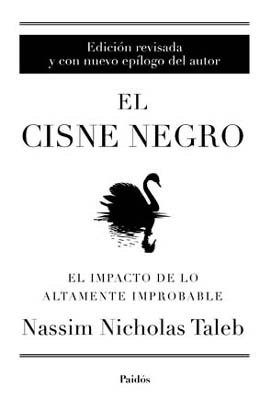 el cisne negroNassim Nicholas Taleb
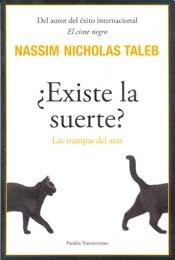 EXISTE LA SUERTENassim Nicholas Taleb
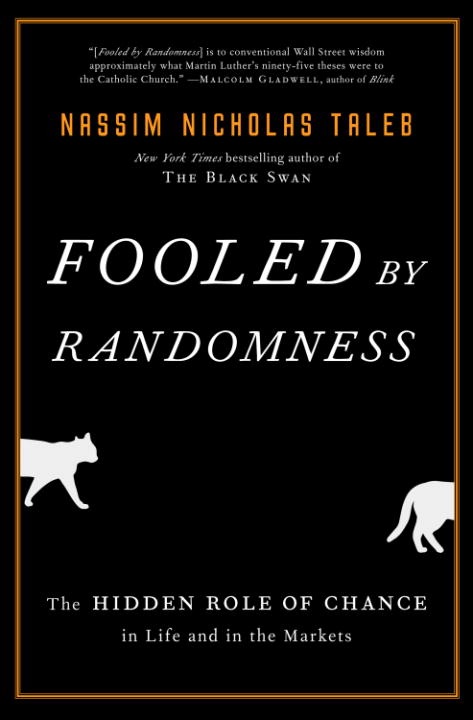 Fooled by RandomnessNassim Nicholas Taleb
 Siyah Kugu - Olasiliksiz Gorunenin EtkisiNassim Nicholas Taleb
 Statistical Consequences of Fat TailsNassim Nicholas Taleb
 The Bed of ProcrustesNassim Nicholas Taleb
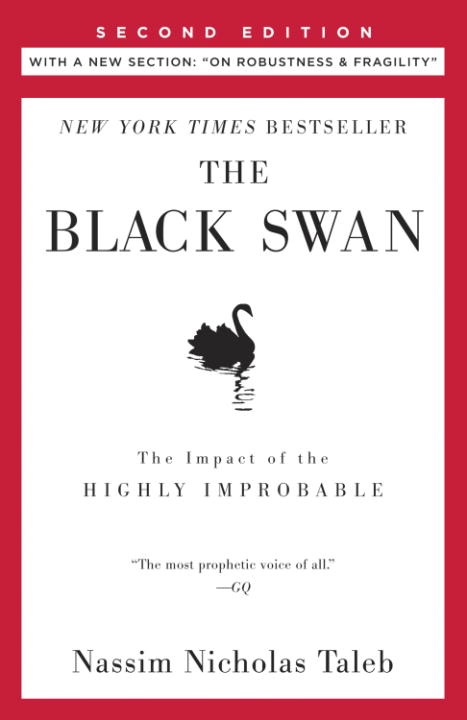 The Black SwanNassim Nicholas Taleb