Siyah Kugu - Olasiliksiz Gorunenin Etkisi
≈ From memoryThe world is shaped by 'Black Swans'—rare, unpredictable, and high-impact events—and our greatest mistake is trying to predict them using linear logic and historical averages.
In one sentence
We live in a world governed by "Black Swans"—events that are impossible to predict, yet carry massive consequences—and our current intellectual systems (economics, history, sociology) are fundamentally flawed because they ignore the power of extreme outliers.
Why read this (for who it's for)
This book is for anyone who believes that the future can be accurately modeled by looking at the past. It is for investors, policymakers, scientists, and thinkers who want to understand why "expert" predictions so often fail. After reading this, you will stop trying to predict the specific timing of the next crisis and instead start building a life and business that is "antifragile"—designed to survive and thrive in a world of chaos.
The big idea
Taleb argues that our human perception is evolutionarily wired to see patterns where none exist. We are "storytelling" animals. Because we cannot handle the discomfort of randomness, we invent narratives to explain why things happened. This leads to a dangerous intellectual arrogance: we believe that because we can describe a past event, we can predict its recurrence.
The core thesis is that the most significant events in human history (the invention of the printing press, the discovery of the Americas, the rise of the internet) were "Black Swans." They were impossible to predict before they happened, yet they changed everything. Because these events are so impactful, they dominate our history, yet our current models of probability (based on "Mediocristan"—the world of averages) fail to account for them. To navigate the world, we must shift from a "predictive" mindset to a "robust" mindset.
Key ideas
The Black Swan
- What it is — A Black Swan is an event that has three characteristics: it is a surprise (it lies outside the realm of possibility of current statistics), it has an extreme impact, and it is only explained after the fact (retrospective predictability).
- Why it matters — If you treat a Black Swan as a "predictable" event, you will be unprepared when it actually arrives. You cannot predict the swan; you can only prepare for the possibility of a swan.
- In the book — Taleb uses the discovery of the New World as a classic example. No one in 1492 could have predicted the geopolitical shift that would follow, yet we now treat it as a "given" in history.
Mediocristan vs. Extremistan
- What it is — Mediocristan is a realm where things cluster around an average (like human height). Extremistan is a realm where outliers dominate (like wealth, book sales, or social media followers).
- Why it matters — Most of our modern tools (Gaussian distributions, bell curves) only work in Mediocristan. If you apply "average" logic to Extremistan (like the stock market), you will be destroyed by the outliers.
- In the book — Taleb compares the height of people (Mediocristan) to the success of authors (Extremistan). A person who is 7 feet tall is an outlier, but they aren't a "Black Swan." A book that sells 10 million copies is a Black Swan.
The Ludic Fallacy
- What it is — The belief that the risks in the real world are the same as the risks in a game or a casino.
- Why it matters — In a game, the rules are fixed and the "odds" are known. In the real world, the rules change, the "odds" are unknown, and the "game" can end entirely. ing In the book — Taleb argues that people who think they can "calculate" the risk of a market crash are like people who think they can calculate the exact moment a volcano will erupt based on a game of dice.
The Narrative Fallacy
- What it is — Our tendency to construct a coherent story after an event has occurred, making it seem like it was "inevitable" or "predictable" when it actually wasn't.
- Why it matters — This makes us overconfident in our ability to predict the future because we mistake our ex-post explanations for ex-ante knowledge.
- In the book — Taleb explains how we look at a successful startup and write a "hero's journey" about it, ignoring the thousands of other identical startups that failed for the exact same reasons.
The Problem of Induction
- What it is — The philosophical problem that just because something happened in the past does not mean it will happen again in the future.
- Why it matters — We rely on "induction" (the sun rose today, so it will rise tomorrow) to survive, but this is a heuristic, not a mathematical certainty. In complex systems (finance, biology), the "rules" can change instantly.
- In the book — Taleb notes that while the sun rising is a reliable induction, the "rules" of the stock market are not, because they are influenced by human psychology, which is not a constant physical law.
The Turkey Problem
- What it is — A metaphor for a turkey that is fed by a farmer every day for months. Every day, the turkey's "prediction" that the farmer is its friend becomes more certain, until the day before Thanksgiving.
- Why it matters — It warns us against "over-fitting" our models to the past. If a system seems stable, it might just be because we haven't hit the "breaking point" yet.
- In the book — This illustrates why "calm" markets are often the most dangerous, as they provide a false sense of security before a sudden, violent shift.
Frameworks & tools
The "Antifragile" Audit
To determine if your life or business is prepared for a Black Swan, run this checklist:
- Exposure to Extremistan: Does your success depend on a few "outlier" events (e.g., a single client, a single product)? If yes, you are in Extremistan.
- The Turkey Test: Is your current success based on a "calm" period that has lasted a long time? If so, what happens if that calm is interrupted?
- Convexity vs. Concavity: Is your "downside" capped while your "upside" is open? (e.g., a writer can only lose the time spent on a book, but the book could sell millions).
- Optionality: Do you have many "cheap" options that can lead to huge payoffs? (e.g., starting 10 small projects to see which one catches fire).
The Rule of "Skin in the Game"
When evaluating an expert or a piece of advice, ask:
- Does the speaker suffer the consequences of being wrong?
- Is the advice based on personal experience or just "theoretical" observation?
- Is the person being rewarded for being right, or for being "loud"? Only trust those who have "Skin in the Game."
Memorable examples & stories
The Turkey and the Farmer
The turkey is fed every day and grows fatter, believing the farmer is its friend. On Thanksgiving, the "prediction" of the farmer's kindness is shattered. Lesson: Past stability is not a guarantee of future safety.
The Invention of the Printing Press
The printing press was a Black Swan. It didn't just "change" communication; it created a whole new world of literacy, religion, and science that was impossible to imagine before its invention. Lesson: True innovations are non-linear; they create "new worlds."
The "Expert" Predictors
Taleb discusses how "experts" in economics often fail because they use models that assume the future will look like a slightly modified version of the past. Lesson: Beware of anyone who claims to have a "perfect" model of a complex, human-driven system.
Key quotes
"The hardest thing to do is to admit that we don't know." (Paraphrased) Why it matters: Intellectual humility is the only defense against the Narrative Fallacy.
"History is what we remember, not what happened." (Paraphrased) Why it matters: We must be wary of how "history" is curated to support current narratives.
"The only way to survive a Black Swan is to be antifragile." (Paraphrased) Why it matters: You cannot predict the storm; you must build a house that gets stronger in the wind.
How to apply it
This week
- Identify your "Turkey" moments: Look at your finances, your career, or your health. Where are you assuming "the farmer will keep feeding me" because it has happened consistently in the past?
- Audit your "Skin in the Game": Identify one person you take advice from. Does that person actually lose anything if their advice fails? If not, stop taking their advice as "truth."
- Practice "Optionality": Instead of committing 100% of your time to one "sure thing," spend 10% of your time on 10 different "small bets" (learning a new skill, testing a side-hustle).
Ongoing
- Avoid "Mediocristan" thinking in Extremistan: When making big life decisions (investing, career moves), do not ask "What is the average outcome?" Ask "What is the worst-case scenario, and can I survive it?"
- Build a "Barbell Strategy": In your portfolio (and your life), combine extreme safety with extreme risk. For example, keep 90% of your assets in ultra-safe investments and 10% in high-risk, high-reward "moonshots."
- Cultivate Intellectual Humility: When you see a news story that perfectly explains why something happened, stop. Ask yourself: "Is this a real explanation, or is this a story I'm telling myself because it feels good?"
Common pitfalls
- The "Predictability" Trap: People often think Taleb is saying we can't predict anything. He isn't. He's saying we cannot predict complex, human-driven systems using linear logic. You can predict that a ball will fall (physics), but you cannot predict the next "great" idea (humanity).
- Over-intellectualizing: Don't get so lost in the philosophy that you forget the practical point: Be prepared for the unexpected.
- The "Safe" Fallacy: People think "safe" means "predictable." In a Black Swan world, "safe" means "robust"—having the ability to withstand a shock that no one saw coming.
Connects to
- Antifragile (Taleb): The direct sequel/companion. While The Black Swan identifies the problem, Antifragile provides the systemic solution.
- Thinking, Fast and Slow (Daniel Kahneman): Explores the cognitive biases (System 1 and System 2) that lead us to fall for the Narrative Fallacy.
- The Lean Startup (Eric Ries): While not a philosophy book, it applies the "Optionality" and "Small Bets" logic to business by testing ideas quickly before committing resources.
If you remember only three things
- Black Swans are unpredictable, high-impact events that we only understand in hindsight.
- Mediocristan vs. Extremistan: Most of our models for "average" behavior fail when applied to "outlier" events like wealth, fame, and disaster.
- The Turkey Problem: Just because something hasn't happened yet doesn't mean it won''t happen tomorrow; "calm" is often just the period before a crash.
Internalize it
- Reflection questions
- In what area of my life am I currently relying on a "Turkey" assumption (assuming things will stay the same because they have been for a long time)?
- If my primary source of income disappeared tomorrow, what "optionality" do I have to pivot quickly?
- When I read the news, am I looking for "facts" or am I looking for a "story" that confirms my existing beliefs?
- Flashcards Q: What are the three characteristics of a Black Swan? A: It is a surprise (outlier), it has a massive impact, and it is explained away with hindsight. Q: What is the difference between Mediocristan and Extremistan? A: Mediocristan is where things cluster around an average (height); Extremistan is where outliers dominate (wealth). Q: What is the "Turkey Problem"? A: The idea that a lack of negative events in the past is not evidence of future safety. Q: What does "Skin in the Game" mean? A: The requirement that an advisor or expert must share the risks of the consequences of their advice. Q: What is the Narrative Fallacy? A: The human tendency to create a coherent story about why something happened after the fact, making it seem predictable. Q: What is the "Barbell Strategy"? A: A portfolio strategy of combining extreme safety with extreme risk to avoid the "middle" where most risks are hidden.
Fidelity note
This summary is based on the core philosophical and conceptual framework of The Black Swan. Because Taleb's writing is dense and often uses "pedantic" language to intentionally challenge the reader's assumptions, some of the nuance in his specific economic examples (which are numerous) may be condensed for clarity. The distinction between "Mediocristan" and "Extremistan" is the most critical technical distinction to maintain when applying his logic.
More from Nassim Nicholas Taleb
 A logica do Cisne Negro - Edicao revista e ampliada - O impacto do altamente improvavelNassim Nicholas Taleb
 AntifragileNassim Nicholas Taleb
 Dynamic hedgingNassim Nicholas Taleb
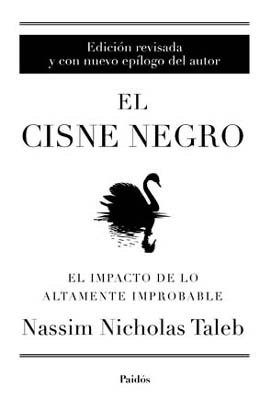 el cisne negroNassim Nicholas Taleb
 EXISTE LA SUERTENassim Nicholas Taleb
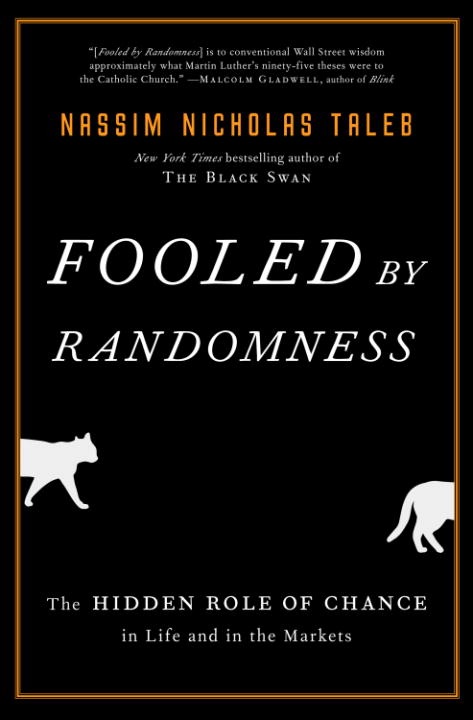 Fooled by RandomnessNassim Nicholas Taleb
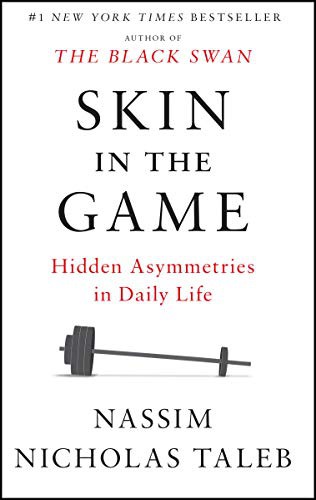 Skin in the GameNassim Nicholas Taleb
 Statistical Consequences of Fat TailsNassim Nicholas Taleb
 The Bed of ProcrustesNassim Nicholas Taleb
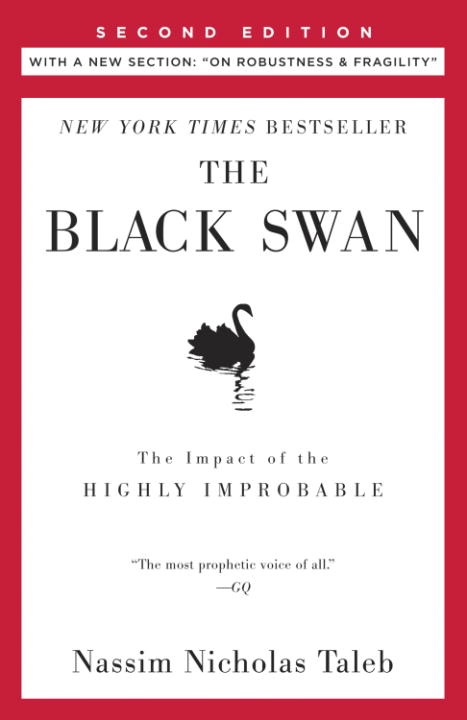 The Black SwanNassim Nicholas Taleb