Antifragile
≈ From memoryTrue resilience isn't just surviving stress; it is the ability to grow, improve, and gain strength from disorder, volatility, and randomness.
In one sentence
The world is inherently volatile and unpredictable, and instead of trying to eliminate risk—which often creates hidden fragility—we should build systems that actually benefit from stress, shocks, and disorder.
Why read this (and who it's for)
Most people approach life and business by trying to minimize "risk." Taleb argues that this is a fundamental misunderstanding of how the world works. By smoothing out the curves of reality (like suppressing forest fires or over-regulating markets), we make systems more fragile because we destroy the very mechanisms that allow them to adapt.
This book is for:
- Entrepreneurs and Leaders who want to build businesses that thrive during market crashes rather than just surviving them.
- Investors who want to understand why "safe" bets can often be the most dangerous in a volatile world.
- Thinkers interested in systems theory, evolutionary biology, and the philosophy of history.
After reading this, you will stop asking "How can I avoid risk?" and start asking "How can I position myself so that I gain from the inevitable chaos of the future?"
The big idea
The core thesis of Antifragile is a rejection of the "Fragilist" mindset that dominates modern Western civilization. We live in a world where we try to make everything perfectly smooth, predictable, and controlled. We build dams to stop floods, we use pesticides to kill pests, and we use regulations to flatten market fluctuations. Taleb argues that while these things might provide short-term comfort, they are fundamentally dangerous because they remove the "stressors" required for systems to remain healthy.
Think of a human body: it needs stress (exercise, cold, infection) to build muscle and an immune system. If you shield a child from every possible germ, their immune system becomes fragile. When the inevitable "Black Swan"—an unpredictable, high-impact event—finally hits, the system collapses because it hasn't been "trained" by small stresses.
Antifragility is the property of some systems to grow stronger when exposed to volatility. A crystal is fragile (it breaks under stress). A steel beam is robust (it resists stress but doesn't change). A human bone is antifragile (it becomes denser and stronger when subjected to weight-bearing stress). Taleb argues that we must stop trying to "engineer" the world into a state of perfect stability, which is an illusion. Instead, we should seek to build systems—in our careers, our investments, and our societies—that are designed to thrive on the very volatility we currently fear.
Key ideas
The Triad: Fragile, Robust, and Antifragile
What it is — This is the foundational taxonomy of the book. Fragility is a measure of how much a system suffers when exposed to stress (it breaks). Robustness is the ability to resist stress without changing (it stays the same). Antifragility is the property of gaining from stress (it improves). Why it matters — Most people think "robust" is the goal. But robustness is just a temporary defense; eventually, any robust system will be overwhelmed by a large enough shock. Antifragility, however, allows for infinite growth through chaos. To be antifragile, you must be exposed to small, manageable stresses so that you are prepared for the big ones. In the book — Taleb uses the example of a forest fire. A "fragilist" approach is to suppress every small fire (which leads to an accumulation of dry wood and eventually a catastrophic, unstoppable inferno). An "antifragile" approach allows small fires to burn, which clears out underbrush and prevents the massive, destructive mega-fires.
The Turkey Problem (Naive Induction)
What it is — This is a critique of how we predict the future based on the past. A turkey is fed every day by a farmer for months; its "data" suggests that the world is safe and the farmer is kind. Then, on Thanksgiving, the farmer arrives with a knife. The turkey's logic was perfect, but it failed because it didn't account for the "Black Swan." Why it matters — We often mistake a "period of calm" for a "permanent state of safety." Just because something hasn't happened yet doesn't mean it won't happen. In fact, the longer a period of peace lasts, the more "fragile" we become to the eventual shock. In the book — Taleb argues that our current global financial system is like the turkey: it has enjoyed a long period of stability (the 20th century), which has led us to believe that the risks of the past are gone, making us dangerously unprepared for the next big crash.
Skin in the Game
What it is — This is the requirement that you must have something to lose in the decisions you make. If a person makes a decision that affects others but doesn't suffer the consequences of that decision, they are not a reliable source of wisdom. Why it matters — Most "experts" (consultants, bureaucrats, pundits) give advice without having skin in the game. They can tell you how to manage a portfolio or run a city, but if their own money or life isn't on the line, their advice is often dangerously detached from reality. In the book — Taleb highlights the difference between a pilot (who has skin in the game) and an aviation consultant (who does not). The pilot’s expertise is earned through the risk of death; the consultant’s knowledge is merely academic.
Via Negativa (The Way of Subtraction)
What it is — Progress is often best achieved by removing something bad rather than adding something good. It is the "less is more" approach to improvement. Why it matters — We are obsessed with adding: adding features to a product, adding supplements to a diet, adding regulations to a market. However, many problems are caused by an excess of something. To fix them, you must subtract. In the book — Taleb uses the example of health. Instead of asking "What should I add to my diet?" (supplements, pills), ask "What should I remove?" (processed sugars, junk food). The answer is almost always more effective and has fewer side effects.
Ergodicity
What it is — This is a mathematical distinction between an "ensemble average" and a "time average." In simple terms: the average of a group of people might not be what happens to one person over time if there is a risk of "ruin" (going bust). Why it matters — If you are playing a game where you can go broke, your "average" return doesn't matter. The only thing that matters is whether you survive long enough to play the next round. You cannot average out a total loss. In the book — Taleb explains this through a gambling example: if you bet $100 on a coin flip and win, but the "house" can take your entire bankroll on any single loss, your "expected value" might be positive, but your actual outcome will eventually be zero because of the risk of ruin.
The Lindy Effect
What it is — The idea that for non-perishable things (ideas, books, technologies, religions), their future life expectancy is proportional to their current age. If a book has been in print for 50 years, it will likely be in print for another 50. Why it matters — We often think "new" means "better." The Lindy Effect suggests that for many things, "old" means "proven." It is a filter for identifying what actually matters over the long term. In the book — Taleb notes that while a new technology might be flashy, an old institution (like the Roman Empire or the English language) has survived because it has been tested by time and volatility.
Convexity vs. Concavity
What it is — This is the geometry of payoffs. A "convex" payoff means you win more on the upside than you lose on the downside (asymmetric upside). A "concave" payoff means you lose more on the downside than you gain on the upside. Why it matters — To be antifragile, you must seek convex positions. You want to be in a position where your losses are capped and your gains are theoretically unlimited. In the book — Taleb argues that investors should look for "optionality"—the ability to benefit from a surprise while being protected against a disaster. This is why he favors certain types of venture capital or "long-tail" bets over "safe" steady-state investments.
Frameworks & tools
The Antifragile Portfolio (The Barbell Strategy)
To build an antifragile life or portfolio, you must avoid the "middle." The middle is where things are "moderately safe" but actually very fragile because they lack a buffer against extreme events. Instead, use the Barbell:
- Extreme Safety: Put the majority of your resources (money, time, energy) into ultra-safe, "boring" positions that protect you from ruin (e.g., high-quality assets, proven skills, stable foundations).
- Extreme Aggression: Take a small, controlled amount of risk in highly explosive, "convex" opportunities (e.g., side projects, experimental investments, learning rare skills).
- The Goal: By avoiding the middle, you ensure that even if your aggressive bets fail, they won't ruin you; but when they succeed, they provide massive upside.
The Via Negativa Checklist
When faced with a problem (health, business, personal growth), do not ask "What can I add?" Instead, run this checklist:
- Identify the Excess: What is currently over-complicating the situation? (e.g., too many meetings, too much junk food, too many notifications).
- Subtract the Friction: Remove that specific element entirely for 30 days.
- Observe the Baseline: Did the system improve without adding anything new?
- Iterate: Only add something back if the subtraction caused a genuine deficit.
Memorable examples & stories
The Forest Fire Analogy
Taleb describes how modern fire management tries to put out every small flame in a forest. By doing so, they allow "fuel" (dead wood and brush) to accumulate. Eventually, because there are no small fires to clear the brush, a massive, uncontrollable fire occurs that destroys everything. The lesson: Small stresses are necessary to prevent large, catastrophic failures.
The Immune System
Our bodies are naturally antifragile. When we are exposed to minor pathogens, our immune system "learns" and strengthens. If we were never exposed to anything, our immune systems would be incredibly fragile. The lesson: Stress is the "workout" that builds biological and systemic resilience.
The Turkey's Perspective
A turkey experiences a peaceful, prosperous life for months under a farmer’s care. It learns that the farmer provides food and safety. This data leads the turkey to believe the world is stable. On Thanksgiving Day, the farmer arrives with a knife. The lesson: A period of calm is not evidence of permanent stability; it may actually be an indicator of increasing fragility.
The Difference Between Pilots and Consultants
A pilot has "skin in the game" because if they make a mistake, they die. A consultant who advises on flight safety but never flies a plane does not share the risk of their advice. The lesson: True expertise is only found where there is a personal cost for being wrong.
Key quotes
"Antifragility is the property of some systems to grow stronger when exposed to stress, volatility, and disorder."
- Why it matters: This defines the entire book; it moves us from a defensive posture (resisting change) to an offensive one (using change as fuel).
"The only way to be antifragile is to have skin in the game."
- Why it matters: It reminds us that responsibility and risk are inseparable. You cannot be truly resilient if you aren't actually on the line.
"We should not try to eliminate all risks, but rather we should seek to be exposed to small, manageable stresses so that we can survive the big ones." (Paraphrased)
- Why it matters: It warns against the "fragilist" urge to over-engineer a perfect world, which only makes us more vulnerable to the inevitable.
How to apply it
This week
- Identify one "Fragile" habit: Find something you do because it feels "safe" but actually prevents growth (e.g., avoiding a difficult conversation, sticking to a boring routine).
- Apply Via Negativa: Instead of trying to "fix" that habit by adding a new tool or app, subtract the thing causing the friction. Stop doing the bad thing entirely for one week.
- The Barbell Audit: Look at your weekly schedule. Are you spending too much time in the "middle"? (e.g., moderate-intensity work that doesn't produce high-impact results). Move some of that time to "Extreme Safety" (rest/deep study) and some to "Extreme Aggression" (high-leverage, risky creative projects).
Ongoing
- Seek Small Failures: Actively seek out small, low-stakes failures. If you are never failing at something small, you are not being tested enough to survive a big failure.
- Avoid Over-Optimization: Don't try to make your life "perfectly" efficient. Leave room for randomness and "slack." A perfectly optimized system has no room to maneuver when a shock hits.
- Practice Skin in the Game: Whenever you give advice or take a leadership role, ensure you are personally invested in the outcome. If it doesn't hurt when you're wrong, don't say it.
Common pitfalls
- The "Risk-Free" Fallacy: People often mistake "low volatility" for "no risk." A stock that stays flat for three years and then drops 90% is incredibly fragile. Just because it hasn't moved doesn't mean there isn't a hidden risk of ruin.
- Over-Engineering the Solution: Because Taleb argues against over-regulation, some people mistakenly think we should do nothing. That’s not the point. We should allow for "natural" systems to function (like markets or ecosystems) while only intervening when there is a clear, immediate threat of ruin.
- Misunderstanding Ergodicity: Don't confuse "average return" with "survival." If you are playing a game where one loss ends the game forever, your average return is irrelevant. Always prioritize survival over expected value in high-risk scenarios.
Connects to
- The Black Swan (Nassim Taleb): The precursor to Antifragile. It explains the types of events that cause chaos; Antifragile explains how to build systems that thrive on those events.
- Thinking in Bets (Annie Duke): Extends the idea of "Skin in the Game" and probability-based thinking into a more practical framework for decision-making under uncertainty.
- Principles (Ray Dalio): While different in tone, Dalio’s focus on "pain + reflection = progress" mirrors Taleb's idea that stress and disorder are necessary for growth.
If you remember only three things
- Fragility vs. Antifragility: Fragile things break under stress; antifragile things need stress to grow. Stop trying to eliminate all stress; instead, seek "good" stress (like exercise or small failures).
- Skin in the Game: Never trust the advice of someone who has nothing to lose if their advice is wrong. True wisdom requires a personal stake in the outcome.
- Via Negativa: Often, the best way to improve your life, health, or business is not by adding something new, but by subtracting what is currently making it worse.
Internalize it
-
Reflection questions
- In what areas of my life am I trying to "smooth out" the curves of reality? What is the hidden fragility that this creates?
- Where am I taking advice from people who have no "skin in the game"? How can I find sources of wisdom that are actually tested by risk?
- If I were to apply Via Negativa to my current biggest problem, what would I stop doing today?
- Am I building a "Robust" life (resisting stress) or an "Antifragile" one (growing from it)? How can I introduce more "good" stress into my routine?
-
Flashcards Q: What is the difference between Fragility, Robustness, and Antifragility? A: Fragile breaks under stress; Robust resists stress without changing; Antifragile improves/grows from stress.
Q: What is "Skin in the Game"? A: The requirement that a person making a decision must also share in the risks and consequences of that decision.
Q: What is the "Turkey Problem"? A: The mistake of assuming that because a period of calm has lasted a long time, it will continue forever (ignoring the impending "Thanksgiving" shock).
Q: What does Via Negatica mean? A: Progress through subtraction—removing bad things rather than adding good ones.
Q: How does the Lindy Effect apply to non-perishable things? A: The future life expectancy of an idea or institution is proportional to its current age (the longer it has survived, the longer it is likely to survive).
Q: What is the "Barbell Strategy"? A: A way to be antifragile by combining extreme safety (to prevent ruin) with extreme aggression (for high-upside optionality), while avoiding the fragile middle.
Q: Why is "Average Return" misleading in some cases? A: Because of Ergodicity—if a risk involves "ruin" (going bust), your average return doesn't matter; only your ability to survive until the next round does.
Fidelity note
I have high confidence in the core concepts of this summary, specifically the definitions of Fragility/Antifragility, Skin in the Game, and Via Negatica. These are the "pillars" of Taleb's work. I am slightly less certain about the specific mathematical nuances of Ergodicity as he presents them (as they can be dense), but the implication for the reader—that ruin-risk trumps average return—is accurately captured. Readers should verify the specific examples of "convexity" in financial markets if they intend to use this for high-stakes trading, as Taleb's views on market mechanics are complex and highly specific.
Keep going — related reads

More from Nassim Nicholas Taleb
 A logica do Cisne Negro - Edicao revista e ampliada - O impacto do altamente improvavelNassim Nicholas Taleb
 Dynamic hedgingNassim Nicholas Taleb
 el cisne negroNassim Nicholas Taleb
 EXISTE LA SUERTENassim Nicholas Taleb
 Fooled by RandomnessNassim Nicholas Taleb
 Siyah Kugu - Olasiliksiz Gorunenin EtkisiNassim Nicholas Taleb
 Skin in the GameNassim Nicholas Taleb
 Statistical Consequences of Fat TailsNassim Nicholas Taleb
 The Bed of ProcrustesNassim Nicholas Taleb
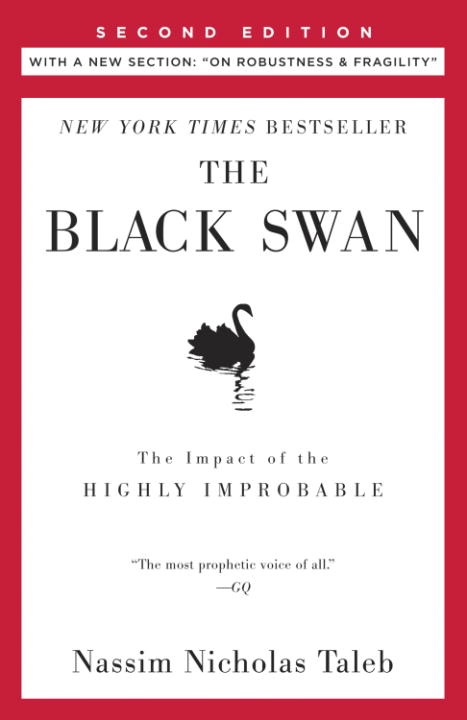 The Black SwanNassim Nicholas Taleb