The Bed of Procrustes
≈ From memoryA profound philosophical critique of modern intellectualism, arguing that we have traded lived experience and the wisdom of tradition for abstract models that distort our perception of reality.
In one sentence
We are currently suffering from a crisis of "Model-Dependent Realism," where we no longer see the world as it is, but only through the distorted lens of the theoretical models we have constructed to describe it.
Why read this (and who it's for)
This book is for the thinker who feels that modern expertise has become hollow—where "experts" can predict everything but manage nothing, and where academic theory often contradicts common-sense reality. It solves the problem of intellectual disorientation in an era of information overload. After reading this, you will be able to identify when a theory is being used to suppress reality rather than explain it, and you will develop a deeper respect for "slow" knowledge: tradition, lineage, and lived experience.
The big idea
Taleb argues that the greatest danger in modern intellectual life is the triumph of Model-Dependent Realism. This occurs when our models (mathematical, sociological, or economic) become so dominant that we stop looking at the actual world and instead look only at what the model tells us should be there. We treat the model as the reality and the reality as a mere confirmation of the model.
This is the "Bed of Procrustes" effect: just as the mythical bed would stretch or shrink a person to fit its dimensions, our theories now stretch and shrink our perception of reality to fit our preconceived notions. If a fact doesn't fit the theory, we ignore the fact; if a theory fails to predict reality, we tweak the theory rather than questioning the underlying assumptions.
The solution is a return to Praxis—knowledge gained through doing, experiencing, and participating in traditions. Taleb argues that true wisdom isn't found in the "clean" abstractions of a laboratory or a classroom, but in the "messy" accumulation of human experience over centuries. We must stop trying to be "innovative" by discarding everything that came before us; instead, we should recognize that tradition is a filter for survival—a way of preserving what actually works in the chaotic, unpredictable world.
Key ideas
Model-Dependent Realism
What it is — The cognitive trap where our mental models become the primary interface through which we perceive reality. Instead of using a model to describe a reality we see, we use the model as a filter that determines what we are even capable of seeing. Why it matters — It creates a "hallucination" of certainty. When experts rely solely on models (like certain economic theories), they become blind to "Black Swan" events or practical nuances because those things aren't accounted for in the model’s equations. In the book — Taleb illustrates this by showing how social sciences often create "perfect" models of human behavior that fail miserably when applied to real people, because the modeler is looking at a map, not the terrain.
The Authority of Tradition
What it is — The idea that "old" ways of doing things (architecture, cooking, social organization) are not obsolete; they are the result of thousands of years of successful survival. Why it matters — Modernity often treats tradition as a lack of imagination. Taleb argues that if a practice has survived for 2,000 years, it is because it works in a complex environment we cannot possibly simulate. To discard it for a "new" theory without testing it first is reckless. In the book — He emphasizes that tradition is an evolutionary filter. It is the "survivor" of many failed experiments; therefore, it contains a density of information that no single modern expert can replicate in a single lifetime.
Skin in the Game (Epistemic Responsibility)
What it is — The principle that you cannot truly "know" anything about a system if you do not bear the risks associated with being wrong about that system. Why it matters — It distinguishes between the Academic (who speaks from a position of safety) and the Practitioner (who knows because they have suffered for their mistakes). Without skin in the game, knowledge is merely an opinion; it lacks the weight of reality. In the book — Taleb argues that an expert who predicts a market crash but has no personal assets at risk is not an expert in the true sense—they are merely a spectator with a megaphone.
The Practitioner vs. The Academic
What it is — A distinction between "knowing-how" (tacit knowledge) and "knowing-that" (explicit, codified knowledge). Why it matters — We often overvalue the academic because it is easy to communicate. However, the most vital human skills—riding a bike, navigating a crisis, leading a team—are held in the body and the intuition of the practitioner. They cannot be fully captured in a manual. In the book — Taleb argues that we must respect the "Master-Apprentice" model of learning, where knowledge is passed down through practice rather than just being read in a textbook.
Evolutionary Epistemology
What it is — The view that ideas, like biological organisms, are subject to evolution. They survive only if they help us navigate reality successfully. Why it matters — It shifts the goal of thinking from "being clever" to "being useful." A theory that is beautiful but doesn't help you survive or thrive in a complex environment is an evolutionary dead end. In the book — He suggests we should view our belief systems as a portfolio of ideas that have been tested by the harsh environment of reality over generations.
Frameworks & tools
The Skin in the Game Filter
Use this to evaluate any piece of advice, news, or "expert" opinion before internalizing it.
- Identify the Source: Who is giving this advice?
- Locate the Risk: Does the person giving the advice suffer a personal, financial, or reputational loss if their advice is wrong?
- Assess the Alignment: If they have no skin in the game (i.e., they gain nothing from being right and lose nothing from being wrong), treat their input as "entertainment" rather than "information."
The Tradition-First Protocol
Use this when you are tempted to "disrupt" a process or discard a long-standing method of doing things.
- Identify the Practice: What is the old way of doing this? (e.g., a social ritual, a business practice, a craft).
- Analyze the Survival Time: How long has this practice existed? If it has lasted for decades or centuries, assume there is a hidden "wisdom" in its design.
- The Innovation Test: Ask: "Can I prove that the old way is actually broken?" Do not assume it is broken just because it feels slow or inconvenient. Only change it if you can demonstrate a specific failure of the old method.
The Practitioner's Hierarchy of Knowledge
When learning a new skill or field, prioritize your sources of information in this order:
- Practice: Doing the thing (The highest form of knowing).
- Observation: Watching someone else do the thing (Intermediate).
- Theory/Literature: Reading about how to do the thing (Lowest form; only useful for clarifying what you've already practiced or observed).
Memorable examples & stories
The Bed of Procrustes
Taleb uses this Greek myth—where a traveler could stretch or shrink anyone to fit a specific bed—to describe how modern intellectual systems force reality into preconceived molds. The lesson: If your theory says the world must look a certain way, you will stop seeing what is actually there and only see what fits your "bed."
The Critique of Social Science
Taleb points out how social scientists often create models of human behavior that are perfectly consistent with their own theories but have zero correlation with actual human behavior. The lesson: A model that is "internally consistent" but externally useless is a hallucination, not a science.
The Master-Apprentice Lineage
Taleb highlights the way crafts (like violin making or sword smithing) are passed down. These skills aren't taught in a 4-year degree; they are absorbed through years of watching and doing under a master. The lesson: True expertise is often "tacit"—it cannot be fully written down, and it requires time to inhabit.
Key quotes
"The problem is that we have become so enamored with our models that we no longer see the world as it is." (Paraphrased) Why it matters: It warns against the intellectual vanity of believing our maps are the territory.
"Tradition is not the worship of ashes, but the preservation of fire." (Paraphrased) Why it matters: It reframes tradition as a survival mechanism rather than a stagnant habit.
"Knowledge without skin in the game is just a sophisticated form of guessing." (Paraphrased) Why it matters: It demands accountability in our intellectual and professional lives.
How to apply it
This week
- The "Skin in the Game" Audit: Look at your news feed or social media. Identify three "experts" who are giving advice on topics they have no personal stake in (e.g., a celebrity giving medical advice, a journalist predicting markets). Note how much of their content is "risk-free" noise.
- The Tradition Check: Think of one thing you were planning to "optimize" or change (a habit, a workflow, a routine). Ask yourself: "Has this worked for me/others for a long time? Is there a reason it survived?" Delay the change by 48 hours to see if you can find any hidden value in the old way.
Ongoing
- Practice over Theory: When learning a new skill (a language, an instrument, a sport), spend 80% of your time doing and only 20% of your time reading about it. Do not let the "study" of the thing replace the "practice" of the thing.
- The Lineage Filter: When you encounter a new "revolutionary" idea, ask: "What does this discard? Does it discard something that has worked for 100 years?" If it does, demand a very high burden of proof before accepting it.
Common pitfalls
- Mistaking "Hard Science" for "Soft Science": People often think Taleb hates all science. He doesn't. He loves physics and chemistry because they have rigorous, falsifiable models. He hates "soft" social sciences that claim to be scientific but lack the ability to be proven wrong by reality.
- The "Anti-Innovation" Trap: Do not mistake his defense of tradition for a call to never change anything. Tradition is a filter, not a prison. If a traditional method truly fails in a new environment, it must be discarded—but only after it has been rigorously tested, not just because it feels old.
- The Academic Bias: It is easy to think that "more information" always leads to better decisions. Taleb argues that too much abstract information can actually obscure the truth of what works in the real world.
Connects to
- Antifragile (Nassim Taleb): While Antifragile focuses on systems that gain from disorder, The Bed of Procrustes provides the philosophical and epistemological foundation for why we need to respect those systems (because they are rooted in reality/tradition).
- Aristotle's Ethics: The emphasis on virtue, practice, and the "phronesis" (practical wisdom) of the practitioner mirrors Aristotle’s belief that ethics is a habit of action, not a set of rules.
- The Republic (Plato): Specifically the Allegory of the Cave—the idea that we often mistake shadows (models/representations) for the actual objects (reality).
If you remember only three things
- Model-Dependent Realism: Beware of letting your theories become a lens that blinds you to reality.
- Skin in the Game: Only trust knowledge from people who have something to lose if they are wrong.
- Tradition as Survival: Respect old ways of doing things; they aren't there because they are "pretty," they are there because they worked when others failed.
Internalize it
-
Reflection questions
- In what areas of my life am I following a "model" (a social expectation, a career path, a fitness plan) that doesn't actually reflect my reality?
- Who are the "masters" in my field? How much of their knowledge is based on actual practice versus academic theory?
- What is a tradition I have dismissed as "outdated"? What would happen if I looked for the hidden wisdom in why it survived so long?
-
Flashcards Q: What is "Model-Dependent Realism"? A: The cognitive trap where our mental models of the world become so dominant that we see only what the model allows us to see, ignoring reality that falls outside the model.
Q: Why does Taleb value tradition? A: Because tradition acts as an evolutionary filter; it represents the "survivors" of thousands of years of trial and error in a complex world.
Q: What is the difference between a Practitioner and an Academic? A: A Practitioner possesses "knowing-how" (tacit, lived experience), while an Academic focuses on "knowing-that" (explicit, codified theory).
Q: What does it mean to have "Skin in the Game"? A: It means that for knowledge to be valid, the person sharing it must bear a personal, financial, or reputational risk if their claims are proven wrong.
Q: How does the Bed of Procrustes metaphor apply to modern thought? A: It describes how our theories "stretch" or "shrink" reality to fit our preconceived notions, rather than letting reality inform our theories.
Keep going — related reads


More from Nassim Nicholas Taleb
 A logica do Cisne Negro - Edicao revista e ampliada - O impacto do altamente improvavelNassim Nicholas Taleb
 AntifragileNassim Nicholas Taleb
 Dynamic hedgingNassim Nicholas Taleb
 el cisne negroNassim Nicholas Taleb
 EXISTE LA SUERTENassim Nicholas Taleb
 Fooled by RandomnessNassim Nicholas Taleb
 Siyah Kugu - Olasiliksiz Gorunenin EtkisiNassim Nicholas Taleb
 Skin in the GameNassim Nicholas Taleb
 Statistical Consequences of Fat TailsNassim Nicholas Taleb
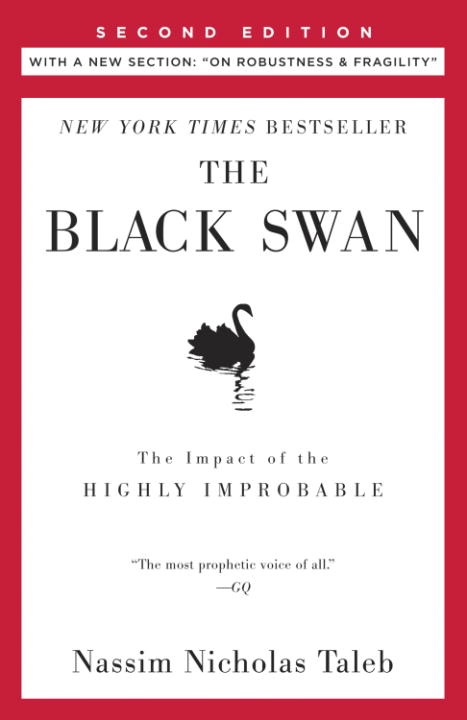 The Black SwanNassim Nicholas Taleb