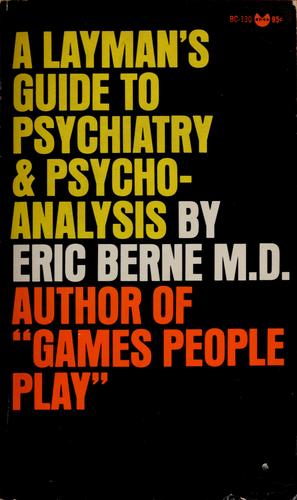
Games People Play
≈ From memoryHuman interaction is often a scripted performance of social roles where the hidden agenda is not to communicate, but to reinforce internal psychological scripts.
In one sentence
We often engage in repetitive, unconscious social scripts called "Games" to satisfy psychological needs while avoiding genuine intimacy or accountability.
Why read this (and who it's for)
If you have ever wondered why you keep having the same argument with the same people, or why certain conversations always end in a stalemate of frustration despite everyone being "right," this book provides the map. It is for anyone who feels like they are reacting rather than acting—people who find themselves trapped in cycles of "drama" and want to understand the hidden mechanics of human interaction. After reading this, you will be able to identify the "scripts" in your own relationships, recognize when a conversation has shifted from honest communication to a "Game," and consciously choose to step out of those roles.
The big idea
Berne argues that most human interaction is not a simple exchange of information, but a series of Transactions. He posits that we operate from three distinct "Ego States": the Parent (the internalized rules and voices of authority), the Adult (the logical, data-processing part of the self), and the Child (the emotional, impulsive, and creative part of the self).
The core thesis is that when we interact with others, we often switch into "Games." A Game is a series of transactions where the content of what we say matters less than the process of how we say it. In a Game, the participants are unconsciously pursuing a hidden agenda—usually to confirm a negative belief about themselves or to avoid a difficult truth. For example, two people might argue about the dishes (the content), but the actual "Game" being played is a scripted dance to prove that "nobody in this house cares about anything."
The reason these games persist is that they provide a predictable psychological payoff. They allow us to stay in our comfort zones of familiar misery rather than taking the terrifying risk of genuine, vulnerable connection. To break the cycle, you must first become aware of the script as it's being performed.
Key ideas
The Three Ego States (Parent, Adult, Child)
What it is — We all possess three internal "personalities": Parent (the internalized rules/judgments), Adult (the objective observer/problem solver), and Child (the emotional reactor/imaginative dreamer). Most of our social interactions involve one of these states reacting to another. Why it matters — Recognizing which state you are currently occupying allows you to "catch" yourself in a reaction. If you realize you are responding from your "Critical Parent," you can consciously choose to shift into your "Adult." In the book — Berne illustrates this by showing how a parent might speak to a child (Parent-to-Child), but as the child grows, they may still be expected to respond from the Child state, creating a friction point when the adult child tries to respond from an Adult state.
Complementary vs. Crossed Transactions
What it is — A "Complementary" transaction is a balanced exchange where the response is expected (e.g., A: "Pass me the salt." B: "Here you go."). A "Crossed" transaction occurs when the response comes from an unexpected ego state (e.g., A: "How was your day?" B: [Angry] "Why are you always interrogating me?!"). Why it matters — Crossed transactions are where conflict begins. They break the flow of communication and force the other person into a defensive posture, effectively ending productive dialogue. In the book — Berne explains that most "Games" start as complementary transactions but quickly cross over once the hidden script is triggered.
The Concept of a "Game"
What it is — A Game is a sequence of transactions where the ultimate goal is not to solve a problem, but to achieve a psychological payoff (a "win") that reinforces a self-defeating belief. Why it matters — Understanding this shifts your perspective from "Why is this person being so difficult?" to "What is the hidden script they are trying to play out?" It removes the personal sting of the conflict by identifying the underlying pattern. In the book — Berne defines a Game as having three requirements: 1) The participants must be aware of the game's rules (even if unconsciously). 2) There must be a hidden agenda. 3) The "payoff" must be a psychological one, not a practical one.
The Hidden Agenda
What it is — This is the secret motive behind every Game. It is often something the person would never admit to saying out loud because it feels too vulnerable or embarrassing. Why it matters — Identifying the hidden agenda is the only way to stop the game. If you can name the underlying fear (e.g., "I'm afraid I'm not good enough"), the Game loses its power. In the book — Berne notes that the hidden agenda often involves seeking "strokes" (recognition) or validating a self-destructive identity, such as "I am unlovable."
Strokes and Recognition
What it assists — A "Stroke" is any unit of recognition. It can be positive (a smile, a compliment) or negative (a scolding, a dirty look). Humans have a biological need for strokes; we would rather be scolded than ignored. Why it matters — Many Games are played simply because one person is "starving" for strokes. If you understand that someone's aggression is actually a desperate plea for recognition, you can respond with a stroke that doesn't feed the Game. In the book — Berne explains that even negative attention counts as a stroke. A child who acts out to get a reaction from a parent is still receiving a "stroke" of recognition.
The "Why Don't You Want to Marry Me?" Game
What it is — A classic example where one person constantly criticizes the other, and the other responds with more criticism, eventually leading to a stalemate of mutual resentment. Why it matters — It serves as a prototype for many interpersonal conflicts. The "win" for the player is the confirmation that the other person is indeed inadequate. In the book — This game is used to show how people can stay in a cycle of arguing for years without ever actually trying to solve the underlying issues, because the argument itself is the point.
Frameworks & tools
The Transaction Analysis Map
Use this mental checklist to diagnose a heated or repetitive interaction:
- Identify the Ego States: Who is speaking? (Parent/Adult/Child). Who are they speaking to?
- Example: "My boss (Parent) is yelling at me (Child)."
- Determine the Transaction Type: Is it Complementary or Crossed?
- Complementary: A asks a question, B answers.
- Crossed: A asks a question, B reacts with an unrelated emotion.
- Identify the "Content" vs. the "Process": What are we actually talking about (the dishes, the late report) versus what is the feeling of the interaction (guilt, anger, avoidance)?
- Detect the Hidden Agenda: If this conversation were a movie script, what would be the "point" of the argument? Is it to prove someone is wrong? To avoid a real conversation?
- The Payoff Check: What does the person get out of continuing this loop? (e.g., "I get to feel like a victim," or "I get to avoid feeling lonely.")
The "Adult-to-Adult" Reset
When you realize a Game is being played, use this 3-step reset:
- Pause: Stop the immediate reaction. Do not respond from your Child (emotional) or Parent (judgmental) state.
- State the Observation: Describe the process of the interaction rather than the content.
- Example: "I notice that every time we talk about our budget, we end up arguing about who spends more. Can we talk about the numbers without the blame?"
- Request Adult Data: Ask for facts and feelings without judgment.
- Example: "What is your specific concern about this expense? I want to understand your perspective."
Memorable examples & stories
The "Yes-But" Game
One person offers a solution, and the other responds with "Yes, but..." until every possible solution has been exhausted. Finally, the second person says, "Well, I guess you're right," and blames the first person for not being helpful enough. The Lesson: The goal of this game isn't to find a solution; it’s to prove that the other person is incompetent and that the problem is unsolvable.
The "Kick Me" Game
A person constantly behaves in ways that invite criticism or make them look like a victim (e.g., complaining excessively, making self-deprecating jokes). They then act shocked or hurt when people actually criticize them. The Lesson: The hidden agenda is to get "strokes" of attention and to confirm the belief: "Everyone is against me."
The "Why Don't You Want to Marry Me?" Game
A person constantly complains about their partner’s flaws, and the partner responds with a list of the first person's flaws. They do this until they both feel exhausted and miserable. The Lesson: This isn't about marriage; it's a scripted way to avoid the intimacy of actually asking, "Do you love me?" or "Are we okay?"
Key quotes
"Games are played because they provide a psychological payoff." (Paraphrased) Why it matters: It explains why people stay in toxic situations—the 'payoff' is a familiar, albeit painful, certainty.
"The transaction is the unit of social intercourse." (Paraphrased) Why it matters: It forces you to look at the structure of how we speak, not just the words we use.
"A Game is a way of avoiding the real issues of life." (Paraphrased) Why it matters: This is the ultimate "why"—Games are defensive shields against vulnerability.
How to apply it
This week
- The Observer Effect: Choose one recurring conflict (with a spouse, coworker, or friend). For one week, do not participate in the argument. Instead, mentally label the Ego States: "Oh, they are using their Critical Parent right now."
- Identify One Game: Write down the names of three "Games" you recognize from your past interactions (e.g., "The Blame Game," "The Martyr Game").
- The Adult Response: The next time someone tries to pull you into a "Game," respond with a purely factual, non-judgmental statement. If they say, "You never help me!" instead of getting angry, say: "Which specific task would you like me to handle today?"
Ongoing
- Identify the Hidden Agenda: Before entering a difficult conversation, ask yourself: "What is the hidden agenda here? Am I trying to win, or am I trying to be understood?"
- Practice Adult-to-Adult Communication: Aim for communication that is data-driven and objective. Instead of saying "You're being lazy," say "I noticed the laundry hasn't been moved; can we coordinate a time to do it?"
- Stop the Script: When you feel the familiar "heat" of a recurring argument, stop. Explicitly name the pattern: "We've had this argument three times this week. I think we're stuck in a loop. Can we stop and talk about what's actually bothering us?"
Common pitfalls
- Over-analyzing: It is easy to become so obsessed with identifying "Games" that you stop actually listening to the person's feelings. Remember: A Game is a pattern, but the underlying feeling (sadness, fear, loneliness) is still real and deserves attention.
- The "Expert" Trap: Don't use this knowledge to "diagnose" people in a way that feels condescending. The goal isn't to win the argument by proving you know their game; the goal is to break the cycle so both people can feel better.
- Ignoring the Child: While "Adult-to-Adult" communication is the goal for problem-solving, humans are not robots. Sometimes, we need to acknowledge and validate the "Child" (the emotions) before we can move into "Adult" logic.
Connects to
- The Drama Triangle (Stephen Karpman): Extends Berne's work by focusing on the three roles of Victim, Rescuer, and Persecutor.
- Emotional Intelligence (Daniel Goleman): Provides the internal emotional awareness that helps you identify why you are playing certain games in the first place.
- Nonviolent Communication (Marshall Rosenberg): Offers a practical linguistic framework for moving from "Game" behavior to honest, needs-based communication.
If you remember only three things
- We interact using three Ego States: Parent (rules), Adult (logic), and Child (emotions).
- A "Game" is a repetitive social script where the hidden agenda is to avoid intimacy or confirm a negative self-image.
- To break a Game, you must identify the hidden agenda and consciously choose an "Adult-to-Adult" response instead of reacting to the script.
Internalize it
Reflection questions
- Which "Game" do I play most often when I feel criticized? (e.g., Do I become the Martyr? The Victim? The Aggressor?)
- Who is the "Parent" in my life that I am still trying to please or appease today?
- When I get into a heated argument, what is the hidden agenda? What am I afraid will happen if I stop arguing and just say, "I'm lonely/scared/hurt"?
Flashcards
Q: What are the three Ego States in Transactional Analysis? A: Parent (rules/judgments), Adult (logic/data), and Child (emotions/impulses).
Q: What is a "Crossed Transaction"? A: A transaction where the response comes from an unexpected ego state, breaking the flow of communication.
Q: What defines a "Game" in Berne's theory? A: A sequence of transactions with a hidden agenda and a psychological payoff (rather than a practical one).
Q: What is a "Stroke"? A: Any unit of recognition, whether positive or negative.
Q: How do you break a Game? A: By identifying the hidden agenda and consciously choosing to communicate from an Adult-to-Adult perspective.
Fidelity note
I have high confidence in the core concepts of Transactional Analysis (PAC model, Transactions, Games) as presented by Berne. The specific "Games" described (like "Why Don't You Want to Marry Me?") are the standard examples used in his seminal work. However, because Berne’s work is a foundational text in psychology, some nuances of his clinical application may vary depending on the specific edition or interpretation of his theories. I have focused on the social and relational applications of his work, which are most accessible to a general reader.