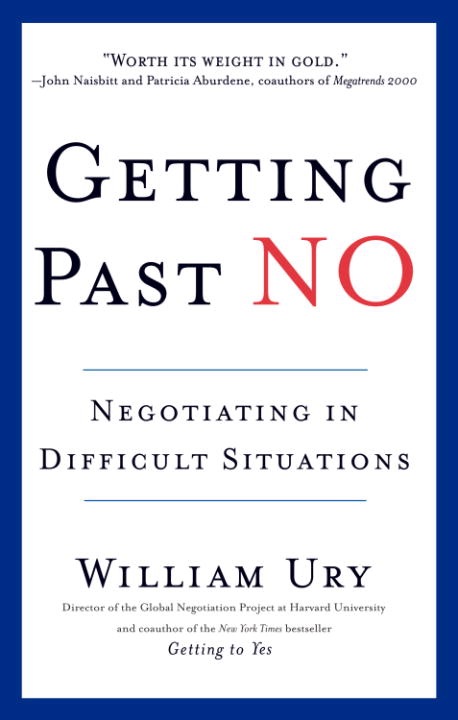
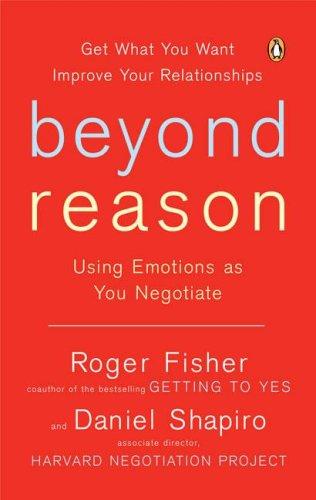
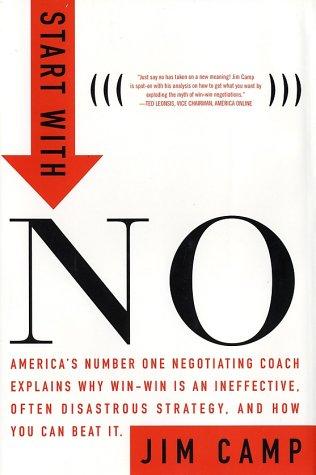
Getting to Yes
≈ From memoryNegotiation is not a battle of wills; it is a collaborative problem-solving process where you separate the people from the problem to find mutually beneficial interests.
In one sentence
Stop trying to "win" against the other person and start working with them to solve the underlying problems that created the conflict in the first place.
Why read this (and who it's for)
Most people approach negotiation as a zero-sum game: for me to win, you must lose. This mindset leads to "hard" bargaining—threats, lies, and stubbornness—which often destroys long-term relationships and leaves both parties feeling like they lost.
This book is for anyone who feels "bullied" in negotiations, anyone who struggles to get their needs met without burning bridges, or any leader who needs to navigate complex, multi-stakeholder conflicts (like salary negotiations, contract disputes, or even high-stakes domestic disagreements). After reading this, you will be able to identify the hidden interests behind a "No," generate creative solutions that expand the pie rather than just dividing it, and maintain your composure when the other side gets aggressive.
The big idea
The central thesis of Getting to Yes is Principled Negotiation. The authors argue that most people fail at negotiation because they treat it as a personality contest or a test of willpower. They focus on "Positions"—the specific demands people state (e.g., "I want a 20% raise")—rather than the underlying "Interests" (e.g., "I need to feel valued for my extra responsibilities").
The logic is simple but profound: Positions are often mutually exclusive, but interests are usually compatible. If two people argue over who gets a specific orange, they might both actually want the juice. If they realize this, they can share the orange (or find two oranges) instead of fighting over one.
By shifting the focus from winning to problem-solving, you change the dynamic from "Me vs. You" to "Us vs. The Problem." This allows for a sustainable agreement that preserves the relationship and achieves the actual goals of both parties.
Key ideas
Separate the people from the problem
What it is — Do not let your emotions, personal feelings, or the other person's personality cloud your judgment of the facts. You must be soft on the people (empathetic, respectful) but hard on the problem (analytical, objective). Why it matters — When you personalize a conflict, you become defensive. If you see the other person as an adversary, they will react to your hostility with more hostility. By treating them as a partner in solving a puzzle, you lower their guard and make it easier to find a solution. In the book — The authors describe how "dirty" negotiators use personal attacks to distract from the issues. They suggest acknowledging the other person's feelings (e.g., "I can see that you are frustrated") without necessarily agreeing with their demands, which de-escalates the tension.
Focus on interests, not positions
What it is — A position is what someone says they want; an interest is why they want it. Interests include desires for security, status, recognition, and fairness. Why it matters — Positions are often "fixed" (I won't budge on this price). Interests are fluid. By uncovering the interests, you discover that there are often multiple ways to satisfy a need. If you know why someone wants something, you can offer an alternative that satisfies them without giving up your own needs. In the book — The authors use the classic example of two people arguing over a piece of land. One wants to build a house; the other wants to preserve the trees. By identifying these interests, they might agree to build a house on a different plot of land while preserving the original trees.
Invent options for mutual gain
What it is — Before trying to settle, brainstorm a wide range of solutions where both parties can win. This is "expanding the pie." Why it matters — Most people jump straight to compromise (splitting the difference). Compromise is often a "lose-lose" because neither party gets what they actually need. By generating options first, you find creative ways to satisfy both interests—for example, trading something that is cheap for you but valuable to them. In the book — The authors emphasize that brainstorming should be separate from negotiation. You shouldn't judge ideas during the "idea-generation" phase; you should only evaluate them once a list of possibilities has been created.
Insist on principled standards
What it is — Instead of arguing over who has more power or who can scream the loudest, base the agreement on objective criteria (e.g., market value, legal precedent, professional standards). Why it matters — It removes the "ego" from the decision. If you can agree on a fair standard before you apply it to your specific problem, the result feels less like a concession and more like a fair judgment. In the book — For example, if two parties are arguing over what a car is worth, they should look at "Blue Book" values or recent comparable sales rather than trying to out-bluff each other on price.
The BATNA (Best Alternative to a Negotiated Agreement)
What it is — Your BATNA is your "walk-away" point. It is what you will do if no agreement is reached. Why it matters — Knowing your BATNA gives you the power to say "No." If you know exactly what your alternative is, you won't be pressured into a bad deal out of fear. Conversely, understanding the other side's BATNA helps you predict their bottom line. In the book — The authors argue that your power in a negotiation comes from your ability to walk away. You should never enter a negotiation without knowing exactly what your alternative is and how much it will cost (in time/money) to pursue that alternative.
Frameworks & tools
The 4 Pillars of Principled Negotiation
Use this checklist before every high-stakes conversation to ensure you aren't falling into the "Position Trap."
- Separate People from the Problem: Are you reacting to their tone? Acknowledge their emotions, but keep your focus on the facts. Ask: "How can we solve this together?"
- Focus on Interests: Ask "Why?" Why do they want that specific deadline? Why is that price point important? What are they afraid of losing?
- Generate Options: Before saying "No" to their proposal, ask, "What else could we do?" Brainstorm at least three different ways to satisfy both parties' interests.
- Use Objective Criteria: What would a neutral third party (an auditor, a judge, a market report) say is fair? Use that as your benchmark.
The BATNA Analysis Tool
Before entering any negotiation, fill out this internal audit:
- Step 1: Identify the "No" point. If we don't reach an agreement today, what happens tomorrow? (e.g., I keep my current job, but I lose the promotion).
- Step 2: Quantify the alternative. What is the cost of that "No"? (e.g., It will take me 6 months to find a new job).
- Step 3: Determine your Reservation Point. Based on the cost of your alternative, what is the absolute minimum/maximum you can accept?
- Step 4: Estimate their BATNA. What happens to them if they don't get this deal? (e.g., Their project will be canceled). This tells you how much leverage you have.
Memorable examples & stories
The Labor Dispute
The authors analyze various industrial disputes where workers and management were locked in a stalemate over wages. They found that the "position" was often a specific dollar amount, but the "interest" was often job security or respect. By identifying these, they could find ways to offer training or better benefits that satisfied both sides without just moving the needle on a single number. Lesson: Most "No's" are actually "Not like this."
The International Treaty Negotiations
The authors look at how countries negotiate complex treaties (like arms control). These are often zero-sum games where one side's gain is another's loss. However, by identifying underlying interests—such as the desire for stability or economic growth—diplomats can find "package deals" that address multiple interests simultaneously. Lesson: Complexity is your friend; it allows for more trade-offs.
The "Dirty" Negotiator
The book describes a type of negotiator who uses lies, threats, and personal attacks to intimidate the other side. The authors advise against "fighting fire with fire." If you respond to an insult with an insult, you lose control of the process. Instead, call out the behavior: "I'm having trouble understanding your point because I feel like you're attacking my character rather than the issue." Lesson: Maintain your own standards even when the other side abandons theirs.
Key quotes
"The biggest mistake people make in negotiations is thinking that they have to give up something to get something." (Paraphrased) Why it matters: This highlights the "expanding the pie" philosophy—you can often find a third way.
"Separate the people from the problem. Be soft on the people, hard on the problem." (Paraphrased) Why it matters: It provides a mental framework for maintaining professional relationships during heated disputes.
"Focus on interests, not positions." (Paraphrased) Why it matters: This is the core engine of Principled Negotiation; it's how you find hidden value.
How to apply it
This week (Small Experiments)
- The "Why" Drill: The next time someone makes a request or a demand (even a small one, like a coworker asking for a favor), don't say yes or no immediately. Ask: "Can you help me understand what your main goal is with this?"
- Identify Your BATNA: Pick one ongoing negotiation (a subscription, a freelance gig, a household chore). Write down exactly what you will do if the other person says "No." Knowing your walk-away point will instantly lower your anxiety.
- The "Soft" Response: If someone gets angry or aggressive in a meeting/conversation, deliberately do not react to their tone. Acknowledge the emotion ("I can see this is frustrating") and then immediately pivot back to the objective: "How can we solve [Problem X]?"
Ongoing (Habits)
- Pre-Negotiation Prep: Never go into a meeting without identifying your interests AND the other person's likely interests. Write them down.
- Brainstorming Buffer: When a negotiation stalls, stop talking about the "deal" and spend 5 minutes brainstorming "What if?" scenarios. Explicitly state: "We aren't deciding yet; we are just looking for options."
- The Objective Standard Check: Whenever you feel stuck on a price or a deadline, ask yourself: "What would an independent expert say is fair here?"
Common pitfalls
- Thinking it means being "Nice": Principled negotiation isn't about being a pushover. It’s about being principled. You can be firm and demanding while still being respectful and focused on interests.
- The "One-Time" Trap: People often think this only applies to big contracts. In reality, it applies to every interaction where there is a difference of opinion. If you don't practice it in small things (like deciding where to eat dinner), you won't have the muscles for the big things.
- Ignoring the BATNA: Many readers skip the BATNA section because they think "I'm not that important." But even if your alternative is "nothing," knowing that is your alternative gives you a baseline of reality that prevents you from being manipulated by an over-confident opponent.
Connects to
- "Never Split the Difference" by Chris Voss: While Fisher and Ury focus on principled negotiation (logic, interests, standards), Voss focuses on tactical empathy and psychological mirroring. They are excellent complements: use Fisher/Ury for the framework and Voss for the "street-level" communication tactics.
- "Influence" by Robert Cialdini: This provides the psychological "why" behind why people say yes to certain triggers (scarcity, authority, social proof), which can help you understand the hidden interests of others.
If you remember only three things
- Separate the people from the problem: Be soft on people, hard on the problem.
- Focus on interests, not positions: Ask "Why?" to find the underlying needs.
- Know your BATNA: Your power comes from your ability to walk away.
Internalize it
-
Reflection questions
- In my last major disagreement, what was the position I took? What were the actual interests (fears, needs, desires) driving that position?
- When someone gets angry with me during a negotiation, do I react to their personality or stay focused on the problem? How can I improve my "emotional regulation" in these moments?
- What is my BATNA for my current biggest professional challenge? If I walked away today, what would happen?
-
Flashcards Q: What is the difference between a Position and an Interest? A: A position is what someone wants (the demand); an interest is why they want it (the underlying need).
Q: How do you "Separate the people from the problem"? A: By being empathetic and respectful toward the person while remaining objective and firm regarding the facts of the issue.
Q: What is a BATNA? A: Best Alternative to a Negotiated Agreement. It is your fallback plan if no deal is reached.
Q: Why is "Inventing Options" important before settling? A: Because it allows you to expand the pie and find creative solutions that satisfy both parties' interests, rather than just splitting a small pie in half (compromise).
Q: What are "Objective Criteria"? A: Independent standards used to determine fairness, such as market value, legal precedents, or professional guidelines.
Fidelity note
I have high confidence in this summary. The core pillars of Principled Negotiation (People/Problem, Interests/Positions, Options/Criteria) are the foundational teachings of the Harvard Negotiation Project and are the primary focus of the book. I am confident in the explanation of BATNA as it is a cornerstone of their methodology. I have avoided any "fluff" often found in summaries of this book that suggest it's just about "being nice"—the authors are very clear that this is a rigorous, strategic framework for achieving results.