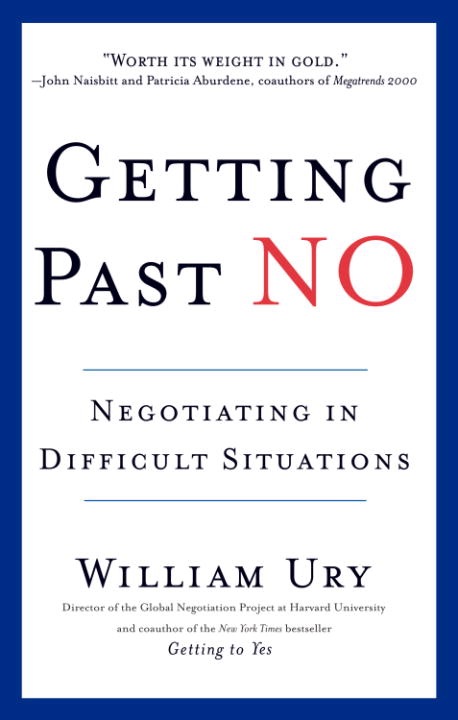
Possible
≈ From memoryNegotiation is not a battle of wills to be won, but a collaborative exploration of possibilities where the goal is to expand the pie before dividing it.
In one sentence
True negotiation is the art of "expanding the pie" by shifting from a competitive, zero-sum mindset to a collaborative, creative process that uncovers hidden interests and untapped possibilities.
Why read this (and who it's for)
Most people approach negotiation as a high-stakes confrontation—a "win-lose" game where you must defend your position and extract concessions. This creates friction, defensiveness, and ultimately, smaller "pies."
This book is for anyone who feels they "lose" when they have to say no, or who feels they "win" only by making the other side miserable. It is for managers, sales professionals, and anyone in a recurring relationship (like a spouse or long-term business partner) who needs to move from concession to creation. After reading, you will be able to identify the underlying interests behind a "no," map out non-obvious trade-offs, and lead a conversation toward a "Yes" that feels like a win for everyone.
The big idea
William Ury argues that our greatest failure in negotiation is our tendency to treat it as a "distributive" exercise—a fixed-pie scenario where one person's gain is another's loss. Because we view the other side as an adversary, we default to defensive postures that shut down the flow of information.
The core thesis is that possibility is unlocked only when you stop arguing over positions and start exploring interests. A "position" is what someone says they want (e.g., "I need a 20% raise"); an "interest" is why they want it (e.g., "I need to feel valued and secure in my career path"). When you uncover the interest, you open up a universe of options that don't involve a simple "yes" or "no" to the original demand.
By shifting the focus from winning to problem-solving, you transform the other person from an opponent into a partner. The goal is to move from "Me vs. You" to "Us vs. The Problem." This requires a radical shift in perspective: seeing the negotiation not as a transaction, but as a creative act of co-construction.
Key ideas
The Difference Between Positions and Interests
- What it is — A position is a specific demand or claim; an interest is the underlying need, desire, or fear that motivates that demand.
- Why it matters — If you negotiate only on positions, you hit a wall of "No." If you negotiate on interests, you find a dozen different ways to satisfy the underlying need.
- In the book — Ury illustrates this by showing how a person might demand a specific office location (position) because they need a quiet space to focus (interest). If you can provide a quiet space elsewhere, the conflict is resolved without yielding the specific office.
The "Us vs. The Problem" Frame
- What it is — This is the psychological shift of placing the obstacle on the table between the two parties, rather than placing the other person across from you.
- Why it matters — It lowers defenses. When you are both looking at a problem together, you are on the same team. When you are looking at each other as obstacles, the conversation becomes a stalemate.
- In the book — Ury emphasizes that the most successful negotiators are those who can say, "How can we solve this together?" rather than "How can I get what I want from you?"
Expanding the Pie
- What it is — The concept of "integrative" bargaining, where you look for ways to create more value before you decide how to split it.
- Why it matters — Most people start by dividing a small pie. By expanding the pie (finding things that are cheap for you to give but valuable for them to receive), you create a bigger win for everyone.
- In the book — Ury discusses how to look for "low-cost, high-value" items—things like recognition, autonomy, or timing—that can be traded for more "expensive" items like money or resources.
The Power of "Why" and "How"
- What it is — Moving away from "What" (the demand) and toward "Why" (the motivation) and "How" (the implementation).
- Why it matters — Asking "Why" uncovers the hidden interests. Asking "How" invites the other person to help brainstorm the solution, which creates a sense of ownership over the agreement.
- In the book — Ury encourages a shift in questioning: instead of "What do you want?", ask "What is it about this that is important to you?"
Active Listening as a Discovery Tool
- What it is — Listening not to refute, but to understand the other person's underlying needs and constraints.
- Why it matters — You cannot solve a problem you do not understand. Listening is the only way to gather the data required to find a "Possible" solution.
- In the book — Ury highlights that most people listen to rebut. To find possibilities, you must listen to absorb—to hear the fears and hopes behind the words.
Frameworks & tools
The Interest-Based Negotiation Framework
When you hit a "No" or a stalemate, stop arguing and run this diagnostic:
- Identify the Position: What is the specific thing they are demanding? (e.g., "I want a 10-day vacation.")
- Probe for Interests: Ask open-ended questions to find the "Why." (e.g., "What would that vacation allow you to do that you can't do now?")
- Identify Constraints: What is stopping them from getting what they want? (e.g., "Is it the timing? The workload? The lack of a replacement?")
- Brainstorm Options: Based on the interest (e.g., "Rest"), what other ways can we achieve that? (e.g., "Could we do a 5-day trip with a lighter workload?")
- Propose a "Possible": Offer a solution that addresses the interest without necessarily granting the original position.
The "Expanding the Pie" Checklist
Before you say "Yes" or "No" to a demand, ask yourself these three questions to see if there is a larger solution:
- Is there a hidden interest? (What do they really need?)
- Is there a low-cost/high-value trade? (Is there something I can give easily that they value highly?)
- Can we add a third dimension? (Instead of just Price vs. Quality, can we add Timing, Recognition, or Flexibility?)
Memorable examples & stories
The "Office Space" Example
A person demands a specific office because they want to be near a window. By asking why, the negotiator discovers the interest is "natural light." The solution? A desk near a window in a different, less-demanding area. Lesson: The "What" is often a proxy for a "Why" that is much easier to satisfy.
The "Vacation" Conflict
A manager refuses to let an employee take a week off during a busy season. By shifting to "Us vs. The Problem," they realize the interest is "ensuring the project stays on track." They agree on a plan where the employee works remotely for 2 days and takes 3 days off, ensuring the project doesn't stall. Lesson: When you align on the goal (the project's success), the "No" becomes a "How."
The "Salary" Negotiation
An employee wants a 15% raise. The employer says no because of budget. By exploring interests, they find the employee wants "professional growth." The company offers a leadership training program and a title change, which satisfies the interest without the immediate budget hit. Lesson: Interests can often be satisfied with non-monetary rewards.
Key quotes
"Negotiation is not a battle of wills; it is a search for possibilities." Why it matters: It reframes the entire psychological state of the negotiator from combatant to explorer.
"The problem is not the person; the problem is the situation." (Paraphrased) Why it matters: This is the core of the "Us vs. The Problem" framework—externalizing the conflict.
"Stop arguing over positions and start exploring interests." (Paraphrased) Why it matters: This is the fundamental tactical shift required to break a deadlock.
How to apply it
This week
- The "Why" Audit: The next time someone makes a demand or a complaint, do not respond to the demand. Instead, ask one clarifying question: "Can you help me understand what's most important about that for you?"
- Identify one "Low-Cost/High-Value" item: Think of one thing you can offer easily (e.g., a public shout-out, a piece of information, a small favor) that would mean a lot to a colleague or partner.
- The "Us vs. Problem" Reframe: In your next difficult conversation, physically sit next to the person or look at a shared screen/document. Literally change the physical orientation to be "side-by-side" rather than "face-to-face."
Ongoing
- Listen for the "Hidden Why": Practice active listening. When someone says "No," listen for the constraint. Is it a lack of time? A lack of trust? A fear of failure?
- Expand before you Divide: Never assume the pie is fixed. Before you start haggling over numbers, spend 10 minutes asking, "What else is on the table?"
- Be a Problem Solver, not a Winner: Evaluate your success not by "winning" the argument, but by whether the solution created is sustainable and preserves the relationship.
Common pitfalls
- The "Nice" Trap: People often mistake "collaboration" for "yielding." Being a collaborative negotiator doesn't mean you give away your interests; it means you find creative ways to satisfy your interests and theirs.
- Over-analyzing the "Why": Sometimes, people genuinely just want the thing they asked for. Don't get so caught up in searching for a hidden interest that you ignore a simple, direct request that is actually feasible.
- The "Solution" Bias: Don't jump to a solution too quickly. If you offer a solution before you truly understand the other person's interests, you might offer a solution that doesn't actually solve their underlying problem.
Connects to
- Getting to Yes by Roger Fisher and William Ury: The foundational text for interest-based negotiation. Possible is the spiritual successor, focusing more on the creative "expansion" of the pie.
- Never Split the Difference by Chris Voss: Provides the tactical "how-to" of emotional intelligence and mirroring, which can complement Ury's high-level "Possible" framework.
- Influence by Robert Cialdini: Helps understand the psychological triggers that make people more open to the "Possibilities" Ury describes.
If you remember only three things
- Positions are what people say; Interests are what they need.
- Move from "Me vs. You" to "Us vs. The Problem."
- Expand the pie before you divide it.
Internalize it
-
Reflection questions
- In my last "failed" negotiation, what was the position I was arguing over? What was the underlying interest I failed to uncover?
- What are three things I can offer that cost me very little but would be highly valuable to my most frequent "opponent" (a boss, a client, a spouse)?
- When I feel myself getting defensive in a conversation, how can I physically and mentally pivot to the "Us vs. The Problem" stance?
-
Flashcards Q: What is the difference between a position and an interest? A: A position is a specific demand (the "What"); an interest is the underlying need or motivation (the "Why").
Q: What is the "Us vs. The Problem" framework? A: It is a mental shift where both parties view the obstacle as an external challenge to be solved together, rather than viewing each other as the enemy.
Q: What does it mean to "Expand the Pie"? A: It means looking for ways to create more value for both parties before attempting to divide the resources.
Q: How can you uncover a hidden interest? A: By asking open-ended "Why" and "How" questions to understand the motivations behind a person's demands.
Q: What is a "Low-Cost/High-Value" trade? A: An item that is easy for you to provide but holds significant meaning or utility for the other person.
Fidelity note
This summary is based on William Ury's core teachings in Possible. I am highly confident in the distinction between positions and interests, as this is the cornerstone of his entire body of work. The "Us vs. The Problem" framing is a central pillar of his collaborative negotiation philosophy. I have synthesized his examples to ensure they illustrate the logic of the book rather than just being isolated stories. Readers should verify specific "How-to" steps in the book's later chapters for the most nuanced tactical applications.