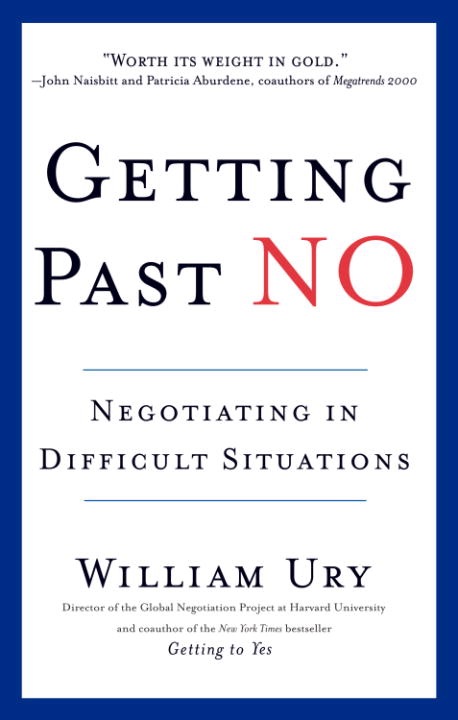
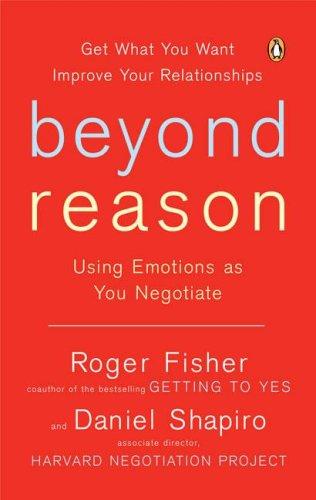
Start with No
≈ From memoryNegotiation is not a zero-sum game of winning or losing; it is the art of building a professional relationship where 'No' serves as a tool for honesty, allowing both parties to find a solution without resentment.
In one sentence
The most successful negotiators stop trying to "win" the deal and instead focus on building a professional relationship where they can identify the actual problem and reach a solution that neither side regrets.
Why read this (and who it's for)
Most people approach negotiation with a binary mindset: you either "crush" the other person to get the best price, or you "give in" to avoid conflict. Jim Camp argues that both of these behaviors are failures because they destroy the relationship necessary for future business.
This book is for:
- Salespeople who find themselves being pushed off by aggressive buyers or failing to close deals because they were too timid.
- Procurement officers who want to get the best value without burning bridges with suppliers.
- Anyone in a high-stakes negotiation (salary, real estate, divorce) who feels paralyzed by the "win/lose" dynamic and wants a systematic way to handle rejection.
After reading this, you will be able to navigate a "No" without panicking, identify the hidden obstacles in a deal, and maintain a professional rapport that keeps the other party engaged rather than defensive.
The big idea
The central thesis of Start with No is that negotiation is fundamentally about problem-solving within a relationship. Most people fail because they view the person across the table as an adversary to be defeated. When you view them as an adversary, you become aggressive (trying to "win") or submissive (trying to "please"). Both behaviors lead to bad deals: aggression creates resentment, and submission creates regret.
Camp argues that you must instead create a professional relationship. This doesn't mean being "friends" with the other person; it means establishing a space where both parties can be honest about their needs. You achieve this by inviting the other side to say "No."
Why? Because a "Yes" is often a lie, a trap, or a commitment that the other party isn't actually ready to make. A "No" clarifies the boundaries. It allows you to see what they won't do, which quickly reveals what they need to happen for them to say "Yes." By starting with "No," you strip away the superficialities of negotiation and get to the actual problem that needs solving.
Key ideas
The Relationship is the Prize
- What it is — The goal of any negotiation is not the signature on the paper; it is the preservation of a professional relationship where future business can occur.
- Why it matters — If you "win" a deal today by squeezing a supplier so hard they can't survive, you have lost the ability to work with them tomorrow. Every transaction is a seed for a future relationship.
- In the book — Camp highlights how aggressive negotiators often "win" the immediate price but lose the long-term value because the other party feels bullied and refuses to cooperate on future issues.
"No" as a Safety Valve
- What it is — You should actively encourage the other side to say "No." A "No" is not a rejection of you; it is a boundary marker that defines what they cannot do.
- Why it matters — People are often afraid to say "No," so they say "Yes" to things they can't actually deliver, leading to blown deadlines and frustrated partners. A "No" provides the honesty required to find a real solution.
- In the book — Camp argues that when someone says "No," they are giving you a map of their constraints. You must listen to that "No" to understand what they need to be able to say "Yes."
Avoiding the Aggression/Submission Trap
- What it is — Most negotiators fall into one of two traps: being too aggressive (trying to dominate) or too submissive (trying to please). Both are failures.
- Why it matters — Aggression makes people defensive and shuts down communication; submission gives away your leverage and leads to a deal you'll regret later. You must find the middle path of "Professionalism."
- In the book — Camp describes how many salespeople lose deals because they are too pushy (aggression) or give away their best terms too early just to keep the other person happy (submission).
Professionalism vs. Friendship
- What it is — You do not need to be "friends" with your negotiation partner, but you must be professional. Professionalism means being reliable, honest, and focused on the problem.
- Why it matters — Trying to be "friends" can actually undermine your leverage because you become afraid of hurting their feelings. Being "professional" allows you to be firm on your needs while still being collaborative on the solution.
- In the book — Camp distinguishes between "being nice" (which is often a tactic) and "being professional" (which is a mindset of mutual respect).
Identifying the Problem
- What it is — You cannot solve a problem you haven't identified. Most negotiations stall because both sides are arguing about symptoms rather than the root cause.
- Why it matters — If you don't know what is actually stopping the deal, you will keep offering concessions that don't matter to the other side.
- In the book — Camp teaches that you must ask questions to find out what is "stuck." Is it a budget issue? A timing issue? A trust issue? You must uncover the specific hurdle before proposing a solution.
Information Symmetry (The Art of Questioning)
- What it is — Negotiation is an information game. You should be asking more questions than you are giving answers.
- Why it matters — Every piece of information you give away is a tool the other side can use against you. By asking questions, you gather intelligence while keeping your own cards close to your chest.
- In the book — Camp emphasizes that you should never give away information until you have asked enough questions to understand the other side's position fully.
Frameworks & tools
The "No" Strategy
Use this when a negotiation feels stuck or when the other party seems hesitant.
- Invite the No: If they are hesitating, ask directly: "Is there something about this that you can't do?"
- Listen for the Constraint: When they say "No," don't argue. Listen for why they said no (e.g., "I can't commit to that timeline").
- Identify the Need: Translate their "No" into a requirement. (If they can't do the timeline, they need more time or fewer deliverables).
- Propose a Solution: Offer a way to solve that specific constraint, not a generic concession.
The Problem Identification Checklist
Before offering any concessions, you must be able to answer these three questions:
- What is the specific hurdle stopping them from saying "Yes"? (Is it price? Is it risk? Is it timing?)
- What do they need to happen for them to move forward?
- What am I willing to do to make that happen?
The Professionalism Rulebook
Follow these rules to maintain the right atmosphere:
- Never be aggressive or insulting; it shuts down the "problem-solving" brain.
- Never be submissive or "pleasing"; it destroys your leverage and creates future regret.
- Always focus on the problem, not the person.
- Always ask questions before giving answers.
Memorable examples & stories
The "Yes" Trap
Camp describes a situation where a buyer says "Yes" to a proposal quickly because they want to be polite or avoid conflict. Later, the deal falls apart because the buyer realized they didn't actually have the budget or authority to follow through. Lesson: A "Yes" that isn't backed by reality is worse than a "No."
The Aggressive Salesperson
He tells of salespeople who try to "bully" a client into a deal. They get the signature, but the client feels violated and never buys again, and they tell everyone in their industry not to work with that salesperson. Lesson: Winning the deal at the expense of the relationship is a long-term loss.
The Hidden Hurdle
A story about two parties arguing over price for weeks. Finally, one party asks, "What is actually stopping us from doing this today?" It turns out it wasn't the price; it was that the other party didn't know how to integrate the software with their existing system. Once that technical hurdle was identified, the price became irrelevant. Lesson: You must identify the actual problem before you start making concessions.
Key quotes
- "Negotiations are not about winning or losing; they are about building a professional relationship." (Paraphrased) Why it matters: It shifts your mindset from combat to collaboration.
- "A 'No' is a gift because it tells you exactly where the boundaries are." (Paraphrased) Why it matters: It removes the fear of rejection and replaces it with a desire for clarity.
- "If you don't know what the problem is, you can't solve it." (Paraphrased) Why it matters: It prevents you from making useless concessions that don't actually move the needle.
How to apply it
This week
- The "Ask First" Rule: In every meeting this week, commit to asking at least three clarifying questions before you offer any information or solutions.
- Identify one "No": Think of a current negotiation where someone is hesitating. Instead of pushing them, ask: "What is the part of this that you can't do?" and then just listen.
- Audit your "Yes"es: Look at a recent deal you closed. Did you feel like you gave away too much? If so, write down what information you gave away too early.
Ongoing
- The Professionalism Habit: Before every negotiation, tell yourself: "I am not here to beat this person; I am here to solve a problem with them."
- Listen for the Constraint: Every time someone says "No" or expresses hesitation, write down the reason they gave. Do not argue with the reason; accept it as a fact of their reality.
- Information Control: Never give away a number, a date, or a specification until you have asked enough questions to understand why that information matters to them.
Common pitfalls
- Thinking "No" means the deal is dead: Many people hear "No" and immediately walk away. Camp argues that "No" is just the beginning of the conversation—it's where the real negotiation starts.
- Being "Too Nice": People often confuse being professional with being a pushover. If you are too nice, you lose the ability to be firm on your own needs, which leads to a bad deal for you.
- Solving the wrong problem: This is the most common mistake. Negotiators often offer a discount (solving a price problem) when the other side actually has a trust or timing problem. If you solve the wrong problem, nothing changes.
Connects to
- Getting to Yes (Fisher & Ury): Both emphasize "principled negotiation" and separating the people from the problem. However, Camp is more focused on the specific mechanics of handling "No."
- Never Split the Difference (Chris Voss): Voss focuses heavily on tactical empathy and mirroring. While different in style, both agree that the goal is to understand the other side's reality to find a viable solution.
If you remember only three things
- Negotiation is about building a professional relationship, not winning a zero-sum battle.
- "No" is a tool for honesty; it identifies the actual constraints of the other party.
- You must identify the actual problem (the hurdle) before you offer any concessions or solutions.
Internalize it
-
Reflection questions
- In my last negotiation, did I try to "win" or "please"? How did that affect the outcome?
- When someone said "No" to me recently, did I get defensive, or did I ask them why they couldn't do it?
- Am I currently trying to solve a price problem when the other side actually has a trust or timing problem?
-
Flashcards Q: What is the primary goal of negotiation according to Jim Camp? A: Building a professional relationship where both sides can move forward without resentment. Q: Why is a "No" considered a gift in negotiation? A: Because it clarifies boundaries and reveals what the other party actually needs to happen for them to say "Yes." Q: What are the two traps most negotiators fall into? A: Being too aggressive (trying to win) or too submissive (trying to please). Q: What is the difference between being "nice" and being "professional"? A: Being nice can undermine your leverage; being professional means being reliable, honest, and focused on solving the problem. Q: What must you do before offering any concessions? A: You must identify the actual hurdle/problem that is stopping the deal from moving forward.
Fidelity note
I have a high confidence level in the core principles of Start with No (the Relationship vs. Transaction dynamic, the "No" as a tool, and the Aggression/Submission trap). These are the hallmarks of Jim Camp's teaching. I am less certain on specific anecdotal names or minor case studies, so I have focused on the universal stories he uses to illustrate these points. If you want to verify the specific "Problem Identification" questions, check the section on identifying hurdles in the original text.