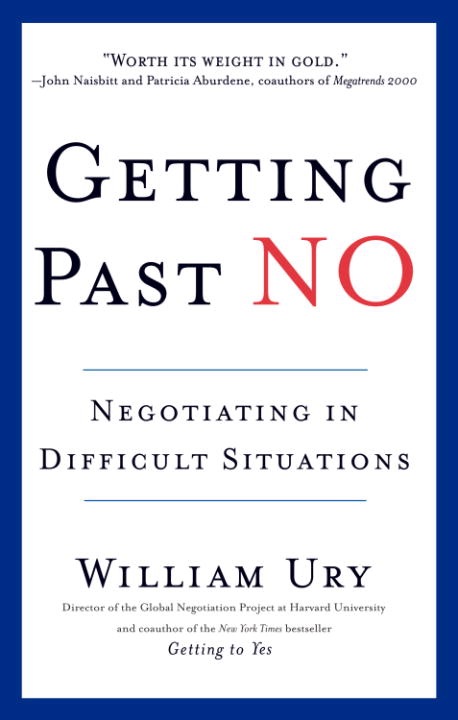
Must We Fight
≈ From memoryTrue negotiation isn't about winning a battle of wills; it's about transforming a conflict from a zero-sum confrontation into a collaborative problem-solving journey.
In one sentence
Negotiation is not a game of "winning" against an opponent, but a process of "winning with" a partner by shifting the focus from positions to interests and from competition to collaboration.
Why read this (and who it's for)
Most people approach negotiation as a tactical skirmish—a way to get what they want while giving up as little as possible. This creates a "win-lose" dynamic that often leaves both parties feeling resentful and creates long-term friction.
This book is for anyone who finds themselves in recurring conflicts—whether in high-stakes business deals, labor disputes, or intimate personal relationships—where the current "fighting" style is yielding diminishing returns. After reading this, you will be able to identify the underlying interests behind a "no," de-escalate heated emotions, and engineer "win-win" agreements that actually stick.
The big idea
William Ury argues that our greatest failure in negotiation is our inability to see the other side's perspective as a valid starting point for a solution. We often view the other person as an obstacle to be overcome rather than a partner whose needs must be understood. This creates a "fixed-pie" mentality where we assume that for me to gain, you must lose.
The core thesis is that collaboration is a skill, not a personality trait. By shifting the perspective from "Me vs. You" to "Us vs. The Problem," we can unlock hidden interests. Ury posits that most conflicts are not about the surface-level demands (positions) but about the underlying needs, fears, and desires (interests). When we stop fighting over positions, we can start designing solutions that satisfy both parties' underlying interests.
Key ideas
The Difference Between Positions and Interests
- What it is: A "position" is what someone says they want (e.g., "I want a 20% raise"). An "interest" is why they want it (e.g., "I need to feel valued and secure in my career path").
- Why it matters: If you only negotiate positions, you hit a wall of "no." If you identify interests, you find a dozen different ways to satisfy the underlying need without necessarily granting the specific demand.
- In the book: Ury illustrates this by showing how two people might argue over a piece of fruit; one wants the apple for its nutrients, the other for its crunch. If they only argue over the apple, they fail. If they identify the interest, they can find other ways to satisfy those needs.
The Power of "The Other Side"
- What it is: This is the practice of actively seeking to understand the other person's perspective, fears, and constraints before attempting to influence them.
- Why it matters: You cannot solve a problem you don't fully understand. By truly empathizing with the other side's "why," you can predict their reactions and identify where their interests might overlap with yours.
- In, the book: Ury emphasizes that "the other side" is not an enemy to be defeated, but a source of information. Understanding their constraints allows you to craft a solution that is actually viable for them to accept.
Moving from "Me vs. You" to "Us vs. The Problem"
- What it is: A cognitive shift where the negotiator and the counterpart join forces to tackle a common obstacle.
- Why it matters: When you are fighting each other, you are both defensive. When you are fighting a problem together, you are both proactive. This shifts the dynamic from adversarial to collaborative.
- In the book: Ury uses the metaphor of a "joint venture." Instead of arguing over who gets the bigger slice of the pie, the parties work together to bake a larger pie.
The Role of Emotions in Negotiation
- What it is: Emotions are not distractions; they are data points. They reveal what the other party cares about most.
- Why it matters: If you ignore the anger or fear in a negotiation, you miss the most important clues about their underlying interests. Validating emotions can de-escalate a situation and open the door to rational discussion.
- In the book: Ury explains that acknowledging a person's feelings (e.g., "I can see how frustrating this delay has been for you") can lower their defenses and make them more willing to listen.
Creating "Win-Win" Solutions
- What it is: A solution where both parties' core interests are met, even if their initial positions were incompatible.
- Why it matters: Win-win isn't about "splitting the difference" (which is just a compromise where both lose a little). It's about finding a creative "third way" that satisfies both parties' needs.
- In the book: Ury highlights that a true win-win often requires "expanding the pie"—finding things that are low-cost to one party but high-value to the other.
Frameworks & tools
The Interest-Based Negotiation Framework
When you find yourself stuck in a stalemate, use this four-step process to pivot:
- Identify the Position: Write down what the other person is demanding.
- Ask "Why?": Ask open-ended questions to uncover the underlying interests (e.g., "What would that solve for you?" or "What is the most important part of this for your team?").
- Map the Interests: List their interests vs. your interests. Look for the "Overlaps" (shared goals) and "Trade-offs" (things you can give that they value more than you do).
- Brainstorm Options: Generate 5-10 ways to satisfy those overlapping interests without necessarily agreeing to their initial position.
The "Us vs. The Problem" Pivot
Use this script/mental model to change the room's energy:
- Acknowledge the Conflict: "It seems like we are at an impasse regarding [Position X]."
- The Pivot: "I'd like to suggest we take a step back. I think we both want [Shared Goal, e.g., a successful project/a safe environment]. Can we look at this as a joint problem to solve together?"
- The Collaborative Inquiry: "What would it take for you to feel confident that [Shared Goal] is being met?"
Memorable examples & stories
The Orange Quarrel
Two sisters are fighting over the last orange in the kitchen. They argue until they are both exhausted. Finally, they agree to split it in half. When they get it home, they peel it and find it's mostly pith. One sister wanted the juice to make a smoothie; the other wanted the peel to bake a cake. If they had asked "Why?" first, they both would have had 100% of what they needed. Lesson: Always ask "Why?" before assuming a "No" is final.
The Labor Dispute
Ury discusses cases where unions and management were locked in a stalemate over wages. By moving away from "how much money" (position) to "job security and dignity" (interests), they were able to find creative solutions involving training and benefits that didn't require the same level of immediate cash outlay. Lesson: Look for the "hidden" interests that aren't tied to a specific number.
The "Third Way" in Procurement
A story of a buyer and a seller who couldn't agree on a price. The buyer wanted a lower price; the seller wanted a higher margin. By looking at the delivery schedule and payment terms, they found a way for the seller to get a higher total value while the buyer got a lower per-unit price. Lesson: If you can't agree on the "What," negotiate the "How" or the "When."
Key quotes
"The most important thing you can do in a negotiation is to listen. You cannot solve a problem you do not understand." (Paraphrased) Why it matters: Listening is the diagnostic tool of negotiation; it reveals the hidden interests.
"Stop fighting against the person and start fighting for the solution." (Paraphrased) Why it matters: This shifts the psychology from competition to cooperation.
"Negotiation is not about winning; it's about creating a sustainable agreement that both sides can live with." (Paraphrased) Why it matters: A "win" that leaves the other side resentful is a long-term loss.
How to apply it
This week
- The "Why" Drill: The next time someone makes a request or a demand (even a small one, like "Can you do this by Friday?"), don't just say yes or no. Ask, "What's the main priority for you on this?" to uncover their interest.
- Active Listening Audit: In your next meeting, spend the first 10 minutes only asking questions. Do not offer your own opinion until you can summarize their position and interests to their satisfaction.
Ongoing
- The Interest Map: Before every important meeting, write down three things you want (Positions) and three reasons why you want them (Interests). Then, try to guess three of their Interests.
- The "Us" Language: Consciously replace "I want" and "You want" with "How can we..." and "What if we..." in your collaborative discussions.
Common pitfalls
- The "Nice" Trap: People often confuse being "nice" with being "collaborative." You can be firm on your interests while being respectful of theirs. Collaboration is not about giving in; it's about finding a better way to get what you need.
- The Speed Trap: Because collaboration requires deep listening and exploration, it takes more time upfront. Many people fail because they try to force a "win-win" in a 5-minute conversation when it requires a 50-minute deep dive.
- The Assumption of Malice: We often assume the other side is being difficult on purpose. Ury reminds us that most people are simply trying to protect their own interests. Assume they are motivated by their own needs, not by a desire to hurt you.
Connects to
- Getting to Yes (Fisher & Ury): The foundational text for interest-based negotiation. Ury’s work builds on and expands these principles into more complex, emotional, and interpersonal dynamics.
- Never Split the Difference (Chris Voss): While Ury focuses on collaborative "win-win" frameworks, Voss focuses on tactical empathy and "getting to yes" in high-stakes, often more adversarial, environments. They complement each other by providing both the philosophy (Ury) and the tactics (Voss).
If you remember only three things
- Positions are the "What"; Interests are the "Why." Always dig for the "Why."
- Shift the frame: Move from "Me vs. You" to "Us vs. The Problem."
- Listen for data: Use emotions and objections as clues to find out what the other side truly values.
Internalize it
-
Reflection questions
- In my last difficult conversation, did I listen to understand, or did I listen to find a gap where I could insert my own point?
- What is a "position" I am currently holding that might be blocking me from seeing a creative "interest-based" solution?
- Who is the hardest person for me to negotiate with right now? What might be their underlying fear or need that I haven't acknowledged yet?
-
Flashcards Q: What is the difference between a position and an interest? A: A position is what someone wants (the "what"); an interest is the underlying reason why they want it (the "why").
Q: How do you shift a negotiation from "Me vs. You" to "Us vs. The Problem"? A: By identifying a shared goal and framing the conflict as a mutual obstacle to be solved together.
Q: Why is it important to acknowledge the emotions of the other party? A: Emotions provide data about what the other party cares about most; acknowledging them de-escalates tension and builds trust.
Q: What is the "Orange Quarrel" lesson? A: That two people can want different things from the same object; asking "Why?" helps identify those different needs.
Q: What is the goal of a "Win-Win" solution? A: To find a "third way" that satisfies the underlying interests of both parties, rather than just splitting the difference.
Fidelity note
I have a high level of confidence in the core principles of this summary (Interest-based negotiation, Positions vs. Interests, and the "Us vs. The Problem" framework). These are the hallmarks of William Ury's work and his specific contributions to the field of negotiation. I am confident in the "Orange Quarrel" example as it is a staple of his teaching. However, because this is a summary of a specific book rather than a direct transcript, some of the specific phrasing of his "scripts" may be paraphrased to be more actionable for a modern reader.