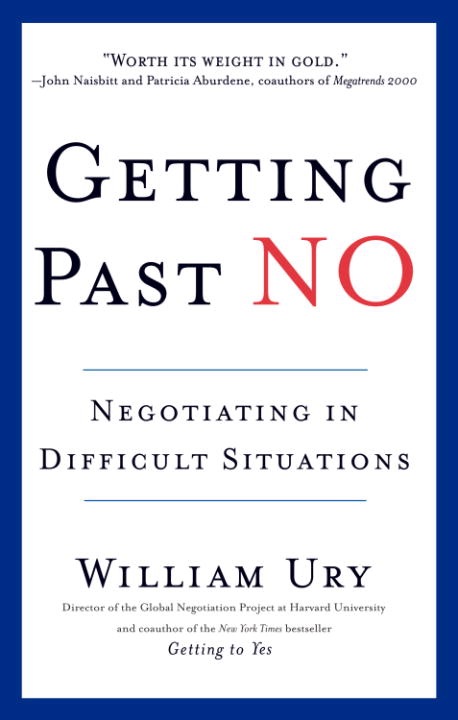
The Power of a Positive No
≈ From memoryA 'No' is not a wall meant to end a conversation; it is a boundary designed to protect your interests and create the space necessary for a meaningful 'Yes'.
In one sentence
Mastering the art of the "Positive No" allows you to set firm boundaries without burning bridges, transforming a defensive rejection into a strategic tool for self-advocacy and better deal-making.
Why read this (and who it's for)
Most people struggle with negotiation because they are afraid of conflict or, conversely, they are too aggressive in their demands. This book solves the "people-pleaser" trap—the tendency to say "Yes" to things you don't want to do simply to avoid immediate friction.
This is for anyone who finds themselves overcommitted, undervalued, or pressured into concessions they regret. After reading this, you will be able to:
- Identify the difference between a "No" that shuts down a relationship and a "No" that protects your integrity.
- Use "No" as a tactical pause to gain clarity.
- Frame rejections in a way that keeps the door open for future collaboration.
The big idea
William Ury, a master negotiator who co-authored Getting to Yes, argues that our greatest weakness in negotiation is often our inability to say "No." We view "No" as a failure—a collision of wills—rather than a necessary boundary. Because we fear the discomfort of saying "No," we often agree to things that compromise our values, our time, and our goals.
The central thesis is that "No" is a tool for self-preservation. When you say "Yes" before you are ready, you aren't being "nice"; you are being dishonest with yourself and the other party. A "Positive No" is a way to protect your interests while maintaining the relationship. It creates a "buffer zone"—a space where you can think, breathe, and evaluate options without the crushing weight of immediate pressure.
Ury argues that by mastering three types of "No"—Not Yet, For Now, and But...—you shift from a reactive state (responding to others' demands) to a proactive state (defining your own boundaries). This isnally empowers you to negotiate from a position of strength, ensuring that when you finally do say "Yes," it is a choice made with clarity, not a concession made under duress.
Key ideas
The Power of the Pause (No, Not Yet)
What it is — This is the "No" of time. It is a refusal to commit to an immediate answer, giving you the space to process information and consult with your team or your conscience. Why it matters — Most people feel pressured to give an answer on the spot because they fear looking unprepared. However, saying "I need to think about this" protects you from making impulsive concessions and allows you to evaluate the true cost of a "Yes." In the book — Ury emphasizes that "No, Not Yet" is your most powerful shield against high-pressure sales tactics or emotional appeals. It shifts the power dynamic by removing the "urgency" the other party is trying to manufacture.
Boundaries as Bridges (No, For Now)
What it is — This is a "No" that defines a limit on scope, resources, or time. It isn't a rejection of the person; it is a declaration of what is currently possible within your constraints. Why it matters — If you don't set boundaries, people will continue to overstep them until you burn out or become resentful. By saying "No" to a specific request while acknowledging the goal, you preserve the relationship while protecting your capacity. In the book — Ury illustrates this by showing how to say: "I can't do X right now because I am committed to Y, but I can do Z." This keeps the conversation moving toward a solution rather than hitting a dead end.
The Positive No (No, But...)
What it is — This is the ultimate evolution of refusal: rejecting the proposal while affirming the relationship. It follows the formula: "I cannot do [X], but I can do [Y]." Why it matters — It transforms a rejection into an invitation to collaborate. Instead of being a "No" person, you become a "Problem-Solving" person. You aren't saying "No" to the other person; you are saying "No" to an unworkable solution. In the book — Ury teaches that this requires identifying the underlying interest. If someone asks for a discount (the position), and you say no, you must offer an alternative that addresses their actual need (e.g., a longer payment plan or a bulk order).
Separating People from Problems
What it is — A core principle from Getting to Yes applied here: the person asking for something isn't your enemy; the problem of "how to get this done" is what you are solving together. Why it matters — When we say "No," we often feel like we are attacking the other person. By framing the "No" as a logistical necessity rather than a personal slight, you lower their defenses and keep them engaged in the negotiation. In the book — Ury argues that a "Positive No" is only possible when you view the other party as a partner in finding a viable path forward, not an adversary to be defeated.
The Importance of the Walk Away
What it is — Knowing your BATNA (Best Alternative to a Negotiated Agreement) and being willing to walk away from a deal that violates your core interests. Why it matters — If you aren't willing to say "No" to a bad deal, you have no power to negotiate a good one. The ability to walk away is the ultimate source of leverage. In the book — Ury stresses that you must know your "walk-away point" before you enter the room. If you don't know what you won't accept, you cannot effectively say "No" when the pressure mounts.
Frameworks & tools
The Three Types of "No"
When faced with a request or proposal that feels overwhelming, uncomfortable, or impossible, categorize your response into one of these three buckets:
-
The "Not Yet" (Buying Time): Use this when you feel pressured to decide immediately.
- Script: "I need some time to think about this/review the details before I can give you a firm answer."
- Action: Physically step away or ask for a follow-up meeting in 24–48 hours.
-
The "For Now" (Setting Boundaries): Use this when you want to help, but cannot do what is being asked of you.
- Script: "I can't commit to [Request] right now because my current priorities are [X and Y]. However, I can offer [Alternative]."
- Action: Clearly state your current capacity limits.
-
The "But..." (The Positive No): Use this when you want to reject a specific proposal while keeping the relationship intact.
- Script: "I can't do [X] because of [Reason], but I can offer [Alternative] instead."
- Action: Always provide at least one viable alternative that addresses their underlying interest.
The Boundary-Setting Checklist
Before saying "Yes" to any new commitment, run through this mental checklist:
- The Interest Check: What is the other person really trying to achieve? (Not just what they are asking for).
- The Cost Check: What will I have to give up (time, energy, money) if I say "Yes" to this?
- The Integrity Check: Does saying "Yes" to this align with my long-term goals and values?
- The Alternative Check: If I say "No," what is a helpful alternative I can offer that still addresses their interest?
Memorable examples & stories
The High-Pressure Sales Pitch
Ury describes scenarios where salespeople use "scarcity" or "urgency" to force a quick decision. By using the Not Yet (the power of the pause), you break the salesperson's spell. When you say, "I need to think about this," you reclaim your agency and allow yourself to see the flaws in their offer that were hidden by the rush of the moment. Lesson: Urgency is often a tactic; silence is your defense.
The Over-Extended Manager
Ury shares the story of managers who say "Yes" to every project because they want to be seen as "team players." Eventually, they become bottlenecks or burn out. By using For Now (setting boundaries), these managers learn to say: "I can't take on this new project without dropping one of my current priorities. Which would you like me to deprioritize?" Lesson: A "No" to a task is often a "Yes" to your own sanity and the quality of your work.
The Hostage Negotiator’s Perspective (Implicit)
While not always a specific hostage story, Ury draws on his experience in high-stakes conflict where "No" is a survival tool. In these situations, a "No" isn't an ending; it's a way to establish the boundaries of what is possible. It creates a safe space for communication to continue without immediate escalation. Lesson: Boundaries are what make continued conversation possible.
Key quotes
"A 'No' is not a wall; it's a boundary." (Paraphrased) Why it matters: This shifts the mental model of "No" from a destructive act to a constructive, protective one.
"The hardest part of saying 'No' is often the fear of what might happen if we don't." (Paraphrased) Why it matters: It acknowledges that our hesitation comes from an imagined social consequence, not a logical reality.
"A positive 'No' means rejecting the offer but not the person." (Paraphrased) Why it matters: This is the core of maintaining relationships while protecting your interests.
How to apply it
This week
- The 24-Hour Rule: For every request for a commitment (a meeting, a project, a favor), wait at least 24 hours before saying "Yes." Practice saying: "Let me check my calendar and get back to you tomorrow."
- Identify One Boundary: Choose one area where you have been saying "Yes" out of guilt (e.g., taking on extra work, attending unnecessary meetings). Prepare a "For Now" script for the next time that request arises.
- The "But..." Practice: The next time you have to say no to someone, don't just stop at the "No." Force yourself to offer one alternative ("I can't do X, but I can do Y").
Ongoing
- Audit your "Yes" list: Once a month, look at your commitments. Ask: "Which of these did I say 'Yes' to because I wanted to, and which did I say 'Yes' to because I was afraid to say 'No'?"
- The Interest Inquiry: Before responding to any request, ask yourself: "What is the underlying interest here?" This helps you craft a "Positive No" that actually solves their problem.
- Practice the Pause: Make it a habit to pause for three seconds before responding to any high-pressure question. Use that silence to decide if your first instinct is a "Yes" of convenience or a "Yes" of conviction.
Common pitfalls
- The "No" without the "But": The biggest mistake is saying "No" and then stopping. This leaves the other person feeling rejected and creates a dead end. Always try to provide an alternative.
- Being Too Aggressive: Sometimes people interpret a firm boundary as a personal attack. Ensure your tone remains collaborative. You are rejecting the proposal, not the person.
- The "Soft No" Trap: Being so afraid of saying "No" that you say "Maybe," "I'll try," or "I'll see." These are actually just "Yeses" in disguise. They lead to disappointment for both parties because they don't set a clear boundary.
- Forgetting the Walk Away: People often forget that "No" is also a valid answer when a deal simply doesn't work. Don't feel obligated to find a middle ground if the middle ground violates your core interests.
Connects to
- "Getting to Yes" by Roger Fisher and William Ury: The foundational text for interest-based negotiation; The Power of a Positive No is essentially the "No" chapter expanded into a full philosophy.
- "Never Split the Difference" by Chris Voss: While Ury focuses on boundaries and "Positive Nos," Voss focuses on tactical empathy and labels. Both are useful for understanding how to navigate high-stakes tension without giving away too much.
- "Boundaries" by Henry Cloud and Dale Hawkins: Though a psychological/self-help book rather than a negotiation book, it provides the emotional framework for why setting boundaries is necessary for mental health and healthy relationships.
If you remember only three things
- A "No" is a boundary, not a wall—it protects your interests so that your "Yes" actually means something.
- Use the Not Yet (time), For Now (limits), and But... (alternatives) to frame your refusals.
- Always separate the person from the problem; you are rejecting a proposal, not a human being.
Internalize it
Reflection questions
- What is one thing I have said "Yes" to in the last month that I actually wanted to say "No" to? What was I afraid would happen if I refused?
- In my current professional role, what are my non-negotiable boundaries regarding time and energy?
- When I say "No," do I provide an alternative? If not, how can I practice the "But..." technique this week?
Flashcards
Q: What is the primary purpose of a "No" according to William Ury? A: To create a boundary that protects your interests and creates space for a meaningful "Yes."
Q: What are the three types of "No" described in the book? A: Not Yet (buying time), For Now (setting limits), and But... (the Positive No).
Q: How do you turn a "No" into a "Positive No"? A: By rejecting the proposal but affirming the relationship, usually by offering an alternative ("I can't do X, but I can do Y").
Q: Why is it important to have a "Not Yet" response? A: It breaks the pressure of immediate decision-making and allows you to evaluate the true cost of a commitment.
Q: What does it mean to separate the person from the problem? A: It means viewing the other party as a partner in solving a logistical issue rather than an adversary to be defeated.
Q: What is the "Walk Away" point? A: Knowing your BATNA (Best Alternative to a Negotiated Agreement) and being willing to leave a negotiation if your core interests are not met.