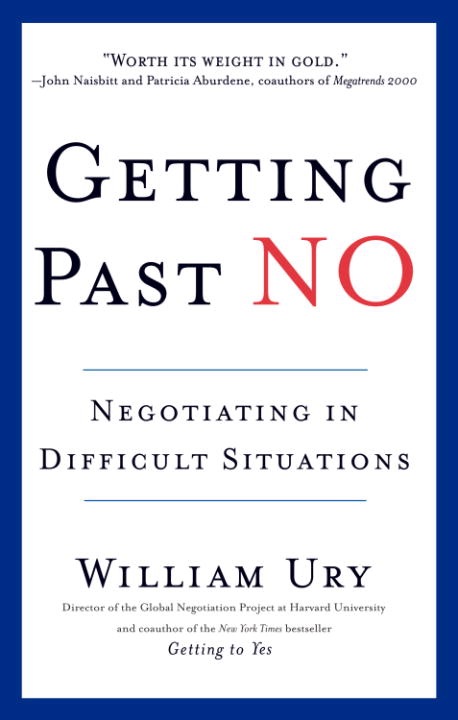
Getting disputes resolved
≈ From memorySuccessful negotiation is not a battle to be won, but a collaborative process of expanding the pie to find mutual gains while maintaining the integrity of the relationship.
In one sentence
Negotiation is a creative, collaborative process where the goal is to move from a "win-lose" zero-sum mentality to a "win-win" integrative solution by identifying underlying interests rather than clinging to rigid positions.
Why read this (and who it's for)
Most people view negotiation as a high-stakes confrontation where you must "win" at the other person's expense. This creates a defensive atmosphere that kills creativity and destroys relationships. This book is for anyone—from managers and lawyers to spouses and coworkers—who finds themselves stuck in "deadlock" because both sides are digging in their heels. After reading this, you will be able to stop reacting to what people say they want (positions) and start uncovering what they actually need (interests), allowing you to find "Zone of Possible Agreement" (ZOPA) solutions that satisfy both parties.
The big idea
The central thesis of Ury’s work is that most disputes are not actually about the "stuff" being argued over; they are about unfulfilled needs, fears, and values. When we argue over a specific price, a deadline, or a policy, we are usually arguing over a position. Positions are the "what"—the demands we put forward to protect ourselves. Interests are the "why"—the underlying reasons for those demands.
Ury argues that because positions are often mutually exclusive (you can't have both $100 and $50 for the same item), they lead to stalemate. However, interests are often compatible. By shifting the conversation from "What do you want?" to "Why is that important to you?", you open up a space where both parties can get what they need. This requires a shift from adversarial thinking (how do I beat them?) to collaborative thinking (how can we solve this together?).
Key ideas
The Difference Between Positions and Interests
- What it is — A position is a concrete demand (e.g., "I want a 20% raise"). An interest is the underlying motivation (e.g., "I want to feel valued and secure in my career").
- Why it matters — If you negotiate positions, you hit a wall. If you negotiate interests, you find a dozen different ways to satisfy the underlying need (e.g., a title change, more autonomy, or a performance bonus).
- In the book — Ury illustrates this by showing how two people might argue over the location of a thermostat: one wants it at 70 degrees, the other at 65. The position is the temperature; the interests are "I want to be comfortable" and "I want to save on heating costs." The solution is to keep the thermostat at 68 and provide a space heater for the cold person.
The "Zone of Possible Agreement" (ZOPA)
- What it is — The ZOPA is the overlap between what you are willing to give up and what the other party is willing to accept.
- Why it matters — Knowing the ZOPA prevents you from making "bad" deals (where you give away too much) or "impossible" deals (where the other side's minimum is higher than your maximum).
- In the book — Ury emphasizes identifying the "reservation point"—the absolute limit of what you will accept. By knowing your own limit and estimating theirs, you can navigate the space where a deal is actually possible.
The Power of "Going to the Balcony"
- What it is — A mental technique where you emotionally and mentally step away from the heat of the negotiation to observe the interaction objectively.
- Why it matters — When we are "in the heat," our emotions cloud our judgment and our reactions become reflexive. Stepping to the balcony allows you to see the patterns of the interaction and choose your next move rather than reacting to a provocation.
- In the book — Ury uses the metaphor of a literal balcony in a theater. When you feel your pulse rising or the other person getting aggressive, you "go to the balcony" to see the "dance" of the negotiation without being swept up in it.
Active Listening as a Strategic Tool
- What it is — Listening not just to hear words, but to understand the underlying emotions and needs of the other party.
- Why it matters — People who feel heard are more likely to lower their guard. Active listening isn't about agreeing; it's about accurately reflecting the other person's reality so they feel understood.
- In the book — Ury suggests using "mirroring" and "labeling." Instead of saying "I understand," say "It sounds like you're worried about the timeline." This forces the other and allows them to clarify their position.
Expanding the Pie (Integrative Bargaining)
- What it is — The practice of looking for "non-correlated" items to trade.
- Why it matters — Most people think negotiation is a zero-sum game (my gain is your loss). However, if you find something that is cheap for you to give but valuable to them, you can "expand the pie."
- In the book — Ury explains that if you are stuck on price, stop talking about price. Ask, "What else matters to you?" Maybe they care about delivery speed, warranty, or payment terms. By trading a "low-cost" concession for a "high-value" gain, you create a win-win.
The Importance of Relationship and Trust
- What it is — Recognizing that the relationship is the negotiation.
- Why it matters — If you "win" a negotiation but destroy the relationship, you have lost in the long term. Especially in ongoing business relationships, the "how" matters as much as the "what."
- In the book — Ury argues that you must treat the other party as a partner in problem-solving, not an opponent to be defeated. This involves building "relational capital" through empathy and honesty.
Frameworks & tools
The "Going to the Balcony" Protocol
Use this when you feel yourself becoming defensive, angry, or stuck in a loop.
- Pause: Stop speaking immediately.
- Observe: Mentally step back. What is the other person's body language? What is the "vibe" of the room?
- Identify the Pattern: Are they repeating a certain demand? Are they acting out of fear?
- Choose your response: Instead of reacting to the content of their last statement, respond to the underlying emotion or interest you just identified.
The Interest-Based Inquiry (The "Why" Drill)
When a negotiation stalls on a specific demand, use this sequence:
- Acknowledge the Position: "I hear that you want [X]."
- The "Why" Question: "Can you help me understand what that would achieve for you?"
- Identify the Interest: Listen for words like "security," "fairness," "efficiency," or "recognition."
- The Pivot: "If I can't give you [X] exactly, what other ways could I help you achieve [the underlying interest]?"
The Expansion Checklist
When you hit a stalemate, run through this list to find "hidden" value:
- Time: Can we change the deadline?
- Scope: Can we do less for a lower price?
- Terms: Can we change the payment schedule?
- Logistics: Can we change the delivery method?
- Relationship: Can we add a "future" clause (e.g., "If X happens, we will do Y")?
Memorable examples & stories
The Thermostat Conflict
Two roommates argue over the temperature of the living room. One wants it hot; the other wants it cold. They are stuck in a position battle. By identifying the interests—one wants to be cozy, the other wants to save money—they realize they can agree to a middle temperature and the "cold" person can use a blanket. Lesson: Interests are often compatible; positions are not.
The "No" of the Negotiator
Ury discusses how many people fear the word "No." He argues that "No" is often a starting point, not a destination. A "No" usually means "Not that way" or "I don't feel safe with that." Lesson: Treat "No" as an invitation to explore other options, not as a wall.
The High-Stakes Labor Dispute
Ury references cases where unions and management were at a total standstill. By moving away from "How much money?" to "How can we ensure job security for the next decade?", they were able to find creative solutions involving training and investment that didn't require a massive, immediate cash payout. Lesson: Creative solutions live in the "Why," not the "How much."
Key quotes
"The most important thing in any negotiation is to understand the other person's interests, not just their positions." Why it matters: This is the fundamental shift from adversarial to collaborative thinking.
"Go to the balcony. Take a breath. Look at the situation from a distance." (Paraphrased) Why it matters: It provides a mental circuit breaker for emotional reactivity.
"Negotiation is not a battle to be won; it's a problem to be solved." (Paraphrased) Why it matters: It reframes the entire mindset of the negotiator from 'warrior' to 'architect.'
How to apply it
This week
- The "Why" Audit: The next time someone makes a request or a complaint (even a small one, like a spouse asking for the dishes to be done), don't just do it or argue. Ask: "What's the most important thing about that for you?"
- The Balcony Moment: In your next heated meeting or conversation, deliberately pause for 3 seconds before responding. Observe your own physical reaction (tight chest, clenched jaw) and "step to the balcony" before speaking.
- Identify your ZOPA: Pick one ongoing negotiation (a purchase, a project deadline, a chore) and write down your "Reservation Point"—the absolute maximum/minimum you will accept.
Ongoing
- Listen for the "Why": Practice active listening. When someone speaks, try to identify the underlying emotion (fear, pride, urgency) behind their words.
- Expand the Pie: Whenever you hit a "No" on a specific item (like price), immediately pivot to: "What else is important to you that we haven't discussed yet?"
- Maintain the Relationship: Before every negotiation, ask yourself: "How do I want this person to feel about me when this is over?"
Common pitfalls
- The "Nice" Trap: People often confuse being "nice" with being "collaborative." You can be firm on your interests while being respectful of theirs. Collaboration isn't about giving in; it's about finding a better way.
- The "Win-Win" Fallacy: Sometimes, a win-win isn't possible. Ury acknowledges that in some cases, you must be prepared to walk away. Knowing your "Reservation Point" is vital because not every deal is a good deal.
- Over-analyzing the "Why": Don't get so caught up in "Why" that you forget to actually reach an agreement. The goal is still to resolve the dispute, not just to have a deep psychological session with the other party.
Connects to
- Getting to Yes (Fisher & U.ry): This is the foundational text. Getting Disputes Resolved is the practical application of the principles found in Getting to Yes.
- Never Split the Difference (Chris Voss): While Ury focuses on collaborative "Win-Win" outcomes, Voss focuses on tactical empathy and "Getting to Yes" in high-stakes, often more adversarial, commercial environments. They complement each other well.
- Difficult Conversations (Stone,ard, & Patterson): This provides the emotional intelligence framework for the "Why" questions Ury asks you to ask.
If you remember only three things
- Positions are what people say; Interests are what they need.
- Go to the balcony: Step back emotionally to see the "dance" of the negotiation.
- Expand the pie: Stop arguing over one thing; find other things to trade to create a win-win.
Internalize it
-
Reflection questions
- In my last argument, what was the position I took, and what was the interest I was actually trying to protect?
- When I feel myself getting angry in a negotiation, what "balcony" view am I missing?
- What are three things I could offer the other party that cost me very little but would be highly valuable to them?
- How can I change my internal narrative from "I need to win" to "We need to solve this"?
-
Flashcards Q: What is the difference between a position and an interest? A: A position is a specific demand (the "what"); an interest is the underlying need or motivation (the "why").
Q: What does it mean to "Go to the Balcony"? A: It means mentally stepping away from the heat of a conflict to observe the interaction objectively and choose a response rather than reacting emotionally.
Q: What is the "Zone of Possible Agreement" (ZOPA)? A: The area where the interests of both parties overlap—where your minimum acceptable terms meet their maximum acceptable terms.
Q: How do you "Expand the Pie" in a negotiation? A: By identifying non-correlated items (things that are easy for you to give but valuable to them) to trade for the things you want.
Q: Why is "No" often a useful starting point? A: Because "No" usually means "Not that way." It signals a boundary or a fear, which invites you to explore other ways to satisfy the other person's interests.
Fidelity note
This summary is based on William Ury's core principles of interest-based negotiation. I am highly confident in the distinction between positions and interests, the "Balcony" metaphor, and the concept of expanding the pie. I have synthesized the practical applications (the "How-to") based on Ury's standard teaching methodology. Because Ury's work is a continuation of his "Getting to Yes" framework, some specific anecdotes may overlap with his earlier work, but the core philosophy remains consistent.