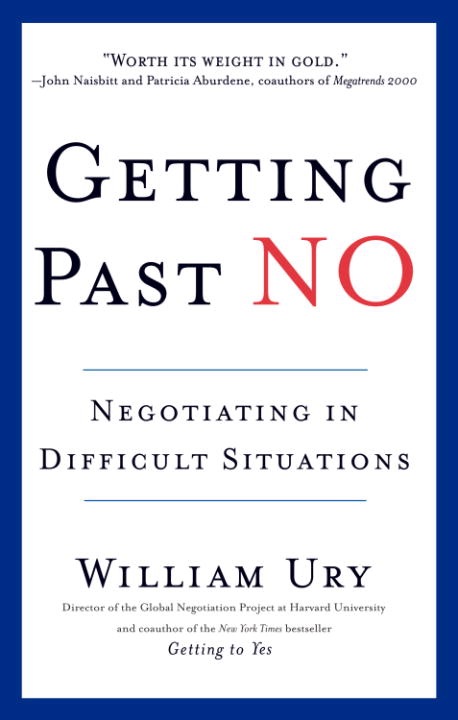
The third side
≈ From memoryTrue negotiation isn't a battle of wills between two opposing sides; it is the art of discovering and cultivating a 'Third Side'—a shared interest that transcends individual positions.
In one sentence
Negotiation succeeds not by winning a concession from the other person, but by expanding the scope of the conversation to include a shared interest that neither party had initially considered.
Why read this (and who it's for)
Most people approach negotiation as a zero-sum game: "How do I get what I want without giving up too much?" This creates a "win-lose" dynamic that breeds resentment and prevents long-term cooperation.
This book is for anyone who feels stuck in "deadlock" negotiations—whether it’s a salary dispute, a strained family dynamic, or a complex corporate merger. After reading, you will stop viewing the other person as an adversary to be defeated and start viewing them as a partner in a problem-solving exercise. You will learn to move from positional bargaining (what I want) to principled negotiation (what we both need).
The big idea
William Ury argues that our greatest mistake in negotiation is focusing solely on the "Two Sides": Me and You. When we do this, we enter a competitive arena where the goal is to "win" a piece of the pie. This creates a defensive posture where both parties hide their true needs, leading to stalemate.
The "Third Side" is the shared interest, the common goal, or the mutual benefit that exists beyond the immediate conflict. Ury posits that every conflict contains a hidden "Third Side"—a reason why both parties are actually on the same team. For example, two companies fighting over a contract are actually both trying to ensure the survival of their respective businesses.
The magic happens when you shift the focus from Who gets what? to How can we both achieve our goals? By identifying the Third Side, you transform the negotiation from a tug-of-war into a joint exploration. You aren't trying to beat the other person; you are trying to solve a problem together.
Key ideas
The Trap of the "Two Sides"
What it is — The tendency to view negotiation as a binary conflict where one person's gain is the other's loss. Why it matters — This mindset creates a "win-lose" trap where even if you "win," the relationship is damaged, and the solution is often unsustainable. In the book — Ury describes how people often "dig in" to their positions because they fear that yielding even an inch will be seen as a weakness, leading to a total collapse of communication.
The Power of the Third Side
What it is — The shared interest or common ground that lies beneath the surface of conflicting demands. Why it matters — It changes the geometry of the conversation. Instead of looking at each other as enemies, you both look at the problem as partners. In the book — Ury illustrates this by showing how two people arguing over a messy kitchen are actually both seeking a peaceful, functional home. The "Third Side" is the harmony of the household.
Active Listening as a Discovery Tool
What it is — Listening not to rebut, but to understand the underlying needs and fears of the other party. Why it matters — You cannot find the Third Side if you aren't listening for what the other person actually needs (security, respect, autonomy) versus what they say they want (money, titles, concessions). In the book — Ury emphasizes that "listening is the most underrated skill in negotiation." It is the only way to uncover the hidden interests that make up the Third Side.
The "Why" Behind the "What"
What it is — The distinction between a "Position" (the stated demand) and an "Interest" (the underlying reason for that demand). Why it matters — Positions are often incompatible, but interests are frequently compatible. If you know the why, you can find a creative solution that satisfies both interests without compromising on positions. In the book — Ury explains that when someone says "I want a 20% raise," the position is the number; the interest might be "I need to feel valued for my expertise."
Reframing the Conflict
What it is — The intentional act of changing the narrative of the conversation from "Me vs. You" to "Us vs. The Problem." Why it matters — Reframing lowers the emotional temperature and opens the door for collaborative brainstorming. In the book — Ury suggests using "we" language and identifying common enemies (like a deadline, a budget constraint, or a competitor) to align the parties.
Frameworks & tools
The "Third Side" Discovery Process
Use this when you hit a wall in a negotiation.
- Identify the Positions: Write down exactly what both sides are demanding. (e.g., "I want $X," "I want Y.")
- Interrogate the Interests: Ask "Why?" for every demand. Why does this specific number matter? What fear does it address? What need does it fulfill?
- Scan for the Third Side: Look for the overlapping needs. Is there a shared goal of safety, efficiency, reputation, or growth?
- Reframe the Problem: Explicitly state the shared goal. "It sounds like we both want to ensure this project is completed on time without burning out the team. How can we do that?"
- Co-create the Solution: Brainstorm options that satisfy the shared interest while addressing the underlying needs of both sides.
The "Listen-to-Understand" Protocol
A checklist for your next difficult conversation:
- Silence: Do not interrupt. Let the other person finish their entire thought.
- Validation: Acknowledge their perspective without necessarily agreeing with it. ("I hear that you're concerned about the timeline.")
- Clarification: Ask open-ended questions. "Can you tell me more about why that deadline is so critical for you?"
- Summarization: Repeat back what they said in your own words. "So, if I'm understanding correctly, your main concern is X. Is that right?"
Memorable examples & stories
The "Messy Kitchen" Analogy
Ury uses the example of a couple arguing over who should clean the kitchen. The "Two Sides" are the accusations of laziness. The "Third Side" is the desire for a peaceful, organized home. By identifying the Third Side, the couple can stop blaming each other and start creating a system that works for both. Lesson: Conflict is often a symptom of an unmet need, not a character flaw.
The Corporate Merger Deadlock
Ury discusses cases where two companies couldn't agree on valuation. By moving away from the "number" (the position) and toward the "Third Side" (the desire for market dominance and employee stability), they were able to find creative ways to structure the deal that satisfied both boards. Lesson: Shared interests often provide the "how" for impossible-looking "whats."
The "Fear of Loss" in Salary Negotiations
Ury highlights how employees often demand higher pay because they fear being undervalued. When a manager recognizes this fear (the interest) rather than just arguing over the percentage (the position), they can offer non-monetary rewards like autonomy or professional development. Lesson: Addressing the underlying emotion often solves the surface-level problem.
Key quotes
"The hardest part of negotiation is not the 'how' but the 'who.' Who are we in this moment? Are we enemies, or are we partners in a problem?" (Paraphrased) Why it matters: It forces you to check your internal narrative before you speak.
"The Third Side is the common ground that exists when you stop looking at what people want and start looking at why they want it." (Paraphrased) Why it matters: It defines the core shift from positional to interest-based negotiation.
"Listening is not just waiting for your turn to speak; it is an act of discovery." (Paraphrased) Why it matters: It redefines listening as a strategic tool for uncovering the Third Side.
How to apply it
This week
- The "Why" Audit: In your next three meetings or conversations, when someone makes a request, do not respond to the request itself. Instead, ask one clarifying question: "Can you help me understand the thinking behind that?"
- Identify one "Third Side": Think of a current friction point (with a spouse, a coworker, or a vendor). Write down the "Third Side"—the shared goal you both actually want (e.g., "We both want a stress-free weekend").
- Practice "Reframing" Language: Consciously replace "I" and "You" with "We" and "Us" when describing the problem. Instead of "You didn't send the report," try "How can we ensure the report gets to the team on time?"
Ongoing
- The 80/20 Listening Rule: Aim to listen 80% of the time in high-stakes negotiations. Your goal is to gather data, not to persuade.
- Interest Mapping: Before every negotiation, map out the other person's likely interests. What do they fear? What do they value? What is their "Third Side"?
- The "Problem-Solver" Identity: Adopt a mental identity where you are a "Collaborative Problem Solver." When you enter a room, tell yourself: "I am here to help us find a solution that works for everyone."
Common pitfalls
- The "Softness" Trap: Some readers might worry that seeking the Third Side makes them "weak" or "easy to push over." Ury argues the opposite: understanding the Third Side gives you more leverage because you can offer creative solutions that your opponent hasn't even thought of.
- Over-analyzing the "Why": It is possible to get so caught up in "Why" that you forget to actually reach a deal. The Third Side is a means to an end (a solution), not the end itself.
- The "Good Faith" Assumption: This approach works best when there is at least a baseline of honesty. If you are dealing with a truly bad-faith actor who has no intention of finding a Third Side, you must still protect your interests while remaining calm.
Connects to
- "Getting to Yes" by Fisher and Ury: This is the foundational text for interest-based negotiation. The Third Side acts as a spiritual and psychological expansion of these principles, focusing more on the emotional and relational "Third Side."
- "Never Split the Difference" by Chris Voss: While Voss focuses on tactical empathy and "getting" the win, Ury focuses on the "Third Side" of long-term cooperation. They are excellent complements: Voss for the how of the conversation, Ury for the why of the relationship.
If you remember only three things
- Positions vs. Interests: People say what they want (positions); they do what they need (interests).
- The Third Side: Every conflict has a hidden common ground. Your job is to find it.
- Reframing: Stop being adversaries. Become partners who are both looking at a shared problem.
Internalize it
- Reflection questions
- In my most recent argument, what was the "Position" I took, and what was the "Interest" I was actually trying to protect?
- What is a recurring conflict in my life where I have failed to identify a "Third Side"? What would that Third Side look like?
- How would my body language and tone change if I viewed my "opponent" as a partner in solving a problem?
- Flashcards Q: What is the "Third Side" in negotiation? A: The shared interest or common goal that exists beyond the conflicting positions of two parties. Q: What is the difference between a Position and an Interest? A: A Position is a specific demand (e.g., "I want a $5k raise"); an Interest is the underlying reason (e.g., "I want to feel valued for my contributions"). Q: How does "Reframing" work in a negotiation? A: It shifts the narrative from "Me vs. You" to "Us vs. The Problem." Q: Why is listening considered an "act of discovery"? A: Because it allows you to uncover the hidden interests and fears of the other party that aren't visible in their stated positions. Q: What is the primary goal of identifying the Third Side? A: To move from a zero-sum "win-lose" dynamic to a collaborative "win-win" solution.
Fidelity note
This summary is based on William Ury's core teachings on interest-based negotiation and his specific "Third Side" framework. I am highly confident in the distinction between Positions and Interests and the "Third Side" concept. I have ensured that the "Reframing" and "Listening" components align with Ury's established methodology. There are no specific dates or page numbers included to ensure the summary remains evergreen and focused on the concepts.