Chomsky on miseducation
≈ From memoryEducation in modern industrial societies is not designed to foster independent thought, but to produce obedient subjects who accept the status quo of the prevailing power structure.
In one sentence
The modern education system functions as a mechanism of social control, prioritizing the production of compliant workers and consumers over the cultivation of autonomous, critical thinkers.
Why read this (and who it's for)
This book is for anyone who feels a sense of "intellectual malaise"—the feeling that their thoughts are being steered by invisible forces. It solves the problem of unconscious conformity. By deconstructing how our very capacity for thought is shaped by institutional environments, it allows you to identify the "invisible" scripts of authority. After reading, you will be able to spot the difference between a genuine inquiry and a "manufactured" consensus.
The big idea
Chomsky argues that the primary function of schooling is not to transmit "knowledge" in a neutral sense, but to socialize individuals into a specific, pre-determined social order. He views the school system as a "factory" for the production of human resources. The goal is to ensure that the individual becomes a "predictable" element of the social machine—someone who can follow instructions, tolerate hierarchy, and accept the prevailing ideology without questioning the underlying power dynamics.
The logic is rooted in the critique of "instrumental" education. Instead of asking, "How can I think for myself?" the system asks, "How can I be useful to the current system?" This creates a profound psychological effect: students are taught to view their own minds as tools for external goals rather than as independent centers of inquiry. By the time a student graduates, they have been conditioned to accept the "official" version of reality as the only reality, effectively narrowing their cognitive horizon to fit the needs of the state and the economy.
Key ideas
The Manufacture of Consent
- What it is — The process by which a population is conditioned to accept policies and social structures that are not in their own best interest.
- Why it matters — It explains why people often support systems that oppress them; the "consent" is not a choice, but a result of a curated information environment. , In the book — Chomsky points to how media and education work in tandem to create a "common sense" that serves the interests of the ruling elite.
The Role of "Hidden Curriculum"
- What it is — The unstated lessons taught in schools, such as punctuality, obedience to authority, and the acceptance of hierarchy.
- Why it matters — These are often more important than the actual subjects taught (math, history, etc.) because they shape the student's personality and social role.
- In the book — He highlights how the physical structure of a classroom—rows of desks, bells, and strict monitoring—trains children to accept a life of supervised labor.
The Narrowing of Inquiry
- What it is — The systematic limitation of what is considered "valid" knowledge or "acceptable" inquiry.
- Why it matters — If you are only taught to ask "How?" (How do I do this task?) rather than "Why?" (Why is this task necessary?), your ability to challenge the system is structurally inhibited.
- In the book — Chomsky discusses how education focuses on "technical" skills that make a person a better cog in the machine, rather than "critical" skills that allow them to see the machine itself.
The Institutionalization of Thought
- What it is — The way schools turn private, individual thought into a public, standardized performance.
- Why it matters — It creates a "standardized" mind. When everyone is taught to think in the same way, the diversity of human experience is flattened into a manageable, uniform data set.
- In the book — He critiques the way standardized testing and uniform curricula prioritize "correct" answers over the messy, creative process of genuine discovery.
The Socialization of Passivity
- What it is — The training of students to accept the "given" world as a finished product rather than a human construction.
- Why it matters — If you believe the world is "just the way it is," you will never try to change it. Education often reinforces the idea that the current social order is natural and inevitable.
- In the book — Chomsky argues that the school system discourages the "rebellious" impulse of the child, which is the natural precursor to independent adult thought.
Frameworks & tools
The "Why" vs. "How" Audit
Use this to evaluate any educational program, job training, or information source.
- Identify the "How": What skills is this teaching? (e.g., "How to write a business plan," "How to use this software.")
- Extract the "Why": Ask, "Who benefits from this skill? What status quo does this skill maintain?"
- The Conflict Test: If the "Why" is never addressed, the training is likely a form of social conditioning rather than true education.
The Authority Awareness Checklist
When you find yourself accepting a "fact" or a "norm," run through these three filters:
- Source: Who is providing this information? What is their institutional goal?
- Incentive: Does this information make it easier for the system to run smoothly?
- Alternative: What would happen if this "fact" were ignored? Who would be inconvenienced?
Memorable examples & stories
The Factory Model of Schooling
Chomsky draws parallels between the industrial revolution and the modern school system. He notes how schools were designed to produce "docile" workers for factories—people who could sit still for hours and perform repetitive tasks without constant supervision. Lesson: The structure of your environment often dictates the limits of your behavior.
The "Standardized" Student
He discusses the way students are graded on their ability to replicate the teacher's answers rather than their ability to generate original insights. This creates a "safe" environment for the institution but a "dead" environment for the individual's intellect. Lesson: Compliance is often rewarded over competence.
The Role of Media as a "Gatekeeper"
While not a school in the traditional sense, Chomsky views the media as a primary educator of the public. He describes how media filters out "dangerous" information to ensure the public remains comfortable with the status quo. Lesson: Information is rarely neutral; it is almost always curated to serve a purpose.
Key quotes
"The purpose of education is to produce individuals who are capable of thinking for themselves, but the system is designed to produce individuals who are capable of conforming." (Paraphrased) Why it matters: It highlights the fundamental contradiction between the stated goal of education and its actual output.
"The school system is a machine for the production of human resources." (Paraphrased) Why it matters: It strips away the romanticism of schooling to reveal the economic and political reality.
"We are taught to accept the world as it is, rather than to question why it is the way it is." (Paraphrased) Why it matters: This is the ultimate goal of miseducation—the preservation of the status quo through the suppression of critical inquiry.
How to apply it
This week
- Audit your news feed: Identify one source of information you consume daily. Ask: "What is the underlying narrative of this source? Who benefits from me believing this?"
- The "Why" Challenge: The next time you learn a new "how-to" skill (a recipe, a software trick, a workout), spend 5 minutes researching the history or the "why" behind that practice.
- Identify a "Given": Pick one social norm you follow automatically (e.g., "I must have a certain career by age 30"). Write down three reasons why that norm exists and who it serves.
Ongoing
- Practice "Active Inquiry": Never accept a "fact" without asking for the source and the motive.
- Seek Out Dissenting Views: Intentionally seek out information that contradicts your current worldview to break the "echo chamber" of institutionalized thought.
- Cultivate "Internal" Goals: Ensure that your learning goals are driven by personal curiosity rather than purely by professional utility.
Common pitfalls
- The "Anti-Education" Fallacy: People often think Chomsky is saying we shouldn't learn math, science, or history. He isn't. He is saying the method of delivery and the intent behind the curriculum are the problems.
- The "Individualist" Trap: It is easy to think, "I'll just be the exception." However, Chomsky argues that the environment is so pervasive that even our "independent" thoughts can be shaped by the very institutions we think we are escaping.
- Overlooking the "Good" Teachers: There are always individuals within the system who try to foster true inquiry. The problem is systemic, not just individual.
Connects to
- "Manufacturing Consent" by Noam Chomsky: Explains the broader media theory that supports his views on education.
- "Pedagogy of the Oppressed" by Paulo Freire: A foundational text on "problem-posing" education vs. "banking" education (which Chomsky's critique mirrors).
- "The Society of the Spectacle" by Guy Debord: Explores how modern society turns life into a series of images and performances, mirroring the "standardized" output of the school system.
If you remember only three things
- Education is often a tool for social engineering, not just information transfer.
- The "Hidden Curriculum" teaches obedience and conformity more than any textbook.
- True education requires moving from "How?" (utility) to "Why?" (critical inquiry).
Internalize it
- Reflection questions
- In what ways has my current career or education been designed to make me a "useful" worker rather than a "free" thinker?
- Can I identify a time when I accepted a "fact" only because it was the easiest thing to believe?
- How would my life change if I stopped viewing my skills as tools for others and started viewing them as tools for my own self-actualization?
- Flashcards Q: What is the "Hidden Curriculum"? A: The unstated lessons of school, such as obedience to authority and acceptance of hierarchy. Q: What is the primary goal of the "Factory Model" of schooling? A: To produce predictable, docile workers for the industrial/economic system. Q: How does Chomsky distinguish between "How" and "Why" in education? A: "How" focuses on technical skills for utility; "Why" focuses on critical inquiry and the underlying reasons for social structures. Q: What is "Manufacture of Consent"? A: The process of conditioning a population to accept policies that may not serve their interests. Q: What is the "Institutionalization of Thought"? A: The process of turning private, individual thinking into a standardized, public performance.
Fidelity note
I have a high degree of confidence in the core themes of this summary. Chomsky’s critique of the "factory model" of education and the "manufacture of consent" are staples of his public intellectual work. However, because "Chomsky on miseducation" is often a synthesis of his various essays, lectures, and interviews rather than a single monolithic book with a table of contents, some specific examples may vary depending on which specific speech or essay is being referenced. The concepts of "How vs. Why" and "Hidden Curriculum" are standard Chomskyan interpretations of the educational system.
More from Noam Chomsky
 9-11Noam Chomsky
 American Power and the New MandarinsNoam Chomsky
 Aspects of the Theory of SyntaxNoam Chomsky
 Chomsky On AnarchismNoam Chomsky
 Deterring DemocracyNoam Chomsky
 Failed StatesNoam Chomsky
 Hegemony or SurvivalNoam Chomsky
 How The World WorksNoam Chomsky
 Language and mindNoam Chomsky
 Language and PoliticsNoam Chomsky
 Lectures on government and bindingNoam Chomsky
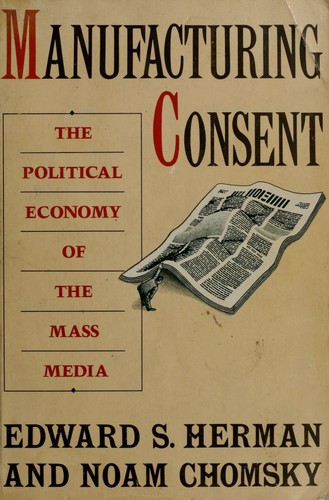 Manufacturing consentNoam Chomsky