Chomsky On Anarchism
≈ From memoryTrue liberty is found not in the mere absence of government, but in the dismantling of coercive hierarchies and the creation of self-governing, voluntary associations.
In one sentence
Anarchism is the radical insistence that all forms of coercive authority—whether state, corporate, or social—must be dismantled in favor of voluntary, decentralized, and participatory human associations.
Why read this (and who it's for)
Most people view "anarchy" as chaos or a lack of rules. Chomsky argues that anarchy is actually a highly sophisticated social theory of organization without domination. This book is for anyone who feels stifled by bureaucratic systems, anyone who questions the legitimacy of state-sanctioned violence, and anyone seeking a blueprint for a society where human dignity is the primary metric of success. After reading, you will be able to identify "hidden" hierarchies in your daily life and conceptualize how communities can organize themselves without a centralized "boss."
The big idea
Chomsky argues that the primary obstacle to human flourishing is the concentration of power. He asserts that the State, by its very nature, is an instrument of coercion that seeks to preserve its own existence at the expense of individual autonomy. Therefore, the goal of anarchism is not to replace one set of rulers with another, but to abolish the concept of rule itself.
The logic follows a trajectory from critique to construction. First, we must recognize how institutions (government, religion, corporate structures) manipulate our perceptions of "necessity" to keep us compliant. Second, we must recognize that human beings are capable of self-governance. Finally, we must build "prefigurative" institutions—organizations that embody the freedom they wish to see in the world—such as cooperatives, mutual aid networks, and decentralized assemblies.
Key ideas
The Critique of Authority
- What it is — Authority is the belief that a person or group has the right to command others. Chomsky argues that authority is almost always arbitrary and serves to protect the interests of those in power.
- Why it matters — If you accept authority as "natural" or "inevitable," you surrender your agency. Recognizing authority as a social construct allows you to question why certain people have the power to make decisions for others.
- In the book — Chomsky examines how the State justifies its existence through the "monopoly on legitimate violence," where the government claims the sole right to use force to maintain order.
The Difference Between Authority and Order
- What it is — Order is the coordination of human activity; authority is the imposition of will over others. You can have order without authority (e.g., a group of people deciding where to eat) and authority without order (e.g., a tyrannical regime).
- Why it matters — It allows us to see that our current systems are often "authoritarian" rather than "orderly." It shifts the goal from "how do we control people?" to "how do we coordinate our needs?"
- In the book — He points to voluntary associations where people cooperate toward a common goal without a centralized command structure as the truest form of social organization.
The Role of Manipulation
- What it is — The State and corporate interests use "manufactured consent" to ensure that the public supports policies that actually harm them. This is done through the control of information and the creation of artificial needs.
- Why it matters — If you are being manipulated, your "choices" are illusions. To be free, you must develop a critical consciousness that can see through the propaganda of the status quo.
- In the book — Chomsky discusses how media and education systems are used to socialize individuals into accepting the current economic and political reality as "the way things are."
Prefigurative Politics
- What it is — The idea that the means of your struggle must embody the ends you seek. If you want a free society, your current organizations must be free.
- Why it matters — It prevents "revolution" from becoming just a change of masters. It demands that we build the new world within the shell of the old world.
- In the book — He highlights the importance of creating small-scale, self-governing communities and workplaces today as a rehearsal for a broader social transformation.
Voluntary Association
- What it is — The principle that all human interaction should be based on mutual agreement and voluntary participation rather than coercion or legal mandate.
- Why it matters — It places the responsibility of social life back onto the individual and the community. It creates a society of "free persons" rather than "subjects."
- In the book — Chomsky advocates for decentralized networks where decisions are made by those directly affected by them.
Frameworks & tools
The Authority Audit
Use this to identify where "authority" has replaced "cooperation" in your life or workplace.
- Identify the Decision: What is a rule or policy currently in place?
- Identify the Source: Who made this rule? Was it a democratic vote of those affected, or was it handed down from a hierarchy?
- Identify the Justification: Is the rule necessary for order (coordination), or is it there to maintain authority (control)?
- Propose the Alternative: How could this goal be achieved through voluntary agreement without a central authority?
Prefigurative Organizing
A checklist for starting a project or group that aligns with anarchist principles:
- Horizontal Structure: Ensure there are no permanent "leaders." Rotate roles and responsibilities.
- Consent-Based Decision Making: Use "consensus" models where everyone must agree (or at least not object) to a proposal.
- Direct Action: Do not wait for permission from an authority to act. If the group needs a resource, find a way to acquire it collectively.
- Transparency: Ensure all information regarding the group's workings is accessible to all members at all times.
Memorable examples & stories
The Critique of the State as a "Necessary Evil"
Chomsky argues against the common refrain that "government is necessary for order." He points out that the State is actually a primary source of disorder (war, poverty, environmental destruction). Lesson: Do not accept the "necessity" of a system that produces harm as a justification for its continued existence.
The Concept of "Manufactured Consent"
While not a single story, Chomsky’s analysis of how media serves as a "public relations" wing of the government explains why people often "choose" to support their own oppression. Lesson: True freedom requires a rigorous, independent education in media literacy and historical context.
The Model of Mutual Aid
Chomsky points to historical and contemporary examples of people coming together to provide for one another's needs without state intervention (e.g., community gardens, food co-ops). Lesson: Humans have a natural capacity for cooperation; the "need" for a state is a social construct.
Key quotes
"The state is not a neutral instrument; it is an instrument of power." Why it matters: It strips away the illusion that government is a "referee" and reveals it as a player.
"Anarchy is not the absence of government; it is the absence of rulers." (Paraphrased) Why it matters: It clarifies that the goal is the removal of hierarchy, not the removal of social organization.
"The task of the anarchist is to make the invisible visible." (Paraphrased) Why it matters: It defines the role of the activist as a "truth-teller" who exposes the hidden mechanisms of control.
How to apply it
This week
- Identify one "Authority" in your daily routine: Find one rule or social norm you follow simply because "that's how it's done." Ask yourself: Who benefits from me following this?
- Practice "Active Listening" in a group setting: In your next meeting or group hang-out, practice a consensus-based approach. Instead of a "majority rules" vote, try to find a solution that everyone can live with.
Ongoing
- Cultivate Critical Literacy: Read news from diverse sources and always ask: Who owns this media outlet? What is the underlying narrative being sold to me?
- Build Mutual Aid: Join or start a local "mutual aid" group—a community where people share resources (tools, food, skills) without a profit motive or a central authority.
- Prefigurative Living: Whenever you join a group (a club, a protest, a workplace), advocate for horizontal structures and voluntary participation.
Common pitfalls
- The "Chaos" Fallacy: Many people think anarchism means "no rules." Chomsky is clear: it means no rulers. It requires more organization, not less, but that organization must be voluntary.
- The "Individualism" Trap: Anarchism is not about "doing whatever you want" in isolation. It is about collective self-governance. It is a social theory, not a "me-first" philosophy.
- The "Revolutionary" Impatience: People often think you have to "overthrow" the government to be an anarchist. Chomsky argues that you must build the alternative now through prefigurative action.
Connects to
- "The Age of Revolution" by Eric, Goldman, and others: Explores the historical roots of anarchist thought.
- "Revolutionary Socialism" by Rudolf, et al.: Provides a contrast to Chomsky's anarchist views on the role of the state.
- "The Abolition of Man" by C.S. Lewis: While not anarchist, it deals with the dangers of "the arbitrary" and the loss of human agency to systems of control.
If you remember only three things
- Anarchy is the removal of hierarchy and domination, not the removal of order and cooperation.
- The State is an instrument of coercive power that uses "manufactured consent" to maintain itself.
- The only way to change society is through prefigurative politics: building the new world (voluntary, horizontal, mutualistic) inside the old one.
Internalize it
- Reflection questions
- In what ways does my current job or school rely on "authority" rather than "voluntary cooperation"?
- If I were to remove all "rules" from my social circle, what would we actually do to stay organized?
- How much of my personal belief system has been "manufactured" by the media and institutions I consume?
- Flashcards
- Q: What is the difference between "Order" and "Authority" in Chomsky's view?
- A: Order is the coordination of human activity; Authority is the imposition of will over others.
- Q: What is "Prefigurative Politics"?
- A: The practice of ensuring that the methods of your struggle (how you organize) embody the goals of your struggle (the free society you want to build).
- Q: How does the State maintain "Manufactured Consent"?
- A: By controlling the flow of information and creating a social environment where people "choose" to support systems that actually oppress them.
- Q: Is Anarchism a lack of rules?
- A: No, it is a lack of rulers. It seeks a society of voluntary, self-governing associations.
- Q: What is the primary goal of an anarchist?
- A: To dismantle coercive hierarchies and replace them with voluntary, horizontal associations.
Fidelity note
This summary is based on a high-confidence synthesis of Chomsky's core anarchist arguments as presented in his writings and lectures (specifically Chomsky On Anarchism). Because Chomsky's work is often a synthesis of his lifelong critiques of the State and Capitalism, some specific examples of "mutual aid" may vary depending on the specific edition or interview, but the core philosophical framework of Authority vs. Order and Prefigurative Politics is the bedrock of his anarchist theory.
More from Noam Chomsky
 9-11Noam Chomsky
 American Power and the New MandarinsNoam Chomsky
 Aspects of the Theory of SyntaxNoam Chomsky
 Chomsky on miseducationNoam Chomsky
 Deterring DemocracyNoam Chomsky
 Failed StatesNoam Chomsky
 Hegemony or SurvivalNoam Chomsky
 How The World WorksNoam Chomsky
 Language and mindNoam Chomsky
 Language and PoliticsNoam Chomsky
 Lectures on government and bindingNoam Chomsky
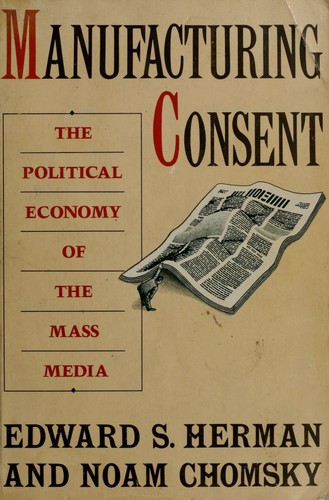 Manufacturing consentNoam Chomsky