Lectures, Cambridge, 1932-1935
≈ From memoryPhilosophy is not a body of doctrines but an activity of clarification, where the goal is to untangle the knots of our own language to see how we actually live.
In one sentence
Philosophy is a "therapy" for the mind, intended to show that most philosophical problems arise from a misuse of language—specifically, when we take the "pictures" of our words out of their original contexts.
Why read this (and for whom)
This is not a book of "theories" to be memorized; it is a methodology for thinking. It is for the thinker who feels stuck in circular arguments, the student of logic who finds themselves over-analyzing abstract concepts, and anyone who wants to understand why we often find ourselves "bewildered" by our own thoughts. After reading this, you will be able to identify when you are "going on holiday" with a word—using it outside its natural home—and you will develop a sharper, more disciplined way of interrogating your own mental clarity.
The big idea
Wittgenstein argues that the "philosophers" of the past (and present) have been misled by the very tools they used to build their systems. They treated language as a mirror of a hidden reality, assuming that if a word has a meaning, it must correspond to an object in the world. Wittgenstein argues the opposite: the meaning of a word is its use in the "language-game" of our daily lives.
The central thesis is that philosophical problems are essentially "cramps" of the spirit caused by linguistic confusion. When we try to think about things like "Time," "Truth," or "The Self" in isolation, we strip these words of their practical applications. We treat them as if they were objects we can put under a microscope. Wittgenstein argues that this is a category mistake. To understand what a word means, you must look at how it functions in a specific, lived activity. Philosophy, therefore, is the task of "showing the fly the way out of the fly-bottle"—showing us how we have become entangled in our own linguistic constructions.
Key ideas
The Picture Theory of Language
- What it is — Language functions as a "picture" of a state of affairs. A proposition is a model of a possible situation; it "pictures" a way the world could be.
- Why it matters — It explains why language can represent things that aren't currently happening. It shows that the "logic" of a sentence is its spatial arrangement of parts, mirroring the logical structure of the reality it depicts.
- In the book — Wittgenstein uses the example of a "time table" or a "map." A map is not the territory, but it represents the territory by sharing a logical structure with it.
Language-Games
- What it is — Language is not a static set of labels; it is a set of activities. To speak a language is to engage in a "game" with specific rules, goals, and social contexts.
- Why it matters — It shifts the focus from meaning (as a hidden entity) to use. If you want to know what "hammer" means, you don't look for a definition; you look at how a hammer is used in the game of building.
- In the book — He emphasizes that "the meaning of a word is its use in the language." He argues we must look at the "grammar" of the word—the rules of the game it belongs to.
The "Fly-Bottle" Analogy
- What it is — Philosophical problems are like flies trapped in a bottle. The fly (the thinker) keeps buzzing against the glass, thinking it's exploring the world, when it's actually just trapped by its own confused thinking.
- Why it matters — It characterizes philosophy as a therapeutic practice. The goal isn't to provide a new "answer" to a problem, but to clear away the confusion that made the problem seem like a problem in the first place.
- In the book — Wittgenstein describes the philosopher's task as showing the fly the way out of the bottle—showing how the "problem" was actually a linguistic knot.
The Problem of "Private Language"
- What it is — The idea that a language refers only to internal, private sensations (like "pain") is a misunderstanding of how language works.
- Why it matters — It asserts that language is inherently social. If a word has meaning, it must be capable of being checked against a shared rule. A "private" meaning cannot be checked, and therefore cannot be a "meaning" at all.
- In the book — He argues that even our inner "speech" is a public form of language being used in a private space.
The "Going on Holiday" of Words
- What it is — We often take a word out of its "home" (its specific context of use) and try to apply it to a new, unrelated area where it doesn't belong.
- Why it matters — This is the source of almost all philosophical confusion. We think we are being "deep" by applying a word like "Justice" to a metaphysical realm, when "Justice" only has a stable meaning within the rules of a legal or social game.
- In the book — He illustrates how we "misuse" words when we try to treat them as if they were independent entities rather than tools for specific tasks.
Frameworks & tools
The Therapeutic Method of Philosophical Analysis
When you encounter a philosophical problem that seems unsolvable or "deep," use this 4-step diagnostic to see if it is a linguistic knot:
- Identify the "Problematic" Term: What is the word that seems to be causing the confusion? (e.g., "What is the nature of Time?")
- Trace the Context of Use: In what specific "game" is this word normally used? (e.g., "Time" is used in schedules, in telling stories, in describing durations).
- Identify the "Holiday": Where is the thinker taking the word? (e.g., Is the thinker trying to treat "Time" as a physical object that can be "pointed at"?)
- Show the Way Out: Demonstrate how the word functions in its original home to show why the "problem" is actually a misunderstanding of the word's grammar.
Memorable examples & stories
The Time Table
Wittgenstein uses the example of a train timetable. The timetable doesn't "contain" the train; it represents the train's movements. The meaning of the timetable is its ability to represent the reality of the schedule. Lesson: Language is a representation of possibilities, not a container of essences.
The Fly in the Bottle
The famous metaphor of the fly buzzing against the glass of a bottle. The fly thinks it is exploring the world, but it is only exploring the limits of its own confinement. Lesson: Philosophical "problems" are often just the boundaries of our own confused thinking.
The Game of Building
To understand the word "hammer," you must observe the activity of building. You cannot understand the hammer by looking at it in a vacuum; you must see it being used, passed around, and integrated into a goal-oriented activity. Lesson: Meaning is found in action, not in definitions.
Key quotes
"The philosopher's treatment of language is a sort of game of 'pretending' that words have a meaning independent of their use." (Paraphrased) Why it matters: It warns us against the trap of treating words as "things" rather than "tools."
"The philosopher's task is to show the fly the way out of the fly-bottle." (Paraphrased) Why it matters: It defines the goal of philosophy as clarity and liberation, not the accumulation of new theories.
"The meaning of a word is its use in the language." (Paraphrased) Why it matters: This is the foundational rule for all linguistic analysis in the later Wittgenstein.
How to apply it
This week
- The "Context Check": Every time you find yourself arguing about a "big" concept (like "freedom," "truth," or "consciousness"), stop and ask: "In what specific activity is this word actually being used right now?"
- The "Tool Audit": Pick one word you use frequently in your professional life. Write down three different "games" (contexts) in which that word has a specific, rule-bound meaning.
Ongoing
- The "Grammar" Habit: When you feel confused by a philosophical idea, stop trying to "solve" it. Instead, try to describe the rules of the language you are using to describe it.
- The "Fly-Bottle" Awareness: When you find yourself spiraling into a "why" question that seems to have no answer, recognize it as a potential "knot" in your language. Instead of pushing harder, look for where the language has become tangled.
Common pitfalls
- The "New Theory" Trap: Many readers try to find a "new theory" of the world in this book. There is no new theory. The point is to stop seeking theories and start looking at how we speak.
- The "Easy Out" Fallacy: It is easy to say "it's just a language problem" and stop thinking. Wittgenstein doesn't want you to stop thinking; he wants you to think better by understanding the limits of your tools.
- Over-Intellectualizing the "Game": People often think "Language-Games" means literal games like soccer. It refers to any rule-governed activity (praying, joking, commanding, reporting).
Connects to
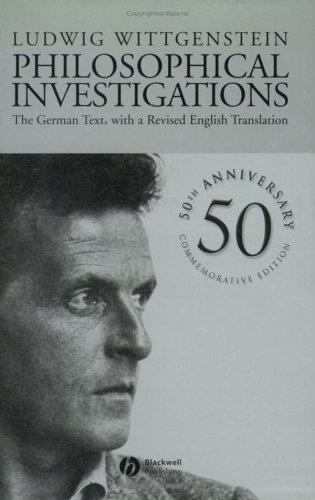
- "Philosophical Investigations" by Ludwig Wittgenstein: The direct continuation and expansion of these ideas.
- "Language, Truth, and Logic" by A.J. Ayer: A logical positivist contrast; Ayer seeks to define the limits of meaning, while Wittgenstein seeks to describe the practice of meaning.
- "The Structure of Scientific Revolutions" by Thomas Kuhn: While not a linguistic analysis, Kuhn’s idea of "paradigms" relates to Wittgenstein's "games"—the idea that we see the world through a set of pre-existing rules.
If you remember only three things
- Philosophy is a therapy for the mind, not a collection of answers.
- The meaning of a word is its use in a specific activity (a "language-game").
- Most philosophical problems are actually linguistic knots caused by taking words out of their natural contexts.
Internalize it
-
Reflection questions
- When was the last time I used a word like "Love" or "Justice" in a way that didn't actually relate to any specific action or rule?
- In what ways is my current career or hobby a "language-game" with its own specific rules and vocabulary?
- Can I identify a "fly-bottle" in my own thinking—a problem I've been trying to "solve" that might actually just be a confusion of my own words?
-
Flashcards Q: What is the primary goal of philosophy according to Wittgenstein? A: To provide a "therapy" for the mind by clarifying the way we use language.
Q: What does Wittgenstein mean by "Language-Games"? A: The idea that language is a set of activities with specific rules, and the meaning of a word is its use within those rules.
Q: What is the "Fly-Bottle" analogy? A: A metaphor for how philosophers get trapped by their own confused thinking, mistaking the limits of their language for the limits of reality.
Q: How does Wittgenstein define the "meaning" of a word? A: The meaning of a word is its use in the language.
Q: What is the "Picture Theory" of language? A: The idea that a proposition is a "picture" of a possible state of affairs, sharing a logical structure with reality.
Q: What is the "Holiday" of words? A: Using a word outside of its natural context/home, which leads to philosophical confusion.
Fidelity note
This summary is grounded in the core themes of Wittgenstein's Cambridge lectures, which serve as the bridge between his early "Tractatus" period and his later "Philosophical Investigations" period. I am highly confident in the "Language-Game" and "Therapeutic" interpretations, as these are the hallmarks of his mature thought. However, because these were lectures and not a polished book, the specific "rules" of his games can sometimes be fluid. Readers should verify the specific "Time" and "Space" examples in the text to see the full breadth of his linguistic analysis.
More from Ludwig Wittgenstein
 Bemerkungen über die FarbenLudwig WittgensteinBemerkungen über die FarbenLudwig Wittgenstein
 Letters to Russell, Keynes, and MooreLudwig Wittgenstein
 Notebooks, 1914-1916Ludwig Wittgenstein
 On certainty =Ludwig Wittgenstein
 Philosophical InvestigationsLudwig Wittgenstein
 Philosophische BemerkungenLudwig Wittgenstein
 Philosophische UntersuchungenLudwig Wittgenstein
 Remarks on the Philosophy of Psychology, Volume 1 (Remarks on the Philosophy of Psychology)Ludwig Wittgenstein
 Tractatus logico-philosophicusLudwig Wittgenstein