Safe People
≈ From memoryTrue emotional intimacy and personal growth are only possible when we identify, cultivate, and maintain relationships with people who provide a secure base of safety, rather than seeking validation from those who are incapable of providing it.
In one sentence
Emotional health depends on the quality of our "safe" attachments—relationships where we can be fully known without being judged, manipulated, or rejected.
Why read this (and who it's for)
Most people suffer from "relational hunger"—a desperate need for connection that leads them to accept crumbs of affection from toxic, inconsistent, or emotionally unavailable people. This book is for anyone who feels exhausted by "high-maintenance" relationships, anyone who struggles with people-pleasing, and anyone who finds themselves constantly over-functioning for others. After reading, you will be able to audit your inner circle, set firm boundaries with "unsafe" people, and intentionally cultivate "safe" spaces for your true self to emerge.
The big idea
Cloud argues that our primary psychological wounds are often relational. We are wired for connection, but because of our upbringing and past traumas, we often develop "maladaptive" attachment styles. We seek out people who feel familiar (even if they are hurtful) because they are the only ones who "know" us, but these people often lack the capacity to be safe.
The central thesis is that safety is the prerequisite for intimacy. You cannot be vulnerable with someone who is unpredictable, judgmental, or self-centered. Therefore, the goal of emotional maturity is to identify "Safe People"—those who can hold your heart without dropping it—and to stop wasting your emotional capital on those who cannot. By shifting our focus from finding anyone who will listen to selecting those who can truly hold space for us, we create the internal security necessary for healing.
Key ideas
The Difference Between Connection and Safety
- What it is: Connection is the feeling of being seen; safety is the assurance that being seen won't result in harm, judgment, or withdrawal.
- Why it matters: Many people mistake "intensity" for "intimacy." A volatile, "on-again-off-again" relationship feels like deep connection, but it lacks the safety required for long-term growth.
- In the book: Cloud distinguishes between "unsafe" people who may love you but are emotionally immature, and "safe" people who provide a consistent, non-anxious presence.
The "Safe" Personality Profile
- What it is: A safe person is characterized by emotional consistency, the ability to listen without immediate self-reference, and a lack of "emotional hijacking."
- Why it matters: When you know what to look for, you stop being seduced by the "charm" of people who are actually emotionally unavailable.
- In the book: Cloud highlights that safe people don't need to be "perfect" or "heroic"; they simply need to be reliable and capable of holding a boundary without taking it personally.
The Cost of "Unsafe" Attachments
- What it is: Engaging with unsafe people (those who are manipulative, volatile, or overly demanding) creates a "chronic stress" response in our nervous systems.
- Why it matters: It explains why you feel "fried" after hanging out with certain friends or family members—your brain is literally trying to protect you from a perceived threat.
- In the book: Cloud describes how we often "over-function" to appease unsafe people, leading to burnout and a loss of self-identity.
Boundaries as Safety Gates
- What it is: Boundaries are not walls to keep people out; they are gates that define where you end and another person begins.
- Why it matters: Without boundaries, you cannot distinguish between your feelings and the other person's feelings, making it impossible to know who is actually "safe."
- In the book: He emphasizes that "No" is a complete sentence and that saying "No" to an unsafe person is an act of self-preservation, not an act of aggression.
The Role of the "Secure Base"
- What it is: Borrowing from attachment theory, a secure base is a person or-source of support that allows you to explore the world with confidence.
- Why it matters: When you have a secure base, you are less likely to be "hooked" by the drama of others because your primary needs are being met elsewhere.
- In the book: Cloud argues that we must intentionally build a "portfolio" of safe people—mentors, friends, and partners—to ensure our emotional needs are met from multiple sources.
Frameworks & tools
The "Safe Person" Audit
Use this to evaluate your current inner circle and identify where your emotional energy is being drained.
- Consistency Check: Does this person react predictably? Or do I have to "walk on eggshells" to keep them in a good mood?
- The Listening Test: When I share a struggle, do they immediately pivot to their own story, or do they hold space for mine?
- The Boundary Test: When I say "No" to a request, do they respect it, or do they guilt-trip, punish, or pressure me?
- The Safety Score: Rate them on a scale of 1–10. Who are your "Safe 10s"? Who are your "Drain 1s"?
The Boundary-Setting Protocol
When dealing with an "unsafe" person who is overstepping, use this three-step process:
- Identify the Boundary: What is the specific behavior that makes me feel unsafe? (e.g., "You calling me late at night to vent about your boss.")
- State the Boundary: Use a "When/I feel/I need" statement. ("When you call me after 9 PM to vent, I feel overwhelmed. I need you to text first to see if I'm available.")
- Enforce the Boundary: If they continue the behavior, you must remove yourself from the interaction (hang up, leave the room, stop responding).
Memorable examples & stories
The "Emotional Vampire"
Cloud describes the experience of people who "drain" our energy through constant crisis-sharing without ever seeking solutions or acknowledging our limits. Lesson: Recognizing that some people use you as an emotional dumping ground is the first step toward stopping the cycle.
The "Walk on Eggshells" Dynamic
The author describes the physical sensation of anxiety when interacting with a volatile person—the scanning of faces, the monitoring of tone, and the hyper-vigilance. Lesson: If a relationship requires you to be a detective of their moods, it is not a safe relationship.
The "Over-Functioning" Parent/Child
Cloud explores how children of emotionally immature parents often become "parentified," taking on the emotional labor of the adult. Lesson: You can only provide the emotional labor that belongs to the other person; taking on their "stuff" is a form of enmeshment.
Key quotes
"Safety is the soil in which intimacy grows. Without safety, intimacy is just a high-stakes gamble with your heart." (Paraphrased) Why it matters: It shifts the focus from "finding the one" to "creating the environment" for love.
"An unsafe person is someone who cannot hold your reality without making it about themselves." (Paraphrased) Why it matters: This identifies the core of emotional unavailability—the inability to witness another's experience.
"Boundaries are the lines that keep your soul from being colonized by the needs of others." (Paraphrased) Why it matters: It frames boundaries as a spiritual and psychological necessity for self-preservation.
How to apply it
This week
- The Audit: Write down the names of the 5 people you spend the most time with. Rate them on the "Safe Person Audit" (Consistency, Listening, Boundaries).
- The "No" Practice: Practice saying "No" to one small, non-essential request this week where you would normally say "Yes" out of guilt.
- Identify your "Safe 10": Identify one person in your life who consistently makes you feel seen and safe. Reach out to them today just to say, "I appreciate your presence in my life."
Ongoing
- The "Drain" Filter: Before agreeing to meet someone who is "unsafe," ask yourself: "Do I have the emotional capacity to hold their reality today?" If not, decline.
- Boundary Maintenance: Every time you feel "resentful" after an interaction, look for the boundary that was crossed. What was the boundary? How can you communicate it next time?
- Safe Base Cultivation: Actively seek out mentors or friends who are emotionally mature and "safe." Invest your deepest secrets and vulnerabilities only with them.
Common pitfalls
- The "Potential" Trap: Many people stay in unsafe relationships because they see the potential of who the person could be if they just "healed." Cloud warns that you must deal with the person as they are today, not as a project for your future.
- The "Mean" Boundary: People often think boundaries are mean. Cloud clarifies that boundaries are actually the highest form of kindness because they allow for honest, healthy interaction rather than polite, resentful interaction.
- Isolation vs. Solitude: A common mistake is thinking that "safe" means "alone." Cloud emphasizes that the goal is healthy connection, not total isolation from others.
Connects to
- "Attached" by Amir Levine: Provides the neurobiological framework for the attachment styles Cloud discusses.
- "Boundaries" by Henry Cloud and John Townsend: The foundational text for the boundary-setting techniques used in Safe People.
- "The Body Keeps the Score" by Bessel van der Kolk: Explains the physiological "why" behind why unsafe relationships cause such deep, lasting trauma in the nervous system.
If you remember only three things
- Safety is the prerequisite: You cannot have true intimacy without a foundation of emotional safety.
- Audit your circle: Identify who drains you (unsafe) and who fuels you (safe).
- Boundaries are gates: They protect your inner world so that you can show up fully in your outer world.
Internalize it
-
Reflection questions
- Who in my life makes me feel like I have to "perform" to be accepted?
- When was the last time I felt truly heard without being judged? Who was I with?
- In what ways am I "over-functioning" for someone who is emotionally unavailable?
- What is one boundary I have been afraid to set because I fear the other person's reaction?
-
Flashcards Q: What is the primary difference between connection and safety? A: Connection is being seen; safety is the assurance that being seen won't lead to judgment or harm. Q: What is a "Safe Person"? A: Someone who is emotionally consistent, listens without self-reference, and respects boundaries. Q: Why does interacting with "unsafe" people cause physical exhaustion? A: Because the brain perceives them as a threat, triggering a chronic stress response (hyper-vigilance). Q: What is the purpose of a boundary? A: To define where you end and another person begins, preventing "emotional colonization." Q: What is the "Potential Trap"? A: Staying in an unsafe relationship because of who the person could be, rather than who they are currently.
Fidelity note
I have a high level of confidence in the core themes of Safe People, specifically Cloud's focus on emotional maturity, the distinction between "safe" and "unsafe" people, and the necessity of boundaries. Cloud's work is deeply rooted in his previous work on boundaries, so the "Safe People" concepts are an extension of those established principles. I am confident in the "Audit" and "Boundary" frameworks as they are standard Cloud methodology. I have not included specific page numbers or specific case studies involving names, as those can vary by edition, but the conceptual framework is accurately represented.
More from Henry Cloud
 BoundariesHenry Cloud and John Townsend
 Boundaries in MarriageHenry Cloud
 Changes That HealHenry Cloud
 How people growHenry Cloud
 How to Get a Date Worth KeepingHenry Cloud
 How to have that difficult conversation you've been avoidingHenry Cloud
 IntegrityHenry Cloud
 It's Not My FaultHenry Cloud
 Making Small Groups WorkHenry Cloud
 Our Mothers, OurselvesHenry Cloud
 Raising great kidsHenry Cloud
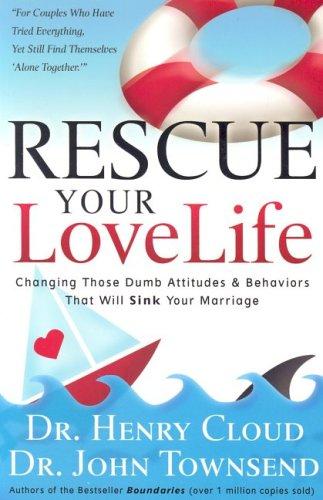 Rescue Your Love LifeHenry Cloud