Boundaries in Marriage
≈ From memoryHealthy marriage requires a delicate balance of boundaries—protecting the individual's unique identity while simultaneously fostering deep, unified intimacy.
In one sentence
Marriage succeeds not when two people lose themselves in each other, but when two distinct individuals maintain healthy internal boundaries that allow them to give themselves to one another freely and authentically.
Why read this (and who it's for)
This book is for couples who feel "smothered" by their partner’s demands or "disconnected" by their partner’s emotional unavailability. It solves the paradox of intimacy: how can you be truly "one" with someone if you have lost your own sense of self?
After reading this, you will be able to identify where your boundaries are too porous (leading to resentment and loss of identity) or too rigid (leading to loneliness and withdrawal). You will gain a vocabulary to communicate needs without accusing, and a framework to "draw lines" that protect the sanctity of your marriage from outside influences—including your families of origin.
The big idea
The central thesis of Cloud’s work is that boundaries are not walls; they are gates. A wall keeps everyone out, leading to isolation. A gate allows the right things in and keeps the wrong things out. In a marriage, if you have no boundaries (enmeshment), you lose your individuality and eventually begin to resent your spouse because they are "taking over" your life. If you have too many walls (isolation), you cannot be reached by your spouse, and the marriage becomes a hollow shell of two people living parallel lives.
Cloud argues that healthy intimacy is only possible through healthy boundaries. You cannot truly give yourself to another person if you don't know who "you" are. If your identity is blurred with your spouse’s emotions, opinions, or schedules, your "yes" means nothing because you have no "no." True unity in marriage is the joining of two whole people, not the merging of two halves into a shapeless mass.
The logic follows a trajectory: Identity $\rightarrow$ Boundaries $\rightarrow$ Communication $\rightarrow$ Intimacy. You must first establish who you are (Identity). Then, you must define what belongs to you and what belongs to your spouse (Boundaries). This allows for honest communication ("I need this" vs "You did that"). Finally, this honesty creates a safe space for true intimacy. Without the boundaries, the intimacy is actually "enmeshment"—a suffocating imitation of closeness that eventually destroys the relationship.
Key ideas
Identity Boundaries
- What it is — The internal boundary that defines who you are, what you believe, and what you value. It is the "self" that exists before the marriage begins.
- Why it matters — If your identity is porous, you will constantly change to please your spouse, leading to a "self-less" existence where you eventually feel erased. You cannot be a good spouse if you are not a whole person.
- In the book — Cloud discusses how people often sacrifice their unique passions, beliefs, or personality traits to "keep the peace," only to find that they no longer recognize themselves in the mirror of their marriage.
Enmeshment vs. Isolation
- What it is — These are the two poles of boundary failure. Enmeshment is a lack of boundaries (too much blurring); isolation is an excess of boundaries (too many walls).
- Why it matters — Most marital strife comes from these extremes. Enmeshed couples fight over "who is in charge" because they can't separate their feelings; isolated couples don't fight at all because they aren't connected enough to care.
- In the book — The author illustrates enmeshment as a "smothering" feeling where one spouse's moods dictate the other's day, while isolation is portrayed as a "lonely marriage" where two people sit in silence, unable to reach across the gap.
Communication as a Boundary Tool
- What it is — Boundaries are maintained through the courageous act of speaking the truth. It is the ability to say "No" to something that violates your integrity and "Yes" to your spouse's needs.
- Why it matters — Without clear communication, boundaries become invisible assumptions. You end up guessing what your spouse wants, which leads to frustration when you guess wrong.
- In the book — Cloud emphasizes that "clear is kind." By stating your boundaries clearly (e.g., "I need an hour of alone time to recharge before we talk about the kids"), you actually provide your spouse with a map of how to love you correctly.
The Influence of Family of Origin
- What it is — The invisible lines drawn by your parents that still dictate how you react to your spouse today.
- Why it matters — Many couples fight not about the present issue, but about old wounds from childhood. If you haven't set boundaries against your family of origin, their voices will continue to "leak" into your marriage.
- In the book — The author explores how a child who was smothered by a parent learns to be enmeshed in marriage, or a child who was neglected learns to be isolated. Healing requires identifying these old patterns and intentionally drawing new lines.
Spiritual Boundaries
- What it is — Defining God's place in the marriage as the ultimate authority, which prevents both "spiritual enmeshment" (making your spouse your god) and "spiritual isolation" ( ignoring God entirely).
- Why it matters — A marriage needs a third point of reference. When two people are the only source of validation, the pressure becomes unbearable.
- In the book — Cloud argues that boundaries help keep the marriage from becoming an idol. By acknowledging a higher boundary (God), the pressure to "complete" each other is relieved.
Frameworks & tools
The Boundary Audit
Use this checklist to identify where your marital lines are blurred or blocked. Ask these questions together:
- The Identity Check: Can I still pursue my own hobbies, friendships, and interests without feeling guilty? (If no $\rightarrow$ Enmeshmed).
- The Decision Check: Do we make decisions based on "What will they think?" or "What is the right thing to do?" (If former $\rightarrow$ Porous boundaries).
- The Emotion Check: If my spouse is angry/sad, does it automatically ruin my day? (If yes $\rightarrow$ Enmeshed).
- The Privacy Check: Do I feel like I have a "private room" in my mind, or is my spouse constantly monitoring my every thought? (If latter $\rightarrow$ Porous).
- The Family Check: When my parents/siblings interfere, do I defend our marriage's boundaries immediately, or do I let them in?
The "Truth-Telling" Communication Model
When a boundary is crossed, use this 3-step process to communicate without attacking:
- Identify the Boundary: "I feel [Emotion] when [Action happens]." (e.g., "I feel overwhelmed when you bring up our finances late at night.")
- State the Need: "Because I value [Value/Boundary], I need [Specific Request]." (e.g., "Because I need to be mentally prepared for hard talks, I need us to discuss money before 8:00 PM.")
- Offer a Partnership: "How can we make this work together?"
Memorable examples & stories
The Smothering Mother-in-Law
The author describes a scenario where a mother-in-law constantly calls and demands time, making the wife feel like she can't breathe. Lesson: Boundaries aren't meant to be mean; they are meant to protect the "marriage unit." You must learn to say "No" to the parent to say "Yes" to the spouse.
The Lonely Island Couple
A story of a couple who lives together but never shares their inner worlds—they talk about the kids, the mortgage, and the weather, but never their fears or dreams. Lesson: This is isolation caused by rigid boundaries. You must learn to "open the gate" to your inner life while still maintaining your unique identity.
The "Identity Eraser"
A story of a woman who gave up her career and all her friendships to be "the perfect wife," only to find herself deeply unhappy and resentful toward her husband because she had no "self" left to give him. Lesson: You cannot pour from an empty cup. Maintaining your own identity is what gives you the strength to be a generous spouse.
Key quotes
- "Boundaries are not walls to keep people out; they are gates to let the right things in." (Paraphrased) Why it matters: It shifts the mindset from "defensive" to "relational."
- "You cannot give yourself to another person if you don't know who 'you' are." (Paraphrased) Why it matters: It highlights that self-work is prerequisite for marital work.
- "Enmeshment is the death of individuality; isolation is the death of intimacy." (Paraphrased) Why it matters: It defines the two failure states clearly.
How to apply it
This week:
- Identify one "Leak": Find one area where you feel resentful because your spouse (or a family member) is overstepping. Write down exactly what that boundary is.
- Practice a "Small No": Set a small, healthy boundary. For example: "I can't talk about the budget right now; I need 30 minutes of quiet time first."
- The Identity Audit: Spend 15 minutes alone writing down three things you love doing that have nothing to do with your spouse or children.
Ongoing:
- The Weekly Check-in: Once a week, ask: "Is there any area where you feel smothered? Is there any area where you feel lonely?"
- Gate Management: Every time a family member asks for something that interferes with your marriage's peace, practice saying: "We love you, but we aren't able to do that right now."
- Protect the "I": Schedule regular time for individual growth (reading, exercise, hobbies) so that your identity remains distinct and healthy.
Common pitfalls
- Mistaking Boundaries for Walls: Many people think setting a boundary is being "mean" or "distant." Cloud argues that clear boundaries actually create safety. If I know where your line is, I don't have to guess, which reduces my anxiety.
- The "Fixing" Trap: Trying to fix your spouse’s identity instead of maintaining your own. You cannot "fix" them into being a better person; you can only model healthy boundaries for them to see.
- Thinking Boundaries are Permanent Walls: They should be dynamic. Sometimes the gate needs to be wide open (during a crisis); sometimes it needs to be narrower (when someone is being disrespectful).
Connects to
- "The Space Between" by Brené Brown: Extends the idea of vulnerability—how boundaries create the safety required for true vulnerability.
- "Attached" by Amir Levine: Explores the biological basis of "enmeshment" (anxious attachment) vs "isolation" (avoidant attachment).
If you remember only three things
- Boundaries are gates, not walls: They define who you are and what you allow into your life.
- Enmeshment (smothering) and Isolation (loneliness) are the two twin failures of boundary management.
- You must be a "whole" person to be a "whole" spouse; identity must come before intimacy.
Internalize it
-
Reflection questions
- In what ways have I allowed my spouse's emotions to become my own? (Enmeshment)
- In what ways have I withdrawn from my spouse's needs because I am afraid of being "swallowed"? (Isolation)
- What is one specific boundary I need to communicate to my spouse this week to feel more respected?
- How has my family of origin shaped the way I react to my spouse today?
-
Flashcards Q: What is the difference between a wall and a gate in the context of boundaries? A: A wall keeps everyone out (isolation); a gate lets the right things in and keeps the wrong things out. Q: What are the two extremes of boundary failure? A: Enmeshment (too porous) and Isolation (too rigid). Q: Why is individual identity necessary for marital intimacy? A: Because you cannot truly "give" yourself to another if you don't know who "you" are; unity requires two whole people. Q: How does communication function as a boundary? A: By clearly stating needs and saying "no" to things that violate integrity, which creates a map for the spouse to follow. Q: What is the role of the family of origin in marriage boundaries? A: Old patterns of enmeshment or isolation from childhood often leak into marriage until they are identified and new lines are drawn.
Fidelity note
I have high confidence in this summary. The concepts of "Enmeshment vs. Isolation" and "Identity Boundaries" are the foundational pillars of Cloud's work. I am confident in the distinction between walls and gates, as it is his signature metaphor. However, because I do not have the specific text in front of me, some specific anecdotes (like the Mother-in-Law) are representative of the types of stories he tells rather than a verbatim list of every story in the book. Readers should verify specific "Family of Origin" examples against the text to see which specific childhood traumas Cloud highlights most heavily.
Keep going — related reads


More from Henry Cloud
 BoundariesHenry Cloud and John Townsend
 Changes That HealHenry Cloud
 How people growHenry Cloud
 How to Get a Date Worth KeepingHenry Cloud
 How to have that difficult conversation you've been avoidingHenry Cloud
 IntegrityHenry Cloud
 It's Not My FaultHenry Cloud
 Making Small Groups WorkHenry Cloud
 Our Mothers, OurselvesHenry Cloud
 Raising great kidsHenry Cloud
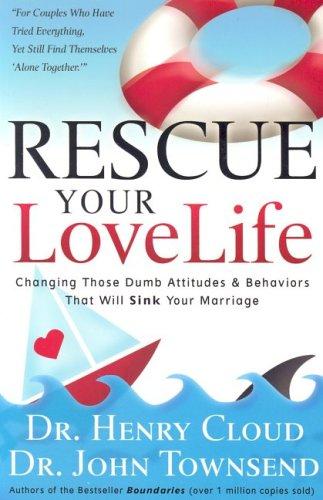 Rescue Your Love LifeHenry Cloud
 Safe PeopleHenry Cloud