How people grow
≈ From memoryTrue psychological growth occurs when individuals move from a state of 'enmeshment'—where their identity is fused with others—to a state of healthy boundaries where they can own their own lives while remaining connected to others.
In one sentence
Growth is the process of establishing "healthy boundaries" that allow you to be a distinct individual while maintaining intimate, loving connections with others.
Why read this (and who it's for)
Most people struggle with a paradox: they want to be close to others, but they feel suffocated by their relationships, or they want independence but feel lonely and abandoned. This book solves the "enmeshment" problem. It is for anyone who feels they "lose themselves" in their spouse, children, or parents, and for anyone who struggles to say "no" without feeling like a bad person. After reading, you will be able to identify where your boundaries are blurred and how to reclaim your personal space without destroying your relationships.
The big idea
Cloud argues that the primary obstacle to human growth is enmeshment. This is a state where the boundaries between two people (usually family members) become so blurred that one person’s emotions, responsibilities, and identities become the other's. In an enmeshed relationship, if one person is sad, the other must be sad; if one person fails, the other feels like a failure.
The logic is simple but profound: for a person to grow, they must be a "separate" entity. Growth requires a "self" that can be held accountable. If you are enmeshed, you cannot be held accountable because you are constantly reacting to the other person's needs. Cloud posits that healthy growth happens when we learn to distinguish between my feelings and your feelings, and my responsibilities and your responsibilities. This isn't about isolation; it’s about "differentiation"—the ability to be close without being fused.
Key ideas
The Enmeshment Trap
- What it is — Enmeshment is a lack of boundaries where people become "intertwined" to the point of losing their individual identities. It often looks like "over-functioning" (doing for others what they can do for themselves) or "over-reacting" (taking on others' emotions as your own).
- Why it matters — If you are enmeshed, you aren't actually growing; you are just reacting. You become a "mirror" of the other person's needs, which leads to resentment, burnout, and a lack of authentic self-development.
- In the book — Cloud describes the "smothering" dynamic where a parent feels responsible for a child's every emotional fluctuation, preventing the child from ever learning to self-soothe.
The Role of Boundaries
- What it is — Boundaries are the "fences" of the soul. They define where you end and other people begin. They are not walls to keep people out, but gates that determine what is allowed in.
- Why it matters — Without boundaries, you are constantly invaded by the demands of others. With boundaries, you can say "I love you, but I cannot do that for you," which preserves the relationship while protecting your integrity.
- In the book — Cloud uses the analogy of a house: a house needs walls to be a home. Without walls, it's just a plot of land. Boundaries provide the "container" for a healthy life.
Responsibility vs. Control
- What it is — A core tenet of growth is recognizing that you are only responsible for your own reactions, choices, and feelings. You are not responsible for "fixing" other people's emotions or behaviors.
- Why it matters — When you try to control others to manage your own discomfort, you create a cycle of dependency. When you take responsibility for your own reactions, you gain the power to change your life.
- In the book — Cloud emphasizes that "you cannot control another person's feelings," but you can control how you respond to them.
The "Self" as a Growth Vessel
- What it is — Growth requires a "self" that is capable of holding responsibility. If you don't have a clear sense of who you are, you cannot be held accountable for your actions.
- Why it matters — Accountability is the engine of growth. If you are always blaming your circumstances or your parents for your current state, you cannot grow because you haven't accepted the "ownership" of your current life.
- In the book — Cloud argues that we must "own" our lives—including our mistakes—to become the kind of people who can actually change.
Differentiation
- What it is — Differentiation is the ability to remain connected to others while remaining distinct. It is the "sweet spot" of human psychology.
- Why it matters — It allows for intimacy without enmeshment. It means you can be in a room with a grieving friend without being pulled into their despair, and you can be in a marriage without losing your own hobbies, opinions, and needs.
- In the book — Cloud describes this as the ultimate goal of healthy psychological development: being "with" someone without being "in" them.
Frameworks & tools
The Boundary Audit
Use this to identify where you are currently enmeshed. Ask yourself these three questions regarding a specific relationship (e.g., a spouse or a parent):
- The Reaction Test: When they are upset, do I immediately feel I must "fix" it or feel their pain as my own? (If yes, you are enmeshed).
- The Responsibility Test: Am I doing for them something they are capable of doing for themselves? (If yes, you are over-functioning).
- The "No" Test: Can I say "no" to a request without feeling a crushing sense of guilt or the need to over-explain? (If no, your boundaries are weak).
The Responsibility Shift
When you feel overwhelmed by someone else's behavior, run this mental checklist:
- Identify the Trigger: What is the other person doing/saying?
- Identify the Reaction: How am I feeling/reacting to it?
- The Pivot: What part of this reaction belongs to me? (e.g., "I am feeling guilty because I want them to like me," or "I am feeling angry because I am trying to control their choice.")
- The Action: How can I manage my reaction instead of trying to change their behavior?
Memorable examples & stories
The Over-Functioning Parent
Cloud describes a parent who constantly manages their child's schedule, social life, and emotional state. The child grows up unable to make decisions, and the parent feels exhausted and resentful. Lesson: By doing for others what they can do for themselves, you rob them of their growth and yourself of your peace.
The "Emotional Sponge"
Cloud illustrates how some people act as sponges, soaking up the moods of everyone in a room. They become "mood-fixers" who are constantly exhausted because they aren't allowed to have their own feelings. Lesson: You are not a sponge; you are a person. You can acknowledge someone's mood without absorbing it.
The Enmeshed Marriage
Cloud describes a couple where one partner's career failure is treated as a total catastrophe for the other. They lose the ability to see each other as two separate people with different roles. Lesson: Healthy intimacy requires two distinct individuals who choose to walk together, not two halves of a single broken whole.
Key quotes
"Enmeshment is the opposite of boundaries. It is the blurring of lines between who you are and who someone else is." Why it matters: It defines the core problem of the book—the loss of self-identity in relationships.
"You are responsible for your own reactions, but you are not responsible for the other person's feelings." (Paraphrased) Why it matters: This is the foundational rule for emotional independence.
"Growth happens when we take ownership of our lives, including our mistakes and our choices." (Paraphrased) Why it matters: Ownership is the prerequisite for any actual change.
How to apply it
This week
- The "Pause" Practice: The next time someone asks you for something that they can do themselves, wait 10 seconds before saying yes. Ask yourself: "Am I saying yes because I want to, or because I'm afraid of their reaction?"
- Identify One "Over-Function": Pick one thing you do for someone else (a child, a spouse, a coworker) that they are capable of doing. Do not do it this week. Observe the discomfort that arises.
- The "I" Statement Audit: Throughout the day, notice how often you say "We feel..." or "We are..." when you actually mean "I feel..." or "I am..."
Ongoing
- Practice the "No": Start saying "no" to small, insignificant things to build the "muscle" for when big, important boundaries need to be set.
- Emotional Ownership: When someone reacts to you, instead of getting defensive, ask yourself: "What part of my reaction to them is my responsibility?"
- Schedule "Solo" Time: Ensure you have regular, non-negotiable time where you are not "available" to others. This reinforces your identity as a separate individual.
Common pitfalls
- The "Coldness" Trap: Many people fear that setting boundaries will make them "mean" or "cold." Cloud argues that boundaries are actually the precondition for true intimacy. Without them, you aren't being loving; you're being enmeshed.
- The "Fixing" Fallacy: A common mistake is thinking that if you just explain your boundaries better, the other person will suddenly change. Boundaries are about your behavior, not their reaction. You cannot control how they react to your boundaries.
- The "One-and-Done" Error: Boundaries are not a one-time wall you build; they are a continuous practice. You must consistently reinforce them, especially when the other person pushes back.
Connects to
- "Boundaries" by Henry Cloud and John Townsend: The foundational text that provides the theological and psychological framework for these concepts.
- "The Disease to Please" by Harriet Lerner: Explores the psychological roots of why we struggle to set boundaries (the need for approval).
- "Attached" by Amir Levine and Rachel Heller: Provides a biological/evolutionary look at why we seek connection, which complements Cloud's psychological view on enmeshment.
If you remember only three things
- Enmeshment is the enemy of growth: When you lose your boundaries, you lose your ability to grow.
- Ownership is mandatory: You are responsible for your reactions and your choices, not for the feelings or behaviors of others.
- Boundaries are the gates of intimacy: You can only be truly close to someone if you are a distinct person first.
Internalize it
-
Reflection questions
- In which of my current relationships do I feel the most "smothered" or "drained"? What boundaries have I allowed to blur there?
- What is one thing I am doing for someone else right now that I am actually afraid to stop doing?
- When I feel guilty for saying "no," what is the specific fear behind that guilt? (e.g., "I'm afraid they won't love me.")
- How would my life change if I stopped trying to manage other people's emotions and focused only on my own reactions?
-
Flashcards Q: What is the primary obstacle to psychological growth according to Cloud? A: Enmeshment (the blurring of boundaries between individuals).
Q: What is the difference between a "wall" and a "boundary"? A: A wall keeps everyone out; a boundary defines where you end and others begin, allowing for healthy connection.
Q: What does it mean to "over-function" in a relationship? A: Doing for others what they are capable of doing for themselves.
Q: What is the "Responsibility Shift"? A: Shifting focus from trying to control others' behaviors to taking ownership of your own reactions.
Q: Why is "ownership" necessary for growth? A: Because you cannot change what you do not acknowledge as your own responsibility.
Q: What is "Differentiation"? A: The ability to remain connected to others while maintaining a distinct, individual identity.
Fidelity note
I have a high-confidence understanding of Henry Cloud's core concepts regarding enmeshment, boundaries, and the "self." His work is a staple in Christian psychology and focuses heavily on the relational dynamics of family and marriage. I am confident in the distinction he makes between "over-functioning" and "enmeshment." However, because Cloud's work is often deeply intertwined with spiritual themes (which are sometimes omitted in secular summaries), a reader should be aware that his "growth" model often includes a spiritual dimension of "becoming who God created you to be." The practical tools provided here are the psychological applications of those broader spiritual themes.
More from Henry Cloud
 BoundariesHenry Cloud and John Townsend
 Boundaries in MarriageHenry Cloud
 Changes That HealHenry Cloud
 How to Get a Date Worth KeepingHenry Cloud
 How to have that difficult conversation you've been avoidingHenry Cloud
 IntegrityHenry Cloud
 It's Not My FaultHenry Cloud
 Making Small Groups WorkHenry Cloud
 Our Mothers, OurselvesHenry Cloud
 Raising great kidsHenry Cloud
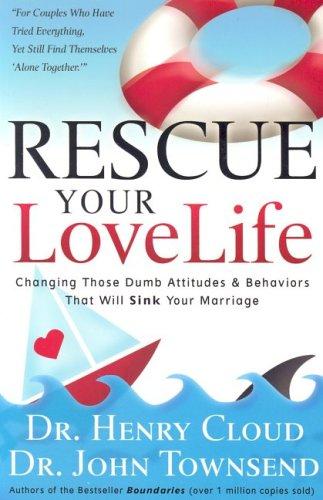 Rescue Your Love LifeHenry Cloud
 Safe PeopleHenry Cloud