Changes That Heal
≈ From memoryTrue healing comes not from changing your behavior, but from a fundamental shift in your internal identity and the way you perceive your relationship with others.
In one sentence
Healing is the process of moving from a "broken" identity—defined by past wounds and external labels—to a "whole" identity rooted in the truth of who you are, which then naturally transforms your behavior.
Why read this (for who it's for)
This book is for anyone who feels "stuck" in repetitive patterns of behavior, emotional reactivity, or relational dysfunction despite "knowing" what they should do differently. It solves the problem of willpower-based change, which often fails because it tries to fix the fruit (behavior) without addressing the root (the self-concept). After reading, you will be able to identify the "silent scripts" running your life and begin the work of reconstructing a healthier internal narrative.
The big idea
Cloud argues that most people live their lives based on a "false self"—a set of beliefs about who they are that were formed in childhood by the expectations, criticisms, and limitations of their parents and environment. Because we believe these things to be true, we act in ways that reinforce them. For example, if you believe you are "unlovable," you will subconsciously sabotage relationships to prove that belief right.
The central thesis is that behavioral change is a byproduct of identity change. You cannot simply "stop" being angry or "start" being confident through sheer force of will. You must first change the underlying "map" of who you believe you are. Healing occurs when you stop trying to "fix" your old self and instead begin to discover and inhabit your true self—the self that is capable of growth, connection, and integrity.
Key ideas
The Difference Between Behavior and Identity
- What it is — Behavior is what you do; identity is who you are. Most people try to change their behavior (the "what") without ever addressing the identity (the "who") that drives that behavior.
- Why it matters — If you only change behavior, you are like a person trying to paint over a rotting fence; eventually, the old structure will cause the new paint to peel. Identity change ensures the "root" is healthy.
- In the book — Cloud uses the analogy of a person trying to quit a habit without changing their lifestyle. If you keep the same triggers and beliefs, the old behavior will always find a way to resurface.
The "False Self" vs. The "True Self"
- What it is — The "False Self" is a mask created to survive childhood—it is the "good girl," the "rebel," or the "perfectionist." The "True Self" is the authentic person who is capable of being known and loved.
- Why it matters — Living in the False Self is exhausting because it requires constant maintenance. Healing is the process of laying down the mask and discovering the True Self.
- In the book — Cloud describes how children often "perform" to get the attention of parents, eventually internalizing those performances as their actual identity.
The Role of "Internalized Voices"
- What it is — We all have an internal narrator that tells us who we are. This voice is often a distorted echo of our parents' criticisms or our own early failures.
- Why it matters — This voice acts as a filter for reality. If your internal voice says "you're a failure," you will interpret every mistake as proof and ignore every success as a fluke.
- In the book — Cloud explains that we must learn to distinguish between our thoughts and our identity. Just because you think "I'm a loser" doesn't mean it is a fact.
The Importance of Boundaries
- What it is — Boundaries are the invisible lines that define where you end and another person begins. They are the "fences" of the soul.
- Why it matters — Without boundaries, you become enmeshed (taking on others' emotions) or isolated (pushing everyone away). Healthy boundaries allow for true intimacy.
- In the book — Cloud emphasizes that "No" is a complete sentence. Boundaries are not about keeping people out; they are about keeping yourself in.
The Power of "Naming"
- What it is — Identifying and naming your specific wounds and patterns is the first step toward mastery over them.
- Why it matters — What you name, you can observe. Once you can observe a behavior (e.g., "I am feeling the urge to withdraw right now"), you are no longer in the behavior; you are watching it.
- In the book — Cloud encourages readers to look at their history and identify the specific "scripts" they've been handed, such as "You are only valuable if you achieve."
Frameworks & tools
The Identity Audit
Use this to identify where your "False Self" is currently running your life.
- Identify the Label: What is the "title" you give yourself when you fail? (e.g., "The Failure," "The Invisible One," "The People Pleaser").
- Trace the Origin: Who gave you this label? Was it a parent, a teacher, or a peer? When did you first start believing it?
Identify the Proof: What "evidence" do you use to keep this label alive? (Note: This is usually biased data).
- The Truth Test: What would a neutral, loving observer say about your character in that same situation?
- The Replacement Script: Write a new, truthful statement. (e.g., instead of "I am a failure," use "I am a person who is learning to succeed.")
The Boundary Check
Use this when you feel overwhelmed or "smothered" by others.
- The "Who" Test: Is this feeling/responsibility actually mine, or did I pick it up from someone else?
- The "Yes" Audit: What am I saying "Yes" to that I actually want to say "No" to?
- The "No" Practice: Practice saying "No" to small things (a social invitation, a minor favor) before saying "No" to big things (a job, a relationship).
- The Boundary Statement: Practice saying: "I can't do that for you right now, but I can do [X] instead."
Memorable examples & stories
The "Good Girl" Archetype
Cloud describes a woman who spent her life trying to be perfect to please her father. She became high-achieving but felt empty inside because she wasn't doing things for herself. Lesson: Achievement without authenticity is just a more sophisticated form of people-pleasing.
The Enmeshed Family
Cloud illustrates a family where a mother is so emotionally dependent on her children that she treats them as extensions of herself. Lesson: Love without boundaries is not love; it is a form of emotional theft.
The "Addicted" to the Pain
Cloud discusses how some people subconsciously "re-enact" their trauma because the familiar pain feels safer than the unknown of healing. Lesson: We often choose the "known" misery over the "unknown" joy because our identity is tied to the old story.
Key quotes
"Change is not about doing something different; it's about being someone different." (Paraphrased) Why it matters: It shifts the focus from willpower to identity.
"The way we see ourselves determines the way we see the world." (Paraphrased) Why it matters: It highlights that our "problems" are often just reflections of our internal lens.
"Boundaries are the gates of the soul." (Paraphrased) Why it matters: It underscores that healthy relationships require a clear sense of where 'I' end and 'You' begin.
How to apply it
This week
- The "Thought Labeling" Experiment: Every time you have a self-critical thought (e.g., "I'm so stupid"), stop and say, "I am having the thought that I am stupid." Do not argue with the thought; just label it as a thought.
- The "One No" Challenge: Say "No" to one small request this week that you would otherwise say "Yes" to out of guilt.
- Identify your "Script": Spend 15 minutes journaling on the question: "What is the one thing I've always believed about myself that I'm not sure is true?"
Ongoing
- Daily Identity Check: Before starting your day, identify one truth about your identity that is not related to your job, your appearance, or your productivity (e.g., "I am a person who is capable of kindness").
- Boundary Maintenance: When you feel someone is overstepping, pause before responding. Ask: "Is this my responsibility or theirs?"
- The "Truth" Audit: When you feel a strong emotional reaction (anger, shame, fear), ask: "What story am I telling myself about this moment?"
Common pitfalls
- The "Self-Help" Trap: Thinking that reading this book is the same as doing the work. Cloud emphasizes that this is a process of re-parenting yourself, which requires consistent, often uncomfortable, internal dialogue.
- Over-Intellectualizing: You can understand the theory of identity change perfectly and still remain stuck in your old patterns. The work is emotional and relational, not just mental.
- The "Fix-It" Mentality: Trying to "fix" your flaws like a broken appliance. You cannot "fix" a personality; you can only grow into a healthier version of yourself.
Connects to
- "The Body Keeps the Score" by Bessel van der Kolk: For a deeper understanding of how childhood trauma is physically and neurologically stored in the body.
- "Boundaries" by Henry Cloud and Ted Chapin: The foundational text for the boundary concepts mentioned in Changes That Heal.
- "Atomic Habits" by James Clear: While Cloud focuses on identity, Clear provides the tactical framework for how to actually build the new behaviors that support that identity.
If you remember only three things
- Identity over Behavior: You don't change by doing; you change by being.
- The False Self: Most of your "problems" are actually old survival strategies (the False Self) that no longer serve you.
- Boundaries are Essential: You cannot be healthy in a relationship with others if you do not have a clear boundary of where you end and they begin.
Internalize it
-
Reflection questions
- If I didn't have to prove anything to anyone, who would I be today?
- What is the "story" I tell myself when I fail? Who wrote that story for me?
- In what areas of my life am I letting other people's identities bleed into mine?
- What would my life look like if I stopped trying to "fix" myself and started trying to "know" myself?
-
Flashcards Q: What is the primary difference between behavior and identity? A: Behavior is what you do; identity is the underlying "who" that drives those actions. Q: What is the "False Self"? A: A mask or persona created in childhood to survive, often based on the expectations of others rather than your true nature. Q: Why is "naming" a thought important? A: It creates distance between you and your thoughts, allowing you to observe them rather than being controlled by them. Q: What is the purpose of a boundary? A: To define where you end and another person begins, ensuring you can maintain your integrity while staying connected to others. Q: How does Cloud define the "True Self"? A: The authentic self that is capable of growth, connection, and being known, free from the performance of the False Self.
Fidelity note
This summary is grounded in Henry Cloud's core therapeutic framework regarding identity, boundaries, and the "False Self." I am confident in the distinction between behavior and identity, as this is the cornerstone of Cloud's work. However, because Cloud's work is deeply rooted in his specific theological and psychological synthesis, some of the nuances of his "True Self" definition may vary slightly depending on the specific case studies used in the text. Readers should verify the specific "Script" examples in the book to see which ones resonate most with their personal history.
More from Henry Cloud
 BoundariesHenry Cloud and John Townsend
 Boundaries in MarriageHenry Cloud
 How people growHenry Cloud
 How to Get a Date Worth KeepingHenry Cloud
 How to have that difficult conversation you've been avoidingHenry Cloud
 IntegrityHenry Cloud
 It's Not My FaultHenry Cloud
 Making Small Groups WorkHenry Cloud
 Our Mothers, OurselvesHenry Cloud
 Raising great kidsHenry Cloud
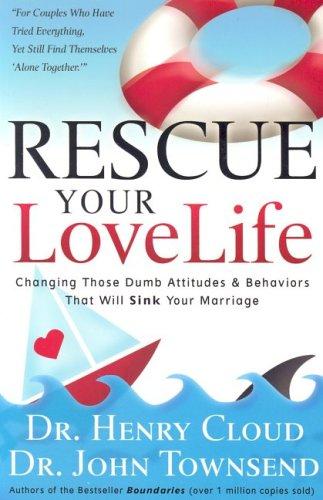 Rescue Your Love LifeHenry Cloud
 Safe PeopleHenry Cloud