Our Mothers, Ourselves
≈ From memoryOur adult identities, emotional struggles, and relational patterns are deeply rooted in the internal 'blueprint' created by our early relationship with our mothers.
In one sentence
The way we relate to ourselves and others as adults is a direct reflection of the emotional "imprint" left by our primary caregiver (the mother) during our formative years of emotional development.
Why read this (and who it's for)
This book is for anyone who feels "stuck" in repetitive relational patterns—specifically those who struggle with people-pleasing, chronic insecurity, or a desperate need for approval. It solves the mystery of why we react the way we do by tracing our current emotional triggers back to our childhood. After reading, you will be able to identify your "internalized mother" (the voice in your head) and begin to differentiate your own identity from the expectations and wounds of your upbringing.
The big idea
Cloud argues that the mother-child relationship is the primary laboratory for human development. Because a child is entirely dependent on the mother for survival, the child learns to see the world, themselves, and others through the "lens" of the mother’s reactions. If the mother is inconsistent, overbearing, or emotionally unavailable, the child adopts her perspective as their own reality.
The core thesis is that we do not just have a mother; we become our mother's internal voice. We internalize her criticisms, her fears, and her needs. This becomes our "internal working model." When we grow up, we find ourselves reacting to our own internal echoes as if they were external voices. To heal, we must recognize that these voices are not "us"—they are the echoes of a past relationship that we must learn to observe and eventually silence.
Key ideas
The Internalized Mother
- What it is — The "internalized mother" is the mental representation of your mother that lives inside your head. It is the source of your conscience, your self-criticism, and your sense of what is "right" or "wrong."
- Why it matters — If you don't realize this voice is an internal echo, you will spend your life trying to please a ghost. You will feel like a failure because you cannot satisfy a standard that was never yours to begin with.
- In the book — Cloud describes how a child who was constantly criticized for being "messy" develops an internal critic that screams at them for every minor mistake in adulthood, even when the child is now a successful professional.
The Blueprint of Attachment
- What it is — Our early interactions with our mothers create a "blueprint" for how we believe love and safety work. This blueprint dictates how we choose partners and how we handle intimacy.
- Why it matters — If your blueprint says "love is conditional on performance," you will subconsciously seek out partners who demand perfection, recreating the original wound rather than healing it.
- In the book — Cloud explores how children who were "smothered" by a mother's needs learn that their own needs are a burden, leading to a lifelong habit of self-effacement.
The Role of Identification
- What it is — Identification is the process by which a child adopts the mother's identity to survive. We "become" what she wants us to be so that we can remain in her good graces.
- Why it matters — While identification is a survival mechanism, it becomes a prison when we fail to "de-identify." We stay trapped in a version of ourselves that was designed to please a parent who is no longer there.
- In the book — Cloud discusses how some children become "the hero" or "the scapegoat" to manage the mother's emotional instability, and how they stay in those roles long into adulthood.
Emotional Autonomy
- What it is — The goal of therapy and personal growth is to achieve emotional autonomy: the ability to feel, think, and act based on your own internal values rather than the echoes of your mother’s expectations.
- Why it matters — Without autonomy, you are a "functional" adult who is still emotionally enslaved. You may have a career and a house, but your inner life is still governed by a 10-year-old's fear of disappointing their mother.
- In the book — Cloud emphasizes that this isn't about "blaming" the mother, but about "re-parenting" the self—learning to provide the validation and safety that was missing in childhood.
The Mirror of the Mother
- What it is — A child sees themselves through the mother's eyes. If the mother sees the child as "weak," "difficult," or "unworthy," the child accepts that as an objective truth.
- Why it matters — We often believe our parents' descriptions of us are "facts." Cloud argues they were merely the subjective perceptions of a flawed human being.
- In the book — He illustrates how a mother’s anxiety can be projected onto a child, making the child feel responsible for the mother's happiness.
Frameworks & tools
The "Internal Voice" Audit
Use this to identify where your "Internalized Mother" is currently speaking for you.
- Identify the Trigger: Note a moment you felt intense guilt, shame, or a need to over-explain yourself.
- Isolate the Voice: What did you say to yourself in that moment? (e.g., "You're so stupid," "You're going to ruin everything.")
- Trace the Source: Ask, "Whose voice is this? Is this my voice, or is this my mother's voice?"
- Externalize: Mentally "hand" that thought back to the mother. Say, "That is your fear, not my reality."
- Replace: State a boundary. "I am allowed to make mistakes. I am learning."
The Autonomy Checklist
When making a major life decision (career, relationship, lifestyle), run through these three questions to ensure you aren't acting out of "Identification":
- The "Mother" Test: If I did this, would I be doing it primarily to make her proud or to avoid her disappointment?
- The "Fear" Test: Am I choosing this because I actually want it, or because I am afraid of the "internal critic" that will scream if I don't?
- The "True Self" Test: If I could never tell anyone about this choice (including my mother), would I still want to do it?
Memorable examples & stories
The "Perfect" Child
Cloud describes a child who was praised only when they achieved. This child grew up to be a high-achiever who suffers from paralyzing anxiety because they feel they are only lovable when they are producing results. Lesson: Success achieved only for the sake of external validation is a hollow victory that fuels anxiety.
The Smothering Mother
A story of a mother who viewed her child as an extension of herself. The child grew up to be a "people-pleaser" who cannot say "no" to anyone, fearing that any boundary will lead to abandonment. Lesson: People-pleasing is often a survival strategy from a childhood where your needs were ignored.
The Scapegoat
The child who was blamed for the mother's unhappiness. This child grows up feeling responsible for everyone's emotions and feels "guilty" for having their own needs. Lesson: You were never responsible for your mother's emotional state; you were simply a child trying to navigate her reactions.
Key quotes
"We become what our mothers want us to be, and in doing so, we lose who we are." (Paraphrased) Why it matters: It highlights the cost of survival—the loss of the authentic self.
"The internal voice of the mother is the most powerful architect of our adult personality." (Paraphrased) Why it matters: It explains why our internal critic feels so authoritative and "true."
"Healing begins when we recognize that the voice of criticism is not our own, but an echo of a past relationship." (Paraphrased) Why it matters: It provides the first step toward liberation: observation.
How to apply it
This week
- The "Voice Labeling" Experiment: Every time you criticize yourself today, say out loud (or in your head): "That is a thought, not a fact." Do not argue with the thought; just label it.
- The "No" Practice: Practice saying "no" to one small, insignificant request from a friend or colleague. Observe the "internal critic" that arises when you do.
- The "Mirror" Exercise: Spend 5 minutes looking in the mirror and identifying three things you like about yourself that have nothing to do with your achievements or your role as a parent/worker.
Ongoing
- Daily Awareness: When you feel a surge of "should" (e.g., "I should be doing more"), stop and ask: "Who told me I should?"
- The "Internal Parent" Journal: When you feel insecure, write down what a loving, wise, and supportive parent would say to you in that moment. Read this whenever the "Internalized Mother" becomes too loud.
- Boundary Setting: Actively identify one area where you are still "performing" for your mother (even if she is deceased or estranged) and set a boundary there.
Common pitfalls
- The Blame Trap: A common mistake is thinking this book is about "blaming" your mother. Cloud is clear: the goal is liberation. Blaming keeps you stuck in the past; recognizing the pattern allows you to move into the future.
- The "Perfect" Parent Myth: Some readers may struggle because they had "good" mothers. Cloud argues that even "good" mothers can have expectations that we internalize as our own. The work is about any internalized expectation that isn't yours.
- Over-Intellectualizing: It is easy to understand the theory of the Internalized Mother without actually feeling the shift in your daily reactions. You must move from "knowing" to "noticing."
Connects to
- "Boundaries" by Henry Cloud and Ted Chapin: The essential companion to this book. While Our Mothers, Ourselves explains the source of our problems, Boundaries provides the practical tools for setting limits.
- "The Body Keeps the Score" by Bessel van der Kolk: Provides the neurological and physiological evidence for how early childhood trauma and relational dynamics are literally "wired" into our nervous systems.
- "Adult Children of Emotionally Immature Parents" by Lindsay Gibson: Offers a more modern, clinical look at the specific types of parental immaturity that create these internal blueprints.
If you remember only three things
- Your inner critic is not "you"—it is an echo of your early relationship with your mother.
- You were conditioned to see yourself through her eyes, and you must now learn to see yourself through your own.
- Healing comes from recognizing the "blueprint" and choosing to redraw it with your own values.
Internalize it
-
Reflection questions
- What is the most frequent criticism I say to myself? Whose voice does that sound like?
- In what areas of my life am I still trying to "earn" love or approval?
- If I were completely free from my mother's expectations, what would I do differently today?
- When I feel guilty for saying "no," what is the specific "voice" I hear in my head?
-
Flashcards Q: What is the "Internalized Mother"? A: The mental representation of your mother's expectations, criticisms, and perceptions that you have adopted as your own internal voice.
Q: Why does the "blueprint" of early attachment matter? A: Because it creates the template for how we perceive safety, intimacy, and our own worth in adult relationships.
Q: What is the difference between "Identification" and "Autonomy"? A: Identification is adopting a persona to survive a parent's expectations; Autonomy is the ability to act based on your own internal values.
Q: How do you "externalize" the internal critic? A: By recognizing that the critical voice is an echo of a past relationship, not an objective truth about your current self.
Q: What is the primary goal of Cloud's work? A: To help individuals recognize their internal working models so they can stop living for others and start living for themselves.
Fidelity note
This summary is grounded in Henry Cloud's core psychological framework regarding the "Internalized Mother" and the developmental impact of early maternal relationships. I am confident in the conceptual framework of "Identification" and "Internalized Voices." However, because Cloud's work is deeply rooted in specific clinical case studies, some of the specific "stories" (like the Scapegoat or the Perfect Child) are representative of his recurring themes rather than a literal 1:1 transcript of a specific chapter. Readers should verify the specific nuances of his "Internalized Mother" theory by reading the primary text.
More from Henry Cloud
 BoundariesHenry Cloud and John Townsend
 Boundaries in MarriageHenry Cloud
 Changes That HealHenry Cloud
 How people growHenry Cloud
 How to Get a Date Worth KeepingHenry Cloud
 How to have that difficult conversation you've been avoidingHenry Cloud
 IntegrityHenry Cloud
 It's Not My FaultHenry Cloud
 Making Small Groups WorkHenry Cloud
 Raising great kidsHenry Cloud
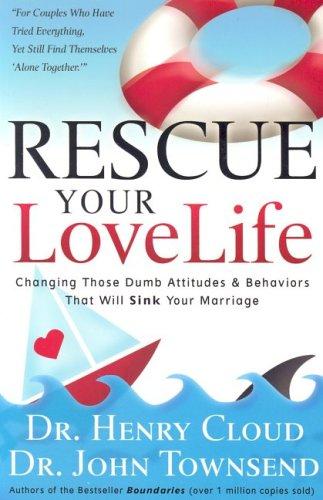 Rescue Your Love LifeHenry Cloud
 Safe PeopleHenry Cloud