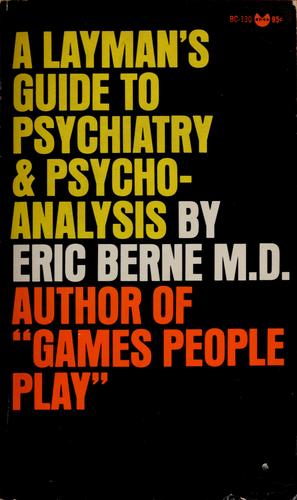
Beyond games and scripts
≈ From memoryHuman behavior is governed by unconscious 'scripts' and repetitive 'games' that we play to avoid intimacy and maintain our internal psychological structures.
In one sentence
Human beings are not merely reacting to the present; we are performing pre-written psychological scripts and playing repetitive social games to defend against the pain of true intimacy and the responsibility of authentic selfhood.
Why read this (and for whom)
This book is the foundational manual for understanding the "why" behind our repetitive, self-defeating behaviors in relationships. It solves the mystery of why we keep choosing the same types of partners, the same types of jobs, and the same types of conflicts.
Who benefits most:
- Therapists and counselors seeking a structural framework for personality disorders and chronic relational patterns.
- Individuals who feel "stuck" in a loop of repeating the same mistakes in their personal lives.
- Students of psychology who want to move beyond behaviorism into the structural dynamics of the human psyche.
After reading, you will be able to identify the "scripts" you are living out, recognize the "games" you play when you feel uncomfortable, and begin to consciously choose authentic interaction over habitual performance.
The big idea
Berne argues that our personalities are not monolithic entities but are composed of "scripts"—unconscious blueprints for life created in childhood. These scripts dictate our expectations, our roles, and our ultimate destiny. Because these scripts are often rooted in early trauma or parental conditioning, we act out our roles automatically, often to the detriment of our own happiness.
The core of the book explores how we use "Games" to navigate social interactions. A Game is a repetitive sequence of interactions that serves a hidden purpose: to provide a "payoff" (usually a feeling of superiority, a relief from boredom, or a justification for failure) while avoiding the vulnerability of genuine, "Adult" communication.
The logic is this: We play games because they are safer than being real. If I am "the victim" in a script, I don't have to take responsibility for my life. If I play a game of "Why don't you...?", I can attack you while maintaining a mask of concern. To change, we must recognize the script, stop the game, and move toward a state of authentic, integrated communication.
Key ideas
The Script
- What it is: A life plan created in childhood that determines how a person perceives the world, their relationships, and their own potential.
- Why it matters: It explains why people "self-sabotage." They aren't making bad choices; they are fulfilling a destiny they wrote for themselves before they were old enough to understand it.
- In the book: Berne describes how a child who is constantly criticized may develop a "Failure" script, where they subconsciously ensure they never succeed so they can remain in the "safe" role of the underdog.
The Game
- What it is: A series of social maneuvers that appear to be about one thing (e.g., a disagreement over chores) but are actually about a hidden psychological payoff (e.g., making the other person feel guilty).
- Why it matters: Recognizing games allows you to stop reacting to the content of what people say and start seeing the function of what they are doing.
- In the book: Berne highlights the "Kick Me" game, where a person constantly seeks out criticism to reinforce their internal belief that they are inadequate.
The Payoff
- What it is: The hidden emotional reward at the end of a game. It is almost always a way to avoid the "pain" of intimacy or the "burden" of responsibility.
- Why it matters: Without identifying the payoff, you cannot stop the behavior. You must ask: "What does this behavior allow me to avoid feeling?"
- In the book: A person might play a game of "See What You've Done," where they act outraged by a partner's mistake. The payoff is the ability to avoid the intimacy of a real, vulnerable conversation about their needs.
The Three Ego States (Parent, Adult, Child)
- What it is: The structural model of the personality. The Parent contains internalized rules and criticisms; the Child contains spontaneous emotions and reactions; the Adult is the data-processing, rational part of the personality.
- Why it matters: Most "Games" occur when we interact with someone's Child or Parent rather than their Adult.
- In the book: Berne explains that "Games" happen when we fail to communicate from Adult to Adult.
The "Why Don't You...?" Game
- What it is: A specific game where one person offers "helpful" advice that is actually a veiled attack or a way to make the other person feel incompetent.
- Why it matters: It is a common trap in marriages and workplaces where "help" is used as a weapon to maintain a position of moral superiority.
- In the book: The person playing this game enjoys the "payoff" of being the "righteous" one while the other person is forced into the role of the "incapable" one.
The "Stroke" (Implicit in the theory of Games)
- What it is: The smallest unit of recognition. A "stroke" is any bit of attention (positive or negative) that validates our existence.
- Why it matters: Games are often played because the player is "starving" for strokes. If we don't get attention, we will manufacture it through conflict.
- In the book: Berne discusses how negative strokes (criticism) are still better than no strokes at all for a person who feels invisible.
Frameworks & tools
The Game Analysis Framework
Use this to deconstruct a recurring conflict in your life.
- Identify the Repetition: What is the specific argument or situation that keeps happening? (e.g., "We always fight about the dishes.")
- Identify the Roles: Who is playing what part? (e.g., "I am the Nagging Parent, they are the Lazy Child.")
- Identify the "Switch": What is the moment the conversation turns from a real problem to a scripted attack?
- Identify the Payoff: What does the person who is "losing" the argument actually get out of it? (e.g., "They get to feel like a martyr.")
- The Adult Intervention: How would two "Adults" solve this without the script? (e.g., "I need help with the dishes because I feel overwhelmed; can we set a specific time?")
The Script Audit
A tool for long-term self-reflection.
- The "Should" List: Write down 5 things you believe you "should" be (e.g., "I should be successful," "I should be a martyr").
- The Origin Trace: For each "should," ask: "Whose voice is this? My mother's? My father's? A teacher's?"
- The Cost Analysis: What has this belief cost you in terms of joy, freedom, and authentic connection?
- The Script Rewrite: What would the "Adult" version of this belief look like? (e.g., "I want to be capable, not just successful.")
Memorable examples & stories
The "Why Don't You...?" Interaction
A person complains about their messy house. The other person responds, "Why don't you just hire a cleaner?" The first person gets angry. The second person says, "I'm just trying to help!" The first person feels attacked. The Lesson: The "help" was a weapon. The payoff was the second person's ability to feel morally superior while avoiding the actual work of helping.
The "Victim" Script
A person who constantly finds themselves in "impossible" situations where they are always the victim of someone else's incompetence. The Lesson: This person may be subconsciously choosing "bad" partners to validate their internal script that they are powerless.
The "See What You've Done" Game
A partner makes a small mistake, and the other reacts with exaggerated, performative outrage. The Lesson: The outrage isn't about the mistake; it's a way to avoid a conversation about the actual, deeper needs of the relationship.
Key quotes
"Games are the way we avoid the pain of being real." (Paraphrased) Why it matters: It highlights that our behaviors aren't "crazy"—they are protective measures.
"The script is the blueprint of our lives." (Paraphrased) Why it matters: It emphasizes that our personalities are often pre-determined by our past.
"The goal of the Game is to get a payoff without the risk of intimacy." (Paraphrased) Why it matters: It identifies the specific fear (intimacy) that drives our self-defeating behaviors.
How to apply it
This week
- The "Game" Watch: Choose one recurring argument you have with a spouse or coworker. Instead of reacting, observe it as if you are a scientist. Note the "Roles" being played.
- Identify the Payoff: The next time you feel angry during a conflict, stop and ask: "What is the hidden payoff of this argument? What am I trying to avoid feeling?"
- Adult Communication: Practice one "Adult-to-Adult" interaction. State a fact, ask a question, and offer a solution without any "Parent" criticism or "Child" whining.
Ongoing
- Script Awareness: When you feel a "should" or a "must," pause and ask: "Is this my script or my actual desire?"
- The Intimacy Check: Before engaging in a conflict, ask: "Am I trying to win this argument, or am I trying to be understood?"
- Stop the Game: When you recognize a "Game" (like Why Don't You...?), refuse to play the role. State clearly: "I feel like we're playing a game here. Can we talk about what's actually bothering us?"
Common pitfalls
- Over-analyzing to the point of paralysis: It is easy to become so obsessed with "Scripts" and "Games" that you stop actually living. The goal is awareness, not constant intellectualization.
- The "Blame" Trap: It is easy to use Berne’s theories to say, "You're just playing a game!" This is just another game. The goal is to understand the pain behind the game, not to win a point against the other person.
- Ignoring the Biological: While Berne focuses on the psychological, he doesn't account for neurobiology or physiological states (hunger, exhaustion, hormones) which can also influence behavior.
Connects to
- Transactional Analysis (The rest of Berne's work): This book is the "What" and "Why," while his other works provide the "How" of the therapy.
- Internal Family Systems (IFS): Similar to Berne's Ego States, IFS explores the "parts" of the self, though it uses different terminology (Protectors, Exiles).
- Schema Therapy: A modern evolution of these ideas, focusing on "Early Maladaptive Schemas" which are very similar to Berne's "Scripts."
If you remember only three things
- Scripts: We act out pre-written life plans created in childhood.
- Games: We use repetitive social patterns to avoid the vulnerability of real intimacy.
- The Payoff: Every self-defeating behavior has a hidden "reward"—usually the avoidance of a difficult feeling.
Internalize it
-
Reflection questions
- What is the "Script" I have been living out in my career? How did I get it?
- What is the most common "Game" I play when I feel criticized?
- If I stopped playing my favorite "Game," what would I have to face?
- In what ways am I currently acting as a "Parent" or "Child" instead of an "Adult" in my primary relationship?
-
Flashcards Q: What is a "Script" in Berne's theory? A: A pre-written life plan created in childhood that dictates how a person perceives their roles and destiny. Q: What is the primary purpose of a "Game"? A: To achieve a psychological payoff (like superiority or relief) while avoiding the pain of true intimacy. Q: What are the three Ego States? A: Parent (internalized rules), Adult (rational data-processing), and Child (emotions/reactions). Q: What is the "Why Don't You...?" game? A: A game where one person offers "helpful" advice that is actually a veiled attack to make the other person feel incompetent. Q: What is the "Payoff"? A: The hidden emotional reward of a game, usually involving the avoidance of responsibility or intimacy. Q: How do you break a Game? A: By identifying the script, recognizing the game, and choosing to communicate from the "Adult" ego state.
Fidelity note
I am highly confident in the core concepts of this summary, specifically the definitions of Scripts, Games, and the Ego States. These are the pillars of Berne's Transactional Analysis. I am less certain of the specific nuances of every single "Game" named in the book, as Berne lists many, but the "Why Don't You...?" and "Kick Me" games are the most prominent. Readers should verify the specific list of Games in the text if they require a comprehensive catalog.