Father and Child Reunion
≈ From memoryThe father serves as the essential bridge to the outside world, providing the adventure, authority, and independence a child needs to become a self-reliant adult.
In one sentence
A child without a present, active father—or a father who functions only as a provider rather than a relational guide—is deprived of the essential "bridge" to the outside world, leading to a profound lack of self-confidence and difficulty with authority.
Why read this (and who it's for)
This book is for parents (particularly fathers) who feel their children struggle with social boundaries, lack self-assurance, or seem "lost" in their own development. It solves the mystery of why some children, despite being well-cared for by a loving mother, still struggle to navigate the complexities of the world. After reading, you will be able to identify the specific "father-roles" that are missing in your household and implement a strategy to provide your child with a sense of adventure and a secure understanding of authority.
The big idea
Warren Farrell argues that the primary role of the father is fundamentally different from that of the mother. While the mother provides the "home"—the sanctuary of nurture, safety, and internal emotional connection—the father provides the "world." He is the bridge that allows the child to move from the safety of the nest into the independence of the outer world.
The tragedy of the modern "Fatherless" society is not just a matter of physical absence (divorce or death); it is a matter of functional absence. A father who is physically present but emotionally unavailable, or who acts only as a "bank" (provider) rather than a "bridge" (relational guide), leaves the child in a state of psychological suspension. Without a father to model adventure and authority, the child remains "enmeshed" in the mother-child bond, making it difficult for them to develop a sense of self-reliance or a respect for external rules.
The logic is simple: A child needs a "Safe Haven" (Mother) to know they are loved, but they need a "Voyager" (Father) to know they can survive the world. When the Voyager is missing, the child lacks the internal compass required to navigate life's challenges with confidence.
Key ideas
The Mother-Child Bond vs. The Father-Child Bond
- What it is — The mother-child bond is rooted in nurture and the "Safe Haven." It is the bond of survival, providing the child with a sense of belonging and emotional security. The father-child bond is rooted in adventure and the "Voyager" role, providing the child with the tools for independence.
- Why it matters — If you view parenting as a monolithic task, you miss the unique psychological "nutrients" only a father can provide. Recognizing this distinction allows you to intentionally cultivate "adventure" rather than just "safety."
- In the book — Farrell distinguishes between the "Home" (Mother) and the "World" (Father). He argues that while the mother helps the child be, the father helps the child do.
The "Fatherless" Child
- What it is — A "Fatherless" child is any child who lacks a father who is actively engaged in the role of a mentor, protector, and adventurer. This includes children whose fathers are physically present but emotionally absent.
- Why it matters — This concept shifts the focus from "broken homes" to "broken roles." It explains why children from "complete" families can still suffer from a lack of self-confidence if the father's role is neglected.
- In the book — Farrell describes the "Fatherless" child as someone who lacks a "bridge" to the outside world, often resulting in a child who is overly dependent on the mother and fearful of the unknown.
The Father as the Bridge to the World
- What it is — The father's primary function is to introduce the child to the "Other." He is the one who pushes the child to explore, to take risks, and to understand that there is a world beyond the immediate needs of the family.
- Why it matters — Without this bridge, a child may become "enmeshed"—unable to distinguish their own needs from their mother's, leading to a stunted sense of identity.
- In the book — Farrell emphasizes that the father's role is to be the "scout." He is the one who says, "Go see what's over there," and provides the safety net for that exploration.
The Authority Gap
- What it is — Because the father is the primary model of "loving authority," his absence creates a vacuum where children struggle to understand why rules exist or how to respect legitimate authority.
- Why it matters — Children who lack this model often struggle with school, sports, and social hierarchies because they haven't learned that authority can be both firm and loving.
- In the book — Farrell argues that the father provides the "rules of the game." Without him, the child sees rules as arbitrary impositions rather than necessary structures for safety and growth.
The Role of the Father in Masculinity and Femininity
- What it is — The father is the primary architect of a child's understanding of gender. He provides the blueprint for what it means to be a man (strength, responsibility, protection) and how a woman should be treated (with respect and safety).
- Why it matters — This is the foundation of social behavior. A father's presence teaches a boy how to be a man and a girl how to be a woman who knows her worth.
- In the book — Farrell notes that a father's presence provides a "moral compass" for gender roles that is often missing in a mother-centric environment.
Frameworks & tools
The Adventure-Authority Framework
Farrell suggests that fatherhood is best expressed through two primary modes of interaction. To be an effective "Bridge," a father must rotate between these two:
1. The Adventure Mode (The "Voyager")
- Purpose: To build self-confidence and independence.
- Action: Engage in "risky" (but safe) play. This includes physical challenges, exploring new environments, and "doing" things together.
- Key Metric: Does this activity require the child to step outside their comfort zone?
2. The Authority Mode (The "Protector")
- Purpose: To provide a sense of security and boundaries.
- Action: Set clear, non-negotiable rules. Explain the why behind the rules (safety, respect, growth).
- Key Metric: Is the rule consistent? Is the father's presence felt as a steady, reliable anchor?
The "Bridge" Assessment
Use this to evaluate the current state of the father-child relationship:
- Presence: Is the father physically there?
- Participation: Is the father actively engaged in the child's interests?
- Adventure: Does the father regularly initiate activities that challenge the child's current abilities?
- Authority: Does the child know exactly where the boundaries are?
- Independence: Is the child being encouraged to do things alone that they are capable of doing?
Memorable examples & stories
The "Safe Haven" vs. "Voyager" Distinction
Farrell uses the metaphor of a harbor and a ship. The mother is the harbor—the place of rest and refueling. The father is the ship—the vessel that takes the child out into the deep water. The lesson is that a child needs both to be a complete human being; a ship without a harbor is lost, and a harbor without a ship is stagnant.
The "Authority Gap" in Schools
Farrell discusses how children who lack a father's "loving authority" often struggle with teachers and coaches. Because they haven't had a father to model how to respect a leader while maintaining a personal bond, they view authority figures as enemies to be rebelled against or as figures to be feared. The lesson is that fatherhood provides the blueprint for healthy power dynamics.
The "Enmeshed" Child
Farrell describes the psychological state of a child who is too close to the mother. Without the father's "push" toward the outside world, the child becomes an extension of the mother's emotions and needs. The lesson is that the father's role is to provide the "distance" necessary for the child to develop a unique self.
Key quotes
"The father is the bridge to the world." Why it matters: This encapsulates the entire book. It defines the father's unique psychological contribution as the facilitator of independence.
"A fatherless child is not just a child without a father; it is a child without a father's role." (Paraphrased) Why it matters: This clarifies that physical presence is insufficient. The function of the father—adventure and authority—is what the child requires.
"The mother provides the home; the father provides the world." (Paraphrased) Why it matters: This highlights the complementary nature of parenting. It validates the mother's role while insisting on the father's unique, indispensable contribution.
How to apply it
This week
- The Adventure Audit: Identify one activity your child is afraid of or hesitant to try (e.g., a bike ride, a certain sport, a difficult puzzle). Schedule a time to do it together this week.
- The Authority Anchor: Choose one household rule that has been "fuzzy" lately (e.g., bedtime, chores). State the rule clearly, explain the "why" behind it, and enforce it consistently for the next 7 days.
- The "No-Phone" Adventure: Spend 30 minutes of "active" play where the father is fully engaged in a physical activity with the child (climbing, running, building).
Ongoing
- Prioritize "Doing" over "Watching": Ensure that a significant portion of your time with your child involves action—exploring, creating, or competing—rather than just passive entertainment.
- Be the "Safe" Risk-Taker: Regularly model taking risks (trying a new hobby, admitting a mistake, trying a difficult physical task) to show the child that the world is a place to be explored, not feared.
- The "Protector" Check-in: Once a week, ask yourself: "Did I provide a boundary today that kept my child safe/disciplined, or did I just let them do whatever they wanted?"
Common pitfalls
- The "Hero" Fallacy: Many fathers feel they must be perfect "super-dads" to fulfill this role. Farrell isn't arguing for perfection; he's arguing for presence and participation. You don't have to be an expert at everything; you just have to be the one who encourages the child to try.
- The "Presence" Trap: Simply being in the same room as your child while looking at a screen does not count as "fathering." The role requires active engagement and the intentional creation of "adventure."
- Over-correcting the Mother: This book is not an indictment of mothers. It is a defense of the father's unique role. The goal is a balanced parenting team where both roles are fully realized.
Connects to
- The Spirit of the Father by Warren Farrell (Further explores the spiritual and cultural dimensions of fatherhood).
- The Book of Parenting (General parenting frameworks that can be layered with Farrell's specific father-centric views).
- Attachment Theory (Bowlby/Ainsworth): While Farrell focuses on the father's unique role, Attachment Theory provides the foundational understanding of why the "Safe Haven" (mother) is so critical for early survival.
If you remember only three things
- The father's primary role is to be the bridge to the outside world.
- A "Fatherless" child is one who lacks the adventure and authority provided by an active father.
- Parenting is a partnership of Home (Mother) and World (Father); both are required for a child to become a self-reliant adult.
Internalize it
-
Reflection questions
- In what ways have I allowed my child to become "enmeshed" in my own life rather than encouraging their independence?
- When was the last time I took my child on a "voyage"—a physical or mental adventure that pushed them out of their comfort zone?
- Am I providing "Authority" (clear, loving boundaries) or just "Rules" (arbitrary restrictions)?
- How can I better model "masculinity" (responsibility and protection) in my daily interactions with my children?
-
Flashcards Q: What is the primary difference between the mother's role and the father's role? A: The mother provides the "Home" (nurture and safety), while the father provides the "World" (adventure and independence).
Q: What does Farrell mean by a "Fatherless" child? A: A child who lacks a father who is actively engaged in the role of a mentor, protector, and adventurer, regardless of whether the father is physically present.
Q: What is the "Bridge" metaphor? A: The father acts as the bridge that allows the child to move from the safety of the family unit to the independence of the outside world.
Q: What is the "Authority Gap"? A: The vacuum created when a father's role as a model of loving authority is missing, leading to children who struggle with rules and respect for authority.
Q: How does the father contribute to a child's understanding of gender? A: By providing a blueprint for manhood (strength, responsibility) and showing the child how a woman should be treated with respect.
Fidelity note
I have a high-confidence understanding of Warren Farrell's core thesis regarding the "Fatherless" society and the specific roles of the father as a "bridge" to the world. The distinction between the "Home" (Mother) and "World" (Father) is the cornerstone of his work. I am confident in the "Adventure" and "Authority" frameworks as they represent his primary recommendations for active fathering. However, because Farrell's work is extensive, some specific anecdotes may be summarized to fit the "Master Book Distiller" format without losing the core psychological truth.
Keep going — related reads



More from Warren Farrell
 Does Feminism Discriminate Against MenWarren Farrell and James P. SterbaEsalen Journal – Enhancing Love From Role Mate to Soul Mate, April 23, 2025Warren FarrellFOX News – OP-ED – Elections are temporary. Family is forever. Here’s how to keep politics from driving you apart, SepteWarren FarrellHeritage – How Pennsylvania’s “Men of Steel” Were Left Behind, June 6, 2024Warren Farrell
 The Boy CrisisWarren Farrell and John Gray
 The Liberated ManWarren Farrell
 The Myth of Male PowerWarren Farrell
 Why Men Are the Way They AreWarren Farrell
 Why Men Earn MoreWarren Farrell
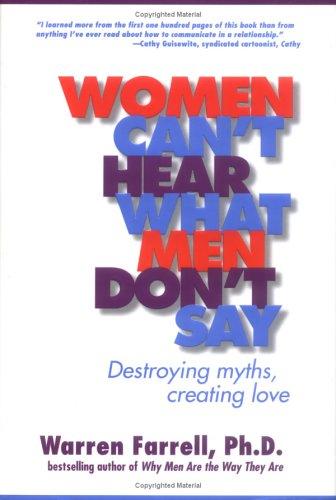 Women Can't Hear What Men Don't SayWarren Farrell