Emotional Intelligence
≈ From memoryEmotional intelligence is the ability to recognize, understand, and manage our own emotions while influencing the emotions of others—a skill set that often proves more predictive of success than IQ.
In one sentence
Success in life and leadership depends less on raw cognitive processing power (IQ) and more on the ability to perceive, understand, and regulate emotions (EQ).
Why read this (and who it's for)
Most people believe that "intelligence" is a fixed trait measured by standardized tests. Goleman argues that this is a narrow view of human potential. This book solves the problem of why brilliant people often fail in leadership roles or struggle with personal relationships: they lack the emotional literacy to navigate complex social environments and internal stresses.
Who benefits most:
- Leaders and Managers who want to improve team cohesion and individual performance.
- Parents and Educators looking to foster emotional resilience in children.
- Individuals who feel "hijacked" by their emotions (anger, anxiety, impulsivity) and want to regain control over their reactions.
After reading this, you will be able to identify the physiological triggers of your emotions, pause before reacting to stressors, and develop a more nuanced vocabulary for describing how you feel and what others need from you.
The big idea
Goleman argues that our emotions are not "irrational" distractions; they are sophisticated biological signals designed to help us survive. However, in the modern world, these ancient survival mechanisms (like the "fight or flight" response) often misfire when applied to office politics or social nuances. Emotional Intelligence (EQ) is the bridge between our primal instincts and our civilized capabilities.
The core logic follows a hierarchy: you cannot manage what you do not perceive. Therefore, EQ begins with Self-Awareness—the ability to identify an emotion as it happens. Once identified, you can apply Self-Regulation to choose a response rather than reacting blindly. This internal mastery then radiates outward into Social Awareness (Empathy) and Relationship Management.
Goleman asserts that EQ is not a static trait like height; it is a set of skills that can be learned, practiced, and strengthened over time through intentional "emotional training."
Key ideas
The Amygdala Hijack
- What it is — The process where the brain's emotional center (the amygdala) reacts to a perceived threat before the rational center (prefrontal cortex) can process the information. This results in an immediate, often inappropriate, emotional outburst or "freeze" response.
- Why it matters — Understanding this explains why we say things we regret during arguments. It proves that our initial reactions are often biological reflexes, not reflections of our character, giving us a window of opportunity to intervene before the "hijack" completes its cycle.
- In the book — Goleman describes how a person might see a coworker's neutral face as a sneer and immediately feel a surge of rage, illustrating how the brain prioritizes speed over accuracy in emotional detection.
The Four Domains of EQ
- What it is — Goleman categorizes EQ into four distinct pillars: Self-Awareness (recognizing your own feelings), Self-Management (controlling those feelings), Social Awareness (understanding others' feelings), and Relationship Management (handling interactions successfully).
- Why it matters — It provides a roadmap for development. Instead of saying "I need to be more emotional," you can identify exactly where the breakdown is occurring: Is it an internal awareness problem or an external social skill problem?
- In the book — He uses the example of a manager who knows they are angry (Self-Awareness) but lacks the discipline to stay calm during a performance review (Self-Management).
Empathy as a Social Radar
- What it is — The ability to "read" others' emotions and understand their perspectives. Goleman distinguishes between cognitive empathy (understanding someone's perspective) and emotional empathy (feeling what they feel).
- Why it matters — Without empathy, social interaction becomes a transaction rather than a connection. Empathy allows us to predict reactions, build trust, and navigate the unspoken rules of any group.
- In the book — He discusses how empathy is essential for leadership; a leader who cannot sense the "temperature" of a room will fail to motivate their team effectively.
The Role of Motivation
- What it is — Emotional intelligence includes an internal drive that goes beyond external rewards like money or status. It involves a passion for work, persistence in the face of failure, and a commitment to personal growth.
- Why it matters — High EQ individuals are often "self-started." They can find intrinsic meaning in difficult tasks, which is what sustains long-term success where IQ alone might lead to burnout or boredom.
- In the book — Goleman highlights how people with high EQ can maintain a sense of purpose even when faced with repeated setbacks, viewing failure as data rather than a definition of self-worth.
Social Skills and Influence
- What it is — The "applied" side of EQ; the ability to communicate clearly, listen actively, and manage conflict. It is the skill of moving people toward a common goal.
- Why it matters — You can be perfectly aware of your emotions and others', but if you cannot articulate those feelings or negotiate a compromise, you will remain stuck in a stalemate. Social skills are the tools for implementation.
- In the book — He emphasizes that social skill is not about "manipulation" but about influence—the ability to foster cooperation and manage the emotional dynamics of a group.
Frameworks & tools
The EQ Competency Model
Goleman identifies five core components of Emotional Intelligence. Use this as a diagnostic tool to assess your own strengths and weaknesses:
- Self-Awareness: Can you name the emotion you are feeling right now? (e.g., "I am not just annoyed; I am feeling undervalued.")
- Self-Regulation: When you feel an impulse, can you pause for 5 seconds before acting?
- Motivation: Do you have a personal "why" that keeps you going when the initial excitement wears off?
- Empathy: Can you accurately guess how someone else is feeling based on their non-verbal cues (body language, tone)?
- Social Skill: Can you navigate a disagreement without making the other person feel attacked?
The "Pause" Technique (Anti-Hijack Protocol)
To stop an Amygdala Hijack, Goleman suggests a mental circuit breaker:
- Identify the Physical Sensation: Recognize the heat in your chest, the tightening of your jaw, or the rapid heartbeat. This is the signal that the amygdala has taken over.
- Label the Emotion: Mentally say, "I am feeling defensive" or "I am feeling overwhelmed." Labeling moves the activity from the emotional brain to the rational prefrontal cortex.
- The 6-Second Rule: Take a deliberate breath. It takes about six seconds for the chemical surge of an emotional hijack to begin to dissipate.
- Choose the Response: Only after this pause should you decide on your words or actions.
Memorable examples & stories
The "Hostile" Coworker
Goleman describes a scenario where an employee interprets a neutral comment as a personal attack. Because their brain reacts with "lightning speed," they respond with hostility, creating a cycle of resentment. Lesson: Our brains are wired for survival, not always for accuracy; we must learn to verify our perceptions before reacting.
The High-IQ Failure
The book discusses cases of brilliant individuals who were passed over for promotions because they couldn't handle the "emotional friction" of managing people. They could do the work, but they couldn't manage the feelings associated with the work. Lesson: IQ gets you through the door; EQ keeps you in the room.
The Empathic Listener
Goleman highlights how a truly empathetic listener doesn't just wait for their turn to speak. They listen for the "undercurrent" of emotion—the fear, the pride, or the hesitation behind the words. Lesson: Listening is an emotional act, not just a cognitive one.
Key quotes
"Emotional intelligence is the ability to monitor one's own feelings and emotions, regulate them and use them constructively." (Paraphrased) Why it matters: It defines EQ as a proactive skill set, not a passive personality trait.
"The brain's emotional center—the amygdala—is like an alarm system. When it's triggered, it can hijack our rational thinking." (Paraphrased) Why it matters: This explains the biological reality of why we lose our cool and how to stop it.
"Empathy is the ability to understand the emotional makeup of other people." (Paraphrased) Why it matters: It frames empathy as a skill that can be developed, not just a "gift" some people are born with.
How to apply it
This week
- The Labeling Exercise: Three times a day, stop and ask yourself: "What emotion am I feeling right now?" Do not judge the feeling; just name it (e.g., "I feel impatient," "I feel curious").
- The 6-Second Pause: In every meeting or difficult conversation this week, commit to a 6-second silence before responding to any provocative comment.
- Active Empathy Check: During one conversation today, focus entirely on the other person's non-verbal cues. What is their body language saying that their words aren't?
Ongoing
- Emotional Journaling: Spend 5 minutes at the end of each day noting one "hijack" moment—what triggered it, how did you react, and how would you like to react next time?
- Social Skill Practice: Actively seek out "low-stakes" social interactions (chatting with a barista, asking a neighbor a question) to practice reading cues and building rapport.
- The Motivation Audit: When you feel yourself flagging on a project, ask: "What is the intrinsic part of this that I actually care about?" Reconnect with your internal 'why.'
Common pitfalls
- Confusing Empathy with Agreeableness: People often think being empathetic means agreeing with everyone. It doesn't. Empathy is understanding their perspective, even if you disagree with their conclusion.
- The "Soft Skill" Fallacy: Because EQ involves emotions, people often dismiss it as "fluff." Goleman argues the opposite: because emotions are biological and neurological, managing them is a rigorous, hard skill that requires intense practice.
- Over-analyzing to the point of Paralysis: You can become so aware of your emotions that you overthink every interaction. The goal is regulation, not constant rumination.
Connects to
- "Thinking, Fast and Slow" by Daniel Kahneman: While Goleman focuses on emotion, Kahneman focuses on the cognitive systems (System 1 and System 2) that underpin how we make decisions. Together, they provide a complete picture of human behavior.
- "Atomic Habits" by James Clear: Provides the practical framework for how to actually build the habits required to develop EQ (the "systems" for emotional regulation).
If you remember only three things
- The Amygdala Hijack: Your emotions can hijack your logic; recognize the physical signs of this happening.
- Self-Awareness is Foundation: You cannot manage what you cannot name. Labeling your feelings is the first step to controlling them.
- EQ is a Skill: Unlike IQ, which is relatively stable, EQ is a muscle that grows with intentional practice and social interaction.
Internalize it
-
Reflection questions
- In what specific situations do I most frequently experience an "Amygdala Hijack"? What are the physical sensations I feel right before I lose my cool?
- When I am in a disagreement, am I listening to understand the other person's feelings, or am I just waiting for my turn to speak?
- Which of the four domains (Self-Awareness, Self-Regulation, Social Awareness, Relationship Management) is my weakest link? What is one specific action I can take this week to strengthen it?
-
Flashcards Q: What is an "Amygdala Hijack"? A: A process where the brain's emotional center reacts to a threat before the rational prefrontal cortex can process it, leading to impulsive reactions.
Q: What are the four domains of Emotional Intelligence? A: Self-Awareness, Self-Regulation, Social Awareness (Empathy), and Relationship Management.
Q: How does "labeling" an emotion help with self-regulation? A: It shifts brain activity from the emotional amygdala to the rational prefrontal cortex, allowing for a more deliberate response.
Q: What is the difference between cognitive empathy and emotional empathy? A: Cognitive empathy is understanding another's perspective; emotional empathy is actually feeling what they feel.
Q: Why is EQ often more important than IQ in leadership? A: Because leadership requires managing people, navigating complex social dynamics, and maintaining motivation—all of which are rooted in emotional intelligence.
Fidelity note
I have a high level of confidence in the core concepts of this summary (the Amygdala Hijack, the four domains of EQ, and the distinction between IQ/EQ). Goleman’s work is foundational in modern psychology. However, because I am summarizing from memory, some of the specific academic studies or minor anecdotes used to illustrate his points may be generalized. For a deep dive into the neurological data, a reader should verify Goleman's specific brain-imaging references in the original text.
Keep going — related reads
 Working with Emotional IntelligenceDaniel Goleman
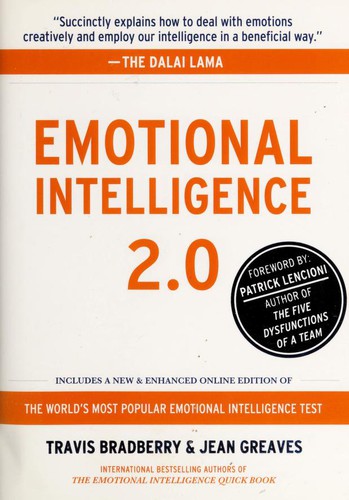 Emotional Intelligence 2.0Travis Bradberry and Jean Greaves
 The Emotional Life of Your BrainRichard J. Davidson and Christine Larson
 The EQ EdgeSteven J. Stein and Howard E. Book
 The Emotionally Intelligent ManagerDavid R. Caruso and Peter Salovey
 Raising an Emotionally Intelligent ChildJohn Gottman
More from Daniel Goleman
 #111 — The Science of MeditationMaking Sense with Sam Harris
 Altered TraitsDaniel Goleman and Richard J. Davidson
 Ecological intelligenceDaniel Goleman
 FocusDaniel Goleman
 HBR's 10 must reads on managing peopleDaniel Goleman
 New LeadersDaniel Goleman
 Primal LeadershipDaniel Goleman, Richard Boyatzis, and Annie McKee
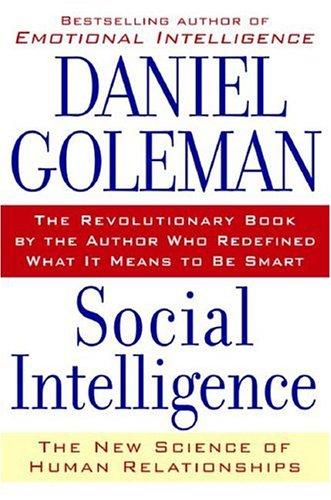 Social IntelligenceDaniel Goleman
 The Science of Emotional Intelligence Daniel Goleman10 Percent Happier
 What psychology knows that everyone shouldDaniel GolemanWorking with Emotional IntelligenceDaniel Goleman