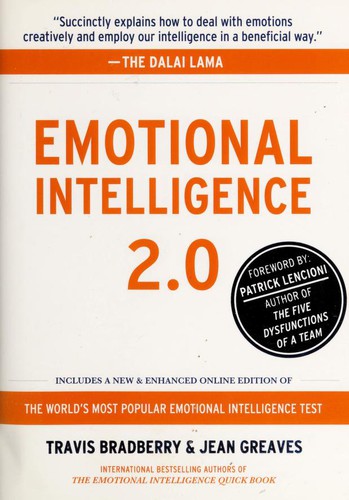
The Emotionally Intelligent Manager
≈ From memoryEffective leadership is not a byproduct of technical mastery alone, but of the ability to perceive, understand, and regulate the emotional data that flows through an organization.
In one sentence
Management is fundamentally a social process where success depends on your ability to accurately perceive and regulate both your own emotions and those of your team members.
Why read this (and who it's for)
Most management training focuses on what to do: how to run a meeting, how to set KPIs, how to delegate tasks. This book addresses the how of human interaction—the invisible substrate of leadership. It solves the problem of "technically brilliant but socially tone-deaf" managers who struggle with employee retention, team friction, and their own burnout.
This is for anyone in a leadership position (or aspiring to be) who finds that people problems are harder to solve than technical ones. After reading this, you will be able to identify the underlying emotional drivers of your team's behavior, manage your own stress responses during high-stakes conflicts, and build a culture of psychological safety where employees feel seen and understood.
The big idea
The central thesis of Caruso and Salovey is that Emotional Intelligence (EI) is not a "soft" personality trait; it is a sophisticated cognitive ability. They argue that emotions are actually data points—signals that provide information about our environment, our needs, and our relationships. A manager who lacks EI is like a pilot flying without instruments: they can see the plane moving, but they cannot interpret the turbulence or the fuel levels correctly.
The authors posit that to be an effective leader, you must develop four distinct competencies: Perceiving emotions (detecting them), Assessing emotions (understanding their meaning), Understanding emotions (predicting how they will evolve), and Regulating emotions (managing them to achieve a goal). When you master these, you move from "Command and Control" leadership—which relies on authority—to "Connect and Collaborate" leadership, which relies on influence and mutual commitment.
The logic is simple: People are emotional creatures. If you ignore the emotional component of work, you are ignoring the primary driver of human motivation and behavior. By treating emotions as a legitimate source of information rather than a distraction to be suppressed, you unlock higher levels of engagement, clearer communication, and more resilient teams.
Key ideas
Emotional Perception: The Sensory Input
What it is — This is the ability to detect emotional signals in yourself and others. It involves recognizing facial expressions, body language, tone of voice, and even "micro-expressions" that signal discomfort or enthusiasm before they are spoken aloud. Why it matters — If you cannot perceive emotion, you are effectively blind to the "weather" of your team. You won't notice when a high-performer is beginning to burn out or when a quiet team member is feeling sidelined until they eventually quit or check out. In the book — The authors emphasize that perception is the foundation. They argue that many managers miss subtle cues—like a slight change in a subordinate’s vocal pitch during a status update—which are actually early warning signs of frustration or anxiety.
Emotional Assessment: Determining Meaning
What it is — Once you perceive an emotion, you must assess its meaning. This means asking: "Why is this person feeling this way?" and "How does this relate to our current goals?" It requires distinguishing between a person's reaction (e.g., anger) and the underlying need (e.g., a lack of clarity on their role). Why it matters — Without assessment, you might react to the surface-level emotion rather than the root cause. If an employee is angry about a deadline, reacting with discipline ignores the fact that they may actually be overwhelmed by a lack of resources. In the book — The authors suggest that assessing emotions requires looking at the "context." You must evaluate how an emotion relates to the individual's history and the current organizational environment to truly understand what is being communicated.
Emotional Understanding: Predicting Dynamics
What it is — This is the ability to understand how emotions evolve over time and how they interact with one another. It involves predicting how a team’s mood might shift if a certain change is implemented, or how an employee's frustration might turn into resentment if left unaddressed. Why it matters — Leadership is often about proactive management. If you can predict that a "high-pressure" environment will eventually lead to emotional exhaustion and a drop in creativity, you can intervene before the team hits a breaking point. In the book — The authors highlight that emotions are not static; they are dynamic processes. Understanding these dynamics allows a manager to anticipate friction points in project timelines or organizational shifts.
Emotional Regulation: The Executive Function
What it is — This is the ability to manage your own emotional responses and influence the emotions of others. It isn't about "suppressing" feelings; it’s about choosing how to express them and using them as a tool for productive outcomes. Why it matters — A manager who loses their temper or reacts defensively to criticism creates an environment of fear. Conversely, a manager who can remain calm under pressure and model a constructive emotional response provides a "safe harbor" for the team during crises. In the book — The authors argue that regulation is the ultimate goal of EI in management. It involves techniques like "reframing"—taking a stressful situation and consciously viewing it as a challenge or an opportunity for growth.
Empathy as a Diagnostic Tool
What it is — Empathy is not just "feeling" what someone else feels; it is a cognitive skill used to understand another person's perspective. In management, empathy serves as a diagnostic tool to uncover the hidden barriers to performance. Why it matters — When an employee underperforms, the first question shouldn't be "What is wrong with them?" but rather "What is their experience of this work?" Empathy allows you to see the obstacles—be they personal, systemic, or emotional—that are blocking their success. In the book — The authors distinguish between affective empathy (feeling what others feel) and cognitive empathy (understanding how others think). For managers, cognitive empathy is often more useful for identifying why a team member might be struggling with a specific task.
Social Awareness vs. Social Skills
What it is — Social awareness is the ability to "read the room" and understand the group's emotional climate. Social skills are the actual behaviors you use to influence that climate—like active listening, conflict resolution, and team building. Why it matters — You can be aware of a toxic culture (awareness) without having the tools to change it (skills). A manager needs both: the ability to see that a team is becoming siloed and the skill to facilitate a conversation that breaks those silos down. In the book — The authors emphasize that social skills are the "output" of emotional intelligence. They are the behaviors—like clear communication and persuasive influence—that result from a high level of emotional awareness.
Frameworks & tools
The Four-Branch Model of Emotional Intelligence
This is the core framework used by Caruso and Salovey to categorize EI. To become an emotionally intelligent manager, you must develop proficiency in all four branches:
- Perceiving Emotions:
- Observe non-verbal cues (posture, eye contact).
- Listen for "emotional" words in meetings (e.g., "frustrated," "confused").
- Identify your own physical reactions to stress (tight shoulders, rapid breathing).
- Assessing Emotions:
- Ask: "What is the underlying need here?"
- Contextualize: Is this reaction normal given the current workload?
- Distinguish between intent and impact.
- Understanding Emotions:
- Predict: "If I don't address this, what will happen in two weeks?"
- Identify emotional triggers: What specific behaviors from others consistently upset you?
- Regulating Emotions:
- Reframing: When a project fails, ask "What did we learn?" instead of "Who messed up?"
- Self-Regulation: Practice the "pause" between a stimulus (an angry email) and your response.
The Emotional Audit (Implicit Framework)
While not a formal numbered list in the book, the authors' logic suggests an "Audit" for any management interaction:
- Identify: What is the current emotion in this room? (Perception)
- Analyze: Why is that emotion present? Is it related to the task or the person? (Assessment)
- Project: How will this emotion affect our ability to finish the work today? (Understanding)
- Act: What can I do to manage my reaction and help the team move forward? (Regulation)
Memorable examples & stories
The "Quiet" High-Performer
The authors describe a scenario where a high-performing employee becomes increasingly silent during meetings. A low-EI manager might see this as "increased focus." An emotionally intelligent manager perceives the withdrawal as a sign of disengagement or burnout and uses empathy to discover that the employee feels their contributions are no longer valued. Lesson: Silence is often a data point, not a lack of information.
The Reactive Manager
The book illustrates the difference between a "reactive" manager (who responds to immediate emotional triggers) and a "proactive" manager (who regulates their response). A reactive manager might snap at an employee for a mistake, creating a culture of fear. A proactive manager recognizes their own irritation, takes a moment to breathe, and then addresses the mistake as a coaching opportunity. Lesson: Your reaction is your responsibility; it is the foundation of team safety.
The Conflictual Team
The authors discuss teams that have "unresolved" emotional friction—where people aren't arguing openly but are instead avoiding each other. An emotionally intelligent manager identifies this "undercurrent," recognizes it as a threat to productivity, and facilitates a structured conversation to clear the air. Lesson: Unaddressed emotions don't go away; they ferment into resentment.
Key quotes
"Emotional intelligence is not about being 'nice'; it is about being effective by understanding the human element of work." (Paraphrased) Why it matters: It strips away the misconception that EI is a personality trait rather than a professional competency.
"The ability to perceive and understand emotions is the prerequisite for any meaningful social interaction." (Paraphrased) Why it matters: You cannot manage what you cannot see. Perception is the first step of leadership.
"Management is the art of managing the emotional climate of an organization." (Paraphrased) Why it matters: It frames the manager's role as a "climate-setter," similar to how a gardener manages soil and weather.
How to apply it
This week
- The Perception Audit: In your next three meetings, do not focus on the content of what people say for the first 5 minutes. Instead, observe their body language and tone. Note one instance where someone's non-verbal cues contradicted their words.
- Emotional Labeling: When a team member expresses frustration, practice "labeling." Say: "It sounds like you're feeling frustrated because of the lack of clarity on X. Is that right?" This validates their emotion and forces a move from reaction to assessment.
- The 5-Second Pause: Before responding to any critical email or comment, wait 5 seconds. Use that time to identify your immediate emotional reaction (e.g., "I feel defensive") before you type a single word.
Ongoing
- Reframing Practice: Whenever a project hits a snag, consciously reframe the situation from "a problem to be fixed" to "an opportunity for team growth." Explicitly state this reframe to your team.
- Active Empathy Checks: Once a week, ask a direct report: "What is one thing I can do to make your job easier this week?" Then, actually listen to the answer without offering immediate excuses or justifications.
- Self-Reflection Journaling: At the end of each day, spend 2 minutes identifying one emotional interaction you handled well and one where you let your emotions (or a lack of awareness) get in the way.
Common pitfalls
- The "Soft Skill" Trap: Many managers think EI means being "nice" or avoiding conflict. The authors argue that EI is actually about clarity. Sometimes, you need to have a difficult conversation; EI gives you the tools to do it without destroying the relationship.
- Over-Empathizing: There is a risk of becoming so attuned to others' emotions that you lose your own perspective or become paralyzed by the team's collective mood. You must maintain "professional distance"—understanding their feelings without being consumed by them.
- Ignoring the Data: A common mistake is thinking EI is just about "feelings." It is actually about data. If you treat emotions as purely subjective and ignore what they tell you about workflow, resources, and morale, you are failing to use the tool correctly.
Connects to
- Daniel Goleman's "Emotional Intelligence": While Caruso and Salovey provide a more academic/ability-based framework for EI, Goleman popularized the concept in the corporate world. Goleman’s work is excellent for understanding the outcomes of EI, while Caruso/Salovey are better for understanding the mechanics.
- Brené Brown's "Dare to Lead": Brown focuses heavily on vulnerability and courage as the core of leadership. This complements Caruso/Salovey by providing the "heart" (vulnerability) to the "head" (the cognitive ability of EI).
If you remember only three things
- Emotions are data: They provide critical information about the health of your team and the success of your projects.
- The 4-Branch Model: You must be able to Perceive, Assess, Understand, and Regulate emotions to lead effectively.
- Regulation is a skill: Like any other professional skill (like coding or accounting), emotional regulation can be practiced, measured, and improved over time.
Internalize it
-
Reflection questions
- When was the last time I reacted to an employee's behavior without first assessing the underlying cause? What was the result?
- Which of the four branches (Perceiving, Assessing, Understanding, Regulating) is my weakest? How does that weakness manifest in my daily management style?
- How would my team's performance change if I spent 10% more time identifying the "emotional weather" of our projects?
-
Flashcards Q: What are the four branches of Emotional Intelligence according to Caruso and Salovey? A: Perceiving, Assessing, Understanding, and Regulating.
Q: What is the difference between perceiving an emotion and assessing it? A: Perception is detecting the signal (e.g., "He looks angry"); Assessment is determining the meaning (e.g., "He is angry because he feels unsupported").
Q: How does a manager use "Reframing" as a regulation tool? A: By consciously changing the narrative of a stressful situation from a "threat" to a "challenge" or "learning opportunity."
Q: Why is emotional intelligence considered an "ability" rather than just a personality trait? A: Because it involves specific cognitive processes—analyzing data, predicting outcomes, and making conscious choices about how to behave.
Q: What is the primary goal of Emotional Regulation in a leadership context? A: To manage one's own reactions and influence the emotional climate of the team to achieve productive goals.
Fidelity note
This summary is grounded in the core theories of David R. Caruso and Peter Salovey, specifically their "Ability Model" of Emotional Intelligence. I am highly confident in the four-branch framework (Perceiving, Assessing, Understanding, Regulating) as this is the cornerstone of their academic work. The management applications are synthesized from the authors' arguments on how these abilities translate to leadership roles. Readers should verify specific organizational case studies if they require a deep dive into specific corporate industries mentioned in the text.