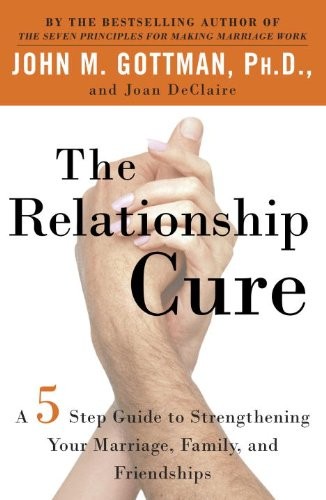
Raising an Emotionally Intelligent Child
≈ From memoryEmotional intelligence is the ability to recognize, understand, and manage emotions; parents foster this by acting as 'emotion coaches' who validate feelings before attempting to correct behaviors.
In one sentence
To raise an emotionally intelligent child, you must shift from being a "behavioral policeman" who punishes outbursts to an "emotion coach" who helps children identify, label, and manage the feelings that drive their behavior.
Why read this (and who it's for)
Most parents approach parenting as a series of problems to be solved: How do I stop the screaming? How do I get them to share? How do I make them sit still? Gottman argues that these are symptoms, not causes. The root cause is often an emotional dysregulation that the child lacks the vocabulary or self-awareness to handle.
This book is for parents who feel exhausted by constant power struggles and want a more sustainable way to connect with their children. By reading this, you will move from a reactive parenting style (reacting to the "bad" behavior) to a proactive one (addressing the underlying emotional state). You will learn how to build a child’s internal toolkit so they can eventually self-regulate without needing you to intervene every time they feel frustrated or sad.
The big idea
The central thesis of Gottman's work is that emotions are data. They are not "good" or "bad"; they are biological signals telling us about our needs, our environment, and our internal state. When a child has an emotional outburst—a tantrum, a meltdown, or even a withdrawal—it is their way of communicating a need that they cannot yet put into words.
Gottman argues that children are born with the capacity for emotion, but they are not born with the ability to manage it. This skill must be taught through a process he calls Emotional Literacy. If a child can name an emotion ("I feel frustrated because this block won't stay up"), they can begin to think about it rather than simply being consumed by it. Once a child can think about their feelings, they gain access to the prefrontal cortex—the "logical" brain—which allows them to find solutions and regulate their reactions.
The logic is simple but profound: Behavior follows emotion. If you only punish the behavior (the screaming) without addressing the emotion (the frustration), the child learns to suppress the feeling, which eventually leads to explosive outbursts later in life or a complete inability to handle stress as an adult. By coaching the emotion first, you give the child a permanent skill for life; by punishing the behavior alone, you only provide a temporary fix.
Key ideas
Emotional Literacy as a Foundation
- What it is — Emotional literacy is the ability to identify, understand, and express emotions accurately. It involves expanding a child's "feeling vocabulary" from basic terms (happy, sad, mad) to nuanced descriptors (frustrated, disappointed, lonely, overwhelmed).
- Why it matters — When a child can label an emotion, they create a "buffer" between the feeling and the action. This is the birth of self-regulation. If a child knows they are disappointed rather than just angry, they can begin to process that disappointment logically instead of acting out physically.
- In the book — Gottman emphasizes that children who lack this vocabulary often resort to "acting out" because behavior is the only language they have available to express an internal state they cannot name.
Validation vs. Evaluation
- What it is — Validation is the act of acknowledging a child's feelings as real and valid, regardless of whether you agree with their reaction. Evaluation is judging the feeling as "wrong" or "bad."
- Why it matters — When you evaluate a child ("You shouldn't be crying over something so small"), you shut down the communication line. Validation says, "I can see that this is really hard for you right now." This makes the child feel seen and safe, which lowers their physiological arousal and allows them to calm down.
- In the book — Gottman highlights that validation does not mean you are giving in to the child's demands; it means you are acknowledging their internal experience. You can validate a feeling while still holding a boundary on behavior (e.g., "It's okay to be angry that we have to leave, but it is not okay to hit me").
The Behavior/Emotion Split
- What it is — This is the distinction between what a child does (behavior) and what a child feels (emotion). Behavior is often the "tip of the iceberg," while emotion is the massive submerged portion.
- Why it matters — Most parents react to the tip of the iceberg (the screaming, the hitting, the whining). Gottman argues that if you only address the behavior, you leave the submerged part of the iceberg untouched. The next time the child feels that same emotion, they will have the same behavioral outburst because the underlying cause was never addressed.
- In the book — He uses the analogy of a "feeling circuit." When a child is overwhelmed, their brain's "alarm system" (the amygdala) takes over. To turn off the alarm, you must address the feeling that triggered it, not just the noise the alarm is making.
Co-regulation as a Prerequisite
- What it is — Children cannot self-regulate until they have first been co-regulated by a calm, regulated adult. Co-regulation is the process where an adult helps a child manage their physiological state through presence, tone of voice, and steadying actions.
- Why it matters — You cannot teach a child to be calm while they are in the middle of a "fight or flight" response. Your own calm becomes their anchor. If you become angry or frantic in response to their tantrum, you are adding fuel to the fire rather than helping them cool down.
- In the book — Gottman stresses that your primary job during a meltdown is not to "fix" the problem, but to be the "calm center." This might mean sitting nearby, offering a steadying hand, or simply breathing deeply so they can mirror your calm.
The Problem-Solving Hierarchy
- What it is — Effective parenting follows a specific order: 1. Notice the emotion, 2. Validate the feeling, 3. Label the emotion, and 4. Solve the problem.
- Why it matters — Most parents skip straight to step 4 (Problem Solving). However, when a child is in an emotional "storm," their logical brain is offline. You cannot solve a problem with a child who isn't calm enough to hear you. You must soothe the emotion before any logic can be applied.
- In the book — Gottman explains that once the "emotional storm" has passed and the child's heart rate has slowed, then and only then is it effective to talk about what happened and how to handle it next time.
Frameworks & tools
The Emotion Coaching Loop
This is the primary framework for transitioning from a reactive parent to an emotionally intelligent coach. Use this 4-step loop every time your child experiences a big emotion.
- Notice: Stop and observe. What is the feeling behind the behavior? (Is it frustration, fear, exhaustion, or boredom?)
- Validate: Acknowledge the feeling without judgment. Use phrases like: "It's really hard when things don't go the way we planned," or "I can see how frustrating that is."
- Label: Help them put words to the feeling. "You're feeling overwhelmed because there are so many pieces to put together." (This moves the brain from the amygdala to the prefrontal cortex).
- Problem Solve: Only once the child is calm, ask: "What can we do next time?" or "How can I help you with this?"
The Validation Checklist
When a child is upset, run through this mental checklist before responding:
- Have I acknowledged their feeling? (e.g., "I see you're really sad.")
- Did I avoid saying "Don't feel that way" or "It's not a big deal"?
- Am I staying calm enough to provide co-regulation?
- Have I identified the actual emotion (the "why") behind the behavior?
Memorable examples & stories
The Iceberg Metaphor
Gottman uses the image of an iceberg to describe child behavior. The visible part above water is the "bad" behavior—hitting, screaming, throwing toys. The massive part below the water is the emotion: fear of failure, feeling ignored, frustration with a difficult task, or physical discomfort (hunger/tiredness). The lesson: If you only address what's above the water, the iceberg will keep crashing into your life.
The "Alarm System" Analogy
Gottman describes the brain's emotional center as an alarm system. When a child is overwhelmed, the alarm goes off. If you try to argue with a screaming child or demand they "stop now," it’s like trying to argue with a smoke detector while the house is on fire. You don't tell the smoke detector to be quiet; you put out the fire (the emotion). The lesson: Calm the emotional storm before you try to teach a lesson.
The Difference in Reaction
Gottman contrasts two parents reacting to a child who can't find their shoes:
- Parent A: "Stop crying! It's just a shoe! You're being so dramatic!" (Evaluates and shuts down).
- Parent B: "You're frustrated because you want to be ready on time. It’s hard when we can't find what we need. Let's look together." (Validates and labels). The lesson: Parent B creates a sense of safety that allows the child to calm down faster, whereas Parent A increases the child's distress.
Key quotes
"Emotions are not problems to be solved; they are signals to be understood." (Paraphrased) Why it matters: This shifts the parenting goal from 'compliance' to 'understanding.'
"Validation is not the same as agreement." (Paraphrased) Why it matters: You can validate that a child is sad about a rule without changing the rule itself.
"A child who can name their feeling is a child who can think about their feeling." (Paraphrased) Why it matters: This is the core of emotional literacy—naming is the gateway to cognitive control.
How to apply it
This week
- The "Labeling" Experiment: Once a day, when you see your child experiencing a big emotion (even a small one), simply name it out loud. "You look really proud of that drawing," or "That seems like a frustrating puzzle." Do not offer a solution; just label the feeling.
- The "Pause" Practice: The next time your child has a meltdown, commit to 60 seconds of silence before you speak. Use this time to breathe and identify the underlying emotion (the iceberg) before you say anything.
Ongoing
- Validate Before You Instruct: Never give an instruction or a correction until the child's emotional "storm" has passed. If they are crying, screaming, or yelling, your words will not be heard. Wait for the calm.
- Expand the Vocabulary: When your child says they are "mad," ask: "What does that mad feel like? Is it angry, or is it frustrated, or maybe disappointed?" Help them find the precise word.
- Model Co-regulation: When you feel yourself getting angry or frustrated with your child, narrate your own emotional process: "I'm feeling a little frustrated right now because I'm trying to help you. I'm going to take a deep breath."
Common pitfalls
- The "Fixing" Trap: Many parents try to solve the problem (e.g., "Just put the toy away!") while the child is still crying. This fails because the brain is in survival mode and cannot process logic. You must soothe first.
- Thinking Validation = Giving In: Parents often fear that if they validate a feeling, the child will get their way. Validation is about acknowledging the feeling, not the demand. "I see you're angry that we can't have candy" validates the feeling without giving in to the demand.
- The Reactionary Loop: When a child screams, many parents scream back. This is a failure of co-regulation. If you lose your cool, you are teaching the child that screaming is how we handle big feelings.
Connects to
- "The Whole-Brain Child" by Daniel Siegel and Tina Brazoria: Extends Gottman's work by explaining the neuroscience of why children need to be taught to "name it to tame it."
- "How to Talk so Kids Will Listen" by Adele Faber and Rudolf Falkenmeier: Provides practical communication scripts that mirror Gottman’s emphasis on validation and active listening.
If you remember only three things
- Emotions are data: They tell you what a child needs, not just what they are doing wrong.
- Validate before you educate: You cannot teach a lesson to a brain that is currently overwhelmed by emotion.
- Naming is power: Helping a child label their feelings gives them the tools to eventually manage those feelings themselves.
Internalize it
-
Reflection questions
- When my child has a meltdown, what is my immediate physical reaction? Am I trying to stop the noise or am I trying to understand the feeling?
- What are the "big" emotions my child struggles with most (e.g., frustration, fear of failure, jealousy)? How can I help them label those specifically?
- Can I identify three moments this week where I validated a feeling without immediately trying to "fix" the situation?
-
Flashcards Q: What is the difference between behavior and emotion in parenting? A: Behavior is what the child does (the tip of the iceberg); emotion is what the child feels (the submerged part). We must address the emotion to change the behavior.
Q: Why is validation important even if you don't agree with the child's demand? A: Validation acknowledges that the child's feeling is real. It lowers their physiological arousal and makes them feel safe, which is a prerequisite for listening to any instructions.
Q: What is "Co-regulation"? A: The process where a calm, regulated adult helps a child manage their own emotional state through presence and steadying actions. Children cannot self-regulate until they have been co-regulated.
Q: What are the four steps of the Emotion Coaching Loop? A: 1. Notice (the emotion), 2. Validate (the feeling), 3. Label (the specific emotion), 4. Problem Solve (only once calm).
Q: Why is "naming" an emotion so important for a child's brain? A: Naming an emotion moves the processing from the amygdala (the alarm system) to the prefrontal cortex (the logical brain), allowing the child to think about the feeling rather than being overwhelmed by it.
Fidelity note
I have high confidence in the core principles of this summary, specifically the distinction between behavior and emotion, the importance of validation, and the "Emotion Coaching" framework. Gottman’s work is heavily rooted in his research on emotional literacy and the physiological responses to stress. However, because I am summarizing from memory, specific anecdotes or minor secondary studies mentioned in the book may be generalized. Readers should verify the specific "Emotional Literacy" vocabulary lists if they want a comprehensive list of descriptors for their child's specific age group.
Keep going — related reads
 The Whole-Brain ChildDaniel J. Siegel and Tina Payne Bryson
 Raising Good HumansHunter Clarke-Fields
 Between Parent and ChildHaim G. Ginott
 No-Drama DisciplineDaniel J. Siegel and Tina Payne Bryson
 The Whole-Brain Child 12 Revolutionary Strategies to Nurture Your Child's Developing MindDaniel J. Siegel and Tina Payne Bryson
 Adult Children of Emotionally Immature ParentsLindsay C. Gibson