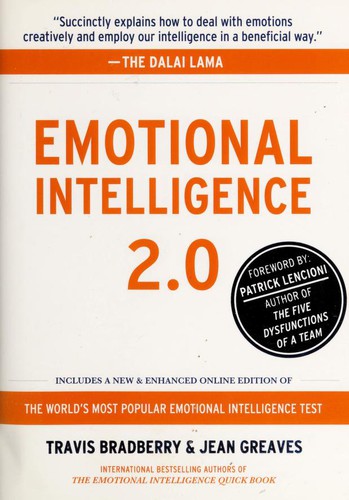
The Emotional Life of Your Brain
≈ From memoryEmotions are not just internal moods; they are sophisticated biological signals evolved for survival, and by understanding their neural architecture, you can train your brain to regulate them more effectively.
In one sentence
Your emotions are ancient, biologically-driven tools designed for survival that can be mastered through an understanding of neuroplasticity and the deliberate strengthening of the prefrontal cortex.
Why read this (and who it's for)
Most people treat emotions as "accidents" of the mind—things that happen to us. This book argues that emotions are actually high-speed data processing systems built into your hardware.
This book is for anyone who feels overwhelmed by their emotional reactions, for professionals looking to lead with higher emotional intelligence (EQ), and for those interested in the "why" behind human behavior. After reading this, you will stop viewing your anxiety or anger as a personal failing and start seeing them as biological signals that can be decoded, labeled, and managed through specific neurological training.
The big idea
The central thesis of Davidson and Larson is that emotions are not "irrational" glitches in our thinking; they are highly sophisticated, evolutionarily honed survival mechanisms. Every emotion—from fear to joy—serves a biological purpose: to help us navigate an environment where mistakes could mean death or social exclusion.
However, because our brains evolved over millions of years, we often experience "mismatched" emotional responses in the modern world. For example, the same amygdala circuit that once kept you safe from a tiger now reacts with equal intensity to a rude email. The authors argue that by understanding the biology of these reactions (the difference between the reactive limbic system and the reflective prefrontal cortex), we can move from being slaves to our impulses to becoming masters of our emotional responses.
The logic follows a clear path: Evolutionary Origin $\rightarrow$ Biological Mechanism $\rightarrow$ Neuroplasticity. If you understand where an emotion comes from (evolution), how it works in your brain (neurobiology), and how the brain can be reshaped (plasticity), you gain the ultimate tool for emotional intelligence: the ability to create a "space" between a stimulus and your response.
Key ideas
Emotions as Evolutionary Survival Tools
What it is: Emotions are not just feelings; they are rapid-fire biological responses designed to ensure survival and reproduction. They provide us with immediate, "gut" reactions that allow for split-second decisions without the need for slow, deliberative thinking. Why it matters: When you realize an emotion is a survival tool, you stop judging yourself for feeling it. You begin to ask: "What is this emotion trying to protect me from?" This shifts your perspective from shame to curiosity. In the book: The authors explain how fear, for instance, isn't just a "bad" feeling; it is an essential alarm system that prepared our ancestors to flee predators. In the modern world, that alarm can be over-sensitive, but its purpose remains valid.
The Distinction Between Feeling and Emotion
What it is: A crucial distinction made by the authors is that "feeling" is the subjective experience (the internal narrative), while "emotion" is the physiological response (the heart rate, the cortisol spike, the neural firing). Why it matters: We often get tangled in our feelings—the stories we tell ourselves about why we are angry or sad. By identifying the emotional component first (the physical sensation), you can observe the feeling without being swept away by the narrative. In the book: The authors describe how a person might feel "embarrassed" because of a social faux pas, but the underlying emotion is a physiological response to a perceived threat of social exclusion.
The Role of the Prefrontal Cortex (PFC)
What it is: The prefrontal cortex is the "CEO" of the brain. It is responsible for executive functions: planning, impulse control, and complex decision-making. It acts as a brake on the more primitive, reactive parts of the brain. Why it matters: Emotional intelligence is essentially the ability to strengthen the connection between your PFC and your emotional centers (like the amygdala). The stronger this "top-down" control is, the less likely you are to act impulsively on an emotion. In the book: The authors discuss how the PFC can be trained to regulate emotional responses, effectively teaching the brain to "think before it reacts."
Neuroplasticity and Emotional Training
What it is: The brain is not a static organ; it is physically shaped by our experiences and thoughts. This means that the way we respond to stress and emotion actually rewires our neural pathways over time. Why it matters: You are not "stuck" with your temperament. By intentionally practicing emotional regulation, you can physically thicken the gray matter in areas associated with calm and focus while thinning the connections associated with reactive fear. In the book: The authors highlight how consistent practice (like mindfulness or focused attention) changes the brain's architecture, making it easier to remain calm under pressure over time.
The Negativity Bias
What it is: Humans are evolutionarily wired to pay more attention to threats than to rewards. This "negativity bias" ensured that our ancestors survived by noticing the one rustle in the grass that might be a predator, rather than the ten flowers that were safe to pick. Why it matters: Understanding this explains why we ruminate so much on negative feedback and why anxiety feels so "sticky." It isn't a personal flaw; it’s an ancestral survival strategy that is now over-active in a world of constant information. In the book: The authors explain how this bias shapes our perception of reality, often making us see threats where none exist in a modern context.
Frameworks & tools
The Awareness-Regulation Loop
The authors imply a systematic way to handle emotional "hijacking." While they don't provide a numbered list, the logic of their neurobiological approach can be distilled into this 4-step process:
- Detection (The Physical Signal): When you feel a surge of emotion, stop and identify the physical sensation first. Is your chest tight? Is your breath shallow? Is your face hot? Do not label it as "anxiety" yet; just notice the body.
- Labeling (Naming the Emotion): Once you've identified the physical signal, name the emotion. Research shows that labeling an emotion (e.g., "I am feeling irritation") actually reduces activity in the amygdala and increases activity in the prefrontal cortex.
- Contextualizing (The Survival Question): Ask yourself: "What is this emotion trying to protect me from?" This identifies the evolutionary root of the feeling (e.g., "It's trying to protect me from being ignored by my peers").
- PFC Engagement (The Conscious Response): Once you have identified the threat, use your prefrontal cortex to decide on a response. Instead of reacting, choose an action that aligns with your long-term goals rather than your immediate emotional impulse.
Memorable examples & stories
The Amygdala's Alarm System
The authors describe how the amygdala acts as a "smoke detector" for the brain. It doesn't care if there is a real fire or just burnt toast; its job is to scream when it detects any smoke. Lesson: Your anxiety isn't always an accurate reflection of reality; it’s often just a very sensitive alarm system doing its job too well.
The "Fear" of Social Exclusion
The book explores how the human brain treats social rejection with the same intensity as physical pain. In our ancestral past, being cast out of the tribe meant certain death. Lesson: Your intense feelings of embarrassment or fear of "looking stupid" are actually your brain's way of trying to keep you alive in a social group.
Neuroplasticity and Meditation
The authors discuss how regular meditation practice can actually change the physical structure of the brain, specifically increasing gray matter density in areas related to emotional regulation. Lesson: Emotional intelligence is a muscle. You can literally "build" a calmer brain through consistent, intentional practice.
Key quotes
"Emotions are not just internal experiences; they are biological signals that provide us with information about our environment." (Paraphrased) Why it matters: This shifts the focus from 'feeling' to 'information,' making emotions useful data points rather than obstacles.
"The prefrontal cortex is the seat of our executive functions, allowing us to override our more primitive, reactive impulses." (Paraphrased) Why it matters: It highlights the biological basis for willpower and self-control—it’s a physical process in the brain.
"Our brains are wired with a negativity bias that served us well for millions of years as a survival mechanism." (Paraphrased) Why it matters: This validates why we struggle with anxiety; it's an evolutionary legacy, not a personal failure.
How to apply it
This week
- The "Body Scan" Check-in: Three times a day, stop and scan your body for tension. Where are you holding stress? (Shoulders, jaw, stomach?) Simply noticing the physical sensation without trying to change it is the first step in emotional awareness.
- Labeling Practice: The next time you feel a spike of irritation or anxiety, say out loud (or in your head): "I am experiencing a feeling of [Name]." This simple act of labeling engages your prefrontal cortex and helps dampen the emotional intensity.
- The "Survival" Inquiry: When you have a strong emotional reaction to a piece of news or an email, ask: "What is this emotion trying to protect me from?" Identify the underlying survival need (e.g., "It's trying to protect my status/safety").
Ongoing
- Prefrontal Cortex Training: Engage in activities that require deep focus and deliberate choice—like learning a new instrument, complex meditation, or intense strategic games. These strengthen the "top-down" control of your brain.
- Mindful Observation: Practice watching your emotions like clouds passing in the sky. You are the observer; you are not the emotion itself. This creates the "space" between stimulus and response.
- Reframing Negativity: When you catch yourself spiraling into a negative thought, acknowledge the "Negativity Bias." Tell yourself: "My brain is doing its job of looking for threats, but I need to remind it that I am safe right now."
Common pitfalls
- The "Control" Trap: A common mistake is thinking you can simply stop feeling an emotion. You cannot stop the amygdala from firing. The goal is not to suppress the emotion, but to change your relationship with it and your response to it.
- Over-Intellectualizing: While understanding the neurobiology is helpful, it's easy to get stuck in "analysis paralysis." Knowing why you feel anxious doesn't automatically make the anxiety go away; you still have to do the work of regulating the response.
- Ignoring the Body: Many people try to solve emotional problems entirely through "thinking" (the prefrontal cortex). However, emotions are rooted in the body. If you ignore the physical sensations (heart rate, breathing), your brain will continue to signal alarm regardless of what you tell yourself intellectually.
Connects to
- "Flow" by Mihaly Csikszentmihalyi: While Davidson focuses on the regulation of emotion, Flow focuses on the optimal experience of engagement. Together, they provide a map for both calming the nervous system and finding peak performance.
- "The Body Keeps the Score" by Bessel van der Worm: This book explores how trauma is physically stored in the body's nervous system. It complements Davidson’s work by showing what happens when the emotional "alarm system" becomes permanently stuck in the "on" position due to trauma.
If you remember only three things
- Emotions are biological survival tools, not just personal moods; they provide vital information about your environment.
- The prefrontal cortex is your brain's "CEO," and it can be trained to regulate the more reactive, primitive parts of your brain.
- Emotional intelligence is a skill built on neuroplasticity—you can physically reshape your brain's response to stress through consistent practice and awareness.
Internalize it
-
Reflection questions
- When was the last time I felt "hijacked" by an emotion? What was the physical sensation in my body before I started thinking about why I was upset?
- How would my daily life change if I viewed my anxiety as a "protective alarm" rather than a personal flaw?
- Which parts of my life currently have a high "negativity bias"? How can I consciously introduce more positive data points into those areas?
-
Flashcards Q: What is the primary difference between "feeling" and "emotion" according to Davidson and Larson? A: Feeling is the subjective, internal narrative; emotion is the actual physiological response (heart rate, neural firing).
Q: Which part of the brain acts as the "CEO" for executive functions and emotional regulation? A: The prefrontal cortex (PFC).
Q: What is the "Negativity Bias"? A: An evolutionary survival mechanism where the brain prioritizes detecting threats over rewards.
Q: How does labeling an emotion affect the brain's activity? A: It increases activity in the prefrontal cortex and decreases activity in the amygdala (the alarm center).
Q: What is the role of neuroplasticity in emotional intelligence? A: It means that by intentionally practicing regulation, we can physically change the brain's structure to become more resilient over time.
Fidelity note
I have a high level of confidence in the core concepts of this summary, specifically the distinction between feeling/emotion, the role of the prefrontal cortex, and the evolutionary basis for emotions. The authors are prominent researchers in affective neuroscience, and these themes are central to their work. However, because I am summarizing from memory, specific nuances regarding certain secondary studies or minor sub-points may be generalized. Readers should verify any specific neuroanatomical details if they require a clinical-level understanding of the brain's architecture.