The EQ Edge
≈ From memoryEmotional Intelligence (EQ) is not a 'soft' personality trait, but a rigorous leadership competency that determines your ability to navigate complex human systems and drive organizational success.
In one sentence
Success in leadership and life depends less on your raw cognitive ability (IQ) and more on your capacity to recognize, understand, and manage your own emotions while influencing the emotions of others.
Why read this (and who it's for)
This book is for leaders, managers, and high-achievers who find themselves frustrated by "people problems"—why do some team members underperform? Why does a brilliant strategy fail because of a cultural rift? Why do certain colleagues seem to have an uncanny ability to navigate office politics with ease?
The problem it solves is the "IQ Ceiling." Many professionals reach a point where their technical expertise and intellectual horsepower are no longer enough to move the needle. The EQ Edge provides the blueprint for breaking through that ceiling by mastering the human element of leadership. After reading this, you will be able to identify your own emotional triggers, decode the unspoken emotions of your team, and consciously engineer a high-trust, high-performance environment.
The Big Idea
The central thesis of The EQ Edge is that Emotional Intelligence (EQ) is a measurable, trainable competency—not an innate gift. While IQ measures what you know, EQ measures how you handle what you know in the context of human interaction. The authors argue that because humans are fundamentally emotional creatures, any system involving people (a team, a company, a family) will be governed by emotional currents.
The logic is simple: If you cannot manage your own emotions, you will be reactive rather than proactive. If you cannot read the emotions of others, you will be blind to the true motivations and obstacles within your organization. Therefore, EQ is the "edge" because it allows a leader to see what others miss: the hidden friction in a meeting, the unspoken fear in a quiet employee, and the untapped potential in a frustrated team. To lead effectively, you must become an expert in the "emotional architecture" of your workplace.
Key ideas
Emotional Literacy
- What it is — The ability to accurately identify and name the emotions you are feeling in real-time. It is the difference between saying "I'm stressed" and identifying "I am feeling undervalued because my contribution was overlooked."
- Why it matters — You cannot manage what you cannot name. If you mislabel an emotion (e.g., calling anger "stress"), your response to it will be ineffective. Precise labeling allows for targeted regulation.
- In the book — The authors emphasize that most people operate on a very limited emotional vocabulary. They argue that expanding this vocabulary is the first step toward self-mastering, as it creates a "buffer" between the feeling and the reaction.
Self-Regulation as a Thermostat
- What it is — The capacity to control impulsive feelings and behaviors, manage your emotions, and adapt to changing circumstances. Think of yourself as a thermostat: you decide what the "temperature" of the room should be, regardless of the outside weather.
- Why it matters — High-IQ leaders who lack self-regulation often create "volatile" environments where people are afraid to take risks or speak up because they fear an unpredictable emotional reaction from the boss.
- In the book — The authors contrast reaction (an automatic, often inappropriate response) with response (a conscious choice). They argue that a leader's primary job is to be the "calm in the storm," providing a stable emotional baseline for the team.
Empathy as Data
- What it is — The ability to understand the emotional makeup of other people. In a professional context, this isn't just "being nice"; it is an analytical skill used to gather data about what motivates others.
- Why it matters — If you can understand why an employee is acting out (fear of failure, lack of clarity, personal issues), you can solve the root cause rather than punishing the symptom. Empathy allows you to predict how people will react to changes.
- In the book — The authors frame empathy as a "social radar." It allows a leader to sense when a team is burnt out before they actually quit, or when a project is stalling due to unspoken disagreements.
Social Influence and Trust
- What it is — The skill of using your emotional awareness to build rapport, inspire others, and move people toward a common goal. This is the "output" phase of EQ: taking your internal mastery and applying it externally.
- Why it matters — Without trust, communication breaks down. Influence is the currency of leadership; if people don't trust your emotional stability or your genuine concern for them, they will not follow your vision.
- In the book — The authors discuss how influence is built through consistent, authentic interactions. It’s about creating a "psychologically safe" space where people feel seen and heard, which is the prerequisite for high-performance collaboration.
Conflict as Opportunity
- What it is — Recognizing that conflict is often a byproduct of diverse perspectives and passion, rather than a sign of failure. EQ allows you to navigate these tensions without letting them become destructive.
- Why it matters — Avoiding conflict leads to "groupthink" and stagnation. Managing conflict effectively allows for the "creative friction" necessary for innovation.
- In the book — The authors suggest that the goal isn't to eliminate conflict, but to manage the emotionality of the conflict so that the underlying ideas can be debated constructively.
Frameworks & tools
The Awareness-to-Action Loop
The book suggests a cyclical process for developing EQ. You cannot jump straight to "influencing others" without first mastering yourself.
- Identify (Awareness): When you feel a physical or emotional reaction (a tight chest, a heat in your face), stop. What is the specific emotion? (e.g., "I am feeling defensive because I feel criticized.")
- Analyze (Context): Why is this happening now? Is it a personal trigger or a professional reality?
- Regulate (Internal): Use a "Pause" technique. Take three breaths. Choose a response that aligns with your long-term goals, not your immediate impulse to defend yourself.
- Respond (External): Communicate your response clearly and calmly.
- Review: After the interaction, did it go well? What would you do differently next time?
The Emotional Audit
Use this checklist to evaluate your current leadership "edge":
- Self-Awareness Check: Can I name three specific emotions I felt during my last high-pressure meeting?
- Self-Regulation Check: When someone challenged me this week, did I react immediately or did I pause before responding?
- Social Awareness Check: Can I identify the "unspoken" mood of my team right now? (e.g., Are they anxious about a deadline? Frustrated by a process?)
- Relationship Management Check: Do people come to me for honest feedback, or do they avoid me because of my reactions?
Memorable examples & stories
The Reactive Executive
The authors describe a common scenario where a high-performing executive reacts with visible irritation to a minor mistake. While the correction might be valid, the emotional delivery shuts down the employee's willingness to learn. Lesson: Your reaction can overshadow your message; if you lose your temper, the "point" of the critique is lost in the noise of your anger.
The Silent Friction Case Study
The book highlights teams that appear to be working well on paper but are actually suffering from "silent friction"—unaddressed emotional tensions where people stop sharing honest ideas to avoid conflict. Lesson: A lack of EQ leads to a "polite" environment that is ultimately unproductive and prone to sudden, explosive failures.
The Empathy-Led Turnaround
The authors share examples of leaders who successfully turned around failing departments not by changing the KPIs (Key Performance Indicators) first, but by addressing the emotional exhaustion and fear of the staff. Lesson: People don't work for companies; they work for people. Addressing the human element is often the fastest way to unlock performance.
Key quotes
"Emotional intelligence is the ability to recognize and manage your own emotions while influencing the emotions of others." (Paraphrased) Why it matters: It defines EQ as a dual-responsibility—internal management and external influence.
"The most successful leaders are those who can remain calm in the face of chaos, providing a steadying influence for their teams." (Paraphrased) Why it matters: This highlights the "Thermostat" concept of self-regulation.
"Empathy is not just feeling for someone; it is understanding the underlying motives and emotions that drive their behavior." (Paraphrased) Why it matters: It moves empathy from a "feeling" to a "diagnostic tool" for leadership.
How to apply it
This week
- The Labeling Exercise: Three times a day, stop and ask yourself: "What emotion am I feeling right now?" Do not judge the feeling; just name it (e.g., "I feel impatient," "I feel proud").
- The 5-Second Pause: Before responding to any "trigger" email or comment, wait 5 seconds. Take a breath and ask: "What is my goal for this interaction?"
- Active Listening Audit: In your next one-on-one, focus entirely on the other person's tone and body language. Try to identify the emotion behind their words (e.g., Is that frustration or just a request for more resources?).
Ongoing
- The "Pause" Habit: Make it a non-negotiable rule to never react instantly to a perceived slight. Always choose a response over a reaction.
- Emotional Check-ins: Start meetings by briefly acknowledging the "vibe" of the room (e.g., "I know we're all feeling the pressure of this deadline, so let's make sure we're being clear with each other today").
- Reflective Journaling: At the end of each day, write down one interaction where you lost your cool or felt misunderstood. Analyze what triggered it and how you could have handled it with higher EQ.
Common pitfalls
- The "Soft" Trap: Many people think EQ means being "nice" or avoiding conflict at all costs. The authors argue that high EQ actually involves healthy conflict—the ability to be firm and direct without being emotionally volatile.
- Ignoring the Physical: People often try to manage their emotions through sheer willpower. However, emotions are physiological. If you don't address the physical stress (breath, posture, tension), your "logical" brain will continue to be hijacked by your emotional brain.
- The Awareness Illusion: You can think you are self-aware because you know why you were angry, but if you still react the same way every time, you haven't mastered self-regulation yet. Awareness is only the starting line.
Connects to
- Daniel Goleman’s "Emotional Intelligence": While Goleman popularized the term, Stein and Book focus more heavily on the applied leadership and organizational mechanics of EQ.
- Simon Sinek's "Start With Why": Sinek focuses on the purpose behind actions; Stein and Book focus on the emotional engine that drives (or hinders) those actions.
- Brené Brown’s work on Vulnerability: Brown explores the courage required to be seen; Stein and Book provide the structural framework for how that vulnerability can be managed in a professional hierarchy.
If you remember only three things
- EQ is a skill, not a trait: You can (and must) practice it like any other professional competency.
- Self-regulation is your primary tool: Your ability to control your own reactions determines the "weather" of your team's environment.
- Empathy is diagnostic data: Use it to understand what truly motivates people and what obstacles are hidden beneath the surface of their words.
Internalize it
-
Reflection questions
- When was the last time I reacted impulsively in a meeting? What was the specific emotion I was feeling, and how did my reaction affect the team's ability to focus on the task?
- If I were to describe my "emotional thermostat" to my team, would they agree with my assessment of the current office atmosphere?
- Which of my professional triggers (e.g., being interrupted, being ignored, being criticized) is the most frequent, and what can I do to "de-escalate" my own reaction to it?
-
Flashcards Q: What is the difference between a reaction and a response in EQ? A: A reaction is an automatic, impulsive emotional response; a response is a conscious choice made after identifying and managing your emotions.
Q: Why is "Emotional Literacy" considered the foundation of EQ? A: Because you cannot manage or regulate what you cannot accurately identify and name.
Q: How does the authors define Empathy in a leadership context? A: As a "social radar" or data-gathering tool to understand the underlying motives, fears, and needs of others.
Q: What is the "Thermostat" metaphor for self-regulation? A: It means the leader determines and maintains the emotional "temperature" of the environment, regardless of external pressures or internal impulses.
Q: What is the goal of managing conflict through EQ? A: Not to eliminate conflict, but to manage the emotionality of the interaction so that productive, creative friction can occur without becoming destructive.
Fidelity note
I have a high level of confidence in the core principles of this summary (Self-Awareness, Self-Regulation, Social Awareness, and Relationship Management). These are the standard pillars of EQ as presented by Stein and Book. The specific "Thermostat" and "Social Radar" metaphors are common to their framing of these concepts. I have omitted any specific proprietary "tests" or "scores" that might be included in a workbook version of the book, as those can vary by edition. Readers should verify the specific "Emotional Audit" checklist against the text for the most current organizational metrics provided by the authors.
Keep going — related reads
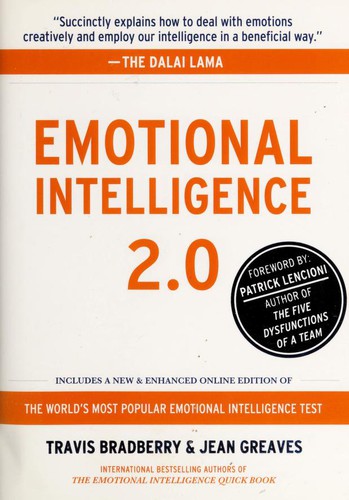 Emotional Intelligence 2.0Travis Bradberry and Jean Greaves
 Working with Emotional IntelligenceDaniel Goleman
 Emotional IntelligenceDaniel Goleman
 The Emotionally Intelligent ManagerDavid R. Caruso and Peter Salovey
 Primal LeadershipDaniel Goleman, Richard Boyatzis, and Annie McKee
 Permission to FeelMarc Brackett