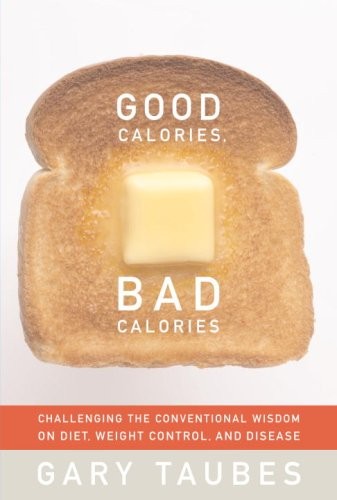
Gary Taubes — What Should We Eat?
✓ Source-groundedThe current state of nutrition science is a 'pseudoscience' because it relies on an outdated energy-balance hypothesis that ignores the hormonal reality of how different foods—specifically refined carbohydrates—regulate fat storage.
In one sentence
Gary Taubes argues that the "energy balance" theory of obesity is a flawed, technology-dependent myth that ignores the fact that certain foods, particularly refined carbohydrates and sugars, act as hormonal triggers that force the body to store fat regardless of caloric intake.
Why read this (and who it's for)
This conversation is for anyone frustrated by the contradictory, often-confusing dietary advice of the modern era. It provides a rigorous, evidence-based critique of why "low-fat" and "low-calorie" diets often fail. After reading this, you will be able to identify the flaws in conventional nutritional guidelines and understand the hormonal role of insulin in weight regulation.
The big idea
Gary Taubes argues that the field of nutrition has abandoned rigorous scientific standards in favor of a "placid acceptance" of the energy balance hypothesis. This hypothesis—that weight is solely a matter of calories in versus calories out—was a byproduct of the limited technology available in the 1870s to 1920s. Because scientists could only measure energy (calories), they assumed energy was the only variable that mattered.
However, the rise of endocrinology in the 1960s proved that fat accumulation is actually a hormonal regulatory process, primarily governed by insulin. Taubes asserts that the "Three Pillars" of modern nutrition—energy balance, the belief that dietary fat causes heart disease, and the advocacy for a plant-based diet—are largely based on flawed observational studies and a refusal to acknowledge the hormonal mechanisms of the human body.
Key ideas
The Energy Balance Fallacy
- What it is — The belief that obesity is purely an "energy balance disorder" where you get fat simply because you take in more calories than you expend.
- Why it matters — If this is the only factor, then the type of food you eat shouldn't matter, only the amount. This leads to the "a calorie is a calorie" mantra, which ignores how different nutrients interact with our hormones.
- In the book — Taubes points out that this theory was born because it was the only thing researchers could measure with the technology of the early 1900s.
The Role of Insulin as a Lipogenic Hormone
- What it is — Insulin is the primary hormone that regulates fat storage; it tells fat tissue to take up fat and hold on to it.
- Why it matters — When insulin is elevated, the body stores fat. If you eat foods that spike insulin (like refined grains and sugars), you will store fat even if you are in a caloric deficit.
- In the book — Taubes notes that by 1965, it was clear that insulin is the "most lipogenic hormone," meaning it stimulates fat formation.
The "Low-Fat" Fallacy
- What it is — The conventional wisdom that dietary fat causes heart disease and that therefore, a low-fat diet is healthier.
- Why it matters — This belief was largely adopted because of a refusal to look at the data regarding insulin and carbohydrates. It led to a public health policy that ignores the actual mechanisms of fat accumulation.
- In the book — Taubes argues that the "low-fat" consensus was reached by removing endocrinology from the conversation because the implications of insulin-driven fat storage were inconvenient for the established narrative.
The Failure of Observational Studies
- What it is — The reliance on "Seven Countries" style studies to correlate saturated fat with heart disease.
- Why it matters — Correlation does not equal causation. These studies often fail to account for other variables, such as sugar consumption.
- In the book — Taubes highlights that when you look at countries like France and Switzerland, which have high saturated fat diets but low heart disease, the "saturated fat causes heart disease" theory falls apart.
The "Westernization" of Disease
- What it is — The observation that indigenous populations (like the Inuit) only develop Western diseases (diabetes, hypertension) when they gain access to refined carbohydrates and sugars.
- Why it matters — It provides a "smoking gun" for what actually causes these diseases: the introduction of refined, processed carbohydrates into a traditional, high-fat, low-sugar environment.
- In the book — Taubes points out that these populations eat high amounts of whale blubber but do not develop these pathologies until they are given "bags of Doritos and soda."
Frameworks & tools
The Three Pillars of Conventional Nutrition (The Critique)
Taubes identifies the three pillars that currently dominate public health, which he argues are fundamentally flawed:
- Energy Balance: The idea that calories are the only variable in weight gain.
- Fat as the Enemy: The belief that dietary fat (specifically saturated fat) is the primary cause of heart disease.
- Plant-Based Advocacy: The recommendation that we should eat mostly plants and "not too much" of anything.
The Hormonal Logic of Weight
To understand how the body actually functions, Taubes suggests looking at the mechanism of insulin:
- Carbohydrate Intake: Refined grains and sugars are easily digestible.
- Insulin Spike: These foods elevate insulin levels rapidly.
- Fat Storage: High insulin levels signal the body to store fat.
- Appetite Feedback: Because the calories are being trapped as fat rather than used for energy, the body signals for more food, creating a cycle of hunger and weight gain.
Memorable examples & stories
The Puberty Comparison
To illustrate why "calories in vs. calories out" is an insufficient explanation for weight gain, Taubes compares boys and girls going through puberty. Both are taking in more calories than they expend, but boys lose fat and gain muscle while girls gain fat in specific places. This proves that there is a hormonal regulatory system for fat accumulation that is independent of simple caloric surplus.
The "French Paradox" / Mediterranean Paradox
Taubes notes that while the "Mediterranean Diet" is often cited for its health benefits, countries like France and Switzerland have even higher saturated fat diets but also have among the highest lifespans in the world. This suggests that the "saturated fat is the problem" narrative is based on cherry-picked data.
The Inuit "Smoking Gun"
Taubes describes how indigenous populations, such as the Inuit, historically lived on high-fat diets (whale blubber) without developing Western diseases. It was only when they were introduced to refined carbohydrates (processed snacks and soda) that they began to exhibit the same pathologies we see in Western society. This highlights the role of refined carbohydrates as the primary driver of disease.
Key quotes
"The idea that the way foods influence our weight is through their caloric content only... was a belief system that was technology dependent." Why it matters: It explains why our current "common sense" about calories is actually a historical limitation of 19th-century measurement tools.
"The fact that they're taking in more calories than they expend is irrelevant to understanding why the boys lost fat and gained muscle and why the girls gained fat." Why it matters: It highlights that the "energy balance" theory is a superficial observation that misses the underlying biological mechanism.
"Some foods are literally fattening independent of their caloric content, and other foods are literally not fattening independent of caloric content." Why it matters: This is the core of Taubes' argument—that the chemical and hormonal nature of food matters more than the number on the label.
How to apply it
This week
- Identify your "Refined" triggers: Look at your pantry for "white" carbohydrates (white bread, white rice, flour-based snacks). These are the primary drivers of the insulin spikes Taubes describes.
- Audit your "Low-Fat" labels: Look at the items you buy that are marketed as "low-fat." Note if they have replaced the fat with high amounts of sugar or refined carbohydrates.
Ongoing
- Prioritize Satiety over Calorie Counting: Instead of obsessing over "how many calories" are in a meal, ask: "Will this meal keep my insulin stable and keep me full?"
- The "Whale Blubber" Principle: When choosing a meal, consider if it is a "Westernized" processed food (like a Dorito) or a whole-food, traditional fat/protein source.
Common pitfalls
- The "Calories Still Matter" Trap: People often argue that "you can't out-run a bad diet" with calories. Taubes isn't saying calories don't matter (you can't eat 15,000 calories of steak without gaining weight), but he is arguing that calories are not the reason why some foods cause weight gain while others don't.
- The "Healthy" Label: Just because a food is "plant-based" or "low-fat" doesn't mean it's healthy. Taubes argues that many plant-based foods (like refined grains) are the primary drivers of the insulin spikes that cause fat storage.
Connects to
- The Atkins Diet: Taubes provides the scientific rationale for why the Atkins diet (high-fat, low-carb) works by lowering insulin.
- Michael Pollan's "In Defense of Food": While Taubes disagrees with Pollan's "plant-based" and "not too much" mantras, they both share the observation that Westernized, refined carbohydrates are the primary drivers of modern disease.
If you remember only three things
- Insulin is the key: Fat storage is a hormonal process regulated by insulin, not just a math problem of calories.
- Refined Carbs are the driver: Refined grains and sugars are the primary triggers for insulin spikes that lead to fat accumulation.
- The "Energy Balance" is a myth: The idea that "a calorie is a calorie" is a result of 19th-century measurement limitations, not a complete understanding of human biology.
Internalize it
-
Reflection questions
- If I stop looking at the "calories" on a food label and only look at the "insulin response" it might cause, how would my grocery shopping change?
- Why did I start believing that "low-fat" was the gold standard? Was it based on a specific study or a general cultural trend?
- How does the "Westernization" of the Inuit provide a blueprint for what I should avoid in my own diet?
-
Flashcards Q: What is the "Energy Balance" hypothesis? A: The belief that obesity is caused solely by taking in more calories than one expends. Q: Why did the Energy Balance hypothesis become the standard? A: Because in the 1870s-1920s, that was the only thing scientists had the technology to measure. Q: What is the primary hormone responsible for fat storage? A: Insulin. Q: How do refined carbohydrates affect insulin? A: They are easily digestible and cause rapid spikes in insulin, which signals the body to store fat. Q: What is the "Smoking Gun" of Western disease? A: The observation that indigenous populations only develop Western diseases once they gain access to refined carbohydrates and sugars. Q: Why does Taubes criticize the "Low-Fat" movement? A: Because it ignores the fact that many low-fat foods are high in refined carbohydrates, which drive insulin and fat storage.
Fidelity note
This summary is based strictly on the provided transcript. I am confident in the representation of Taubes' three pillars (Energy Balance, Fat as the Enemy, Plant-Based) and his explanation of the insulin/carbohydrate mechanism. The transcript does not provide a specific "how-to" guide for a daily meal plan, but rather a philosophical and biological framework for rejecting current dietary norms.