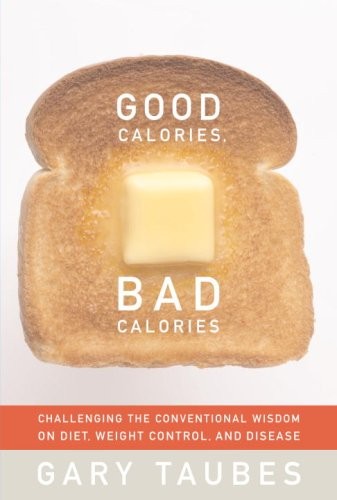
The Case Against Sugar
≈ From memorySugar is not a nutrient; it is a concentrated source of calories that hijacks our biological satiety signals and overwhelms our metabolic capacity to process it.
In one sentence
Sugar is a "sweetener" and a source of calories, not a nutrient, and its overconsumption creates a metabolic mismatch where the body's ability to process fructose is overwhelmed, leading to insulin-driven fat storage and a hijacked satiety system.
Why read this (and who it's for)
This book is for anyone who has ever felt like they have a "willpower" problem with sweets. Taubes argues that the struggle isn't a moral failing; it is a biological trap. This book solves the mystery of why sugar is so addictive and why "moderation" is so difficult to achieve. You will emerge from this book with a deep understanding of the metabolic pathways of fructose and glucose, a keen ability to spot hidden sugars in processed foods, and a strategy to reset your body's satiety signals.
The big idea
The central thesis of The Case Against Sugar is that we have fundamentally misunderstood what sugar is. We treat sugar as a "carbohydrate" in the same category as grains or vegetables, but Taubes argues that sugar is a unique metabolic entity. Unlike complex carbohydrates, which provide fiber and sustained energy, sugar (specifically fructose) is processed almost entirely in the liver. When we flood the liver with more fructose than it can handle, it converts that excess into fat.
Furthermore, sugar acts as a "biological hijack." It is evolutionarily designed to be the most palatable substance on earth because, in nature, sweetness signaled high-calorie, life-sustaining energy. However, in a modern environment of infinite caloric density, this "sweetness signal" overrides our internal satiety cues. When you eat sugar, your brain's "I'm full" signal is silenced, allowing you to consume more calories than your body actually needs.
The tragedy of the modern diet is that we are using a prehistoric biological system—designed to find and consume rare, calorie-dense treats—in an environment where those treats are ubiquitous and engineered to be hyper-palatable. This mismatch leads to chronic hyperinsulinemia (excess insulin), which is the primary driver of weight gain, insulin resistance, and metabolic disease.
Key ideas
Sugar is a "Sweetener," Not a Nutrient
- What it is — Sugar provides calories, but it does not provide the essential nutrients (vitamins, minerals, fiber) that the body requires to function. It is a source of energy, but it is not a "building block" of health.
- Why it matters — If you view sugar as a nutrient, you justify its inclusion in your diet as a "good" thing. If you view it as a concentrated source of calories, you realize that its primary role is to provide energy, and that energy is best obtained from whole foods that also provide fiber and micronutrients.
- In the book — Taubes distinguishes between "nutrients" (which the body needs) and "caloric sources." He argues that sugar is a source of calories, and while it is a carbohydrate, it lacks the structural benefits of complex carbohydrates like whole grains.
The Fructose Bottleneck
- What it is — Unlike glucose, which can be used by every cell in the body for energy, fructose is primarily processed in the liver. The liver has a limited capacity to process fructose; when that capacity is exceeded, the liver converts the sugar into fat (de novo lipogenesis).
- Why it matters — This explains why high-fructose corn syrup (HFCS) and table sugar are so potent drivers of fatty liver disease and obesity. Because the liver is the "bottleneck," flooding it with fructose creates a metabolic backlog that forces the body to store fat.
- In the book — Taubes explains the metabolic pathway: Glucose enters cells and is used for energy; Fructose goes to the liver, where it is converted into triglycerides. When the liver is overwhelmed, these triglycerides are exported into the bloodstream as VLDL (very-low-density lipoproteins).
The Satiety Hijack (The "Sugar Trap")
- What it is — Sweetness is a biological signal that tells the brain, "This is a high-calorie food; eat as much as you can." Sugar, specifically, has a unique ability to override the "fullness" signals produced by other foods.
- Why it matters — This is why you can eat a massive amount of dessert and still feel hungry for a full meal. Sugar "mutes" the satiety signals of other foods, making it the ultimate "addictive" ingredient in processed foods.
- In the book — Taubes describes how sugar acts as a "biological hijack." It allows for the consumption of more calories than the body requires because it suppresses the signals that would normally tell you to stop eating.
Hyperinsulinemia as the Driver of Weight Gain
- What it is — Insulin is the body's primary storage hormone. When blood sugar rises (due to sugar or refined carbs), the pancreas releases insulin to shuttle that sugar into cells.
- Why it matters — If you have chronically high insulin levels (hyperinsulinemia) because of a high-sugar diet, your body stays in "storage mode." It becomes very difficult to burn stored fat because insulin inhibits the breakdown of fat (lipolysis).
- In the book — Taubes argues that weight gain is not a problem of "burning calories" but a problem of "hormonal signaling." High insulin levels are the primary reason why people struggle to lose weight even when they believe they are "eating less."
The Evolutionary Mismatch
- What it is — Humans evolved in an environment where calories were scarce. We developed a powerful craving for sweet, calorie-dense foods because they were rare and essential for survival.
- Why it matters — Our brains are still wired for a world where calories were hard to find. In a world of "hyper-palatable" processed foods, our survival mechanisms become our greatest liabilities.
- In the book — Taubes explains that our "sweet" preference is an evolutionary adaptation. We are biologically programmed to seek out sugar because, for most of human history, sugar was a rare, high-energy reward.
The Role of Ultra-Processed Foods
- What it is — Modern food processing isn't just about convenience; it's about engineering "hyper-palatability." Manufacturers use sugar, salt, and fats in specific ratios to create foods that are "more rewarding" than nature intended.
- Why it matters — These foods are designed to bypass our natural satiety signals. They are engineered to be "craveable" in a way that whole foods are not.
- In the book — Taubes highlights how the food industry uses sugar to make products like bread, yogurt, and crackers more appealing, even though these foods don't need sugar to be palatable.
Frameworks & tools
The Sugar-Free Audit
Use this to identify where sugar is hiding in your daily routine. Most people think of "sugar" as candy, but Taubes highlights its presence in savory and "healthy" items.
- Audit the Pantry: Look for "hidden" sugars in items like pasta sauce, salad dressings, yogurt, and bread.
- Identify the "White" Ingredients: Look for flour, rice, and potatoes. These are all high-glycemic carbohydrates that trigger the same insulin response as sugar.
- Scan for "ose" and " syrup": Look for any ingredient ending in "-ose" (glucose, fructose, sucrose, maltose) or any syrup (corn syrup, agave, maple).
- The "Whole Food" Test: If the food comes in a package and has a long list of ingredients, it likely contains hidden sugars or refined starches.
The Satiety-First Eating Rule
Instead of counting calories (which is difficult because of the "Sugar Trap"), focus on the signals that tell your brain you are full.
- Prioritize Protein and Fiber: These are the primary triggers for satiety.
- Eat Whole Foods First: Focus on foods that were never "processed" (meat, eggs, vegetables, fruits).
- Identify the "Muting" Effect: Recognize that when you eat a sugary snack, your "full" signal is being hijacked. Wait 20 minutes before eating again to let the signal reset.
- Avoid Liquid Calories: Juice and soda provide the "Sugar Trap" without any of the fiber or bulk that helps signal fullness.
Memorable examples & stories
The Evolutionary Advantage of Sweetness
Taubes explains how, for our ancestors, the ability to find and crave sweet fruits was a survival advantage. It ensured they got enough calories to survive lean times. Lesson: Your craving for sweets isn't a character flaw; it's a prehistoric survival mechanism that is now being exploited by the food industry.
The Liver as a Processing Plant
Taubes describes the liver's role as the primary processor of fructose. Unlike other organs that can use glucose for fuel, the liver is the "bottleneck" for fructose. Lesson: When you overconsume fructose, you aren't just "eating sugar"; you are overloading a specific organ's processing capacity, leading to fat storage.
The "Sugar Trap" in Processed Snacks
Taubes discusses how manufacturers use sugar to make products like crackers and bread more "addictive." They aren't just making them taste better; they are using sugar to silence the "I'm full" signal. Lesson: Sugar is used as a tool to keep you eating more than you need.
Key quotes
"Sugar is not a nutrient. It is a source of calories." Why it matters: This shifts the entire conversation from "is sugar healthy?" to "how much sugar can our bodies process?"
"Sugar acts as a biological hijack, silencing the signals of satiety." (Paraphrased) Why it matters: This explains why "willpower" fails when faced with hyper-palatable, processed foods.
"The liver is the bottleneck for fructose metabolism." (Paraphrased) Why it matters: This identifies the specific physiological reason why high-fructose corn syrup is so damaging to metabolic health.
"We are living in an environment of caloric abundance that our bodies were never designed to handle." (Paraphrased) Why it matters: It frames the obesity epidemic as an evolutionary mismatch rather than a personal failure.
How to apply it
This week
- The Label Audit: Every time you buy a packaged food this week, look at the ingredient list. Identify every source of added sugar (syrups, fruit juices, and "ose" words).
- The "No Liquid Sugar" Rule: Eliminate all soda, sweetened coffee/tea, and fruit juices for 7 days. Replace them with water, sparkling water, or unsweetened tea.
- The Whole Food Swap: Replace one processed snack (like crackers or granola bars) with a whole-food alternative (like a handful of nuts or a hard-boiled egg).
Ongoing
- Prioritize "Whole" over "Processed": When choosing a meal, ask: "Could this food have existed in nature 100 years ago?" If not, it likely contains hidden sugars or refined starches.
- Manage the Insulin Response: Focus on meals that are high in protein and fiber to keep insulin levels stable and avoid the "spikes" caused by refined carbohydrates.
- Recognize the Satiety Hijack: When you feel a craving for something sweet, recognize it as a "signal" from your brain. Pause and ask if you are actually hungry or if your "fullness" signal has been hijacked.
Common pitfalls
- The "Sugar is just a Carb" Fallacy: Many people think that because sugar is a carbohydrate, it's the same as a potato or a piece of whole-grain bread. Taubes argues this is false because of how fructose is metabolized in the liver.
- The "Moderation" Trap: Because sugar is so designed to hijack our satiety signals, "moderation" is incredibly difficult. The brain's response to sweetness makes it hard to stop once you start.
- The "Healthy" Label Trap: Many "healthy" products (like low-fat yogurt or granola) are loaded with sugar to compensate for the loss of flavor. Don't let "low-fat" or "organic" labels blind you to the sugar content.
Connects to
- The Obesity Code (Joe Goodman): Extends the idea of "hijacked" signals by looking at the dopamine-driven addiction to hyper-palatable foods.
- Deep Nutrition (Shawn Baker): Challenges the standard "low-fat" advice by focusing on the role of insulin and carbohydrates in weight management.
- Glucose Revolution (Jessamine Stanley): Provides a more practical, daily-management approach to blood sugar and insulin, complementing Taubes' metabolic theory.
If you remember only three things
- Sugar is a source of calories, not a nutrient, and it is processed differently (in the liver) than other carbohydrates.
- Sugar acts as a "biological hijack" by silencing the body's natural signals of fullness (satiety).
- Weight gain is largely driven by hyperinsulinemia—the body's storage hormone—which is triggered by the overconsumption of sugar and refined carbohydrates.
Internalize it
-
Reflection questions
- When I eat a sugary snack, how does my "fullness" signal change compared to when I eat a high-protein meal?
- Which of my "staple" foods (bread, pasta, yogurt, etc.) actually contain hidden sugars or refined starches?
- How would my daily eating habits change if I viewed sugar as a "source of calories" rather than a "nutrient"?
-
Flashcards Q: What is the primary difference between how the body processes glucose vs. fructose? A: Glucose can be used by every cell in the body for energy, while fructose is primarily processed in the liver.
Q: Why is sugar referred to as a "biological hijack"? A: Because it suppresses the brain's signals of satiety, allowing a person to consume more calories than they need.
Q: What is the role of insulin in weight gain? A: Insulin is a storage hormone; high levels (hyperinsulinemia) signal the body to store fat and inhibit the breakdown of stored fat.
Q: Why is the liver considered the "bottleneck" for fructose? A: The liver has a limited capacity to process fructose; when overwhelmed, it converts the excess into fat (de novo lipogenesis).
Q: What is the "Evolutionary Mismatch" in the context of sugar? A: Our bodies evolved to crave sweet, calorie-dense foods for survival, but we now live in an environment of infinite, hyper-palatable sugar.
Fidelity note
I have a high level of confidence in the core metabolic arguments presented in The Case Against Sugar, specifically the distinction between fructose and glucose metabolism and the role of insulin in fat storage. These are the pillars of Taubes' argument. I am less certain about the specific nuances of every single "hidden" ingredient he mentions, as those can vary by edition and specific food products, but the underlying principle of "hidden" sugars in processed foods is a central, consistent theme of the book. Readers should verify the specific "hidden" ingredients by checking their own pantry labels.
Keep going — related reads
 Salt Sugar FatMichael Moss
 Most Replayed Moment Is Milk Healthy The Truth About Dairy, Sugar, Fruit And FastingThe Diary of a CEO
 Why We Get SickBenjamin Bikman
 In Defense of FoodMichael Pollan
 Eating for Better Sleep & Foods that Improve Metabolic Health Dr. Marie-Pierre St-OngeHuberman Lab
 Ultra-Processed PeopleChris van Tulleken