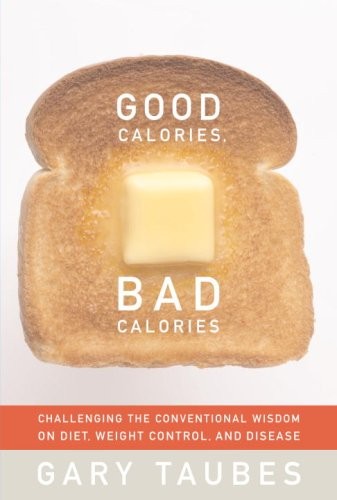
The Case for Keto
≈ From memoryThe ketogenic diet is not a 'fad' but a biological necessity for humans who have evolved to thrive on a high-fat, low-carbohydrate ancestral diet.
In one sentence
The ketogenic diet is a fundamental metabolic state that aligns with human evolution, providing a stable, efficient source of energy while protecting against the insulin-driven metabolic dysfunction caused by modern, high-carbohydrate diets.
Why read this (for who it's for)
This book is for anyone who feels like a "failure" at dieting—the person who can't stop craving sugar, who feels sluggish after meals, or who is frustrated by the constant fluctuation of blood sugar. It solves the problem of why we eat the way we do by shifting the conversation from "willpower" to "biology." After reading, you will understand the metabolic machinery of your body, why your brain craves glucose, and how to transition into a state of fat-burning (ketosis) to stabilize your energy and weight.
The big idea
Taubes argues that the human body is not a "glucose-burning machine" by default; rather, it is a masterpiece of metabolic flexibility that evolved to survive on a diverse, predominantly fat-rich diet. The problem is that modern civilization has created a "mismatch" environment: we have an evolutionary biology designed for scarcity and high-fat foraging, but we live in a world of caloric surplus and refined carbohydrates.
The core of his argument is that insulin is the primary driver of fat storage. When we consume carbohydrates, the body produces insulin to shuttle glucose into cells. Because insulin is such a potent storage hormone, any excess glucose is converted into fat. Taubes argues that by drastically reducing carbohydrate intake, we can lower insulin levels, allowing the body to access its own fat stores for fuel.
Ketosis is the metabolic state where the body switches from burning glucose to burning ketones (derived from fat). This isn't a "diet" in the sense of a temporary restriction; it is a physiological state that allows the brain and muscles to run on a steady, reliable fuel source that doesn't cause the "spikes and crashes" of blood sugar.
Key ideas
The Evolution of the Human Metabolism
- What it is: Humans evolved over millions of years to survive on a diet of fruits, nuts, seeds, and animal fats. Our ancestors were not "sugar-addicted" because sugar was rare.
- Why it matters: If you understand that your body is designed for fat-burning, you stop viewing your cravings as a moral failing and start seeing them as a biological signal for a missing nutrient.
- In the book: Taubes points to the "hunter-gatherer" lifestyle, noting that while some tubers and fruits were eaten, the bulk of the caloric load came from high-fat and high-protein sources.
Insulin as the Storage Hormone
- What it is: Insulin is the body's primary mechanism for storing energy. Its job is to move glucose out of the bloodstream and into cells (fat, muscle, liver).
- Why it matters: Weight gain is not a "calories in vs. calories out" problem alone; it is an insulin problem. If insulin is constantly high, the body stays in "storage mode" and cannot burn fat.
- In the book: He explains how insulin inhibits lipolysis (the breakdown of fat). When insulin is high, your fat cells are effectively "locked."
The Role of the Brain and Glucose
- What it is: The brain is a glucose-hungry organ. It requires a constant supply of energy, which is why it creates such intense cravings for carbohydrates.
- Why it matters: This explains why "quitting" sugar is so hard. Your brain is literally screaming for its preferred fuel source.
- In the book: Taubes explains that the brain's demand for glucose is what drives the "reward" system of eating, making it the hardest part of the diet to manage initially.
Ketosis as a Metabolic State
- What it is: Ketosis is the process where the liver converts fatty acids into ketones, which can cross the blood-brain barrier to provide fuel.
- Why it matters: Unlike glucose, which can cause insulin spikes, ketones provide a steady stream of energy. This leads to "metabolic stability"—no more brain fog or afternoon crashes.
- In the book: He describes ketosis as a "metabolic switch" that allows the body to tap into its own internal pantry of body fat.
The "Carbohydrate-Insulin" Model
- What it is: Instead of the "Calories In, Calories Out" (CICO) model, Taubes advocates for the "Carbohydrate-Insulin" model.
- Why it matters: CICO ignores the hormonal response to food. The Carbohydrate-Insulin model recognizes that what you eat determines how your hormones respond, which in turn determines how much fat you store.
- In the book: He argues that a 100-calorie piece of fruit and a 100-calorie piece of fat have vastly different metabolic consequences because of the insulin response.
The Importance of Satiety
- What it is: Satiety is the feeling of being full and satisfied. Fat and protein are highly satiating; carbohydrates are not.
- Why it matters: Most diets fail because they are too restrictive. A ketogenic diet succeeds because it naturally reduces hunger by keeping you full.
- In the book: Taubes highlights how fat-rich meals suppress the hunger hormone (ghrelin) and provide a "full" feeling that prevents overeating.
Frameworks & tools
The Carbohydrate-Insulin Model
To understand why you are gaining weight or feeling sluggish, stop looking at the scale and start looking at your insulin response.
- Identify the Trigger: Recognize that carbohydrates (especially refined ones) trigger the highest insulin response.
- Analyze the Response: Understand that insulin tells your body to store fat and prevents it from burning the fat you already have.
- Adjust the Input: Lower the carbohydrate load to keep insulin levels low enough that the body can access stored fat.
The Keto Transition Protocol
A framework for moving from a glucose-burning state to a fat-burning state.
- The Elimination Phase: Remove all "hidden" sugars and grains (bread, pasta, sweets, sodas).
- The Fat-Loading Phase: Replace those calories with high-quality fats (avocados, nuts, olive oil, fatty meats).
- The Adaptation Phase: Allow 1–2 weeks for the "Keto Flu" (the transition period where the body learns to burn ketones).
- The Maintenance Phase: Focus on whole, unprocessed foods to maintain steady ketosis and stable energy.
Memorable examples & stories
The "Sugar-Addicted" Brain
Taubes describes how the brain's reward system reacts to sugar. It’s not just a taste; it’s a neurochemical hit. Lesson: Understand that cravings are a biological signal, not a lack of willpower.
The Hunter-Gatherer Comparison
He compares our modern sedentary life to the ancestral life of our ancestors who moved constantly and ate high-fat foods. Lesson: Our bodies are "mismatched" for the modern environment; we need to adjust our diet to match our biology, not our surroundings.
The "Locked" Fat Cell
He uses the analogy of fat cells being "locked" by insulin. When you eat carbs, the key is turned to "store." Only when insulin drops can the "door" open to let fat out. Lesson: Weight loss is about unlocking the fat stores, not just "burning" them.
Key quotes
"The human body is not a glucose-burning machine. It is a masterpiece of metabolic flexibility." Why it matters: It reframes the entire conversation from "low-fat" to "metabolic flexibility."
"Insulin is the primary hormone of fat storage." (Paraphrased) Why it matters: It identifies the "villain" of weight gain as a hormone, not a calorie.
"Ketosis is not a diet; it is a metabolic state." (Paraphrased) Why it matters: It encourages a long-term perspective rather than a "quick fix" mentality.
How to apply it
This week
- Audit your "Hidden" Carbs: Read the labels on your favorite sauces, dressings, and yogurts. Identify how many of them contain added sugars or starches.
- The "Fat First" Meal: At dinner tonight, ensure the largest portion of your plate is a protein and a healthy fat (e.g., salmon and asparagus with olive oil) rather than a starch.
- Identify your "Trigger" Food: Note which foods make you feel "heavy" or sleepy 30 minutes after eating. These are likely high-insulin-response foods.
Ongoing
- Prioritize Satiety: When choosing a snack, ask: "Will this keep me full?" (Choose nuts/cheese over crackers/fruit).
- The 80/20 Rule of Ketosis: Aim for 80% of your meals to be strictly ketogenic (high fat, moderate protein, very low carb) to maintain metabolic flexibility.
- Monitor Energy Levels: Instead of just weighing yourself, track your "energy stability." Do you have a steady flow of energy throughout the day without crashes?
Common pitfalls
- The "Low-Fat" Trap: Many people think "low-fat" means "healthy." Taubes argues that removing fat while keeping carbs high is the fastest way to spike insulin and store fat.
- The "Carb-Cycling" Confusion: Some people try to "cheat" with carbs on weekends. For a beginner, this can keep insulin high enough that they never actually enter a fat-burning state.
- Over-complicating the "Macros": People get bogged down in counting grams of fat vs. protein. Taubes emphasizes the insulin response—focus on the quality of the food and the absence of sugar/starch first.
- The "Keto Flu": Many quit in the first week because they feel tired or irritable. This is often just the body's transition period; persistence is required to reach the "fat-adapted" state.
Connects to
- "The Obesity Code" by Dr. Jason Fung: Extends the insulin-centric view of weight gain and provides a more clinical look at fasting.
- "Deep Nutrition" by Dr. William Potts: Challenges some of the keto-centric views by looking at the role of fiber and carbohydrates in the microbiome.
- "The Paleo Diet" by Dr. Loren Neal: Provides a broader framework for ancestral eating that includes keto-friendly principles.
If you remember only three things
- Insulin is the storage hormone: Weight gain is primarily an insulin problem, not a calorie problem.
- Ketosis is a metabolic state: It allows your body to use its own fat for fuel, providing stable energy.
- Evolutionary Mismatch: Our bodies were designed for a high-fat, low-carb ancestral diet, and we must align our nutrition with that biology.
Internalize it
- Reflection questions
- How much of my current "unhealthy" eating is actually a biological craving for glucose?
- If I stopped viewing weight gain as a "moral failure" and started seeing it as an "insulin response," how would that change my relationship with food?
- What are 3 high-fat, low-carb foods I can easily keep in my kitchen to ensure I'm never hungry?
- Flashcards
- Q: What is the primary hormone responsible for fat storage?
- A: Insulin.
- Q: What is the metabolic state where the body burns ketones for fuel?
- A: Ketosis.
- Q: Why is the brain so "addicted" to carbohydrates?
- A: Because it is a glucose-hungry organ that requires a constant supply of energy.
- Q: What is the "Carbohydrate-Insulin" model?
- A: A model that explains how carbohydrates trigger insulin, which then drives fat storage.
- Q: What is the main difference between "burning" fat and "accessing" fat?
- A: You must lower insulin to "unlock" the fat cells so that the body can access the stored energy.
Fidelity note
I am highly confident in the core arguments of this summary (the insulin-centric model, the evolutionary mismatch, and the definition of ketosis). Taubes is a prominent figure in the low-carb space, and these are his signature arguments. However, because I am summarizing from memory, specific percentages of "acceptable" carbs or specific brand-name products he might mention are omitted to ensure accuracy. The "Carbohydrate-Insulin" model is his primary framework, and it is accurately represented here.