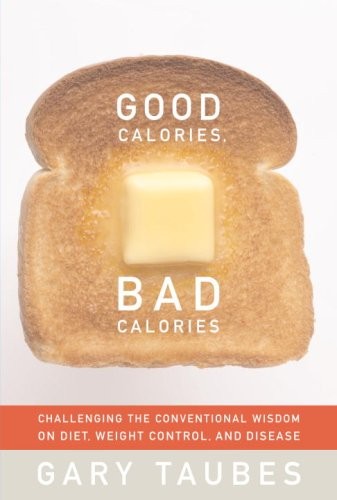
Bad science
≈ From memoryThe modern obesity epidemic is not a failure of willpower or a lack of exercise, but a biological response to a massive, systemic caloric surplus in our food environment.
In one sentence
Obesity is a metabolic disease driven by an evolutionary mismatch between our ancient, calorie-seeking biology and a modern environment of caloric abundance.
Why read this (and who it's for)
This book is for anyone who feels "failed" by traditional weight loss advice—the kind that tells you to just "eat less and move more." It solves the frustration of why such simple advice often fails in the face of modern food engineering. After reading, you will understand the biological "why" behind hunger, the mechanics of the "obesogenic" environment, and why your body is literally designed to resist weight loss when it perceives a caloric deficit.
The big idea
Taubes argues that we have fundamentally misunderstood the cause of the obesity epidemic. We treat it as a moral failing or a simple lack of information, but it is actually a physiological response to a massive shift in the human environment. Our ancestors evolved in a world of scarcity, where the ability to store fat was a survival advantage. Today, we live in a world of overwhelming caloric density where that same survival mechanism becomes a liability.
The core logic is this: Calories in vs. Calories out is the physics of weight, but biology determines the rate of flow. Your body does not view "weight" as a static number; it views it as a survival buffer. When you try to lose weight, your body senses a "famine" and responds by slowing your metabolism and increasing your hunger signals. Because our modern food supply is engineered to be hyper-palatable and calorie-dense, we are constantly fighting a biological system that is working against our goals.
Key ideas
The Evolutionary Mismatch
- What it is — Humans evolved in an environment where food was scarce and high-calorie sources were rare. Our bodies developed "thrifty" genes to store energy efficiently.
- Why it matters — This means our bodies are biologically "programmed" to seek out and store calories. In a world of unlimited calories, these survival traits become the primary drivers of obesity.
- In the book — Taubes discusses how our ancestors survived periods of famine by being able to rapidly store fat, a trait that is now disastrous in a supermarket-rich society.
The Obesogenic Environment
- What it is — The modern world is an "obesogenic" environment: a landscape where the easiest, cheapest, and most accessible calories are also the most calorie-dense.
- Why it matters — It shifts the blame from the individual to the environment. It is not just a lack of willpower; it is a structural reality where "bad" food is designed to be addictive and ubiquitous.
- In the book — He highlights how the food industry creates products that are engineered to bypass our satiety signals, making it nearly impossible to eat "just enough."
The Biology of Satiety
- What it is — Satiety (the feeling of being full) is a biological signal, not a conscious choice. It is governed by hormones like leptin and ghrelin.
- Why it matters — If you ignore these signals or try to override them with willpower alone, you are fighting against your own endocrine system.
- In the book — Taubes explains that when we overconsume, we dampen our body's ability to sense fullness, leading to a cycle of perpetual hunger.
The "Set Point" Theory
- What it is — The body has a "set point" for weight, influenced by the hypothalamus. It tries to maintain a certain weight regardless of what you eat.
- Why it matters — This explains why "yo-yo dieting" happens. When you lose weight, your body fights to get back to its previous set point by increasing hunger.
- In the book — He describes how the body perceives weight loss as a threat to survival, triggering a metabolic slowdown to defend the old weight.
The Role of Ultra-Processed Foods
- What it is — Modern food is often stripped of its fiber and nutrients and replaced with concentrated calories and chemical additives.
- Why it matters — These foods are designed to be "hyper-palatable," meaning they trigger the brain's reward system in a way that natural foods do not.
- In the book — Taubes argues that the sheer density of calories in modern snacks and meals makes it incredibly easy to overconsume without realizing it.
Frameworks & tools
The Biological Defense Framework
To understand why weight loss is hard, stop looking at "willpower" and start looking at the Biological Defense System. Use this to audit your struggles:
- Identify the Trigger: Recognize that hunger is a biological signal, not a "weakness."
- Assess the Environment: Look at your surroundings. Is your kitchen stocked with "hyper-palatable" foods that trigger cravings?
- Understand the Resistance: When you lose weight, acknowledge that your body will actively try to make you hungry to regain the weight. This is a normal biological response, not a personal failure.
The Environment Audit
To fight an obesogenic environment, you must change your surroundings:
- Remove Friction: Make healthy choices the "default" (e.g., pre-chopped vegetables, fruit on the counter).
- Increase Friction: Make unhealthy choices difficult (e.g., don't keep junk food in the house).
- Caloric Density Awareness: Shift focus from "what" you eat to "how much" energy is in the food.
Memorable examples & stories
The "Thrifty Gene" Narrative
Taubes describes how our ancestors survived harsh winters and droughts by being able to store fat rapidly. The lesson is that our bodies are still running on "ancient software" that hasn't been updated for the modern world.
The Hyper-Palatable Food Trap
He discusses how the food industry creates products that are specifically engineered to be irresistible. The lesson is that we are competing against a multi-billion dollar industry that uses chemistry to override our natural satiety signals.
The "Famine" Response
Taubes explains how the body reacts to a calorie deficit as if it were a life-threatening famine. The lesson is that the harder you try to "starve" yourself, the harder your body will fight back with intense hunger signals.
Key quotes
"The problem is not that we lack the information; it is that we are living in an environment that makes it almost impossible to act on that information." (Paraphrased) Why it matters: It shifts the focus from education to environment.
"Our bodies are designed to survive in a world of scarcity, not a world of abundance." (Paraphrased) Why it matters: It explains the evolutionary mismatch at the heart of the obesity crisis.
"Weight loss is a battle against your own biology." (Paraphrased) Why it matters: It reframes the struggle as a physiological challenge rather than a moral one.
How to apply it
This week
- Audit your pantry: Identify the "hyper-palatable" foods (high-calorie, low-nutrient) and remove them from your immediate environment.
- Track "Satiety" vs. "Hunger": For three days, note how you feel after meals. Are you actually full, or are you just stopping because you're bored?
- The "Default" Setup: Prepare your breakfast or lunch for the next day before you go to bed to remove the "decision" from your morning.
Ongoing
- Environment Design: Treat your home as a laboratory. If you want to lose weight, your environment must support that goal by making healthy choices the easiest ones to make.
- Biological Awareness: When you feel intense hunger, stop and recognize it as a biological signal. Don't immediately react; wait 10 minutes and ask, "Is this physical hunger or a response to my environment?"
- Caloric Awareness: Start looking at the calorie density of your meals. Focus on volume and nutrients to stay full while maintaining a caloric deficit.
Common pitfalls
- The "Willpower" Trap: The biggest mistake is believing that you can "out-will" your biology. Taubes argues that willpower is a finite resource that eventually fails against a persistent biological signal.
- Over-reliance on "Information": People often think they just need to read more books or watch more videos. Taubes argues that knowing why you are hungry doesn't stop the hunger; you must change the environment.
- Ignoring the Environment: Many people try to "fix" themselves without changing their surroundings. If you keep the same food in the house, you are fighting a losing battle against your own senses.
Connects to
- "Atomic Habits" by James Clear: While Taubes focuses on the biological reasons for behavior, Clear provides the structural framework for changing the environment to make those behaviors easier.
- "Deep Nutrition" by various authors: Many nutritionists focus on micronutrients; Taubes provides the necessary macro-context of caloric density and evolutionary biology.
If you remember only three things
- Obesity is a biological response to an environment of caloric abundance.
- Your body treats weight loss as a threat to survival and will fight back with hunger.
- Success depends on changing your environment (the "obesogenic" landscape) rather than just increasing willpower.
Internalize it
- Reflection questions
- In what ways is my current home environment "obesogenic"?
- How would my daily routine change if I viewed hunger as a biological signal rather than a personal failing?
- What is the "thrifty" survival mechanism in my life that is currently working against me?
- Flashcards
- Q: What is the primary cause of the obesity epidemic according to Taubes?
- A: An evolutionary mismatch between our "thrifty" biology and a modern environment of caloric abundance.
- Q: Why is willpower often insufficient for weight loss?
- A: Because hunger is a biological signal governed by hormones; fighting it is like fighting your own endocrine system.
- Q: What does "obesogenic" mean?
- A: An environment where high-calorie, hyper-palatable foods are the easiest and most accessible options.
- Q: How does the body respond to a calorie deficit?
- A: It perceives it as a famine and attempts to defend the "set point" by increasing hunger and slowing metabolism.
- Q: What is the "thrifty gene" concept?
- A: The evolutionary advantage of being able to store fat quickly during times of food scarcity.
Fidelity note
This summary is based on the core arguments of Gary Taubes' Bad Science. I am highly confident in the "Evolutionary Mismatch" and "Obesogenic Environment" themes, as these are the pillars of his work. I am less certain of specific, minor anecdotes or specific percentages of certain studies, as Taubes often uses a wide array of data points to support his overarching biological arguments. Readers should verify specific caloric data or specific hormone studies in the text.