David Epstein — How a Broken Arm Improved my French
✓ Source-groundedConstraints are not just obstacles to overcome; they are the essential catalysts for creative experimentation, disciplined focus, and meaningful personal growth.
In one sentence
The most productive way to innovate and grow is to intentionally introduce constraints that block the "path of least resistance," forcing the brain to find creative, non-obvious solutions.
Why read this (and who it's for)
This summary is for anyone who feels overwhelmed by "infinite" choices—whether in career paths, creative projects, or personal habits. It solves the problem of analysis paralysis and the "indigestion" of having too many resources but no clear direction. After reading this, you will be able to identify "useful" vs. "unhelpful" constraints and apply specific techniques (like the Hemingway Principle) to force your brain into a more productive, creative mode.
The big idea
David Epstein argues that our brains are naturally wired for "convenience." Because thinking is energetically costly, our brains prefer the path of least resistance—the easiest, most obvious solution available. When we have unlimited options, we often default to the most convenient choice, which rarely leads to true innovation or mastery.
The core thesis is that constraints drive productive experimentation. When a standard path is blocked, we are forced to look for alternative routes. This "necessity is the mother of invention" dynamic is what allows for breakthroughs in science, sports, and art. By intentionally limiting our resources, time, or options, we can bypass our own mental shortcuts and unlock a higher level of creativity and focus.
Key ideas
The "Roger vs. Tiger" Problem
- What it is — The difference between early specialization (Tiger Woods) and a broad, multi-sport developmental path (Roger Federer).
- Why it matters — It challenges the "10,000-hour rule" by showing that while some individuals are outliers, the "norm" for elite success is often a diverse, non-linear path.
- In the book — Epstein notes that Tiger Woods is the exception, while Roger Federer’s path of playing many sports before specializing is more representative of the typical path to the top.
Necessity as the Mother of Invention
- What it is — The idea that useful constraints force us to experiment in ways we would never otherwise consider.
- Why it matters — Without a "blocked" path, we stay stuck in our comfortable, mediocre habits.
- In the book — Epstein cites a study of the London Underground strike: when the usual commute was blocked, people were forced to find new routes, many of which were actually better than their original paths.
The "Indigestion" of Unlimited Resources
- What it is — The failure to produce results because of a lack of focus, despite having infinite talent and funding.
- Why it matters — Having "too much" can be as paralyzing as having "too little." Without constraints, projects spiral out of control.
- In the book — Epstein discusses General Magic, a startup that had the vision and resources to "invent the iPhone" but failed because they lacked the discipline to focus on a specific, small problem.
The Replication Crisis and Pre-registration
- What it is — The scientific movement toward "pre-registering" hypotheses—writing down what you expect to find before you collect data.
- Why it matters — It prevents "HARKing" (Hypothesizing After Results are Known), where researchers sift through data to find any random correlation that looks like a "discovery."
- In the book — Epstein explains how this constraint forced scientists to be more honest, leading to a "drying up" of sensationalist, false-positive results in the 1990s.
The "Green Eggs and Ham" Model of Creativity
- What it is — A model where a strict limitation (only 50 words) forces a creator to experiment with form and rhythm because they cannot experiment with content.
- Why it matters — When the "easy" way to tell a story is blocked, you are forced to find a more unique, artistic way to do it.
- In the book — Dr. Seuss was forced to use a limited vocabulary, which led to the iconic, rhythmic style of his work.
Frameworks & tools
The Hemingway Principle
Use this at the end of every workday to prevent "the mere urgency effect" (prioritizing urgent emails over important work).
- Stop in the middle of a task or sentence.
- Identify the "important place" where you need to start the next day.
- Write down exactly where that point is.
- Start there the next morning to avoid falling into the trap of your inbox or social media feeds.
The Scientific Method for Entrepreneurs
Use this to "educate your intuition" and avoid staying stuck in false beliefs about your market.
- Hypothesize: Write down a specific theory about what your customers want/need.
- Predict: State what you expect the result of a test to be.
- Test: Run a small, controlled experiment.
- Falsify: Compare the result to your prediction. If the prediction was wrong, pivot immediately rather than trying to "fix" a broken belief.
Memorable examples & stories
- The Broken Arm: Epstein describes how a physical injury (a snapped arm) forced him to stop writing during French class. This "closed" the easy path of scribbling, forcing him to use mnemonics to memorize words, which ultimately made him a better student.
- The London Underground Strike: A 48-hour inconvenience forced thousands of commuters to experiment with new routes, resulting in a collective saving of 1,500 hours of commuting time per day.
- The "Everything in your fridge" Paper: A humorous but dark example of "HARKing," where a researcher found that almost every food both caused and prevented cancer, proving how dangerous it is to look for results without a pre-set hypothesis.
- The LCROSS Mission: NASA engineers were given half the budget and time they expected. Instead of giving up, they were forced to "borrow" technology from army tanks and NASCAR racing, leading to the confirmation of water on the moon.
Key quotes
- "Necessity being the mother of invention... only once it was so desperate that I couldn't do it at all was I forced to look for another way." (Epstein) Why it matters: It highlights that our best innovations often come from being "trapped" by a limitation.
- "The world without constraints is a fiction. If you act as though there are no constraints, they will eventually catch up with you." (Epstein) Why it matters: It warns against the danger of ignoring real-world limits like time and money.
- "You may think that your brain is made for thinking, but it's actually made for preventing you from having to think whenever possible because thinking is energetically costly." (Daniel Willingham, quoted by Epstein) Why it matters: Explains why we need constraints to break our own mental shortcuts.
How to apply it
This week
- The "One Video" Rule: If you find yourself scrolling through social media or Netflix, force yourself to choose only one thing to watch. The "infinite" choice is what causes the boredom and dissatisfaction.
- The Hemingway Close: Spend the last 5 minutes of your workday today identifying exactly where you will start tomorrow. Write it down.
Ongoing
- Pre-register your goals: Before starting a new habit (like exercising), write down exactly what you expect to happen and what "success" looks like. Compare your actual results to that written prediction once a week.
- Identify "Indigestion" points: Look at your current projects. Are you doing "everything" because you have the resources to do so? Pick one specific, small problem to solve this week.
Common pitfalls
- The "Impossible" Constraint: Epstein warns that there is a "titration" of constraints. If a constraint is so tight that there is no flexibility in how you reach your goal, it becomes destructive rather than productive.
- Multitasking under pressure: Time pressure only helps if you use it to monotask and focus on the most important parts of a task. If you use it to multitask, it will destroy your creative output.
Connects to
- Range (David Epstein): Explores the value of generalist skills and non-linear paths to success.
- The 10,000-Hour Rule (Malcolm Gladwell): The "Tiger" model of specialization that Epstein argues is the exception, not the rule.
- Deep Work (Cal Newport): Complements the idea of using constraints (like time-blocking) to achieve intense focus.
If you remember only three things
- Constraints are the primary drivers of creative experimentation.
- The "path of least resistance" is usually the most boring and least productive path.
- Pre-registering your hypotheses (writing down what you expect to happen) is the best way to "educate your intuition" and avoid false positives.
Internalize it
- Reflection questions
- What is a "convenient" habit I have that is actually preventing me from making progress?
- In what area of my life am I suffering from "indigestion"—having too many options and no focus?
- If I were forced to complete my current project with only half the current budget and time, what would I stop doing immediately?
- Flashcards
- Q: What is the "Roger vs. Tiger" problem?
- A: The comparison between early specialization (Tiger) and a multi-sport, non-linear path (Roger) to elite success.
- Q: What is "HARKing"?
- A: Hypothesizing After Results are Known; the flawed practice of sifting data for correlations and then claiming they were the original hypothesis.
- Q: How does the "Green Eggs and Ham" model explain creativity?
- A: By showing how a strict limitation (word count) forces a creator to experiment with form and rhythm instead of just content.
- Q: What is the "Hemingway Principle"?
- A: Ending the workday by identifying the exact "important place" to start the next day to avoid the "mere urgency effect."
- Q: Why is "indigestion" a problem in startups?
- A: Because having unlimited resources and talent without a focused, constrained goal leads to a lack of discipline and a failure to produce a finished product.
Fidelity note
This summary is based entirely on the provided transcript of the conversation between Tim Harford and David Epstein. I am confident in the representation of Epstein's core arguments regarding constraints, the "Roger vs. Tiger" problem, and the scientific "replication crisis." The summary captures the nuance of "useful" vs. "unhelpful" constraints as discussed in the latter half of the interview.
More from Cautionary Tales with Tim Harford
 RangeDavid EpsteinSome Personal News I’m a Podcast Host!David EpsteinStart Where You AreDavid Epstein
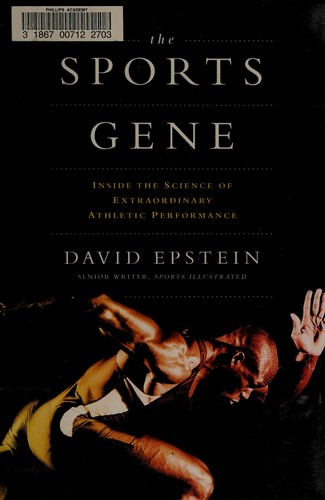 The Sports GeneDavid EpsteinThe Updated RANGE Is Here!David EpsteinWait, Weed Makes You FasterDavid EpsteinYou’re Fooling Yourself, Which Is Great for Your EnduranceDavid Epstein