The Updated RANGE Is Here!
✓ Source-groundedSuccess in a knowledge economy depends on 'match-quality'—the ability to discover your true strengths through a deliberate 'sampling period' of diverse experiences.
In one sentence
To succeed in a modern, multifaceted career, you must prioritize "match-quality" by treating early career stages as a sampling period to gather data on your own strengths and interests.
Why read this (and who it's for)
This piece addresses the anxiety of "choosing" a career path too early. It is for anyone who feels pressured to specialize quickly or who feels like a "Jack of all trades" without a clear direction. After reading this, you will stop viewing "sampling" as a distraction and start seeing it as a high-leverage data-gathering strategy to find your best professional "match."
The big idea
The "knowledge economy" is defined by lateral mobility and multifaceted careers. In this environment, the traditional model of picking a career path before you actually know what the job entails—or who you are as a professional—is fundamentally flawed. This leads to a "match-quality" problem: people end up in roles that don't align with their actual talents.
Epstein argues that we must shift from a "theory-based" selection (choosing a path based on what we think we want) to a "practice-based" selection. This is achieved through a sampling period. By intentionally exposing yourself to a variety of experiences, you generate "signal"—real-world data about your strengths, values, and performance—allowing you to make better-informed decisions about where to commit your energy.
Key ideas
The "Jack of All Trades" Re-evaluation
- What it is — The phrase "Jack of all trades, master of none" is a truncated version of a longer, more nuanced observation.
- Why it matters — It shifts the cultural narrative from "generalists are less capable" to "generalists are often better than specialists" because they possess a broader range of tools.
- In the book — Epstein notes that the original 1592 version was "A Jack of all trades is a master of none, but oftentimes better than a master of one."
Match-Quality
- What it is — The degree of alignment between an individual's unique talents/interests and the requirements of their career path.
- Why it matters — High match-quality leads to better performance, higher satisfaction, and better retention. Low match-quality leads to burnout and early career exits.
- In the book — The Army's "talent-based branching" program was created specifically because the previous model had a "match-quality problem" where cadets chose professions they didn't understand.
The Sampling Period
- What it is — A deliberate phase of exploration where an individual cycles through different roles, internships, and experiences to gather data.
- Why it matters — It allows for "lateral mobility." Instead of being "stuck" in a choice made before you knew yourself, you use experience to discover who you are in practice.
- In the book — The Army's program allows officers-in-training to cycle through classes and field training to discover their own interests while simultaneously learning about the jobs.
The Knowledge Economy
- What it is — A modern economy characterized by "sampling and lateral mobility" where careers are longer and more multifaceted.
- Why it matters — In this economy, success is not about staying in one lane; it is about "knowing yourself"—your strengths, values, and how you best perform.
- In the book — Epstein cites Peter Drucker’s prediction that workers would increasingly have "longer and multifaceted careers."
The Role of the Mentor (Signal vs. Noise)
- What it is — The role of a coach or parent is to help a learner extract "signal" from their experiences.
- Why it matters — Experience alone can be overwhelming; a mentor helps the learner reflect on what they actually learned about their own talents and interests.
- In the book — Epstein compares his parenting strategy to a "coach-like mentor" who helps his son get the maximum amount of signal from each "zig and zag."
The "Dark Horse" Reflection
- What it is — A practice of regular, honest self-reflection to determine your current "match."
- Why it matters — It prevents you from becoming stuck in a path that no longer fits. It allows you to say, "Here is who I am at the moment... which of these is the best match right now?"
- In the book — This is a recurring theme for "dark horses" who constantly reassess their motivations and opportunities.
Frameworks & tools
The Sampling Period Framework
Use this to navigate career transitions or personal growth:
- Identify the Sampling Period: Define a timeframe where the goal is exploration, not mastery.
- Gather Experiences: Cycle through different "internship-like" work experiences or roles.
- Extract Signal: After each experience, perform a "self-reflection" (tracked in a journal or portal).
- Assess Match-Quality: Ask: "Who am I at the moment? What did I like to do? What is the best match right now?"
- Pivot if Necessary: Be willing to switch paths when a better match is identified.
The "Dark Horse" Reflection Questions
Ask yourself these questions regularly to maintain high match-quality:
- Who am I at the moment?
- What are my current motivations?
- What have I found I like to do?
- What would I like to learn?
- What are the opportunities available to me?
- Which of these is the best match right now?
Memorable examples & stories
The Army's Talent-Based Branching
The Army realized that cadets were choosing careers they didn't understand because they were forced to choose before they knew their own abilities. By creating a "sampling period" where cadets could try different jobs, 90% of participating cadets changed at least one of their top three career preferences. Lesson: We learn who we are in practice, not in theory.
The "Jack of All Trades" History
The phrase was originally used as a jab at a young William Shakespeare, who was a poet with no university education involved in various roles like copying scripts and bit-part acting. Lesson: Versatility is a historical precursor to mastery, not a lack of it.
The 12-Year-Old's "Top 5"
A 12-year-old girl suggested that instead of making "What I want to be when I grow up" signs, kids should make "Top 5 things I want to learn about this year" signs. Lesson: Shift the focus from a static destination to a dynamic period of learning.
Key quotes
"We learn who we are in practice, not in theory." Why it matters: This is the core justification for the sampling period; experience is the only way to generate reliable data about your own potential.
"Success in the knowledge economy comes to those who know themselves — their strengths, their values, and how they best perform." (Paraphrased from Peter Drucker) Why it matters: Self-knowledge is the ultimate competitive advantage in a complex, shifting job market.
"A Jack of all trades is a master of none, but oftentimes better than a master of one." Why it matters: It validates the generalist's ability to navigate complexity and variety.
How to apply it
This week
- Audit your "Match": Identify one area of your current work or life where you feel a "subpar career match." Write down why it feels like a mismatch.
- Identify a "Sampling" Opportunity: Find one small thing you want to learn or try this week that is outside your current "specialty."
- Create a "Learning Sign": Instead of asking "Where will this lead me?", ask "What are the top 3 things I want to learn about this [project/job] this month?"
Ongoing
- The Reflection Habit: Schedule a monthly "Dark Horse" reflection. Ask: Who am I at the moment? What is the best match right now?
- Prioritize Signal over Speed: When trying something new, don't just do it to "get it done." Do it to see what it reveals about your strengths and interests.
- Maintain Lateral Mobility: Keep your options open. Don't assume a choice made today is a permanent commitment for the next ten years.
Common pitfalls
- The "Specialization Trap": Assuming that you must pick a "forever" career immediately to be successful. This leads to low match-quality and early burnout.
- Confusing Sampling with Aimlessness: Sampling is not "doing things for the sake of doing them." It must be intentional data-gathering to find "signal" about your talents.
- Theory-Based Planning: Relying on what you think you should want rather than what you discover you actually enjoy when you do the work.
Connects to
- Range (David Epstein): This text serves as an expansion of the core principles found in the book, specifically regarding the "Dark Horse" and "Match-Quality."
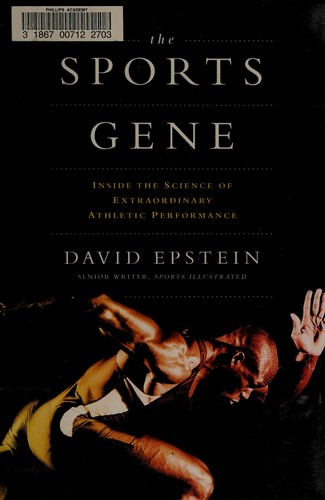
- The Sports Gene (David Epstein): Mentioned as a precursor to the research that informed Range.
If you remember only three things
- Match-Quality: The goal of any career move is to find the best fit between your unique talents and the role's requirements.
- The Sampling Period: Use early career stages to gather data, not just to build a resume.
- Practice over Theory: You cannot know what you are good at until you actually do the work.
Internalize it
- Reflection questions
- In what areas of my life am I currently making decisions based on "theory" rather than "practice"?
- If I were to treat my current role as a "sampling period," what data would I want to collect about myself?
- How can I better facilitate "signal" for others (mentees, children, or teammates) by helping them reflect on their experiences?
- Flashcards Q: What is the primary goal of the "talent-based branching" program in the Army? A: To improve "match-quality" by providing a sampling period for officers-in-training to discover their own interests and talents. Q: What is the difference between the common "Jack of all trades" phrase and its original form? A: The original form—"A Jack of all trades is a master of none, but oftentimes better than a master of one"—emphasizes the value of versatility. Q: What does "signal" mean in the context of the sampling period? A: It refers to the actual data about one's own strengths, values, and performance gathered through experience. Q: What is the "Dark Horse" reflection? A: A regular practice of asking: "Who am I at the moment? What are my motivations? What is the best match right now?" Q: Why is the "knowledge economy" different from previous economies? A: It is characterized by lateral mobility and multifaceted careers, rewarding those who know their own strengths and values.
Fidelity note
This summary is based strictly on the provided text, which is an afterword/update to David Epstein's book Range. Because the source material is a specific update, the summary focuses heavily on the "Sampling Period," "Match-Quality," and the Army's "Talent-Based Branching" program. Readers should note that while the text references Range (specifically Chapters 6 and 7), the full details of those chapters are not contained in this specific source material.
Keep going — related reads
More from David Epstein
 How a Broken Arm Improved my French - with David EpsteinCautionary Tales with Tim HarfordHow To Quiet the Chatter in Your HeadDavid EpsteinHow to Turn “High Conflict” into Good ConflictDavid Epstein
 RangeDavid EpsteinSome Personal News I’m a Podcast Host!David EpsteinStart Where You AreDavid Epstein
 The Sports GeneDavid EpsteinWait, Weed Makes You FasterDavid EpsteinYou’re Fooling Yourself, Which Is Great for Your EnduranceDavid Epstein