Some Personal News I’m a Podcast Host!
✓ Source-groundedYou discover who you are by testing reality through action, not by analyzing yourself in a vacuum.
In one sentence
Identity and career paths are discovered through the "doing" of activities, not through the "thinking" of introspection.
Why read this (and who it's for)
This is for anyone paralyzed by "analysis paralysis"—the feeling that you must have a perfect, clear vision of your future before you can take a single step. It solves the problem of over-intellectualizing your career path. After reading this, you will stop trying to "think" your way into a new identity and start "acting" your way into one.
The big idea
The central thesis is that our insight into ourselves is fundamentally constrained by our past experiences. Therefore, you cannot "think" your way into a new version of yourself because your thoughts are only as good as the data your past actions have provided. To find out what you are capable of, what you enjoy, and who you are, you must engage in a cycle of action and reflection.
Epstein argues that the "painless path" to a new career—the idea that you can simply form a clear picture of what you want before acting—is actually the opposite of sound advice. Instead, you must "test reality" by trying new activities, building new networks, and finding new role models. You act first, then reflect on how that action fits you, and then you act again.
Key ideas
Learning in Practice
What it is — We learn who we are by doing, not by theory. Identity is an emergent property of experience. Why it matters — If you rely solely on introspection, you are limited by your current, narrow perspective. Action is the only way to expand your "roster of experiences" and see what is possible. In the book — Epstein cites Herminia Ibarra, who argues that "We learn who we are in practice, not in theory."
The Fallacy of the "Painless Path"
What it is — The belief that a clear, pre-planned vision is the prerequisite for success is a myth. Why it matters — This belief keeps people stuck in a loop of planning without ever gathering the data that only comes from execution. In the book — Epstein critiques conventional-wisdom articles (like those in the Wall Street Journal) that suggest the secret to a new career is simply forming a "clear picture" before taking action.
The Michelangelo Model
What it is — A metaphor for iterative, messy, and non-linear creation. Why it matters — It validates the "messiness" of growth. It’s okay to change your mind, abandon goals, and pivot when a better opportunity for learning arises. In the book — Epstein notes that Michelangelo did not see a finished figure in a block of marble; he constantly changed his plans, ran out of rock due to course corrections, and left many works unfinished because he was a "relentless experimenter."
The Spotlight Effect
What it is — The psychological tendency to overestimate how much others are focused on our mistakes or actions. Why it matters — Recognizing this lowers the barrier to entry for trying new things. You aren't the center of everyone else's universe, which gives you the freedom to fail publicly. In the book — This is discussed as a way to manage the "choking" of performance under pressure.
Low-Stakes Practice
What it is — Creating environments where you can practice being self-conscious or performing a skill where the consequences of "choking" are not dire. Why it matters — It builds "competitive instincts" and resilience without the risk of permanent failure. In the book — Epstein shares the example of Serena Williams serving oranges over a fence to hone her competitive instincts.
Cognitive Outsourcing
What it is — Moving a piece of information from your working memory to a physical location (like a written word) to free up mental processing power. Why it matters — It prevents the "mental spiral" of anxiety by allowing your prefrontal cortex to focus on the task at hand rather than trying to remember a mantra. In the book — Epstein suggests writing a focus word on your hand with a Sharpie to occupy the conscious control part of your brain.
Frameworks & tools
The Experiment-and-Reflect System
Use this system to navigate career transitions or personal growth.
- Identify a "Small Experiment": Choose a low-stakes activity that will provide data on your interests or abilities.
- Execute: Perform the action (e.g., a "man on the street" interview, a new project, or a new role).
- Reflect: Analyze how the experience fit you and what it revealed about your strengths/weaknesses.
- Iterate: Use that data to inform the next experiment.
The "Choking" Mitigation Protocol
Use this when you feel overwhelmed by the pressure of a performance (like an audition or a big meeting).
- Identify the Spotlight Effect: Remind yourself that people are not watching your flaws as closely as you think.
- Find a Mantra: Pick a single focus word or phrase.
- Cognitive Outsourcing: Write that word down physically (on a hand, a piece of paper, or a screen) so you don't have to hold it in your head.
- Low-Stakes Prep: Practice the skill in a "goofy" or low-consequence environment before the big day.
Memorable examples & stories
The Michelangelo Metaphor Michelangelo was a "relentless experimenter" who changed his plans mid-sculpture and abandoned projects entirely to pursue poetry. Lesson: Growth is rarely a straight line; it is a series of pivots and abandoned paths.
Serena Williams' Oranges Serena Williams practiced serving oranges over a fence to hone her competitive instincts. Lesson: Even "silly" or low-stakes activities can build the mental muscles needed for high-stakes performance.
The "Man on the Street" Epstein describes how he overcame a fear of talking to strangers by being forced to do "man on the street" reporting for the NY Daily News. Lesson: Forced, low-stakes practice is often the fastest way to cure a persistent social anxiety.
Key quotes
"We learn who we are in practice, not in theory." (Paraphrased from Herminia Ibarra) Why it matters: It shifts the focus from internal contemplation to external action.
"We discover the possibilities by doing... by trying new activities, building new networks, finding new role models." (Paraphrased from Herminia Ibarra) Why it matters: It highlights that your "roster of experiences" is the only thing that expands your horizon.
"I aspire to a formative process akin to Michelangelo’s—start down a path, but keep my eyes open for promising turns..." (Paraphrased) Why it matters: It encourages a mindset of perpetual experimentation over rigid goal-setting.
How to apply it
This week
- Identify one "Small Experiment": What is one thing you've been overthinking? Find a way to "test" it this week with a low-stakes action.
- The "Man on the Street" test: If you struggle with social anxiety, find a way to initiate a brief, meaningless interaction with a stranger (e.g., asking for directions or a recommendation).
- Write your Mantra: If you have a looming presentation or meeting, write your focus word on your hand or a sticky note to practice "cognitive outsourcing."
Ongoing
- Maintain a "Book of Small Experiments": Keep a running log of what you tried, what the result was, and what it taught you about your own strengths and interests.
- The "Doing" Rule: Whenever you feel stuck in a planning loop, force yourself to perform one small action that generates new data.
Common pitfalls
- The Analysis Trap: Thinking that "thinking more" will eventually lead to a clear answer. Epstein argues that more thinking without action only reinforces your current, limited perspective.
- High-Stakes Testing: Trying to learn a new skill by jumping straight into a high-stakes environment. You need "low-stakes" practice (like the orange-serving) to build the necessary confidence.
- The "Perfect Path" Myth: Believing there is a "painless" way to find your calling. Acceptance of the "messy" process of experimentation is required.
Connects to
- Working Identity by Herminia Ibarra (The foundational research on learning through practice).
- The Power of Habit by Charles Duhigg (The context for the podcast and the importance of systems).
- Range by David Epstein (The broader philosophy of exploration and generalism).
If you remember only three things
- You learn who you are by doing, not by thinking.
- Your current perspective is limited by your past experiences; only new actions can expand it.
- Use a "Book of Small Experiments" to turn your life into a series of data-gathering missions.
Internalize it
- Reflection questions
- What is one area of my life where I am "over-thinking" instead of "doing"?
- What would a "low-stakes" version of that experiment look like?
- If I were to treat my career like a "Book of Small Experiments," what would my next entry be?
- Flashcards
- Q: What is the "Spotlight Effect"?
- A: The tendency to overestimate how much others are focused on our mistakes.
- Q: What is "Cognitive Outsourcing"?
- A: Writing down a mantra or focus word to free up working memory during high-pressure moments.
- Q: How does David Epstein describe Michelangelo's work process?
- A: As a "relentless experimenter" who frequently changed his plans and left works unfinished.
- Q: What is the core difference between "thinking" and "doing" in career development?
- A: Thinking is limited by your current experiences; doing provides the new data needed to discover who you are.
Fidelity note
This summary is based strictly on the provided text. I am confident in the representation of the "Doing vs. Thinking" philosophy and the specific techniques for "Choking" (Spotlight Effect, Low-Stakes Practice, Cognitive Outsourcing). The "Book of Small Experiments" is presented as a personal system used by the author, and while the text doesn't provide a formal template, the "Experiment-and-Reflect" framework is derived directly from his description of his own process.
Keep going — related reads

More from David Epstein
 How a Broken Arm Improved my French - with David EpsteinCautionary Tales with Tim HarfordHow To Quiet the Chatter in Your HeadDavid EpsteinHow to Turn “High Conflict” into Good ConflictDavid Epstein
 RangeDavid EpsteinStart Where You AreDavid Epstein
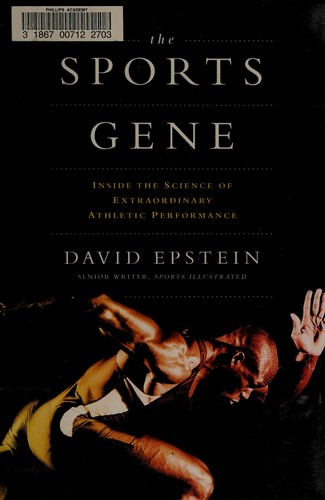 The Sports GeneDavid EpsteinThe Updated RANGE Is Here!David EpsteinWait, Weed Makes You FasterDavid EpsteinYou’re Fooling Yourself, Which Is Great for Your EnduranceDavid Epstein