Ryan Holiday — Ancient Strategies For Managing Stress And Anxiety
✓ Source-groundedStoicism is not a passive philosophy of endurance, but a proactive spiritual practice of 'medicine' designed to help you navigate a chaotic world by distinguishing what you can control from what you cannot.
In one sentence
Stoicism is a practical "medicine" for the soul—a set of spiritual exercises designed to help you navigate life's inevitable hardships by focusing entirely on your internal character and response to external events.
Why read this (and who it's for)
This conversation is for anyone feeling overwhelmed by the "noise" of modern life, the anxiety of the future, or the weight of past regrets. It provides a framework for emotional resilience by teaching you how to stop "suffering before it is necessary" and instead build a mental fortress of discipline, perspective, and acceptance. You will learn how to use specific Stoic exercises—like premeditating on "evils" and practicing "amor fati"—to transform your relationship with stress.
The big idea
Ryan Holiday argues that Stoicism is often misunderstood as a cold, emotionless resignation to fate. In reality, it was designed as a form of "medicine"—a soothing ointment to relieve the distress of a broken world. The core logic of Stoicism rests on the realization that while we have powerlessness over external events (the weather, the economy, other people's actions), we have absolute sovereignty over our internal judgments and our responses to those events.
By practicing Stoic "spiritual exercises," you train your mind to recognize the difference between what is up to you and what is not. This allows you to stop wasting energy on anxiety (which is essentially suffering before the event occurs) and instead focus on the only thing that truly matters: your character and your choices in the present moment.
Key ideas
Premeditatio Malorum (Premeditation of Evils)
- What it is — The practice of deliberately imagining the worst possible outcomes of a situation to prepare yourself mentally for them.
- Why it matters — It strips away the element of surprise from misfortune. By anticipating "evils," you become comfortable with the hard things that might happen, allowing you to remain calm and proactive when they actually occur.
- In the book — Holiday references Seneca’s example of a traveler on a ship: instead of ignoring the risks, the traveler should contemplate sinking, pirate attacks, storms, and illness to ensure they are prepared for any reality.
Amor Fati (Love of Fate)
- What it is — The practice of not just accepting what happens, but actively "loving" it and choosing to do something with it.
- Why it matters — It transforms resignation into agency. It is the difference between "this happened to me" and "this is the hand I've been dealt; how will I use it to be good?"
- In the book — Holiday connects this to the "Stockdale Paradox," where a prisoner of war maintains hope for the future while simultaneously facing the brutal reality of his current situation.
Memento Mori (Remembering Death)
- What it is — The practice of keeping the reality of your own mortality and the fleeting nature of life at the forefront of your mind.
- Why it matters — While it sounds morbid, it is actually a tool for clarity. Remembering that life is short helps you strip away trivialities and focus on what is truly essential.
- In the book — Holiday explains that this practice helps one realize that "life is fleeting," which serves as a grounding mechanism for prioritizing what matters.
Discipline as Temperance
- What it is — A shift from viewing discipline as "brute force" to viewing it as "moderation" or "temperance."
- Why it matters — Brute force is exhausting and often unsustainable. Temperance—like the ancient symbol of watering down wine—is about finding a sustainable balance that allows for consistency without total exhaustion.
- In the book — Holiday notes that the willpower to get out of bed in the morning requires less discipline if you have the discipline of the night before to decide when to go to sleep.
The Role of Justice and Action
- What it is — The belief that Stoicism is not a retreat from the world, but a call to be "in the arena."
- Why it matters — It prevents Stoicism from becoming a "garden" of isolation (like Epicureanism). It demands that you be active in the issues and debates of your time.
- In the book — Holiday cites Thomas Wentworth Higginson, a Stoic who was active in the protests against the Fugitive Slave Act and led a black regiment in the Civil War.
Frameworks & tools
The Stoic Feedback Loop
To internalize Stoic philosophy, Holiday suggests treating it as a "spiritual exercise" rather than a static set of rules. Use this three-step loop:
- Preparation: Read and listen to the teachings (the "reading and the talking").
- Action: Apply the principles to your daily life (the "applying").
- Debrief: Journal at the end of the day to ask:
- Where did I fall short?
- How could I have been better?
- What did I learn?
- How do I now have a better understanding of what the philosophers meant?
The "What is up to me?" Filter
When feeling anxious or overwhelmed, run your thoughts through this filter:
- Identify the stressor: (e.g., "I'm worried about the flight being delayed.")
- Categorize: Is this in my control? (The weather/airline schedule = No. My preparation/reaction = Yes.)
- Pivot: Stop "suffering before it is necessary." Focus entirely on the action you can take right now.
Memorable examples & stories
The Slave and the Emperor
- The Story: Marcus Aurelius, the most powerful man in the Roman Empire, relied on the philosophy of Epictetus, who was a slave.
- The Lesson: This shows that Stoicism is a universal "medicine" that works regardless of status; it is about the internal mastery of the self, not external circumstances.
The Stockdale Paradox
- The Story: Jim Stockdale, a prisoner of war in the Hanoi Hilton, survived by maintaining a dual perspective: accepting the brutal reality of his current situation while never losing hope for the ultimate outcome.
- The Lesson: This is the embodiment of Amor Fati—accepting the "now" while deciding the "end of the story."
The "Watered-Down Wine" of Temperance
- The Story: In the ancient world, the symbol of temperance was not total abstinence, but the act of watering down wine to make it less strong.
- The Lesson: Discipline is about finding the "middle way" of moderation rather than the impossible standard of perfect, brittle willpower.
Key quotes
"He who suffers before it is necessary, suffers more than necessary." — Seneca Why it matters: This is the core of anxiety; Stoicism teaches us to stop pre-paying for problems that haven't happened yet.
"Philosophy is actually a set of spiritual exercises." — Pierre Hadot (via Holiday) Why it matters: It reminds us that philosophy is a practice, like a sport or a meditation, not just a set of ideas to be memorized.
"I never lost hope in my ability to decide the end of the story." — Jim Stockdale (paraphrased) Why it matters: It highlights the Stoic belief in our ultimate agency over our internal character.
How to apply it
This week
- Premeditatio Malorum: Before a stressful meeting or event, spend 2 minutes imagining the worst-case scenario. Visualize yourself responding with calm and dignity.
- The Evening Debrief: Spend 5 minutes journaling tonight. Ask: "Where did I fall short today? What did I learn?"
- Identify the "Up to Me": The next time you feel anxious, stop and ask: "Is this in my control?" If not, consciously decide to stop worrying about it.
Ongoing
- Practice Amor Fati: When something "bad" happens (a flat tire, a rude comment), instead of complaining, say to yourself: "This is the hand I've been dealt. How can I use this?"
- The Discipline of the Night Before: Practice "temperance" by setting a consistent bedtime. It is easier to be disciplined in the morning if you have the discipline to rest the night before.
Common pitfalls
- The "Passive" Trap: Many people mistake Stoicism for "giving up" or being indifferent. Holiday clarifies that Stoicism is about being active in the world, but refusing to let the world's chaos corrupt your internal character.
- The "Brute Force" Trap: Trying to use "willpower" to crush your feelings rather than using "temperance" to manage your habits.
- The "Reading Only" Trap: Reading about Stoicism without the "spiritual exercise" of applying it to your actual life.
Connects to
- Buddhism: Both traditions independently arrived at the conclusion that we must manage our internal response to external events to alleviate suffering.
- The Stockdale Paradox: A modern psychological framework that perfectly mirrors the Stoic practice of Amor Fati.
If you remember only three things
- Stop pre-suffering: Anxiety is suffering before the event; Stoicism teaches you to stay in the present.
- Amor Fati: Don't just accept your fate; love it. Use every obstacle as fuel for your character.
- Philosophy as Exercise: You don't "know" Stoicism by reading it; you "do" Stoicism by practicing it daily.
Internalize it
- Reflection questions
- What is one thing I am currently "suffering" over before it has actually happened?
- If I accepted my current "bad" situation as the perfect opportunity to practice virtue, how would my reaction change?
- How can I apply the "discipline of the night before" to a habit I've been struggling to maintain?
- Flashcards
- Q: What is Premeditatio Malorum?
- A: The premeditation of evils; imagining what could go wrong to become comfortable with and prepared for it.
- Q: What does Amor Fati mean?
- A: A love of fate; embracing and choosing to do something with what happens to us.
- Q: How did the Stoics view "discipline"?
- A: As temperance or moderation (like watering down wine) rather than just brute force.
- Q: What is the "Stockdale Paradox"?
- A: Maintaining hope for the end of the story while simultaneously accepting the brutal reality of the present.
- Q: What is the "spiritual exercise" of Stoicism?
- A: The cycle of reading, talking, writing, and applying the philosophy to daily life.
Fidelity note
Confidence: High. This summary is grounded strictly in the provided transcript. The distinction between "passive resignation" and "active engagement" is a key nuance provided by Holiday. The comparison to Buddhism is included as a point of commonality in their conclusions, though they developed independently.
More from 10 Percent Happier
 ConspiracyRyan Holiday
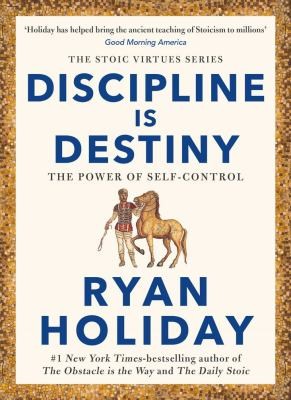 Discipline is DestinyRyan Holiday
 Ego is the EnemyRyan Holiday
 Growth Hacker MarketingRyan Holiday
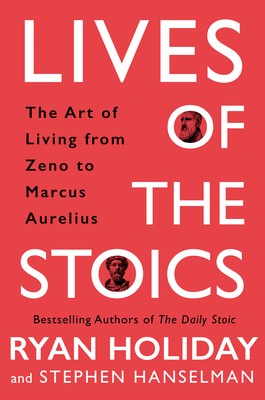 Lives of the StoicsRyan Holiday
 Right Thing, Right NowRyan Holiday
 Ryan Holiday on the Odyssey The True Wisdom Most People MissedThe Rich Roll Podcast
 Stillness Is the KeyRyan Holiday
 The daily stoicRyan Holiday
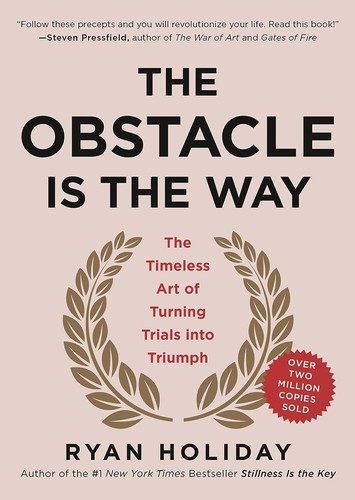 The Obstacle is the WayRyan Holiday
 Trust Me, I'm LyingRyan Holiday