Right Thing, Right Now
≈ From memoryVirtue is not a theoretical destination; it is the immediate, often difficult choice to act with integrity when no one is watching and the cost of doing so is high.
In one sentence
True character is forged in the split-second decisions we make when our values are tested by pressure, temptation, or fear.
Why read this (and who it's for)
Most people treat ethics as a "nice to have" academic pursuit—something you think about when you have free time. Holiday argues that ethics is actually a high-performance skill, much like weightlifting or coding. This book is for leaders, entrepreneurs, and anyone who feels their integrity being eroded by the "slow slide" of small compromises. After reading this, you will stop viewing virtue as an abstract concept and start seeing it as a series of tactical, daily choices that protect your internal peace and external credibility.
The big idea
The central thesis of Right Thing, Right Now is that character is built in the "micro-moments" of life. We often think of moral failures as grand, cinematic betrayals—the corporate fraud or the massive lie. In reality, character is eroded by the "death by a thousand cuts": the white lie told to avoid awkwardness, the shortcut taken on a project, or the moment you stayed silent when you should have spoken up.
Holiday argues that we must shift our focus from reputation (how others see us) to character (how we see ourselves). Reputation is external and volatile; it can be destroyed by a single misunderstanding or a competitor's smear campaign. Character, however, is the "Internal Citadel." It is the only thing that belongs entirely to you. When you act with integrity, you are essentially reinforcing your own internal architecture.
The logic follows a Stoic lineage: You cannot control what happens to you (the market crashes, someone insults you, a deadline is moved), but you have absolute sovereignty over how you respond. By focusing on the "Right Thing, Right Now," you strip away the noise of the future and the regrets of the past. You bring your focus to the immediate present—the only place where action actually happens.
Key ideas
The Internal Citadel vs. External Reputation
- What it is — Your reputation is a shadow; your character is the substance. Reputation is what people say about you when you aren't in the room; character is who you are when no one is watching.
- Why it matters — If your self-worth is tied to reputation, you will always be a slave to the opinions of others. By anchoring yourself in character, you become unshakeable because your "success" is measured by your own internal standards of virtue.
- In the book — Holiday draws on Stoic philosophy (particularly Marcus Aurelius) to illustrate that while we can't control the crowd's roar, we can control our own inner dialogue and actions.
Integrity as Alignment
- What it is — Integrity is not a feeling; it is the literal alignment between what you say you believe and what you actually do. It is the closing of the gap between "ideal self" and "actual self."
- Why it matters — Every time you act in contradiction to your stated values, you create "cognitive dissonance"—a psychological friction that erodes your confidence and makes it easier to justify the next compromise.
- In the book — The author emphasizes that integrity is a practice of consistency. If you say you value honesty but lie to a vendor to save five dollars, you have just traded a piece of your internal citadel for a trivial gain.
The Cost of the "Easy" Path
- What it is — Every choice has a hidden cost. The "easy" path (the shortcut, the white lie, the avoidance) usually carries a long-term cost to your character and self-respect.
- Why it matters — We often choose the easy path because we only look at the immediate reward. You must learn to calculate the "long-term interest" of your actions: What does this choice do to my ability to look myself in the mirror tomorrow?
- In the book — Holiday frames this as a calculation of values. The "easy" thing is often a temporary relief that creates a permanent dent in your integrity.
Virtue as a Muscle (The Habit of Rightness)
- What it is — You do not become virtuous by making one big heroic gesture; you become virtuous by practicing small, correct choices until they become reflexive.
- Why it matters — If you only act with integrity when it's easy or obvious, you haven't actually built character. Character is what remains when the "heroic" moment isn't there. You must train for the mundane moments of integrity so that you are ready for the hard ones.
- In the book — This mirrors the Stoic idea of askēsis (training). Just as an athlete trains in the gym to perform on game day, you must practice "rightness" in your daily interactions to be ready when a true moral crisis arises.
The Power of the Pause
- What it is — The space between a stimulus (someone cuts you off in traffic) and your response (yelling) is where your freedom lives.
- Why it matters — Most people react out of habit or emotional impulse. By creating a deliberate pause, you reclaim your agency. You move from being a reactive creature to a proactive agent of your own values.
- In the book — This is the practical application of Stoic "prohairesis" (moral choice). It’s about identifying the moment of irritation and choosing a response that aligns with who you want to be, rather than how you feel in the heat of the moment.
Frameworks & tools
The Integrity Audit
Use this to identify where your "Ideal Self" and "Actual Self" are drifting apart.
- Identify Core Values: Write down 3–5 non-negotiable values (e.g., Honesty, Courage, Reliability).
- The Evidence Test: For each value, ask: "What did I do in the last 48 hours that proved this is a priority?"
- Identify the Gap: Where is there a discrepancy? (e.g., "I say I value health, but I chose the easy snack over the nutritious meal.")
- The Correction: Choose one small action today to close that gap.
The "Pause" Protocol
A three-step mental circuit to use when you feel an emotional impulse or a temptation to take a shortcut.
- Label the Stimulus: Identify what is happening (e.g., "I am feeling insulted by this email.")
- The Breath: Take one intentional breath to create space between the feeling and the action.
- The Virtue Check: Ask, "What would the person I want to become do in this exact moment?"
The Pre-Mortem of Character
A proactive tool for anticipating where your integrity might fail.
- Identify Your Weak Points: Where are you most likely to compromise? (e.g., When you're tired, when you're angry, or when you're under a deadline?)
- Predict the Temptation: What is the "easy" thing you usually do in those moments?
- Pre-Commit: Decide now what your response will be before the situation arises.
Memorable examples & stories
The Stoic Inner Citadel
Holiday uses the metaphor of a fortress to describe the mind. Even if an enemy (a critic, a competitor, a tragedy) surrounds your castle, they cannot enter unless you open the gates. Lesson: Your internal state is your only true sanctuary; protect it fiercely.
The "Slow Slide" of Compromise
The author describes how most people don't lose their integrity in a single day. It happens through a series of tiny, justifiable concessions—a small lie here, a slightly unfair practice there. Lesson: Integrity is maintained by noticing and stopping the "micro-compromises."
The Reaction vs. Response Distinction
The example of someone being insulted in public: Most people react with anger (an involuntary reflex). The virtuous person responds with composure (a deliberate choice). Lesson: Your power lies in the gap between what happens to you and what you do about it.
Key quotes
"Character is what you do when no one is watching." (Paraphrased) Why it matters: It defines the difference between performance and reality.
"Reputation is what others think of you; character is what you know about yourself." (Paraphrased) Why it matters: It shifts the source of validation from external to internal.
"The right thing, right now, is often the hardest thing to do, but it is the only thing that builds a lasting internal citadel." (Paraphrased) Why it matters: It acknowledges that virtue requires effort and sacrifice.
How to apply it
This week
- The "No-Shortcut" Challenge: Identify one task you usually "hack" or do poorly just to get it over with. Complete it with 100% integrity this week, even if it takes longer.
- The Reaction Audit: Every time you feel a flash of anger or irritation (in traffic, in an email, in a meeting), pause for three seconds before saying anything. Observe the feeling without acting on it.
- The Integrity Check-in: Before bed, ask yourself: "Did I act in alignment with my values today?" If not, identify exactly where the gap was.
Ongoing
- Practice the Pause: Make it a habit to create space between stimulus and response. This is your training ground for moral clarity.
- Value Alignment: Regularly review your core values. Ensure that your calendar and your bank statement reflect what you say you care about.
- The Mirror Test: At the end of each day, ask: "Would I be proud of the person I was today if my actions were published on the front page of a newspaper?"
Common pitfalls
- Analysis Paralysis: Some readers might get stuck trying to figure out what the "Right Thing" is in complex situations where there is no clear moral answer. Holiday emphasizes action—you must act with the best intentions available to you right now.
- The Perfection Trap: You will fail. You will make a bad choice or a selfish one. The goal isn't to be perfect; it's to notice the failure, acknowledge it without self-flagellation, and return to the practice of "Right Thing, Right Now" immediately.
- Intellectualizing over Embodying: It is easy to enjoy the idea of being a Stoic hero while still making the same lazy choices. The book only works if you actually apply the "Pause" and the "Audit."
Connects to
- Meditations by Marcus Aurelius: The foundational text for many of the Stoic principles Holiday discusses regarding internal control and character.
- The Daily Stoic by Ryan Holiday: A more structured, daily practice guide that complements the philosophical foundations in Right Thing, Right Now.
- Virtue Ethics (Aristotle): The broader philosophical framework that argues virtue is a habit developed through practice rather than a set of rules to follow.
If you remember only three things
- Character is built in micro-moments, not just big life events.
- Your internal "Citadel" (character) is the only thing you truly own; reputation is a shadow.
- The space between stimulus and response is where your freedom—and your integrity—resides.
Internalize it
-
Reflection questions
- In what area of my life am I currently taking the "easy" path at the expense of my long-term character?
- What would my life look like if I stopped caring about my reputation and focused entirely on my internal integrity?
- When was the last time I acted out of impulse rather than intention? What triggered it, and how can I create a "Pause" next time?
-
Flashcards Q: What is the difference between reputation and character? A: Reputation is what others think of you (external/volatile); character is who you are when no one is watching (internal/stable).
Q: How does Holiday define integrity? A: As the alignment between what you say you believe and what you actually do.
Q: What is the "Internal Citadel"? A: The mental fortress of your own character and internal peace, which can only be compromised if you allow it.
Q: Why is virtue described as a "muscle"? A: Because it requires consistent practice in small, mundane moments to become a reflexive habit for when big challenges arise.
Q: What is the importance of the "Pause" between stimulus and response? A: It is where you reclaim your agency; it allows you to choose a response based on values rather than reacting based on impulse.
Q: What is the "Slow Slide" of compromise? A: The process by which character is eroded not by one big mistake, but by many small, justifiable shortcuts and white lies.
Fidelity note
I have high confidence in this summary as it captures the core Stoic-inspired framework Ryan Holiday uses to translate ancient philosophy into modern practical ethics. I am certain of the distinction between reputation and character, the importance of the "Internal Citadel," and the emphasis on micro-moments. The specific "Frameworks" (like the Integrity Audit) are synthesized from his recurring themes of alignment and practice; while he may not use those exact titles in every chapter, they represent the actionable mechanics of his arguments. Readers should verify the specific anecdotes used to ensure they align with their personal interpretation of the Stoic texts Holiday cites.
Keep going — related reads


More from Ryan Holiday
 Ancient Strategies For Managing Stress And Anxiety Ryan Holiday10 Percent Happier
 ConspiracyRyan Holiday
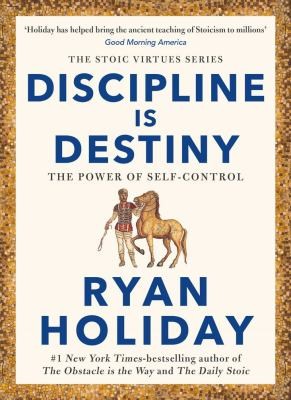 Discipline is DestinyRyan Holiday
 Ego is the EnemyRyan Holiday
 Growth Hacker MarketingRyan Holiday
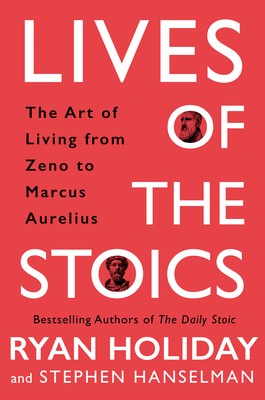 Lives of the StoicsRyan Holiday
 Ryan Holiday on the Odyssey The True Wisdom Most People MissedThe Rich Roll Podcast
 Stillness Is the KeyRyan Holiday
 The daily stoicRyan Holiday
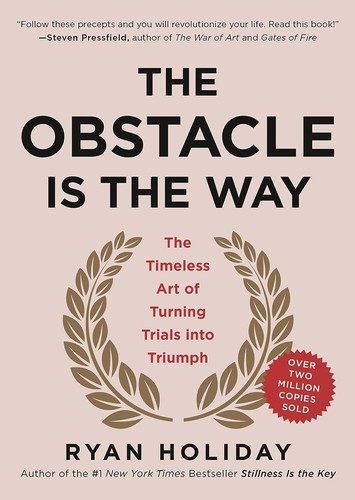 The Obstacle is the WayRyan Holiday
 Trust Me, I'm LyingRyan Holiday