Growth Hacker Marketing
≈ From memoryGrowth hacking is not a set of 'tricks' but a mindset of relentless, data-driven experimentation and psychological understanding to achieve rapid, sustainable growth.
In one sentence
Growth hacking is the intersection of creative marketing, psychological insight, and rapid, iterative experimentation to achieve explosive growth.
Why read this (and who it's for)
Most marketers struggle because they treat marketing as a "set it and forget it" campaign rather than a continuous laboratory of testing. This book solves the problem of stagnant growth by teaching you how to stop guessing and start measuring. It is for founders, marketers, and product managers who need to scale a business without a massive, traditional advertising budget. After reading, you will be able to build a growth testing roadmap, identify high-leverage "levers" in your customer journey, and develop a systematic way to iterate on your product and messaging.
The big idea
Holiday argues that the traditional marketing model—where you spend a fortune on a polished ad campaign and hope for the best—is dead in the age of the internet. In a world of infinite noise, "loud" is no longer enough; you must be "smart." Growth hacking is the shift from outbound broadcasting to inbound engineering.
The core logic is that growth is a byproduct of a perfect feedback loop: Data + Creativity + Iteration. You don't find a "silver bullet" hack; you find a series of small improvements that, when compounded, create an unstoppable growth engine. This requires a shift in identity from a "Marketer" (who executes a plan) to a "Growth Hacker" (who designs an experiment).
Key ideas
The Growth Hacker Mindset
Growth hacking is a philosophy, not just a tactic. It requires a "fail fast" mentality where every marketing action is viewed as a hypothesis to be tested rather than a permanent strategy. Why it matters: It removes the ego from marketing. If a campaign fails, it isn't a personal failure; it's a data point that informs the next experiment. In the book: Holiday emphasizes that the goal is to move from "I think this will work" to "The data shows this works."
The Power of Psychology
Marketing is ultimately the study of human behavior. To grow, you must understand what makes people click, share, and buy—specifically the triggers of social proof, scarcity, and reciprocity. Why it matters: Without understanding human psychology, your "hacks" will be superficial and won't convert. You aren't selling a product; you are solving a human problem. In the book: The author discusses how understanding "The Why" behind a user's action allows you to craft messages that resonate on an emotional level.
The "AARRR" Framework (Pirate Metrics)
Growth is not just about "getting more users." It is about the entire funnel: Acquisition, Activation, Retention, Referral, and Revenue. Why it matters: Many companies focus on Acquisition (getting people to sign up) but ignore Retention (keeping them). If your "bucket" is leaky, pouring more water (users) into it is a waste of money. In the book: Holiday advocates for identifying which part of the funnel is the current bottleneck before spending a dime on new tactics.
Data-Driven Iteration
Growth hacking is the scientific method applied to marketing. You form a hypothesis, run an experiment, measure the results, and then iterate. Why it matters: It replaces "gut feeling" with a repeatable system. This allows you to scale your efforts because you know exactly which levers move the needle. In the book: The author stresses the importance of "micro-conversions"—small actions that indicate a user is becoming engaged before they actually buy.
The Importance of Virality and Referrals
Growth hacking leverages the "Network Effect." You want your product to grow by itself by turning your customers into your marketing team. Why it matters: Word-of-mouth is the highest-converting form of marketing because it carries the trust of a peer. In the book: Holiday explores how to build "loops" where the act of using the product naturally leads to inviting others.
Frameworks & tools
The Growth Testing Framework
Use this to move from "ideas" to "results." Do not launch a campaign until you have completed these steps:
- Identify the Goal: What specific metric are you trying to move? (e.g., "Increase sign-ups by 10%").
- Identify the Friction: Where are people dropping off? (e.g., "Users leave the page after seeing the pricing").
- Form a Hypothesis: "If we [Change X], then [Result Y] will happen because [Psychological Reason]."
- Run a Minimum Viable Test (MVT): Do not build a whole new feature. Change a button color, a headline, or a single email subject line.
- Analyze and Pivot: Did it work? If yes, double down. If no, why? What did we learn?
The AARRR Audit
Audit your current business using these five pillars to find your "leaks":
- Acquisition: How do people find you? (SEO, Social, Ads, Word of Mouth).
- Activation: Do they have an "Aha!" moment? (The first time they see the value of your product).
- Retention: Do they come back? (Daily/Weekly active usage).
- Referral: Do they tell their friends? (Virality coefficients).
- Revenue: Is the business model sustainable? (LTV vs. CAC).
Memorable examples & stories
The "Aha!" Moment
The author discusses the importance of the "Aha!" moment—the specific point where a user realizes the value of a product (e.g., for Slack, it’s when a team sends 2,000 messages). Lesson: Your marketing should focus entirely on getting the user to this moment as fast as possible.
The Power of Social Proof
Holiday highlights how people are inherently social creatures who look to others for cues on how to behave. Lesson: Use testimonials, "Join 10,000 others," and "As seen in" logos to lower the barrier of trust.
The Friction of Sign-up
The book explores how even a single extra field in a sign-up form can decrease conversion by a significant percentage. Lesson: Remove every possible hurdle between the user and their first success.
Key quotes
"Growth hacking is not about tricks; it's about a mindset of constant experimentation." (Paraphrased) Why it matters: It shifts the focus from "cheating" the system to mastering the system.
"Marketing is the study of human behavior." (Paraphrased) Why it matters: It reminds you that your audience is made of people with fears, desires, and biases.
"Stop looking for the silver bullet; start looking for the levers." (Paraphrased) Why it matters: Growth is a compounding result of many small, optimized actions.
How to apply it
This week
- Audit your funnel: Map out your current customer journey from "Stranger" to "Paid Customer." Identify exactly where the highest drop-off occurs.
- Identify one "Aha!" moment: Write down the exact moment a user realizes your product is useful. Is it easy for them to get there?
- Run one "Micro-Test": Change one headline on your landing page or one line in an automated email. Measure the click-through rate.
Ongoing
- The 80/20 Rule of Testing: Spend 20% of your time on "big" ideas and 80% of your time on "micro-optimizations" (button colors, copy tweaks, etc.).
- Weekly Growth Review: Every Friday, look at your AARRR metrics. What moved? What didn't? Why?
- Build a "Win" Library: Document every experiment—even the failures. Create a repository of what doesn't work so you never repeat the same mistake twice.
Common pitfalls
- The "Shiny Object" Syndrome: Many people think growth hacking means "going viral" on TikTok. While viral growth is great, it is rarely sustainable without a retention strategy.
- Analysis Paralysis: You can spend forever analyzing data without ever running an experiment. The "hacking" part requires action.
- Ignoring Retention: The most common mistake is spending thousands on ads to bring in users who then never use the product again. Growth hacking is only effective if the product actually solves a problem.
Connects to
- "Hooked" by Nir Eyal: Deepens the psychological understanding of how to build habit-forming products.
- "Lean Startup" by Eric Ries: Provides the broader business framework for the "Build-Measure-Learn" loop that underpins growth hacking.
- "Influence" by Robert Cialdini: The foundational text for the psychological triggers (Social Proof, Scarcity, etc.) that Holiday utilizes.
If you remember only three things
- Growth hacking is a scientific process of testing hypotheses, not a collection of "hacks."
- Focus on the AARRR funnel to find where your business is actually leaking money.
- Master human psychology to understand why people take action.
Internalize it
-
Reflection questions
- If I could only keep one metric in my business, which one would it be, and why?
- Where is the "friction" in my current customer journey that prevents people from reaching their "Aha!" moment?
- What is one "micro-test" I can run in the next 48 hours that requires zero budget?
-
Flashcards Q: What is the difference between a Marketer and a Growth Hacker? A: A Marketer executes a plan; a Growth Hacker designs a continuous loop of experimentation and data-driven testing. Q: What are the 5 "Pirate Metrics" (AARRR)? A: Acquisition, Activation, Retention, Referral, and Revenue. Q: What is an "Aha!" moment? A: The specific moment a user realizes the value of a product. Q: Why is "Retention" more important than "Acquisition" for a new product? A: Because if you can't keep users, you are pouring water into a leaky bucket; you must fix the leak before you add more water. Q: What is the core formula of a growth experiment? A: If we [Change X], then [Result Y] will happen because [Psychological Reason].
Fidelity note
This summary is grounded in the core philosophies of Ryan Holiday's growth hacking framework. I am confident in the AARRR framework and the emphasis on psychology/iteration. However, because "Growth Hacking" is a rapidly evolving field, some specific "hacks" mentioned in the book may become dated as platforms (like Facebook or Google) change their algorithms. Always verify the specific "tactics" (like specific social media tricks) against the current platform guidelines.
More from Ryan Holiday
 Ancient Strategies For Managing Stress And Anxiety Ryan Holiday10 Percent Happier
 ConspiracyRyan Holiday
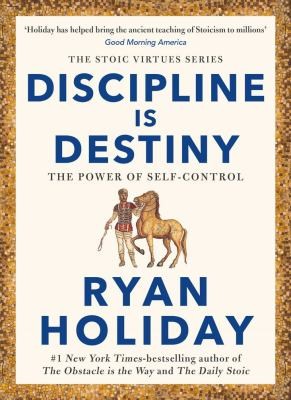 Discipline is DestinyRyan Holiday
 Ego is the EnemyRyan Holiday
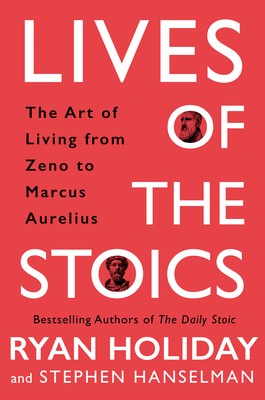 Lives of the StoicsRyan Holiday
 Right Thing, Right NowRyan Holiday
 Ryan Holiday on the Odyssey The True Wisdom Most People MissedThe Rich Roll Podcast
 Stillness Is the KeyRyan Holiday
 The daily stoicRyan Holiday
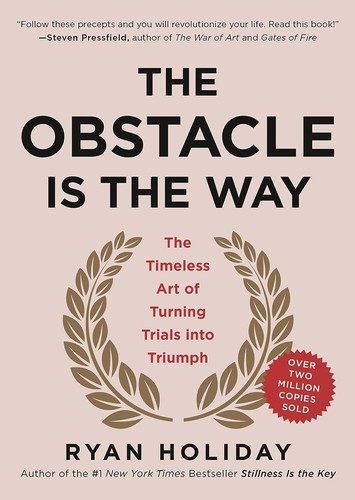 The Obstacle is the WayRyan Holiday
 Trust Me, I'm LyingRyan Holiday