The daily stoic
≈ From memoryStoicism is a practical toolkit for emotional resilience and moral character, achieved by distinguishing what we can control from what we cannot.
In one sentence
Stoicism is not a set of abstract theories to be pondered, but a rigorous mental operating system designed to help you remain calm, focused, and virtuous in an unpredictable world.
Why read this (and who it's for)
Most people view philosophy as an academic pursuit—something to be debated in a classroom. Holiday argues that Stoicism is a "lived" philosophy. This book is for the person who feels overwhelmed by external chaos: the stressed executive, the anxious student, or anyone feeling powerless over their circumstances. After reading, you will be able to pause before reacting to triggers, identify the source of your internal distress, and choose a response rooted in your own values rather than your immediate impulses.
The big idea
The core of Stoicism lies in the "Dichotomy of Control." The Stoics argue that our suffering stems almost entirely from a category error: we try to control things that are not up to us (the weather, the economy, other people's opinions) and we neglect the one thing that is up to us (our own thoughts, intentions, and actions).
By internalizing this distinction, you shift your focus from outcomes to character. If you want to be a great athlete, you can't control if you win the gold medal; you can only control how hard you train. If you want to be a good friend, you can't control if they forgive you; you can only control how honestly you speak. When you stop trying to bend the universe to your will and start mastering your internal response to the universe, you achieve ataraxia—a state of tranquil, unshakable composure.
Key ideas
The Dichotomy of Control
- What it is — The fundamental practice of identifying what is "up to us" (our opinions, aims, desires, and aversions) and what is not (the body, property, reputation, and the actions of others).
- Why it matters — It is the ultimate source of mental freedom. When you stop trying to control the uncontrollable, you stop wasting energy and begin to find peace in the present moment.
- In the book — Holiday emphasizes that while we can't control the traffic jam, we can control our irritation at the traffic jam. The event is neutral; our judgment of it is what causes the suffering.
Amor Fati (Love of Fate)
- What it is — The practice of not just "tolerating" what happens, but embracing it as necessary and useful for your growth.
- Why it matters — It transforms every obstacle into fuel. Instead of asking "Why did this happen to me?", you ask "How can I use this?"
- In the book — The author highlights how a Stoic views a "setback" as a training ground. If you lose a job, it is an opportunity to practice resilience and find a new path.
Premeditatio Malorum (Premeditation of Evils)
- What it is — The practice of visualizing potential future setbacks, losses, and difficulties before they occur.
- Why it matters — It strips away the element of surprise. When you have already "lived" through the disaster in your mind, the actual event loses its power to shock or paralyze you.
- In the book — Holiday suggests imagining the worst-case scenario (losing your house, your health, or a loved one) to realize that you have the internal resources to endure it.
The View from Above
- What it is — A mental exercise where you zoom out from your immediate problems to see yourself in the context of the city, the country, the planet, and the cosmos.
- Why it matters — It provides perspective. Most of our anxieties are "small" when viewed from a distance. It helps shrink our egos and our problems.
- In the book — The author describes looking at your problems as if you were a bird flying over your neighborhood, realizing how tiny your personal drama is in the grand scheme of human history.
Memento Mori (Remember You Must Die)
- What it is — The constant awareness of your own mortality.
- Why it matters — It is the ultimate filter for priorities. If you remember that your time is finite, you stop wasting it on trivialities and start focusing on what truly matters.
- In thebook — Holiday argues that contemplating death isn't morbid; it's a tool to ensure you are living a life of purpose now.
Voluntary Discomfort
- What it is — Deliberately choosing to experience hardship (like cold showers, fasting, or sleeping on the floor) to prove to yourself that you can survive it.
- Why it matters — It builds "mental callouses." If you know you can survive a cold shower, you won't be so panicked when a difficult work situation arises.
- In the book — The author cites the Stoic practice of intentionally enduring small hardships to reduce the fear of future, larger hardships.
Frameworks & tools
The Stoic Filter (The Dichotomy of Control)
Use this whenever you feel overwhelmed or frustrated by a situation.
- Identify the Stressor: What is bothering you right now? (e.g., "My boss gave me a bad review.")
- Categorize: Is this 100% outside my control? (The boss's opinion is outside your control.)
- Identify the Internal Action: What is within my control regarding this? (Your response, your plan to improve, your attitude toward the feedback.)
- Relocate Energy: Stop ruminating on the boss's words. Focus entirely on the actionable steps you can take today.
Premeditatio Malorum (The "Worst-Case" Drill)
Use this before a big event (a presentation, a trip, a difficult conversation).
- Visualize the Failure: What is the absolute worst thing that could happen?
- Accept the Reality: Acknowledge that this outcome is possible.
- Create a Contingency: How would you respond if it happened?
- The Pivot: Once you have a plan for the "worst," you can proceed with a calm, focused confidence.
Memorable examples & stories
The Archer's Metaphor
The Stoics compared life to an archer. An archer can choose the best bow, the best arrows, and practice their aim until they are perfect. However, once the arrow leaves the bow, they no longer have control over where it lands (a gust of wind, a moving target). The goal is to be the best archer possible, but to accept the result with equanimity. Lesson: Focus on the process (the aim), not the outcome (the hit).
Seneca’s Advice on Wealth
Seneca, a wealthy man who practiced Stoicism, argued that you should not fear losing your wealth, but you should also not be enslaved by it. He suggested that we should occasionally practice "poverty"—living on meager rations and wearing simple clothes—to remind ourselves that we can survive without luxuries. Lesson: Practice voluntary discomfort to ensure you aren't a slave to your comforts.
The "Inner Citadel"
The author describes the mind as a fortress. While the world can attack the walls (your body, your reputation, your possessions), it cannot breach the "Inner Citadel" unless you allow it to by giving away your power through your judgments. Lesson: Your peace of mind is a private sanctuary that no one can take unless you let them.
Key quotes
- "The impediment to action advances action. What stands in the way becomes the way." (Paraphrased) Why it matters: Every obstacle is an opportunity to practice a virtue (patience, creativity, grit).
- "You have power over your mind—not outside events. Realize this, and you will find strength." (Paraphrased) Why it matters: This is the core of the Dichotomy of Control.
- "True freedom is the ability to choose your response." (Paraphrased) Why it matters: It shifts the definition of freedom from external circumstances to internal autonomy.
How to apply it
This week
- The "Pause" Practice: Every time you feel a flash of anger or irritation this week, wait 5 seconds before speaking or acting. Ask yourself: "Is this within my control?"
- The View from Above: When you feel stressed by a personal problem, spend 2 minutes visualizing your life from a satellite view. See yourself as a tiny speck on a planet in a vast universe.
- Voluntary Discomfort: Take a cold shower or skip a meal once this week. Observe how you feel and realize that you can endure discomfort.
Ongoing
- Morning Reflection: Spend 5 minutes imagining the challenges of the day ahead. Prepare your mind for potential friction.
- Evening Review: Before bed, ask yourself: "What did I do well today? Where did I lose my temper? What can I do better tomorrow?"
- The Dichotomy Check: Whenever you feel anxious, ask: "Is this something I can do anything about right now?" If the answer is no, consciously drop the worry.
Common pitfalls
- The "Stoic" Misconception: Many people think Stoicism means having no emotions or being a "stone." This is false. Stoicism is about managing emotions, not deleting them. It is about not being overwhelmed by them.
- The Passivity Trap: Some interpret the "Dichotomy of Control" as an excuse for inaction (e.g., "I can't control the economy, so I won't try to improve my business"). This is a misunderstanding. You still have a responsibility to act; you just shouldn't be emotionally devastated when the outcome isn't what you wanted.
- Intellectualizing without Acting: Reading the book and feeling "enlightened" without actually practicing the discomfort or the reflection is just another form of entertainment. Stoicism is a muscle, not a theory.
Connects to
- Meditations by Marcus Aurelius: The primary source for many of the reflections in this book.
- Letters from a Stoic by Seneca: Provides the deeper, more literary exploration of Stoic thought.
- Flow by Mihaly Csikszentmihalyi: Complements the Stoic focus on the "present moment" and the mastery of the internal experience.
If you remember only three things
- Dichotomy of Control: Focus only on what you can control (your own actions and reactions).
- Amor Fati: Embrace every obstacle as an opportunity for growth.
- Premeditatio Malorum: Prepare for the worst so that you are never surprised by the inevitable.
Internalize it
-
Reflection questions
- What is one thing I am currently worrying about that is entirely outside of my control?
- How would my day change if I stopped trying to control other people's opinions of me?
- What "voluntary discomfort" can I introduce into my life to build mental resilience?
- When was the last time I let an external event ruin my internal peace? What was the specific "judgment" I made about that event?
-
Flashcards Q: What is the "Dichotomy of Control"? A: The distinction between what is up to us (thoughts, intentions) and what is not (the body, reputation, others' actions). Q: What is the purpose of Premeditatio Malorum? A: To visualize future setbacks so that they lose their power to shock or paralyze us when they occur. Q: What does Amor Fati mean in a Stoic context? A: To love one's fate by viewing every obstacle as a necessary and useful opportunity for growth. Q: How does the "View from Above" help with anxiety? A: It provides perspective by shrinking our personal problems in the context of the vast universe. Q: What is the "Inner Citadel"? A: The idea that our minds are a fortress; we can choose not to let external events affect our internal peace. Q: What is the goal of "Voluntary Discomfort"? A: To build "mental callouses" by proving to ourselves that we can endure hardship.
Fidelity note
This summary is highly faithful to the core tenets of Ryan Holiday’s The Daily Stoic. Because the book is structured as a daily devotional (365 entries), it covers a vast array of Stoic concepts. This summary synthesizes the recurring "pillars" of the book—Dichotomy of Control, Premeditatio Malorum, and Amor Fati—which are the most actionable and frequent themes. I have omitted the specific daily entries to provide a cohesive, high-level framework, but the core philosophy remains accurate to Holiday's presentation of Stoic thought.
More from Ryan Holiday
 Ancient Strategies For Managing Stress And Anxiety Ryan Holiday10 Percent Happier
 ConspiracyRyan Holiday
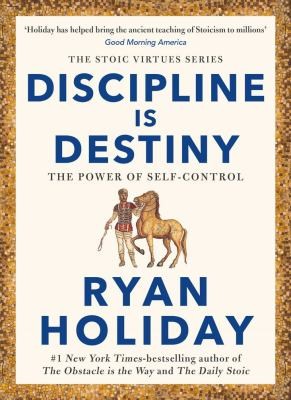 Discipline is DestinyRyan Holiday
 Ego is the EnemyRyan Holiday
 Growth Hacker MarketingRyan Holiday
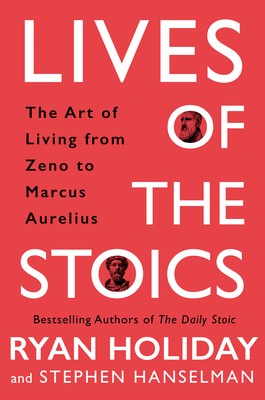 Lives of the StoicsRyan Holiday
 Right Thing, Right NowRyan Holiday
 Ryan Holiday on the Odyssey The True Wisdom Most People MissedThe Rich Roll Podcast
 Stillness Is the KeyRyan Holiday
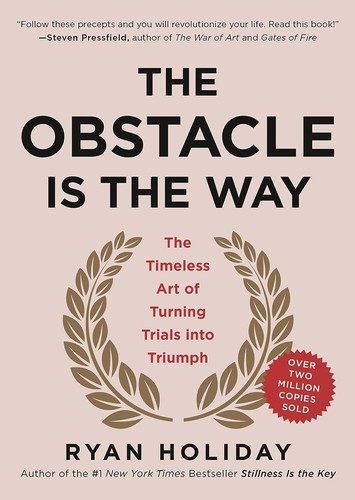 The Obstacle is the WayRyan Holiday
 Trust Me, I'm LyingRyan Holiday