Ego is the Enemy
≈ From memorySuccess is not a destination but a process of continuous self-mastery, where the greatest obstacle to achievement is the internal vanity that prevents us from learning, staying humble, and remaining focused on the work.
In one sentence
The greatest enemy of success is not the competition, the lack of resources, or the difficulty of the task; it is the internal ego that prevents us from seeing clearly, learning from others, and staying grounded in the present moment.
Why read this (and who it's for)
This book addresses the "success trap"—the phenomenon where our own achievements become the very things that blind us to our next steps. It is for the high-achiever, the entrepreneur, the artist, and anyone who finds themselves becoming self-conscious about their status rather than their craft. After reading, you will be able to identify the "ego-driven" impulses in your professional and personal life and replace them with a stoic, process-oriented mindset.
The big idea
Holiday argues that the ego is a double-edged sword. While a healthy sense of self-confidence is necessary to initiate action, an overactive ego becomes a "self-reinforcing loop" of vanity. When the ego takes the driver's seat, it prioritizes looking successful over being successful. It makes us defensive, prevents us from taking necessary risks, and causes us to stop learning because we believe we already know everything.
The core logic is that success is a cycle of three stages: Aspire, Achieve, and Attain. Most people fail because they stop at "Achieve." They reach a goal, and instead of using that success as a platform to reach the next level, they become obsessed with protecting their current status. Holiday argues that to sustain greatness, one must remain a perpetual student, treating every success as a starting line rather than a finish line.
Key ideas
The Trap of Achievement
- What it is — The tendency to let our past successes become a barrier to our future growth. When we "arrive," we often stop looking for the very things that got us there in the first place.
- Why it matters — If you stop growing because you think you've "made it," you become stagnant and eventually obsolete.
- In the book — Holiday discusses how many successful people become "preachers" of their own success, spending more time talking about what they did than doing what needs to be done next.
The Importance of Apprenticeship
- What it is — The recognition that mastery requires a period of "ego-less" submission to a craft. You must be willing to be a beginner, to be corrected, and to do the "grunt work" without immediate recognition.
- Why it matters — Without a period of humble apprenticeship, you lack the foundational skills to sustain long-term success.
- In the book — He highlights the importance of finding a mentor and being willing to be "the least important person in the room" to absorb the wisdom of those who came before you.
The "Work" of Success
- What it is — Success is not a trophy; it is a set of habits and a commitment to the daily grind. It is the "boring" stuff—the repetition, the discipline, and the refusal to seek shortcuts.
- Why it matters — If you view success as a result rather than a process, you will always feel like a failure until the "result" is achieved. If you view it as a process, you can find satisfaction in the daily effort.
- In the book — Holiday emphasizes that the "grind" is where the actual growth happens, and the ego tries to distract us from the grind by offering us the illusion of "quick wins."
The Danger of Public Recognition
- What it is — The trap of seeking external validation (likes, applause, status) rather than internal mastery. Public recognition is a "cheap" substitute for actual competence.
- Why it matters — Once you live for the applause of others, you lose your internal compass. You start making decisions based on what people think of you rather than what is right for the work.
- In the book — He warns against the "celebrity" trap where the person becomes the brand, making it harder to do the actual work that requires humility and anonymity.
The Power of Stillness
- What it is — The practice of stepping back from the noise of the world to gain clarity. It is the ability to listen to your own internal voice rather than the roar of the crowd.
- Why it matters — Without stillness, we are constantly reacting to external stimuli. Stillness allows us to see the "why" behind our actions.
- In the book — Drawing on Stoic and contemplative traditions, Holiday argues that we need "quiet" to hear the truth of our own intentions.
Frameworks & tools
The Three Stages of Success
To avoid the "Achievement Trap," categorize your current state into one of these three phases:
- Aspire: The phase of dreaming and planning. Your goal is to gather information and build a vision.
- Achieve: The phase of execution. Your goal is to do the work, build the skills, and produce the results.
- Attain: The phase of mastery. Your goal is to integrate your success into your identity and use it to mentor others and reach the next level. Action: Identify which stage you are currently in. If you are in "Attain" but feel stuck, you likely need to return to the "Achieve" phase of a new, harder goal.
The "Ego-Check" Audit
When you feel a surge of pride or a defensive reaction to criticism, run through this checklist:
- Is this about the work or about me? (Am I trying to look smart or am I trying to be effective?)
- Who is the smartest person in this room? (If it's not you, listen to them. If it is you, stay humble.)
- What is the "boring" thing I'm avoiding? (The ego loves the "big" ideas; the spirit loves the "small" repetitions.)
- Am I seeking validation or mastery? (Would I still do this if no one ever knew I did it?)
Memorable examples & stories
The Story of the "Master"
Holiday discusses the concept of the master who is never satisfied. They are always looking for the next nuance, the next refinement. The lesson is that true mastery is a horizon, not a destination.
The "Preacher" of Success
He describes individuals who become so enamored with their own success that they spend all their time telling others how to succeed without actually doing the work. The lesson is that "telling" is often a defense mechanism against the fear of "doing."
The Stoic Practice of Voluntary Hardship
While not a single story, he references the Stoic practice of intentionally choosing difficult paths to keep the ego in check. The lesson is that comfort is the enemy of growth.
Key quotes
"The biggest enemy of success is not the competition, it's your own ego." (Paraphrased) Why it matters: It shifts the focus from external threats to internal mastery.
"Success is not a destination, it's a process of continuous self-mastery." (Paraphrased) Why it matters: It reframes achievement as a lifelong practice of character.
"The ego is a thief of attention. It steals your focus from the present moment and the work at hand." (Paraphrased) Why it matters: It highlights the immediate, practical cost of vanity—the loss of focus.
How to apply it
This week
- The "No-Brag" Rule: Do not tell anyone about a project you are working on until it is finished. Focus entirely on the "Achieve" phase without seeking external validation.
- Seek a "Master": Identify someone who is significantly better than you at a skill you want to develop. Ask them for a critique of your work, not a compliment.
- The 10-Minute Stillness: Spend 10 minutes every morning in total silence. No phone, no book, no podcast. Just observe your thoughts.
Ongoing
- The Apprenticeship Mindset: Treat every new project as if you are a beginner. Ask "What can I learn?" instead of "How can I show off?"
- Audit your "Why": Before every major decision, ask: "Am I doing this because it's the right thing to do, or because I want people to see me doing it?"
- Celebrate the Process: Instead of celebrating the "win," celebrate the discipline it took to get there.
Common pitfalls
- The "Self-Help" Trap: A common pitfall is reading this book and feeling a sense of "spiritual" superiority for understanding the concept of ego. This is, in itself, an egoic act. The goal is not to feel better about yourself for knowing this; it is to act differently.
- Over-Correction: One can become so obsessed with "humility" that they lose their healthy ambition. You still need to want to win; you just shouldn't let the desire to win become a distraction from the work required to win.
- The "Knowing" Fallacy: Reading the summary and thinking you have "mastered" the concept. Ego is a constant, creeping presence. It requires daily, conscious vigilance.
Connects to
- Meditations by Marcus Aurelius: Provides the foundational Stoic philosophy of internal control and the rejection of external validation.
- Deep Work by Cal Newport: Complements the "Achieve" phase by providing the cognitive tools to focus on the "boring" work Holiday describes.
- The War of Art by Steven Pressfield: Explores the "Resistance" that occurs when we try to do the work, which Holiday identifies as a byproduct of the ego.
If you remember only three things
- Success is a process of continuous self-mastery, not a trophy to be won.
- The "Achievement Trap" occurs when we let our past success blind us to our future growth.
- True mastery requires a "beginner's mind"—the willingness to be a student, to do the grunt work, and to seek internal mastery over external applause.
Internalize it
-
Reflection questions
- In what area of my life am I currently "performing" success rather than actually practicing the craft?
- When was the last time I sought a critique that actually hurt my feelings? Why did I avoid it?
- What is the "boring" work I have been avoiding because I'd rather think about the "big" vision?
- If I could never tell anyone about my achievements, would I still want to achieve them?
-
Flashcards Q: What is the "Achievement Trap"? A: The tendency to let past successes become a barrier to future growth by stopping the learning process.
Q: What are the three stages of success? A: Aspire (dreaming/planning), Achieve (execution/grind), and Attain (mastery/mentorship).
Q: What is the "Preacher" of success? A: Someone who talks about success to avoid the actual, difficult work of achieving it.
Q: How does the ego steal your attention? A: It forces you to focus on how you are perceived by others rather than on the task at hand.
Q: What is the "Apprenticeship" mindset? A: The willingness to be a beginner, do the grunt work, and accept correction without ego.
Q: Why is public recognition a "cheap" substitute? A: Because it provides a dopamine hit of validation without the actual internal growth of mastery.
Q: What is the role of "Stillness" in this book? A: It allows you to hear your own internal voice and gain clarity away from the noise of external expectations.
Fidelity note
I have a high-confidence rating for the core themes of this book (Aspire/Achieve/Attain, the danger of the Achievement Trap, and the importance of apprenticeship). The specific anecdotes and "Preacher" metaphors are central to Holiday's narrative style. However, because this is a summary of a philosophical work, the "feeling" of the prose—the specific Stoic-inflected tone—is something the reader should experience in the original text to fully grasp the gravity of the "ego" he describes.
More from Ryan Holiday
 Ancient Strategies For Managing Stress And Anxiety Ryan Holiday10 Percent Happier
 ConspiracyRyan Holiday
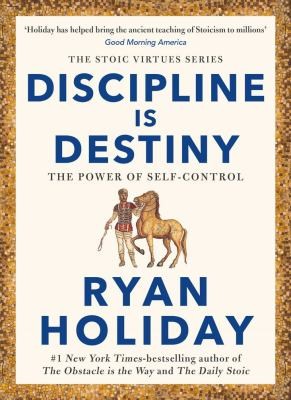 Discipline is DestinyRyan Holiday
 Growth Hacker MarketingRyan Holiday
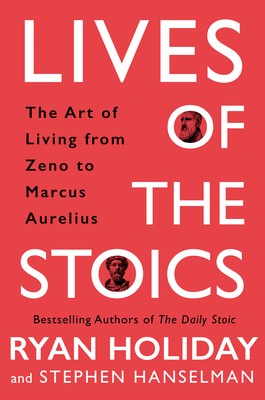 Lives of the StoicsRyan Holiday
 Right Thing, Right NowRyan Holiday
 Ryan Holiday on the Odyssey The True Wisdom Most People MissedThe Rich Roll Podcast
 Stillness Is the KeyRyan Holiday
 The daily stoicRyan Holiday
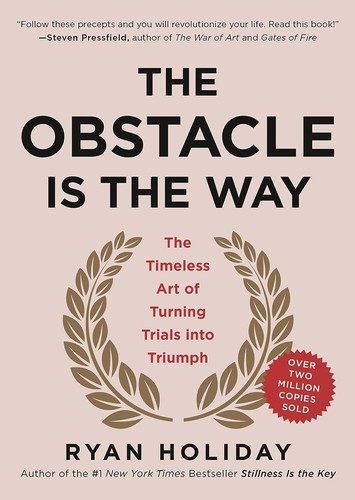 The Obstacle is the WayRyan Holiday
 Trust Me, I'm LyingRyan Holiday