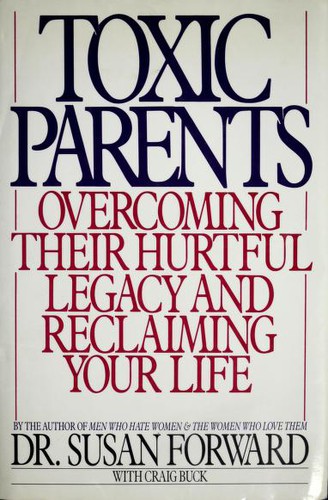
Mothers Who Can't Love
≈ From memoryThe book explores how mothers who lack the capacity for unconditional love use manipulation, guilt, and emotional sabotage to maintain control over their children, creating a cycle of psychological dependency.
In one sentence
The book argues that some mothers are incapable of providing a secure emotional base and instead use their children as emotional "batteries" or extensions of themselves, employing subtle psychological maneuvers to ensure the child remains tethered to their needs.
Why read this (and who it's for)
This book is for anyone who has ever felt "crazy" for reacting to a parent's behavior—specifically those who grew up with a mother who was emotionally volatile, demanding, or suffocating. It provides a vocabulary for the "invisible" tactics of emotional abuse. After reading, you will be able to identify specific manipulative patterns (like the "guilt trip" or "the martyr"), set firm emotional boundaries, and stop seeking validation from a source that is fundamentally unable to provide it.
The Big Idea
Forward argues that for some parents, the child is not a separate human being with their own needs, but an object to be used for the parent's emotional survival. Because these mothers lack the internal resources to be happy or self-sufficient, they "colonize" the child’s identity. The child becomes responsible for the mother's happiness, stability, and self-esteem.
The core logic is that this is a form of emotional parasitism. When a mother cannot love, she instead needs. This need is expressed through manipulation: if the child tries to become independent, the mother reacts with a "crisis" of guilt, illness, or despair. The goal of the mother is not the child's success, but the child's proximity. The book serves as a map to help the adult child recognize these patterns so they can finally "break the spell" of the enmeshed relationship.
Key ideas
The Maternal "Need" as a Trap
- What it is: The mother views the child as a source of emotional sustenance rather than an independent entity.
- Why it matters: If you believe your mother "needs" you to survive, you will feel a crushing sense of responsibility for her emotions, preventing you from pursuing your own life.
- In the book: Forward describes how a mother might use her own "fragility" as a weapon, making the child feel that any attempt at autonomy is a cruel abandonment.
The Guilt-Trip as a Control Mechanism
- What it is: A primary tool where the mother portrays herself as a victim of the child's "selfish" desires.
- Why it matters: Guilt is the most effective way to silence a child's rebellion without using physical force. It makes the child police themselves.
- In the book: Examples of mothers who "sigh" excessively or mention their own sacrifices to make the child feel like a monster for wanting a simple, independent life.
The "Martyr" Complex
- What it is: The mother adopts a persona of extreme self-sacrifice, often complaining about how much she has given up for the child.
- Why it matters: It creates a "debt" that can never be repaid. The child is kept in a state of perpetual apology, making it impossible for them to stand on their own feet.
- In the book: Forward highlights how the martyr uses their "suffering" to shut down any of the child's legitimate needs or complaints.
Emotional Sabotage
- What it is: The mother undermines the child's achievements or relationships to ensure they remain dependent on her.
- Why it matters: If the child succeeds too much, they might leave. The mother may "poison" the child's confidence or create drama whenever the child finds a source of joy outside the home.
- In the book: The author describes how a mother might criticize a child's partner or sabotage a job opportunity to keep the child "safe" (i.e., under her thumb).
The Enmeshed Identity
- What it is: The blurring of boundaries where the mother's emotions become the child's emotions.
- Why it matters: When you cannot distinguish between your feelings and your mother's feelings, you lose your sense of self.
- In the book: Forward explains how the child is taught to be a "mirror" for the mother's moods, constantly scanning her face to see if she is angry or pleased.
Frameworks & tools
The Identification Checklist
To understand the dynamic, look for these three recurring behaviors in your mother's interactions with you:
- The Victim Narrative: Does she frequently frame her actions as "sacrifices" and your needs as "demands"?
- The Emotional Crisis: Does she have a "crisis" (anxiety, illness, sadness) whenever you attempt to set a boundary or spend time away?
- The Identity Theft: Does she claim your achievements as her own, or does she seem offended when you have a private life she isn't a part of?
The Boundary-Setting Protocol
When dealing with a mother who cannot love, you must move from "negotiation" to "information."
- Identify the Trigger: Recognize when she is using guilt or a "crisis" to pull you back into her orbit.
- State the Boundary: Clearly state what you will and will not do (e.g., "I cannot talk about your finances right now").
- The "Broken Record": Do not explain, justify, or defend (JADE). Simply repeat the boundary.
- Physical/Emotional Distance: If she continues to escalate, remove yourself from the conversation. You are not responsible for her reaction to your boundary.
Memorable examples & stories
The "Sick" Mother
Forward describes a mother who becomes physically ill or collapses into a state of extreme distress whenever the child tries to assert independence. Lesson: This is a "tactical" illness used to paralyze the child's ability to leave.
The "Perfect" Victim
The story of a mother who does everything "right" on the outside (the perfect house, the perfect meals) but creates a suffococating atmosphere of obligation on the inside. Lesson: External appearances of a "good mother" can mask a deeply manipulative internal dynamic.
The Sabotaged Success
A case where a mother reacts to a child's promotion or engagement with a "tragedy" of her own, making the child feel guilty for their happiness. Lesson: For the mother who can't love, your joy is a threat to her control.
Key quotes
"She doesn't want a child who is independent; she wants a child who is an extension of herself." (Paraphrased) Why it matters: It identifies the core motivation of the behavior—control, not care.
"Guilt is the currency of the mother who cannot love." (Paraphrased) Why it matters: It explains the primary tool used to maintain the status quo.
"The child's only way out is to stop trying to win her approval." (Paraphrased) Why it matters: It provides the ultimate solution—the cessation of the game.
How to apply it
This week
- The Observation Log: Every time you feel a "ping" of guilt regarding your mother, write down exactly what she said or did right before that feeling arose. Look for the pattern of manipulation.
- The "No" Experiment: Say "no" to one small request from her that you usually say "yes" to out of habit or guilt. Observe her reaction without trying to "fix" her reaction.
- Identify the "Debt": Write down three things she claims she "sacrificed" for you. Then, write down how those sacrifices actually served her own needs.
Ongoing
- Stop JADE-ing: Never Justify, Argue, Defend, or Explain. When you explain, you give her more "hooks" to grab onto. State your boundary and stop.
- Emotional Detachment: View her emotional outbursts as "weather." It is happening to her, not because of you.
- Build an External Support System: Actively invest in friendships and mentors who provide the validation and "safe" love that your mother cannot provide.
Common pitfalls
- The "Maybe she's just hurt" trap: Readers often try to find a "good" reason for her behavior (e.g., "she had a hard childhood"). While true, it doesn't excuse the manipulation. You must accept her behavior as it is, not as you wish it were.
- The "Fixing" Fallacy: Many readers try to find the right words to finally make her "understand." The book argues that she does understand; she simply chooses not to change because the current dynamic works for her.
- Over-correction: Sometimes readers become so afraid of the mother's manipulation that they cut off all contact instantly without a plan. While sometimes necessary, it's often more effective to build a "fortress" of boundaries first.
Connects to
- "Boundaries" by Henry Cloud and Martin Cooper: Provides the practical "how-to" for the boundaries Forward identifies.
- "The Dance of Anger" by Danielle Siegel: Helps understand the emotional cycles of reactive parenting and children.
- "Adult Children of Emotionally Immature Parents" by Lindsay Gibson: A modern companion that explores the specific personality traits of parents who cannot provide emotional depth.
If you remember only three things
- Your mother’s "needs" are not your responsibility to fulfill.
- Guilt is a tool of control, not a signal of your wrongdoing.
- Independence requires you to stop seeking her approval as a prerequisite for your self-worth.
Internalize it
- Reflection questions
- In what ways have I allowed my mother's "guilt trips" to dictate my life choices?
- What would my life look like if I stopped trying to make her "see" my point of view?
- How can I begin to validate myself instead of waiting for her permission to be happy?
- Flashcards Q: What is the primary motivation of a mother who cannot love? A: To maintain control and use the child as an emotional extension of herself. Q: What is the "Martyr" complex? A: A tactic where the mother highlights her own "sacrifices" to create an unpayable debt of guilt for the child. Q: What does it mean to "JADE"? A: Justify, Argue, Defend, and Explain—behaviors that give a manipulative parent more leverage. Q: How should you respond to a mother's "emotional crisis" when you set a boundary? A: Recognize it as a tactic, stay firm on your boundary, and do not try to "fix" her reaction. Q: What is the goal of "Emotional Sabotage"? A: To undermine the child's success or relationships to ensure they remain dependent on the mother.
Fidelity note
This summary is based on the core psychological frameworks presented by Susan Forward in Mothers Who Can't Love. I am highly confident in the descriptions of manipulation, the martyr complex, and the concept of enmeshment. Because this is a summary of a psychological work, some of the specific "stories" are representative of the types of case studies Forward uses rather than a 1:1 transcript of every anecdote. Readers should verify specific boundary-setting techniques in the text to ensure they align with their unique family dynamic.