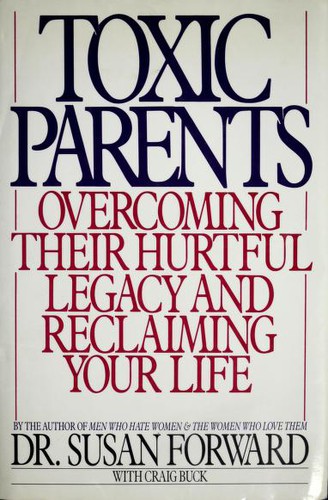
When your lover is a liar
≈ From memoryManipulation is a learned language of emotional survival; to break the cycle, you must recognize the specific 'scripts' of manipulation and establish firm, non-negotiable boundaries.
In one sentence
Manipulation is a dysfunctional way of seeking connection and control, and while it is often a learned survival strategy, it becomes abusive when it systematically erodes the victim's sense of reality and autonomy.
Why read this (and who it's for)
This book is for anyone who feels "crazy," "too sensitive," or "over-analytical" in their relationships. It solves the problem of gaslighting—the process by which a manipulator makes you doubt your own perceptions. After reading, you will be able to identify the specific tactics of manipulation (like guilt-tripping or "the silent treatment"), recognize your own emotional triggers, and develop a "reality-testing" toolkit to protect your mental health.
The big idea
Forward argues that manipulation is not just "lying"; it is a complex, often unconscious communication system used to manage others' behavior to satisfy one's own needs. Most manipulators aren't "villains" in the cinematic sense; they are often people who grew up in environments where they had to manipulate others to survive, gain attention, or avoid punishment.
The core logic of the book is that manipulation thrives in the space of ambiguity. When a manipulator can keep you guessing about their feelings, their intentions, or the "rules" of the relationship, they maintain power. To stop the cycle, you must move from a state of reaction (responding to their emotional cues) to a state of observation (identifying the tactic they are using). By naming the behavior, you strip it of its power.
Key ideas
The Difference Between Manipulation and Communication
- What it is — Communication is an exchange of information intended to reach a shared understanding; manipulation is an attempt to influence someone's behavior or feelings without their awareness or consent.
- Why it matters — If you treat manipulation as "bad communication," you will keep trying to "talk it out." You must realize that manipulation is a tactic, not a conversation.
- In the book — Forward highlights how a manipulator might say, "I'm just trying to help you," while actually trying to control your choices.
The "Script" of Manipulation
- What it is — Manipulators often use predictable patterns: the victim, the hero, the martyr, and the persecutor. They cast themselves in roles to elicit specific emotional responses.
- Why it matters — Recognizing the "script" allows you to see the behavior as a rehearsed play rather than a personal attack on your character.
- In the book — The "Martyr" script involves the manipulator doing something "selfless" and then constantly reminding you of the sacrifice they made to induce guilt.
Gaslighting and the Erosion of Reality
- What it is — Gaslighting is a specific form of manipulation where the perpetrator makes the victim doubt their own memory, perception, and sanity.
- Why it matters — It is the ultimate tool of control because it destroys the victim's internal compass, making them entirely dependent on the manipulator for "the truth."
- In the book — Forward describes how a manipulator might deny a conversation ever happened, even when the victim remembers it vividly, eventually leading the victim to believe they are losing their mind.
The Role of Guilt and Shame
- What it is — Manipulators use guilt to create a sense of obligation and shame to keep the victim small and compliant.
- Why it matters — Guilt is a "hook." Once you feel guilty, you are more likely to do what the manipulator wants just to alleviate the discomfort of the feeling.
- In the book — The author explores how "The Guilt Trip" works by highlighting the manipulator's "suffering" caused by the victim's independent choices.
Boundaries as Self-Preservation
- What it is — Boundaries are not about changing the other person; they are about defining what you will do in response to their behavior.
- Why it matters — You cannot control a manipulator's behavior, but you can control your proximity to it. Boundaries are the only way to maintain a sense of self.
- In the book — Forward emphasizes that a boundary is a "No" that you enforce, not a request for the other person to behave better.
Frameworks & tools
The Reality-Testing Framework
Use this when you feel confused or "crazy" after an interaction.
- External Validation: Immediately call a trusted friend or write down what happened. Do not let the interaction sit in your head alone.
- Fact vs. Feeling: Separate what was said from how it made you feel. (e.g., "They said I was hysterical" = The Statement. "I felt hurt and confused" = The Feeling. The fact is: They said a word.)
- The "Why" Check: Ask, "What is this person trying to get me to do/feel right now?" (e.g., Are they trying to make me feel guilty so I'll apologize for something I didn't do?)
The Boundary Enforcement Protocol
When a manipulative behavior occurs, follow these steps:
- Identify the Tactic: (e.g., The Silent Treatment, The Guilt Trip, The Victimhood Play).
- State the Boundary: "I will not continue this conversation while you are yelling/using insults."
- The Action: If the behavior continues, physically leave the room or hang up the phone.
- Consistency: Do not negotiate the boundary. If you give in once, the boundary is erased.
Memorable examples & stories
The "Silent Treatment" as a Weapon
Forward describes how silence isn't just a lack of words; it is a deliberate withdrawal of affection to punish the other person. The lesson is that silence is often a way to force the other person to "beg" for connection, giving the manipulator total control.
The "Martyr" Complex
The author illustrates a partner who constantly "sacrifices" their own needs (and then complains about it) to make the other person feel like a monster for having their own needs. The lesson is that "self-sacrifice" used as a weapon is actually a form of emotional extortion.
The "I'm just being honest" Defense
The author explores how manipulators use "honesty" as a shield to deliver cruel, cutting remarks. They claim they are just "telling it like it is," but the goal is to diminish the other person's confidence. The lesson is that honesty without empathy is often just a tool for dominance.
Key quotes
"Manipulation is a way of getting what you want by making someone else do what you want." (Paraphrased) Why it matters: It strips away the complexity of "personality" to show the raw mechanics of the behavior.
"The goal of the manipulator is to make you doubt your own perceptions of reality." (Paraphrased) Why it matters: This identifies the ultimate danger of gaslighting—the loss of the self.
"Boundaries are not about changing the other person; they are about protecting your own peace." (Paraphrased) Why it matters: It shifts the focus from an impossible task (changing a manipulator) to a possible task (protecting yourself).
How to apply it
This week
- The Observation Log: Every time you feel a sudden, intense wave of guilt or confusion in a conversation, stop. Write down exactly what was said and how you felt. Do not analyze "why" yet—just record the data.
- Identify One Script: Choose one manipulation tactic (e.g., The Guilt Trip) and look for it in your interactions this week. Simply notice it without reacting.
Ongoing
- The "Pause" Rule: When a manipulator tries to provoke a reaction (anger, tears, defensiveness), wait 10 seconds before speaking. This breaks the "reaction" cycle they rely on.
- Boundary Enforcement: Choose one boundary (e.g., "I will not stay in a room where I am being insulted") and commit to enforcing it every single time it is crossed.
Common pitfalls
- The "Fixer" Trap: Many readers try to "explain" the manipulation to the manipulator. This rarely works because the manipulator often knows exactly what they are doing; they just don't want to stop.
- Over-Analyzing the Past: It is easy to get stuck in a loop of "Why did they do this?" Forward suggests that while understanding the "why" (their childhood, their trauma) is helpful for context, it should not be used as an excuse to tolerate ongoing abuse.
- The "Perfect" Boundary: Readers often think a boundary is a wall you build once. In reality, boundaries are muscles that must be exercised and reinforced daily.
Connects to
- "The Disease of More" by William J. M. Godwin: For understanding the underlying psychological needs for control.
- "Boundaries" by Henry Cloud and Dale McConkey: For a more systemic look at personal boundaries in all types of relationships.
- "Why Does Your Partner Do That?" by Dr. Ramani and Dr. J. (The Gottman Institute): For a more clinical look at communication breakdowns.
If you remember only three things
- Manipulation is a tactic, not a personality trait; it is a way of managing others to get a desired result.
- Gaslighting is the intentional destruction of your reality; your only defense is external validation and "reality-testing."
- Boundaries are not about changing the other person; they are the rules of engagement for what you will tolerate.
Internalize it
-
Reflection questions
- When I feel "crazy" or confused in a relationship, who is the first person I call to check my reality?
- In what ways have I allowed guilt to dictate my choices rather than my own values?
- What is one specific "script" (e.g., the victim, the martyr) that my partner frequently plays?
- What is one boundary I have failed to enforce because I was afraid of the other person's reaction?
-
Flashcards Q: What is the primary goal of a manipulator? A: To influence someone's behavior or feelings without their awareness or consent.
Q: What is gaslighting? A: A tactic where a person makes another doubt their own memory, perception, and sanity.
Q: How do you "break" a manipulation script? A: By naming the behavior and refusing to react emotionally to the "script."
Q: What is the difference between a boundary and a request? A: A request asks someone else to change; a boundary defines what you will do if a certain behavior occurs.
Q: Why is "The Martyr" a common manipulation script? A: It uses "self-sacrifice" to induce guilt and force the other person into compliance.
Fidelity note
I am highly confident in the core concepts of this summary, specifically the definitions of manipulation, gaslighting, and the "scripts" of behavior. Susan Forward's work is a staple in psychological literature regarding relational dynamics. However, because this is a summary of a specific book, some of the nuanced "case studies" may be summarized for brevity. Readers should verify specific "scripts" and the "Reality-Testing" steps against the text to ensure they capture the full nuance of Forward's specific terminology.