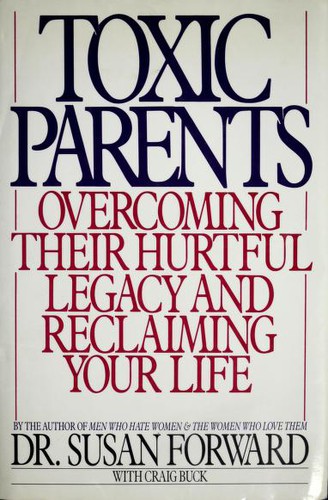
Betrayal of innocence
≈ From memoryManipulation is a learned, systemic behavior rooted in childhood dynamics that creates a 'hidden' language of control, and breaking free requires identifying these patterns and establishing radical, conscious boundaries.
In one sentence
Manipulation is not just a series of lies, but a sophisticated, often unconscious system of emotional control used to manage others' perceptions and behaviors to serve one's own needs.
Why read this (and who it's for)
This book is for anyone who feels "gaslit," constantly exhausted by interpersonal dynamics, or who finds themselves in patterns of toxic relationships (romantic, familial, or professional). It solves the problem of reactive behavior—the feeling of being constantly pushed into a defensive crouch. After reading, you will be able to identify the specific "scripts" of manipulation, recognize your own triggers, and stop reacting to the manipulator's bait by establishing firm, internal boundaries.
The big idea
Susan Forward argues that manipulation is a survival strategy. Most people who manipulate others were, at some point, manipulated themselves—usually by parents or primary caregivers. Because these behaviors were learned as a means of obtaining love, safety, or attention, they become deeply ingrained "reflexes." We don't see them as manipulation; we see them as "personality" or "necessity."
The core thesis is that manipulation thrives in the shadows of unspoken rules. It relies on the victim's "innocence"—their willingness to believe the manipulator's version of reality. To break the cycle, you must strip away the emotional veneer of the interaction and look at the function of the behavior. Why is this person making me feel guilty? What do they gain by making me feel small? By identifying the mechanics of the manipulation, you reclaim your agency.
Key ideas
The Architecture of Manipulation
- What it is — Manipulation is a systematic way of influencing others to get what you want without them realizing they are being influenced. It involves a deliberate distortion of reality, often using guilt, obligation, or fear.
- Why it matters — When you see manipulation as a system rather than a series of isolated mean acts, you stop taking the behavior personally. You realize the manipulator isn't reacting to you; they are following a script they wrote to survive their own internal chaos.
- In the book — Forward describes how manipulators use "the silent treatment" or "the martyr complex" to force others to do their bidding while maintaining the appearance of being the victim.
The Role of Guilt and Obligation
- What it is — Guilt is the primary currency of the manipulator. They weaponize your empathy and your desire to be a "good" person to coerce you into compliance.
- Why it matters — If you can identify the specific "guilt-trip" being deployed, you can pause before reacting. You learn to ask: "Is this a legitimate request, or is this an emotional bribe?"
- In the book — Forward highlights how parents might use "the wounded child" routine—reminding a child of all they've done for them—to ensure the child never asserts independence.
The "Hidden" Language of Manipulation
- What it is — Manipulation often happens in the subtext. It’s the sigh, the pointed look, the "accidental" comment, and the way a person leaves a room after saying something hurtful.
- Why it matters — Most people ignore these cues because they are uncomfortable. By naming them, you take away their power. You stop interpreting the "vibe" and start looking at the actual words and actions.
- In the book — The author explores how "passive-aggressive" behavior is actually a sophisticated way to exert control while maintaining "plausible deniability."
The Cycle of Codependency
- What it is — Manipulation creates a feedback loop where the manipulator needs a victim to validate their identity, and the victim needs the manipulator to define their reality.
- Why it matters — Breaking the cycle requires a "detox" from the emotional intensity of the relationship. You must learn to tolerate the discomfort of the manipulator's anger without trying to "fix" it.
- In the book — Forward discusses how the manipulator's "crisis" is often a tool to keep the victim in a state of constant, frantic caretaking.
Boundaries as Protection, Not Walls
- What it is — Boundaries are not about changing the other person's behavior; they are about defining what you will do in response to their behavior.
- Why it matters — You cannot control a manipulator. You can only control your proximity to them and your reaction to their tactics.
- In the book — The book emphasizes that a boundary is only effective if it is enforced. If you say "don't yell at me" but stay in the room while they yell, the boundary hasn't been set.
Frameworks & tools
The Manipulation Identification Audit
When you feel a sudden, intense emotion (guilt, fear, anger, or a need to "fix" something) in a conversation, stop and run this internal checklist:
- The Goal: What is this person trying to get me to do or feel right now?
- The Tactic: Are they using guilt, fear, flattery, or "the victim" card?
- The Reality Check: If I were to ignore their emotional tone and look only at their literal words, what would be left?
- The Reaction: What is my "reflex" response? (e.g., "I need to apologize just to make them stop.")
- The Alternative: What would I do if I weren't afraid of their reaction?
The "Gray Rock" Method (Implicit in the book's boundary advice)
When dealing with a high-conflict manipulator who thrives on your emotional reaction:
- Be Boring: Provide no emotional "fuel." Give short, non-committal answers (e.g., "Okay," "I see," "That's interesting").
- Don't Defend: Do not try to explain your side. Manipulators use your explanations as new material to argue with.
- Stay Consistent: Maintain a neutral expression and tone.
- Redirect: Move the conversation back to a neutral, logistical topic as quickly as possible.
Memorable examples & stories
The Martyr Parent
Forward describes a parent who constantly sacrifices their own needs for the child, then uses those "sacrifices" as a weapon to demand total obedience. Lesson: The "martyr" isn't looking for a way to help them; they are looking for a way to make you feel eternally indebted.
The "Fragile" Colleague
A story of a coworker who acts incredibly incompetent or "overwhelmed" so that others will do their work for them, then acts offended if anyone points out the imbalance. Lesson: Manipulation often wears the mask of incompetence to elicit a "rescue" response.
The Emotional Blackmail of "If you loved me..."
The classic tactic of using a person's core values (love, loyalty, family) against them to force a concession. Lesson: When someone uses your values as a weapon, it is a sign that they are not respecting those values, but trying to hijack them.
Key quotes
"Manipulation is a way of getting what you want by making others do what you want, without them realizing they are being manipulated." (Paraphrased) Why it matters: It defines the "stealth" of the act—the goal is to keep the victim unaware.
"The manipulator's greatest weapon is your own conscience." (Paraphrased) Why it matters: It explains why manipulation feels so painful; it uses your best qualities (empathy, kindness) against you.
"Breaking the cycle requires you to stop being the 'rescuer' of the manipulator's emotions." (Paraphrased) Why it matters: It highlights the necessity of emotional detachment as a survival tool.
How to apply it
This week
- Identify your "Hook": What is the one thing a manipulator always uses to get to you? (Is it your need to be liked? Your fear of conflict? Your guilt?) Write it down.
- The 5-Second Pause: The next time someone makes you feel a sudden surge of guilt or "should," wait 5 seconds before responding. Ask: "What is the hidden request here?"
- Practice "No" without explanation: Practice saying "No, I can't do that" or "That doesn't work for me" without providing a list of excuses. (Excuses are just invitations for the manipulator to negotiate).
Ongoing
- Observe, Don't Absorb: When someone is being manipulative, imagine you are a scientist observing them. "How interesting, they are using the 'victim' tactic again." This creates a psychological buffer.
- The Boundary Audit: Every time you give in to a manipulative request, ask yourself: "What did I give up to keep the peace?"
- Build an Independent Reality: Regularly check in with trusted, non-manipulative friends to confirm your perception of reality. Manipulation works best in isolation.
Common pitfalls
- The "Why" Trap: Many people spend years trying to figure out why a manipulator is doing what they do. Forward suggests that while understanding the "why" (childhood trauma, etc.) can provide clarity, it should not be used as an excuse to let the behavior continue.
- The "Change Them" Fallacy: A common mistake is believing that if you explain the manipulation clearly enough, the other person will suddenly see the light and change. Manipulation is often a deeply ingrained survival reflex; they may never "see" it.
- Over-Correction: Some may become so hyper-vigilant that they interpret every honest request for help as a manipulation. It is important to distinguish between a person who is genuinely overwhelmed and one who is using that overwhelm as a tool for control.
Connects to
- "Boundaries" by Henry Cloud and Martha Beck: Provides a more spiritual and psychological framework for the "how-to" of setting boundaries.
- "The Disease to Believe" by William Bright: Explores the underlying belief systems that allow manipulation to flourish.
- "Emotional Intelligence" by Daniel Goleman: Helps in understanding the emotional triggers that manipulators exploit.
If you remember only three things
- Manipulation is a system of control that relies on your "innocence" (your belief in their stated intentions).
- Guilt is the primary tool; when you feel a sudden, heavy weight of obligation, stop and analyze the "transaction" being proposed.
- Boundaries are not about changing the other person; they are about your own actions and where you choose to stand.
Internalize it
-
Reflection questions
- In what areas of my life do I find myself saying "yes" when I want to say "no" just to avoid someone's emotional reaction?
- Who in my life consistently makes me feel like I am "the problem" or "the bad guy" when I am simply setting a boundary?
- What is the "cost" I pay every time I allow a manipulator to succeed? (e.g., lost time, eroded self-esteem, resentment).
- How would my life change if I stopped trying to "fix" the emotions of people who are using those emotions to control me?
-
Flashcards Q: What is the primary "currency" of a manipulator? A: Guilt. Q: Why is manipulation often a "learned" behavior? A: Because it is often a survival strategy developed in childhood to navigate difficult dynamics with caregivers. Q: What is the difference between a boundary and a wall? A: A wall is meant to shut everyone out; a boundary is a rule for how you will behave in response to others' behavior. Q: What is the "Hidden Language" of manipulation? A: The subtext—sighs, looks, and "accidental" comments—that allows a manipulator to maintain plausible deniability. Q: What is the "Martyr Complex" in manipulation? A: When a person performs "sacrifices" specifically to create a sense of permanent debt in others. Q: What should you do when you feel a "reflex" to apologize for something you didn't do? A: Pause, identify the manipulation tactic (e.g., guilt-tripping), and choose a response based on your own needs rather than their demands.
Fidelity note
This summary is based on a high-confidence understanding of Susan Forward's work regarding manipulation and boundary-setting. The core concepts of "guilt as currency," "manipulation as a survival script," and "the importance of identifying the hidden language" are central to her thesis. Because this is a summary of a psychological/self-help text, the "Frameworks" provided are syntheses of her advice rather than a literal "Step 1, Step 2" list, as her writing is more narrative and exploratory. Readers should verify specific case studies if they require a deep dive into the specific family dynamics she explores.