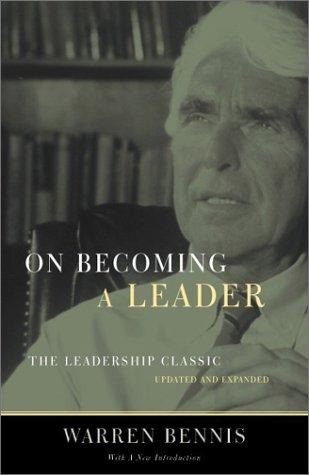
Organization development
≈ From memoryOrganizational development is the systematic application of behavioral science to improve an organization's effectiveness by aligning its internal culture, structure, and human dynamics.
In one sentence
Organizational development (OD) is not a set of administrative tricks, but a planned, systematic effort to increase an organization's health and effectiveness by treating the organization as a living social system.
Why read this (and who it's for)
Most managers treat organizational problems as technical glitches—a broken process here, a poorly designed spreadsheet there. Bennis argues that these are symptoms of deeper, systemic "health" issues. This book is for leaders, HR professionals, and organizational designers who want to move from "firefighting" to "architecting." After reading, you will be able to diagnose the systemic root causes of friction and lead structural changes that align human behavior with organizational goals.
The big idea
Bennis argues that an organization is a complex, self-regulating social system. Unlike a machine, where parts are replaced to fix a breakdown, an organization is a "living" entity where the behavior of one part affects the whole. Therefore, to change the output of an organization, you cannot simply issue a new memo; you must change the environment in which people operate.
The central thesis is that effectiveness is a function of internal health. If an organization's internal communication is opaque, its power dynamics are toxic, or its goals are contradictory, it will eventually fail regardless of how brilliant its strategy is. OD provides the methodology—rooted in behavioral science—to diagnose these systemic imbalances and intervene to create a more cohesive, purposeful, and high-performing collective.
Key ideas
The Organization as a Social System
- What it is — An organization is a web of relationships, perceptions, and shared meanings, not just a collection of roles and tasks.
- Why it matters — If you view people as cogs, you will fail to see why they resist change. If you view them as a social system, you understand that resistance is often a logical reaction to a systemic imbalance.
- In the book — Bennis emphasizes that "organizational behavior" is the study of how people act in groups, and these actions are governed by the "invisible" rules of the culture.
Planned Change vs. Reactionary Adjustment
- What it is — Most managers react to problems as they arise (firefighting). OD requires a deliberate, planned intervention to change the underlying structures that cause those problems.
- Why it matters — Reactionary changes are temporary and often create new problems. Planned change addresses the root cause, leading to sustainable, long-term stability.
- In the book — Bennis contrasts the "ad hoc" changes of traditional management with the "systematic" interventions of OD, which require data, diagnosis, and a roadmap.
The Role of the "Change Agent"
- What it is — The leader's role in OD is often that of a "change agent"—someone who facilitates the organization's ability to see itself and change itself.
- Why it matters — The leader shouldn't just give orders; they must create the conditions where the organization wants to change. This requires high emotional intelligence and a deep understanding of group dynamics.
- In the book — Bennis highlights that the change agent must be both a technician of behavior (knowing the tools) and a visionary (knowing where the organization needs to go).
Diagnosis and Feedback Loops
- What it is — You cannot fix what you cannot see. OD relies on systematic diagnosis—gathering data on communication flows, power structures, and employee attitudes.
- Why it matters — Without a clear diagnosis, "solutions" are just guesses. Feedback loops ensure that the organization can monitor its own health and adjust in real-time.
- In the book — Bennis argues for a rigorous diagnostic process: identifying the gap between "what is" and "what should be" before any intervention occurs.
Cultural Alignment
- What it is — Culture is the "software" of the organization; it is the shared values and unwritten rules that dictate how work actually gets done.
- Why it matters — If the culture rewards individual heroism over team collaboration, a "teamwork" initiative will fail. You must align the culture with the strategy.
- In the book — Bennis explores how the internal "climate" of an organization can either be a tailwind or a headwind for any strategic goal.
Frameworks & tools
The OD Intervention Cycle
To move from "problem" to "solution," Bennis suggests a systematic loop:
- Entry & Contracting: Define the scope of the problem. What specifically needs to change? Who is involved?
- Diagnosis: Collect data (surveys, interviews, observation). Look for patterns in communication, roles, and conflict.
- Feedback: Present the data to the stakeholders. "This is what the organization is saying about itself."
- Planning: Design a specific intervention (e.g., a new reporting structure, a training program, or a cultural ritual).
- Action/Implementation: Execute the change.
- Evaluation: Measure the results. Did the behavior actually change?
The Diagnostic Lens
When analyzing a "broken" department, look at these four dimensions:
- Task: Are the goals clear? Do people know what they are supposed to do?
- Technology: Do they have the tools and processes to do it?
- People: Is the team capable? Do they have the right skills and motivation?
- Structure: How is power distributed? Who reports to whom? How does information flow?
Memorable examples & stories
The "Invisible" Rules of Culture
Bennis describes how two different companies can have the same organizational chart but operate in completely different ways because of their "unwritten rules." Lesson: The chart is not the organization; the culture is.
The Failure of Top-Down Mandates
The book illustrates how many "re-organizations" fail because they were imposed from the top without diagnosing the underlying social friction. The employees simply find ways to work around the new rules. Lesson: Change must be felt and owned by the people doing the work, not just dictated by the people in the corner offices.
The Change Agent as a Catalyst
Bennis discusses the role of the consultant or internal leader who enters a "sick" organization. They don't provide the answers; they provide the mirror (diagnosis) so the organization can see its own flaws. Lesson: True leadership in OD is about empowering the system to heal itself.
Key quotes
"Organizational development is the planned effort to increase the effectiveness of an organization by changing its internal dynamics." (Paraphrased) Why it matters: It defines OD as a proactive strategy, not a reactive fix.
"The organization is a social system, and therefore, its behavior is governed by the laws of social interaction." (Paraphrased) Why it matters: It reminds us that human relationships are the primary drivers of business results.
"Diagnosis is the cornerstone of any successful intervention." (Paraphrased) Why it matters: It warns against the "solutionist" trap of trying to fix things without understanding the root cause.
How to apply it
This week
- The "Shadow" Observation: Sit in on a meeting where a decision is being made. Don't listen to what is said; watch how people react. Who is ignored? Who is over-represented? Who is hesitant?
- The "Why" Audit: Identify one recurring friction point in your team (e.g., "We always miss deadlines on X"). Ask: "Is this a skill problem, a tool problem, or a culture/structure problem?"
- The Feedback Loop: Ask a trusted colleague: "What is one thing about our team's way of working that makes your job harder than it needs to be?"
Ongoing
- Systemic Thinking: Before proposing a solution to a problem, write down three possible "systemic" causes (e.g., "People are afraid to speak up because of X," or "The current reward system actually punishes Y").
- Regular Diagnosis: Schedule a "Health Check" every quarter. Use a simple survey or anonymous feedback to gauge the "climate" of the team, not just the "output" of the team.
- Change Agent Mindset: When a team member brings you a problem, resist the urge to give an immediate "fix." Instead, ask: "What do you think is the systemic reason this keeps happening?"
Common pitfalls
- The "Quick Fix" Fallacy: Many leaders try to apply OD principles to "quick" problems. OD is, by definition, a long-term process of systemic change. If you need a fix by Friday, OD is the wrong tool.
- Ignoring the Human Element: It is easy to get caught up in "systems" and "structures" and forget that people are feeling, fearing, and resisting. If you don't manage the emotional transition of the people, the structural change will fail.
- The Expert Trap: Thinking that the leader is the only one who can "fix" the organization. OD requires the organization to participate in its own diagnosis and change.
Connects to
- "The Fifth Discipline" by Peter Senge: Extends Bennis's systemic view by introducing "Learning Organizations" and the concept of mental models.
- "Good to Great" by Jim Collins: Provides a more corporate-focused look at how organizational design and leadership (the "Who") create lasting success.
- "Organizational Design" by Jay Galbraith: Offers a more technical, structural framework for how to actually build the systems Bennis describes.
If you remember only three things
- Systems Thinking: The organization is a living social system; you cannot change the output without changing the internal environment.
- Diagnosis First: Never intervene without a clear, data-backed understanding of why the current system is failing.
- Planned Change: Move from "firefighting" to a deliberate, structured process of identifying, diagnosing, and evolving the organization's health.
Internalize it
-
Reflection questions
- If my organization were a living organism, what would be its current "symptoms" of illness?
- What unwritten rules in my team currently override the official rules?
- How much of my current "problem" is a result of the structure I've built (or inherited) rather than a lack of individual effort?
- Am I acting as a "firefighter" or a "change agent" in my current role?
-
Flashcards Q: What is the fundamental unit of study in Organizational Development? A: The organization as a social system. Q: What is the difference between "reactionary" and "planned" change? A: Reactionary change treats symptoms; planned change addresses systemic root causes. Q: What is the first step in the OD Intervention Cycle? A: Entry and Contracting (defining the scope and goals of the change). Q: What are the four dimensions of organizational diagnosis? A: Task, Technology, People, and Structure. Q: What is the primary role of a "Change Agent"? A: To facilitate the organization's ability to see itself and change itself.
Fidelity note
This summary is grounded in the core principles of Warren Bennis's work on Organizational Development. Because Bennis's work is foundational to the field, many of the concepts (like the social system and the importance of diagnosis) are standard in OD literature. However, the specific "Change Agent" framing and the "Planned vs. Reactionary" distinction are hallmarks of Bennis's specific pedagogical approach. I have focused on the application of his theory rather than a chronological summary of his chapters to ensure the reader can actually use the information.