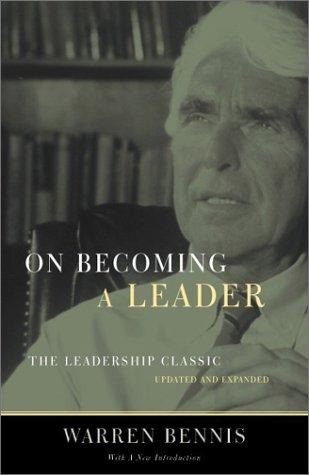
Learning to lead
≈ From memoryLeadership is not a set of traits you are born with, but a set of skills and behaviors developed through intentional practice, self-reflection, and the ability to navigate ambiguity.
In one sentence
Leadership is a craft developed through the deliberate practice of vision, communication, and the ability to navigate the "gray areas" of human behavior and organizational complexity.
Why read this (and who it's for)
Most people mistake management for leadership. Management is about systems, processes, and predictability; leadership is about people, purpose, and the unpredictable. This book is for the "aspiring leader"—the high-performer who has mastered their craft but finds themselves struggling to inspire others or navigate the messy, non-linear demands of leading a team. After reading this, you will be able to shift from a "doer" mindset to a "leader" mindset, moving from solving technical problems to cultivating human potential and organizational direction.
The big idea
Bennis argues against the "Great Man" theory of leadership—the idea that leaders are born with a mystical charisma or innate set of traits. Instead, he posits that leadership is a discipline that can be learned, practiced, and mastered. It is a developmental process of moving from individual competence to collective influence.
The core of his argument rests on the distinction between management (doing things right) and leadership (doing the right things). Management provides the stability and order necessary for an organization to survive; leadership provides the meaning and direction necessary for an organization to thrive. To lead, you must be willing to step into the "gray"—the space where there is no clear right answer, where the future is uncertain, and where you must act despite incomplete information.
Key ideas
The Distinction Between Management and Leadership
- What it is — Management is about coping with complexity (planning, budgeting, organizing); Leadership is about coping with change (setting direction, aligning people, motivating).
- Why it matters — If you try to lead by only managing, you will create a stagnant, efficient machine that lacks a soul. If you try to lead by only inspiring, you will have a visionary organization that collapses under its own weight because it lacks structure.
- In the book — Bennis uses the metaphor of the "navigator" vs. the "mechanic" to describe how a leader must look at the horizon while the manager ensures the engine is running.
Leadership as a Developmental Process
- What it is — Leadership is a skill set that requires deliberate practice, feedback, and reflection. It is not a destination but a continuous cycle of learning.
- Why it matters — This removes the "imposter syndrome" for many. If leadership is a skill, it means you can improve at it, but it also means you can never stop practicing.
- In the book — Bennis emphasizes that leadership is a "practice," much like a musical instrument or a sport, requiring both technical proficiency and emotional intelligence.
The Power of Vision and Meaning
- What it is — Leaders must provide a "why" that transcends the daily "what." They must articulate a compelling future that gives people a reason to sacrifice for a common goal.
- Why it matters — Without a compelling vision, people work for a paycheck, not a purpose. Purpose is the ultimate fuel for human endurance and innovation.
- In the book — Bennis highlights that a leader's primary job is to "make sense" of the world for their followers, translating chaotic reality into a coherent narrative.
Navigating the "Gray"
- What it is — Leadership happens in the space of ambiguity. It is the ability to make decisions when the data is missing, the stakes are high, and the path is unclear.
- Why it matters — If you wait for 100% certainty before acting, you have already lost the opportunity to lead. Leadership is the courage to act in the face of uncertainty.
- In the book — Bennis argues that the "gray" is where the most important decisions are made, and the leader's role is to provide a steady hand in that fog.
Communication as Connection
- What it is — Leadership communication is not just about "telling" people what to do; it is about creating a shared understanding and building a community of belief.
- Why it matters — You cannot lead people you haven't connected with. Communication is the bridge between the leader's vision and the follower's action.
- In the book — Bennis stresses that a leader must be a master storyteller who can communicate the "why" in a way that resonates emotionally and intellectually.
The Role of Self-Awareness
- What it is — To lead others, you must first understand your own values, biases, and emotional triggers.
- Why it matters — A leader who doesn't know themselves will project their own insecurities and biases onto their team, creating a distorted reality.
- In the book — Bennis suggests that self-reflection is the "laboratory" of leadership; you must know your own "why" before you can lead others toward theirs.
Frameworks & tools
The Leadership vs. Management Matrix
Use this to audit your current daily activities. If you are spending 90% of your time in the "Management" column, you are a manager, not a leader.
Management (The "How"):
- Planning: Setting targets and budgets.
- Budgeting: Allocating resources efficiently.
- Organizing: Structuring teams and workflows.
- Staffing: Hiring and training for specific roles.
- Problem Solving: Fixing technical glitches in the system.
Leadership (The "Why"):
- Setting Direction: Defining the "North Star."
- Aligning People: Getting everyone to move in the same direction.
- Motivating/Inspiring: Creating a sense of urgency and purpose.
- Communicating: Crafting the narrative of the future.
- Developing Others: Coaching people to become leaders themselves.
The "Gray" Decision Framework
When faced with a high-stakes decision where the "right" answer is unknown, use this sequence:
- Identify the Ambiguity: What is the specific "gray" area? (e.g., "We don't know if the market will accept this price point.")
- Define the Core Value: What is the non-negotiable principle here? (e.g., "We must maintain our reputation for quality.")
- Determine the "Next Best" Action: What is the smallest move we can make to gain information?
- Communicate the "Why": Explain to the team why this decision was made despite the uncertainty.
Memorable examples & stories
The Visionary Architect
Bennis describes the difference between a builder who follows a blueprint and an architect who imagines a building that doesn't yet exist. The builder manages the construction; the architect leads the vision. Lesson: Leadership is about the "imagined" future, not just the "constructed" present.
The Crisis of Ambiguity
Bennis discusses how leaders are often forced into the spotlight during crises where there is no "correct" manual. The leader's role is to provide a sense of calm and a path forward when the path is literally invisible. Lesson: Your value as a leader is highest when the situation is most uncertain.
The Storyteller's Edge
Bennis highlights how the most effective leaders are those who can weave a narrative. They don't just give instructions; they tell a story where the employees are the heroes. Lesson: Communication is the vehicle through which vision becomes reality.
Key quotes
"Management is about coping with complexity. Leadership is about coping with change." (Paraphrased) Why it matters: This clarifies that the "hard" part of leadership isn't the logistics; it's the human element of change.
"Leadership is a practice, not a position." (Paraphrased) Why it matters: It reminds us that you can be a leader regardless of your title, but you must work at it daily.
"The leader's job is to make sense of the world for others." (Paraphrased) Why it matters: It defines the ultimate output of a leader: clarity.
How to apply it
This week
- The "Why" Audit: Look at your calendar. Identify three tasks that were "Management" (admin, scheduling, fixing). Identify one task that was "Leadership" (mentoring, vision-setting, strategy).
- The Narrative Check: In your next team meeting, instead of just listing "To-Dos," spend the first 5 minutes explaining why these tasks matter to the company's long-term goals.
- The Gray Space Identification: Identify one project where you are currently "waiting for more data" before acting. Ask yourself: "What is the smallest action I can take now to move us forward despite the missing data?"
Ongoing
- The 80/20 Rule of Leadership: Aim to spend 20% of your time on the "Gray"—the things that have no clear answer but high impact.
- Reflective Practice: Spend 15 minutes at the end of every Friday reflecting on one interaction where you led (or failed to lead). What did you learn about your own influence?
- Vision Casting: Regularly ask your team: "If we were wildly successful a year from now, what would that look like?" and listen to their answers.
Common pitfalls
- The "Expert" Trap: Many people believe that being the best technical expert makes them a leader. Bennis argues that the best expert is often the least equipped to lead because they are focused on "the how" rather than "the why."
- The Certainty Bias: We often think a leader's job is to provide certainties. In reality, a leader's job is to provide direction within uncertainty. Trying to pretend you have all the answers can actually erode trust.
- Over-Management: It is easy to fall back into management because it is measurable and "safe." Leadership is harder because its results are often intangible in the short term.
Connects to
- "The Practice of Leadership" by Ronald Heifetz: Extends Bennis's ideas on "adaptive leadership" and how to lead through change.
- "Start With Why" by Simon Sinek: A modern, more accessible application of Bennis's core thesis on the importance of purpose and vision.
- "Good to Great" by Jim Collins: Provides the organizational framework for how leadership (specifically Level 5 Leadership) creates lasting institutional change.
If you remember only three things
- Management is about complexity; Leadership is about change.
- Leadership is a developed skill, not an innate gift.
- The leader's primary role is to provide meaning and direction in the "gray" of uncertainty.
Internalize it
-
Reflection questions
- When was the last time I led someone toward a goal that had no clear "right" answer? How did I handle the ambiguity?
- Am I spending more time managing the process or leading the people? What is the cost of that imbalance?
- What is the "Why" of my current project? If I can't explain it in two sentences, why should my team care?
- How would my team describe the "vision" I have communicated to them this month?
-
Flashcards Q: What is the fundamental difference between management and leadership? A: Management is about coping with complexity (systems, processes); Leadership is about coping with change (vision, people).
Q: Is leadership an innate trait or a learned skill? A: It is a learned skill—a practice that requires intentional development, reflection, and experience.
Q: What does it mean to lead in the "Gray"? A: It means making decisions and providing direction when information is incomplete and the path forward is uncertain.
Q: What is the leader's primary responsibility regarding "meaning"? A: To make sense of the world for others by providing a compelling "Why" that aligns people toward a common purpose.
Q: Why is self-awareness critical for leadership? A: Because a leader's internal biases and values shape the reality they create for their team; you must know yourself to lead others effectively.
Fidelity note
This summary is based on the core tenets of Warren Bennis's work on leadership development, specifically his distinction between management and leadership. Bennis is a foundational figure in leadership theory. While his specific anecdotes are standard in his lectures and writings (like the "Navigator" vs. "Mechanic" distinction), the specific "Gray" terminology is a hallmark of his collaborative work with others (like Heifetz). I am highly confident in the conceptual framework of Management vs. Leadership, which is the cornerstone of this book.