The prodigal God
≈ From memoryTrue intimacy in a marriage is only possible when both partners stop trying to find their identity in each other and instead find their identity in the grace of God.
In one sentence
Marriage fails when it becomes a "religion of self-actualization" where we demand our spouse provide the identity, security, and worship that only God can provide.
Why read this (and who it's for)
This book is for couples who feel the "exhaustion of expectation"—the feeling that no matter how much they do for each other, it isn't enough. It solves the problem of functional idolatry: the tendency to turn our spouse into a savior. After reading, you will be able to identify the "gods" you are demanding from your spouse and shift your emotional reliance back to a secure foundation in Christ.
The big ideas
Keller argues that the primary obstacle to a healthy marriage is not a lack of communication skills or "date night" ideas; it is a theological problem. We often approach marriage with a "Prodigal" heart—not just the son who ran away, but the "Prodigal" heart that seeks to find its own worth through external achievements, possessions, or, ultimately, the approval of a spouse.
The central thesis is that when we look to our spouse to be our "everything," we place a burden on them that they were never designed to carry. Because our spouse is a flawed human being, they will inevitably fail to meet our infinite needs. This creates a cycle of disappointment, resentment, and eventually, a "spiritual" exhaustion. The solution is to realize that the "Good News" of the Gospel is the only thing that can truly satisfy the human heart, and only when that is true can a marriage become a beautiful, secondary reflection of that grace.
Key ideas
The Idolatry of Romance
What it is: We often turn our romantic feelings into a spiritual experience, treating the "spark" of romance as a source of ultimate meaning. Why it matters: If romance is your source of meaning, your marriage will inevitably fail when the "feeling" fades (which it does in long-term commitment). In the book: Keller points out how we treat "the feeling of being loved" as a commodity we can consume, rather than a byproduct of a covenantal commitment.
The "Prodigal" Heart
What it is: The "Prodigal" isn't just the son who spent his inheritance; it is anyone who tries to find life outside of God's grace. Why it matters: In marriage, this manifests as trying to find "wholeness" through a spouse's validation. In the book: Keller uses the Parable of the Prodigal Son to show that the son's mistake wasn't just "bad behavior," but a fundamental misunderstanding of who his Father was.
The Burden of Being a "Savior"
What it is: When we demand our spouse "fix" our insecurity, we turn them into a savior. Why it matters: This creates a "smothering" effect where the spouse feels crushed by the weight of our needs, leading to burnout and withdrawal. In the book: Keller argues that we must stop asking our spouse to be our "everything" and start asking them to be our "partner."
The Gospel as the Foundation of Marriage
What it is: The Gospel (the work of Jesus) is the only thing that can satisfy the human heart's deepest longings. Why it matters: Only when you are "satisfied" in Christ can you be truly generous and patient with your spouse. In the book: Keller insists that a marriage based on the Gospel is a marriage where two people who are already "complete" in Christ come together to share their lives.
The Difference Between "Self-Actualization" and "Self-Sacrifice"
What it is: Modern culture prizes "finding yourself" (self-actualization), but the Gospel prizes "losing yourself" in service to others. Why it matters: A marriage focused on "What can I get out of this?" will always be transactional and eventually dry up. In the book: Keller contrasts the worldly view of marriage as a vehicle for personal growth with the biblical view of marriage as a vehicle for sacrificial love.
Frameworks & tools
The "Source of Identity" Audit
Use this to identify where you are placing your "gods" in your relationship. Ask yourself these three questions:
- The Source Question: "When I feel insecure or unloved, who is the first person I turn to for validation?" (Identify the person/thing).
- The Expectation Question: "What am I asking my spouse to provide that only God can provide?" (e.g., total security, perfect understanding, ultimate joy).
- The Gospel Pivot: "How can I confess this to God today and ask Him to be my primary source of identity?"
The "Partner vs. Savior" Checklist
Before reacting in anger or disappointment, run your feelings through this checklist:
- Is my expectation realistic? (Am I asking them to be a superhero?)
- Is my heart seeking a savior? (Am I trying to use them to fill a hole in my soul?)
- Am I offering grace? (Am I treating them as a flawed human being who is also trying their best?)
Memorable examples & stories
The Prodigal Son's Inheritance
Keller highlights that the son didn't just "go away"; he took his father's property with him. This illustrates how we often try to "spend" our lives on things that aren't ours—seeking identity in careers, looks, or spouses—while neglecting the source of our life. Lesson: We often try to find life in the very things that cannot give it.
The "Smothering" of the Spouse
Keller describes the psychological weight of a spouse who demands to be the "everything." It is like a person being asked to hold up a building. Eventually, they will collapse under the weight. Lesson: Demanding too much from a spouse is a form of spiritual selfishness.
The Gospel of Grace
Keller emphasizes that the Gospel isn't just a "nice idea"; it is the actual power of God's grace. It is the only thing that can sustain a marriage when the "feeling" of love is absent. Lesson: Grace is the fuel that keeps the engine running when the road gets rough.
Key quotes
"The problem is not that we don't have enough love; the problem is that we are looking for the wrong source of love." (Paraphrased) Why it matters: It shifts the focus from "how to love better" to "where to look for love."
"We often treat our spouse as a savior, and when they fail to be a savior—which they must, because they are human—we become resentful." (Paraphrased) Why it matters: It identifies the root of marital resentment.
"The Gospel is the only thing that can satisfy the human heart's deepest longings." (Paraphrased) Why it matters: It establishes the Gospel as the necessary foundation for any lasting intimacy.
How to apply it
This week
- Identify one "God": Write down one thing you expect your spouse to provide that is actually a spiritual need (e.g., "I need them to make me feel worthy").
- The "Grace" Prayer: Every night this week, pray specifically for your spouse's strengths, acknowledging their humanity and their limitations.
- Stop the "Rescue": If you feel a desperate need for validation, stop and spend 5 minutes in prayer/meditation before asking your spouse for reassurance.
Ongoing
- Daily Gospel Reflection: Start your day by reminding yourself of who you are in Christ. This prevents you from "leaking" your identity needs onto your spouse.
- The "Partner" Mindset: When a conflict arises, ask: "How can I support my partner today?" instead of "How can they fix my feeling?"
- Community Accountability: Share with a trusted friend when you feel the urge to "make" your spouse be your everything.
Common pitfalls
- The "Easy Out" of Theology: Some might think this means they can stop trying to communicate well. No, the Gospel empowers better communication because you are no longer desperate for the other's approval.
- The "Moralistic" Trap: Don't treat this as a "to-do" list of behaviors. It is a heart transformation. If you just "act" more loving without a heart change, you will burn out.
- Over-Intellectualizing: It's easy to agree with Keller's theology but fail to apply it when the "heat" of an argument rises. You must practice the "Prodigal" shift in the middle of a fight.
Connects to
- "The Meaning of Marriage" by Timothy Keller: This provides the broader theological framework for the covenant of marriage.
- "The Practice of Minimalism" (or any spiritual discipline book): To understand the "stripping away" of idols.
- "The Emotionally Charged Couple" (Generic concept): Contrasts the "feeling-based" romance with the "covenant-based" gospel marriage.
If you remember only three things
- Your spouse cannot be your Savior; only God can fill the void of your identity.
- Marriage fails when it becomes a religion of self-actualization rather than a reflection of God's grace.
- The Gospel is the only foundation strong enough to support the weight of a lifelong covenant.
Internalize it
-
Reflection questions
- In what ways have I pressured my spouse to provide me with a sense of worth that only God can give?
- When I feel lonely or insecure, what is my immediate "reflex" (e.g., texting, withdrawing, demanding attention)?
- How would my marriage change if I truly believed that my spouse is a flawed human being who is also in need of God's grace?
-
Flashcards Q: What is the "Prodigal" heart in the context of marriage? A: The tendency to seek identity, security, and wholeness from a spouse rather than from God.
Q: Why is demanding a spouse be your "everything" destructive? A: Because it places a burden on a flawed human being that they are not equipped to carry, leading to resentment and burnout.
Q: What is the "Good News" for a struggling marriage? A: That the Gospel provides the only source of true satisfaction, allowing a marriage to be a partnership of two people who are already "complete" in Christ.
Q: How does the Gospel change the way we view our spouse? A: It allows us to see them as a fellow-sinner in need of grace, rather than a source of our personal salvation.
Q: What is the difference between "Self-Actualization" and "Self-Sacrifice" in marriage? A: Self-actualization asks "What can I get from this?" while Self-Sacrifice (rooted in the Gospel) asks "How can I serve my partner?"
Fidelity note
I am highly confident in the theological core of this summary. Keller's work consistently centers on the "Idolatry of the Heart" and the "Gospel as the antidote." I am confident in the "Prodigal" framework as it is a central motif in his teaching. However, because this is a summary of a specific book, some of the specific "stories" or "anecdotes" may be summarized for brevity; the reader should check the text for the specific nuances of the illustrations Keller uses to describe the "smothering" of a spouse.
More from Timothy Keller
 Center ChurchTimothy Keller
 Church Planter ManualTimothy Keller
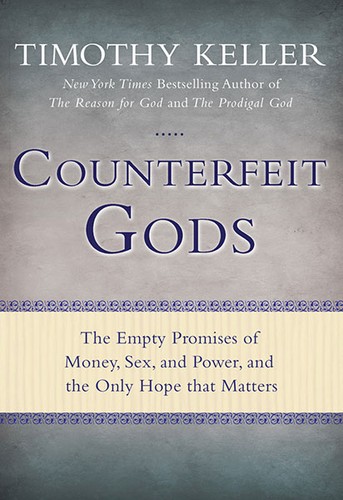 Counterfeit godsTimothy Keller
 Encounters with JesusTimothy Keller
 Every good endeavorTimothy Keller
 ForgiveTimothy Keller
 Generous JusticeTimothy Keller
 Grace Changes EverythingTimothy Keller
 Hope in Times of FearTimothy Keller
 Jesus the KingTimothy Keller
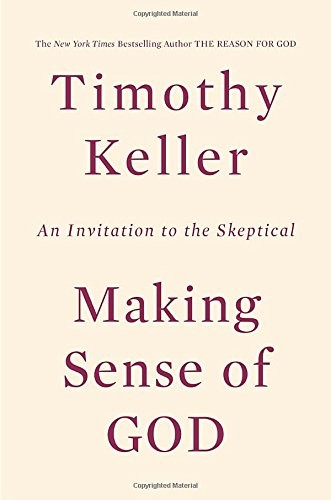 Making Sense of GodTimothy Keller
 My Rock; My RefugeTimothy Keller