Encounters with Jesus
≈ From memoryTrue intimacy in a relationship is only possible when both partners stop looking to each other to provide the ultimate sense of identity and security, and instead find their primary worth in Jesus Christ.
In one sentence
The primary obstacle to a healthy, flourishing marriage is "functional idolatry"—the attempt to make your spouse the source of the satisfaction, identity, and security that only God can provide.
Why read this (and who it's for)
This book is for couples who feel the "exhaustion of expectation." It addresses the cycle where partners demand from one another what only a savior can give: unconditional acceptance, perfect selflessness, and a complete cure for loneliness. By identifying the theological root of relational friction, Keller helps couples move from a "me-centered" demand for perfection to a "God-centered" posture of grace. You will be able to identify your specific idols, communicate your needs without being demanding, and cultivate a "third space" of spiritual intimacy in your marriage.
The big idea
Keller argues that most marital problems are not merely communication errors or personality clashes; they are theological problems. We treat our spouses as "saviors" because we have not yet fully grasped the sufficiency of Jesus. When we do this, we inevitably fail our spouse because we are trying to perform a role we were never designed to hold.
The logic follows a trajectory of Idolatry $\rightarrow$ Frustration $\rightarrow$ Resentment. Because we want our spouse to be our everything, we become hyper-sensitive to their failures. Because they cannot be our everything, they inevitably fail us. This creates a cycle of resentment. The solution is a "re-centering" of the heart: when we encounter Jesus as our true source of identity, the pressure on the spouse is relieved. They are no longer required to be our God; they are invited to be our companion on the journey toward God.
Key ideas
The Idol of "The Perfect Other"
- What it is — The tendency to believe that if we find the right person, our lives will finally be complete and our insecurities will vanish.
- Why it matters — If your spouse is your idol, you will always be disappointed. You are asking a human being to perform a divine function, which leads to inevitable burnout and bitterness.
- In the book — Keller explores how we often use our partners to "fix" our internal brokenness rather than letting God do the work of sanctification.
Functional Idolatry in Communication
- What it is — Using "you" statements to demand that a spouse meet an internal need that actually belongs to our own spiritual life.
- Why it matters — When we say, "You never make me feel special," we are often really saying, "I don't feel worthy unless you validate me." This puts an unfair burden on the other person.
- In the book — Keller highlights how our "demands" are often masks for our own unaddressed spiritual hungers.
The Gospel as the Foundation of Forgiveness
- What it is — Forgiveness is not a feeling we manufacture; it is a response to the reality of what Christ did for us.
- Why it matters — Without a "vertical" understanding of grace (God to us), our "horizontal" grace (us to each other) will eventually run dry when the offenses become too large.
- In the book — Keller emphasizes that we can only forgive our spouse's "unforgivable" sins when we realize how much we have been forgiven by God.
The "Third Space" of Spiritual Intimacy
- What it is — Moving the focus of the relationship from "Me and You" to "Me and You and God."
- Why it matters — When a couple looks in the same direction (toward Christ), they naturally walk closer together. It changes the dynamic from a tug-of-war to a joint journey.
- In the book — This is illustrated by the importance of shared spiritual disciplines, such as praying together or studying scripture, as a way to bond.
The Role of Suffering in Marriage
- What it is — Viewing the difficulties of marriage not as a sign of failure, but as a "refiner's fire" for our character.
- Why it matters — If we view marriage only as a "happiness project," we will quit when things get hard. If we view it as a "holiness project," we can endure trials with purpose.
- In the book — Keller argues that God uses the friction of marriage to strip away our self-centeredness and teach us the beauty of sacrificial love.
Frameworks & tools
The "Idol Audit" for Relationships
Use this to identify where you are putting pressure on your spouse that belongs to God.
- Identify the Hunger: What is the specific feeling you are craving? (e.g., Security, Validation, Peace, Excitement).
- Identify the Source: Who are you currently looking to for that feeling? (e.g., "I want my husband to make me feel safe.")
- The Gospel Pivot: Acknowledge that only God can provide that ultimate security. Ask: "How can I let God provide this, while still enjoying my spouse's company?"
- The Request: Rephrase your request to your spouse from a demand to a request. (e.g., "I'm feeling insecure today; could you please offer me some extra words of affirmation?")
The "Triangle of Intimacy"
A mental model for shifting the focus of your relationship.
- The Base: Your individual relationship with Jesus (Prayer, Scripture, Worship).
- The Side: Your individual identity as a child of God (Knowing your worth).
- The Apex: Your relationship with your spouse. Rule: The stronger the base and sides are, the more stable and healthy the apex becomes.
Memorable examples & stories
The "Perfect" Couple's Collapse
Keller describes the irony of couples who have the "perfect" external life (the right house, the right kids, the right social standing) but are dying of loneliness inside because they haven't built a spiritual foundation. Lesson: External success is not a substitute for internal, spiritual intimacy.
The "Unforgivable" Offense
Keller discusses the weight of betrayal (infidelity, deep lies) and how human willpower is insufficient to heal such wounds. Lesson: Only the "extraordinary" grace of the Gospel provides the supernatural healing required for deep relational wounds.
The "Mirror" Effect
The idea that we often see our own sins reflected in our spouse's flaws. When we are angry at our spouse's selfishness, it is often because we are also struggling with a selfish heart. Lesson: Use your spouse as a mirror for your own spiritual growth, not just as a target for your frustration.
Key quotes
"The problem is not that your spouse is incapable of meeting your needs; it’s that you are asking them to meet needs that only God can fulfill." (Paraphrased) Why it matters: It shifts the responsibility of happiness from the other person to our own spiritual walk.
"Marriage is a training ground for the Kingdom of God." (Paraphrased) Why it matters: It reframes the "grind" of marriage as a divine opportunity for sanctification.
"Forgiveness is not the absence of memory; it is the presence of grace." (Paraphrased) Why it matters: It allows for a realistic view of healing—you don't have to forget what happened to move forward.
How to apply it
This week
- The "No-Demand" Day: For 24 hours, consciously notice every time you want to "demand" something from your spouse (a look, a feeling, a change in behavior). Instead, pray for them and for your own heart.
- The Identity Audit: Write down three things you want your spouse to provide for you (e.g., "I want them to make me feel worthy"). Then, write down how Jesus provides those things instead.
- Shared Prayer: Spend 5 minutes tonight praying specifically for each other's spiritual growth, not just for "logistical" needs (bills, kids, schedules).
Ongoing
- The "Third Space" Habit: Schedule a weekly "spiritual date"—a time to read a book together, listen to a sermon, or pray together without distractions.
- The "Grace-First" Response: Before reacting in anger to a spouse's flaw, ask: "What is the idol I am seeing here? How has God shown me grace in this same area?"
- The "Identity Check": When you feel lonely or unloved, go to your "Identity List" (a list of who you are in Christ) before calling your spouse to "fix" the feeling.
Common pitfalls
- The "Easy Out" Fallacy: Some might use this to say, "Well, if I'm not asking them to be my God, I don't have to do anything to improve my communication." No—the goal is to love them better because you aren't demanding they be your savior.
- Over-Intellectualizing: It is easy to agree with Keller's theology but fail to apply the "gritty" work of daily, patient, annoying, and messy forgiveness.
- The "Spiritual Bypass": Using "God's will" as an excuse to avoid the necessary, hard work of honest communication and boundary-setting.
Connects to
- "The Meaning of Marriage" by Timothy Keller: This provides the broader theological framework for the entire concept of covenant.
- "The Practice of Mindfulness" (General Concept): While not a religious book, the practice of "noticing" your own internal triggers before reacting to your spouse is a vital psychological tool that complements Keller's spiritual insights.
- "The Prodigal God" by Timothy Keller: To understand the depth of the "Father's" heart, which is the ultimate model for how a husband and wife should love one another.
If you remember only three things
- Your spouse cannot be your savior; only Jesus can provide the ultimate identity and security you crave.
- Most marital friction is a symptom of "functional idolatry"—trying to get from a human being what only God can give.
- Marriage is a "holiness project" where God uses the friction of relationship to refine your character and draw you closer to Him.
Internalize it
- Reflection questions
- What is the one thing I most frequently demand from my spouse that I should be asking of God?
- When I feel angry at my spouse, what "idol" (security, validation, etc.) is being threatened in that moment?
- How would my daily interactions change if I truly believed my spouse was a gift from God rather than a source of my ultimate happiness?
- Flashcards Q: What is "functional idolatry" in a marriage? A: It is the act of looking to a spouse to provide the ultimate identity, security, and satisfaction that only God can provide. Q: Why does demanding "perfection" from a spouse lead to resentment? A: Because a human being is incapable of fulfilling a divine role; when they inevitably fail, it creates a cycle of frustration and bitterness. Q: How does the "Third Space" concept help a couple? A: It shifts the focus from "Me and You" to "Me, You, and God," creating a shared spiritual direction that fosters intimacy. Q: What is the "Refiner's Fire" of marriage? A: The idea that the difficulties and frictions of marriage are tools God uses to strip away our self-centeredness and develop our character. Q: What is the "Gospel Pivot" in communication? A: Identifying a demand (e.g., "You never make me feel special") and recognizing it as a spiritual hunger, then asking God to meet that need while requesting a simple, human response from the spouse.
More from Timothy Keller
 Center ChurchTimothy Keller
 Church Planter ManualTimothy Keller
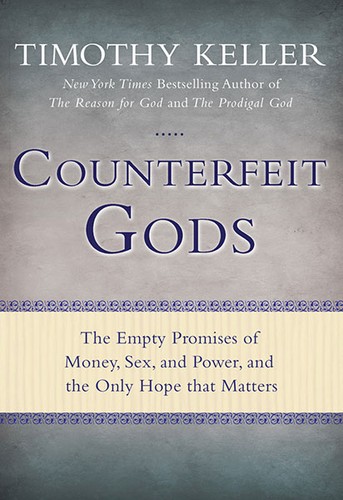 Counterfeit godsTimothy Keller
 Every good endeavorTimothy Keller
 ForgiveTimothy Keller
 Generous JusticeTimothy Keller
 Grace Changes EverythingTimothy Keller
 Hope in Times of FearTimothy Keller
 Jesus the KingTimothy Keller
 Making Sense of GodTimothy Keller
 My Rock; My RefugeTimothy Keller
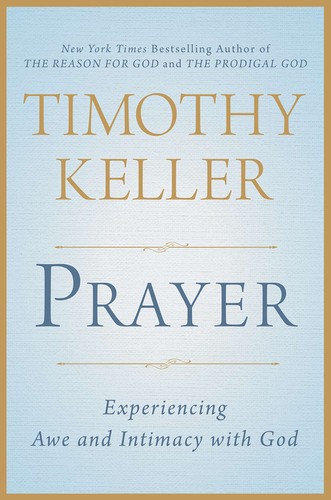 PrayerTimothy Keller