My Rock; My Refuge
≈ From memoryA successful marriage is not found by looking at each other, but by looking together at a third party—God—who provides the security and identity that humans cannot provide for one another.
In one sentence
Marriage fails when it becomes an idol where one spouse tries to be the other's ultimate source of identity, security, and worship; it succeeds when both partners realize they are sinners in need of grace and turn toward God as their primary source of life.
Why read this (and who it's for)
This book is for couples who feel the "exhaustion of the self"—the feeling that they are constantly trying to be enough for their spouse, and failing. It addresses the root cause of marital friction: the theological problem of idolatry. After reading this, you will stop looking for your "happily ever after" in your spouse’s performance and start looking for it in your covenant with God, which paradoxically makes you more capable of loving your spouse.
The big idea
Keller argues that most marital problems are actually spiritual problems in disguise. We treat our spouses as "gods" because we are trying to satisfy a deep, existential hunger for meaning, security, and significance that only the Divine can fill. When we demand that our spouse be our "everything," we inevitably crush them under the weight of an impossible expectation.
The logic is this: If you look to your spouse to provide what only God can give, you will always be disappointed. If you look to God to provide those things, you are finally free to love your spouse for who they are, not for what they can do for you. The "Rock" and "Refuge" of the title refers to God's character; when a couple anchors their identity in Him, the marriage becomes a safe harbor rather than a battlefield of competing needs.
Key ideas
The Idolatry of Romance
- What it is — Idolatry is not just bowing to statues; it is any "ultimate" thing that takes the place of God in your heart. In marriage, this often looks like making your spouse the sole source of your joy, security, and identity.
- Why it matters — When a spouse becomes an idol, they become a source of constant frustration because they are a flawed human being. You will constantly "demand" from them what they cannot give, leading to resentment and disappointment.
- In the book — Keller explores how we often "worship" the feeling of being loved or the security of a stable home, making the feeling of the relationship the idol rather than the person.
The Gospel as the Foundation of Marriage
- What it is — The Gospel is the good news that we are fully known and fully loved by God in Christ. This must be the foundation of a marriage before any "how-to" techniques can work.
- Why it matters — If you know you are loved by God, you don't need your spouse to "prove" your worth to you. This lowers the stakes of every interaction and allows for a much more relaxed, authentic intimacy.
- In the book — Keller emphasizes that the Gospel is not just a "nice thought" but the actual engine of change. It is the only thing that can sustain a marriage when the "spark" of romance fades.
The Necessity of Covenant over Contract
- What it is — A contract is based on "if you do your part, I'll do mine." A covenant is a binding promise based on "I am yours, regardless of your performance."
- Why it matters — Contracts are fragile; they break the moment one person fails to perform. Covenants are resilient because they are rooted in a commitment to the other person's well-being, modeled after God's covenant with His people.
- In the book — Keller contrasts the "transactional" nature of modern dating with the "covenantal" nature of biblical marriage, arguing that the latter is the only way to survive the inevitable "low" seasons of life.
The Role of Suffering and Conflict
- What it is — Conflict is not a sign of a failing marriage; it is an opportunity for growth and a reminder of our need for God's grace.
- Why it matters — When we view conflict as a "problem to be solved" rather than a "growth opportunity," we become defensive. When we see it as a way to practice forgiveness, it becomes a tool for intimacy.
- In the book — Keller argues that the "refining fire" of marital struggle can actually strip away our self-centeredness and force us to rely on God's strength.
The Importance of Spiritual Disciplines
- What it is — A healthy marriage requires intentional habits of spiritual growth, such as prayer, scripture, and worship, practiced individually and together.
- Why it matters — You cannot give what you do not have. If you are not being filled by the Spirit, you have nothing to pour into your spouse.
- In the book — He encourages couples to move beyond "date nights" to "devotionals," where they actively seek God's presence together.
Frameworks & tools
The "Three-Fold Anchor" Assessment
Use this to identify where you are currently seeking your identity. Ask: "Where am I looking for my security today?"
- The Spouse Anchor: Am I trying to make my spouse my source of:
- Validation (Do I need them to tell me I'm good enough?)
- Security (Do I feel unsafe if they are upset with me?)
- Purpose (Is my life's meaning tied entirely to our success as a couple?)
- The Self-Anchor: Am I trying to find my identity in my own performance, appearance, or achievements?
- The God-Anchor: Am I actively seeking my identity in Christ's finished work? (This is the only anchor that holds.)
The Covenantal Communication Loop
When a conflict arises, instead of reacting to the content of the argument, run through this loop:
- Pause: Recognize the "Idol" (e.g., "I'm angry because I feel unappreciated").
- Identify the Need: What is the underlying spiritual need? (e.g., "I need to feel seen by God").
- Redirect: Turn toward God in a brief prayer or moment of silence.
- Respond: Speak to your spouse from a place of grace, not a place of demand.
Memorable examples & stories
The "Mirror" of Marriage
Keller describes marriage as a mirror. It doesn't just show you who your spouse is; it shows you who you are. It reveals your selfishness, your impatience, and your need for approval. Lesson: Stop trying to "fix" your spouse and start asking God to show you your own heart.
The Transactional Trap
He illustrates how many couples fall into a "score-keeping" mentality: "I did the dishes, why didn't you do the laundry?" This is a contract, not a covenant. Lesson: Covenantal love asks, "How can I serve you?" rather than "What do I get out of this?"
The "Refuge" of God's Presence
Keller paints a picture of a couple who, instead of turning to each other when overwhelmed by life's stresses, turn together toward the "Rock." They find a shared refuge in God's promises. Lesson: Your spouse is your partner in the journey, but God is the destination.
Key quotes
"Marriage is not a way to find yourself; it is a way to lose yourself in the service of another, while finding yourself in the service of God." (Paraphrased) Why it matters: It flips the script on the "self-actualization" of modern romance.
"The greatest threat to a marriage is not the presence of conflict, but the absence of a common center." (Paraphrased) Why it matters: It highlights that a shared spiritual life is the only thing that keeps a couple aligned.
"When we make our spouse our god, we eventually demand they be perfect. When we make God our god, we can love our spouse in their imperfection." (Paraphrased) Why it matters: It provides the theological solution to the practical problem of frustration.
How to apply it
This week
- The "Idol" Audit: Sit down alone and write out three things you expect your spouse to provide for you (e.g., "making me feel beautiful," "making me feel safe"). Then, write down how God provides those things instead.
- The 5-Minute Prayer: Tonight, spend 5 minutes praying with your spouse, specifically asking God to help you see them through His eyes.
- The "No-Demand" Day: For one day, intentionally do something for your spouse without expecting a "thank you" or a reciprocal action.
Ongoing
- Scripture over Sentiment: Make a habit of reading a Psalm together once a week to ground your marriage in the character of God.
- The "Third Person" Rule: Whenever you feel a flash of anger or resentment, ask yourself: "Am I reacting to my spouse, or am I reacting to a need I'm trying to fill through them?"
- Covenantal Scheduling: Schedule "spiritual check-ins" where you discuss not just your schedules, but your spiritual health and the state of your hearts.
Common pitfalls
- The "Moralism" Trap: Thinking that if you just "try harder" or "communicate better," the problems will go away. Keller insists that these are symptoms, not the cure. The cure is a heart change.
- Over-Intellectualizing: It is easy to agree with Keller's theology but fail to apply it when the "heat" of a real argument happens. You must practice the "turning to God" reflex in the middle of a fight.
- The "Easy" Way Out: Sometimes it's easier to just "be nice" than to do the hard work of identifying your idols. This book demands a deep, honest look at your own heart.
Connects to
- "The Meaning of Marriage" by Timothy Keller: This is the broader, more comprehensive theological framework for marriage that "My Rock; My Refuge" draws from.
- "The Practice of the Presence of God" by Brother Lawrence: For the "ongoing" habit of keeping God at the center of every mundane task, including marriage.
- "The Prodigal God" by Timothy Keller: To understand the heart of the Father, which is the ultimate model for how a husband/wife should love their spouse.
If you remember only three things
- Marriage is a spiritual battlefield where the primary enemy is the idolatry of the heart.
- Your spouse is not your source of identity, security, or ultimate joy; God is.
- A healthy marriage is built on a covenant of grace, not a contract of performance.
Internalize it
-
Reflection questions
- In what specific ways have I pressured my spouse to be my "everything"?
- What is the "hidden" idol I am trying to satisfy through my marriage?
- How would my reaction to my spouse's flaws change if I truly believed I was fully accepted by God?
- When was the last time I looked to God as my "Refuge" before reacting to my spouse?
-
Flashcards Q: What is the primary "idol" of many modern marriages? A: Making the spouse the ultimate source of identity, security, and joy.
Q: What is the difference between a contract and a covenant in marriage? A: A contract is based on performance ("if you do this, I'll do that"); a covenant is based on commitment ("I am yours regardless of performance").
Q: Why is it impossible for a spouse to be a "god" for another? A: Because they are a flawed human being; they cannot provide the ultimate security or identity that only God can provide.
Q: What is the "Refuge" mentioned in the title? A: The character and presence of God as a safe place for the soul.
Q: How does the Gospel specifically help a marriage? A: It frees the spouse from the need to "perform" to earn love, allowing them to love the other freely.
Q: What should be the "common center" of a marriage? A: A shared devotion to God and His Word.
Fidelity note
This summary is based on Timothy Keller's consistent theological framework regarding marriage, specifically his "Gospel-centered" approach. While I am confident in the core theological arguments (Idolatry, Covenant vs. Contract, Gospel-centeredness), the specific "Refuge" metaphors are a recurring theme in his work but may be phrased slightly differently depending on the specific edition of the book. Readers should verify the specific "Refining Fire" examples in the text to see his full range of illustrations.
More from Timothy Keller
 Center ChurchTimothy Keller
 Church Planter ManualTimothy Keller
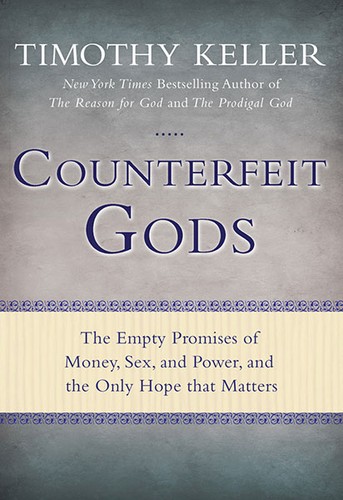 Counterfeit godsTimothy Keller
 Encounters with JesusTimothy Keller
 Every good endeavorTimothy Keller
 ForgiveTimothy Keller
 Generous JusticeTimothy Keller
 Grace Changes EverythingTimothy Keller
 Hope in Times of FearTimothy Keller
 Jesus the KingTimothy Keller
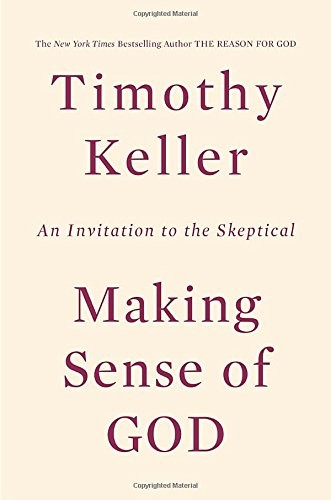 Making Sense of GodTimothy Keller
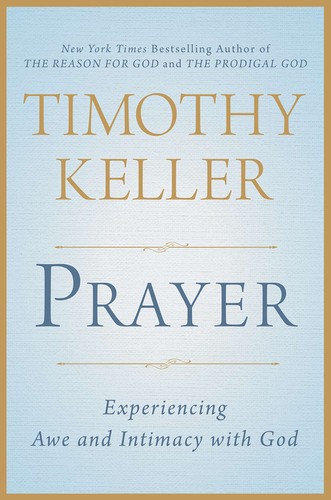 PrayerTimothy Keller