The Age of AI
≈ From memoryAI represents a fundamental shift in human history—not merely as a faster tool for calculation, but as a new form of non-human agency that reshapes our perception of reality, our geopolitical power structures, and the very definition of human intelligence.
In one sentence
Artificial Intelligence is a transformative technology that creates a "new reality" by automating reasoning and decision-making, necessitating a fundamental redesign of our social, political, and ethical frameworks to ensure human agency remains intact.
Why read this (and who it's for)
This book is for leaders, policymakers, and thinkers who need to understand the structural shifts AI will cause in society—not just the technical specs of LLMs. It solves the problem of "technological myopia": the tendency to view AI only as a productivity booster while ignoring how it fundamentally alters human sovereignty, international security, and our collective understanding of truth. After reading this, you will be able to identify the subtle ways AI reshapes decision-making in your organization and articulate the geopolitical risks of autonomous systems.
The big idea
The central thesis is that we are entering an era where "intelligence" is no longer a uniquely human province. Unlike previous technologies (the steam engine, electricity, the internet) which acted as extensions of human capability, AI acts as an agentic force. It doesn't just do what we tell it to do; it finds paths to goals that humans may not have anticipated.
The authors argue that this creates a "decoupling" of human intent from machine execution. Because AI operates on patterns and correlations rather than human-style logic, it produces outputs that are often opaque to us (the "black box"). This means we are moving from a world where machines were tools for calculation to a world where machines are partners in cognition.
This shift is profound because it threatens the "shared reality" required for democracy and diplomacy. If AI can generate convincing synthetic media, manipulate markets, or out-think human strategists in warfare, the traditional pillars of human governance—reasoned debate, verifiable truth, and predictable behavior—are under siege. We must therefore develop a new "diplomacy of intelligence" to manage a world where non-human actors participate in our most critical decisions.
Key ideas
The Shift from Tools to Agents
What it is: Traditional technology (like a hammer or a calculator) follows a linear path: human input $\rightarrow$ machine action $\rightarrow$ result. AI, however, is agentic; you provide a goal, and the AI determines the "how." Why it matters: When tools become agents, we lose direct control over the process of achieving an outcome. This creates a "responsibility gap" where humans may be held accountable for actions they didn't explicitly command but were merely the ultimate overseers of. In the book: The authors contrast the "calculative" nature of traditional software with the "generative" nature of neural networks, noting that AI can find solutions in high-dimensional spaces that human minds simply cannot perceive.
Non-Human Reasoning and the Black Box
What it is: AI does not "think" like a human; it identifies statistical correlations within massive datasets to predict the next most likely outcome. This process is often opaque, even to its creators. Why it matters: Because we cannot always trace the why behind an AI's decision, we risk delegating critical infrastructure (power grids, stock markets, weapons systems) to a logic that is fundamentally alien to human experience. In the book: The authors emphasize that "understanding" in AI is not synonymous with "comprehension." An AI can win a game of chess perfectly without knowing what a "queen" is; we must be careful not to project human-like understanding onto these systems.
The Erosion of Shared Reality
What it is: The ability of AI to generate hyper-realistic synthetic content (Deepfakes, automated propaganda) threatens the common ground of facts required for social cohesion. Why it matters: Democracy relies on a "shared reality." If we can no longer agree on what is true—what happened in a video, what was said in a speech—then collective action becomes impossible. AI accelerates this by making the production of misinformation cheap and infinitely scalable. In the book: The authors discuss how synthetic media could be used to overwhelm our sensory perceptions, creating a "post-truth" environment where only the most powerful actors can maintain a coherent narrative.
Geopolitical Competition and Sovereign AI
What it is: AI is a dual-use technology (like nuclear energy) that provides both immense economic benefits and catastrophic military advantages. It is becoming the primary frontier of geopolitical competition. Why it matters: Nations are racing to achieve "AI sovereignty"—the ability to control their own data, compute, and algorithmic models—because whoever leads in AI will dictate the standards of the next century's economy and security. In the book: Kissinger draws on his experience with nuclear proliferation to argue that we need a new international framework for AI, as current treaties are ill-equipped to handle software that can autonomously evolve or replicate.
The Human-Machine Loop (Co-evolution)
What it is: We are entering a period of "co-evolution" where human behavior will be shaped by the feedback loops of AI systems. Why it matters: As we rely more on AI for navigation, information, and even social interaction, our own cognitive muscles—judgment, memory, and critical thinking—may atrophy. The danger is not just what AI does to us, but what we become when we allow AI to do everything for us. In the book: The authors warn that if we outsource our "thinking" to machines, we may lose the very qualities that make us human: the ability to reflect, to deliberate, and to choose a path based on values rather than just probabilities.
Frameworks & tools
The Agency Audit (Evaluating AI Integration)
To understand how much agency you are giving away in your organization or life, use this checklist when deploying any new AI system:
- Goal vs. Path: Does the human define the path to the goal, or does the machine choose the path? (High risk if the machine chooses the path).
- Explainability: Can the system explain why it reached a specific conclusion in a way that is understandable to a non-technical human?
- Intervention Point: At what stage of the process can a human "veto" or override the AI's decision? Is that veto point easy to reach?
- Feedback Loop: Does the system learn from its mistakes, or does it require manual retraining?
The Geopolitical Risk Matrix (For Policy/Strategy)
When assessing the impact of an AI technology on a specific sector, evaluate it across three dimensions:
- Autonomy Level: Can the system act without human intervention? (Low, Medium, High).
- Dual-Use Potential: Can this civilian tool be easily repurposed for surveillance or kinetic warfare?
- Data Sovereignty: Does the deployment of this AI rely on data/compute from a hostile or unstable jurisdiction?
Memorable examples & stories
The Nuclear Analogy
The authors frequently reference the Cold War and the development of nuclear weapons. They argue that just as the world had to build new institutions (IAEA, non-proliferation treaties) to manage a technology that could destroy civilization, we must do the same for AI. Lesson: Technology that changes the "rules of the game" requires a corresponding change in international law and diplomacy.
The "Black Box" of Neural Networks
The book describes how deep learning models can identify patterns in images or text that are invisible to humans—such as identifying a specific type of disease from an X-ray before a human doctor could see it. However, the AI cannot explain which pixels led to that conclusion. Lesson: We are trading "interpretability" for "performance," and we must decide if that trade-off is acceptable in high-stakes environments like medicine or law.
The Erosion of Truth in Social Media
The authors point to the current state of information warfare, where bots and algorithms already curate what people see and believe. They project this into a future where AI can generate personalized propaganda for every individual on earth simultaneously. Lesson: The danger isn't just "fake news"; it's the destruction of the infrastructure of truth that allows society to function.
Key quotes
"AI is not just another tool; it is a new way of perceiving and interacting with reality." (Paraphrased) Why it matters: It shifts the focus from what AI can DO to what AI does to our perception.
"The danger is not that machines will develop a consciousness like humans, but that they will develop capabilities that exceed human comprehension." (Paraphrased) Why it matters: This clarifies that the risk is functional/operational, not necessarily "sentient" or "evil."
"We are entering an era where the boundary between human and machine intelligence becomes blurred, requiring a new social contract." (Paraphrased) Why it matters: It highlights the need for proactive policy-making rather than reactive damage control.
How to apply it
This week
- Identify one "Agentic" task: Find one thing you currently do that involves "judgment" or "reasoning" (e.g., summarizing a meeting, prioritizing emails). Ask: "If an AI did this for me today, what part of the process would I lose control over?"
- Audit your Information Diet: Notice how many of your news sources are curated by algorithms. Identify one source that is purely human-led and non-algorithmic to preserve a "baseline" of reality.
Ongoing
- The "Human-in-the-Loop" Principle: Establish a rule for any AI implementation in your work: AI can suggest, but only a human can authorize. Ensure there is always a manual review step for high-stakes decisions.
- Cognitive Reserve: Practice "manual" thinking. Spend 30 minutes a day on a complex problem without using any AI tools (no LLMs, no automated summaries) to maintain your own analytical muscles.
Common pitfalls
- The Sci-Fi Trap: Many people think this book is about Terminator-style sentient robots. It isn't. The authors are concerned with the societal and geopolitical consequences of non-human reasoning today. Focus on the policy and power dynamics, not the "robot uprising."
- Overestimating Human Control: A common mistake is thinking that because we wrote the code, we control the outcome. The book argues that as systems become more complex, they become less predictable. Assume a level of unpredictability in AI outputs that exceeds your current comfort level.
- Ignoring the "Dual-Use" Reality: People often think of AI as a purely civilian "productivity" tool. The authors insist on viewing it through the lens of national security and power—it is a weapon of influence and a tool of surveillance as much as it is a tool for writing emails.
Connects to
- "Superintelligence" by Nick Bostrom: While this book focuses on the societal/geopolitical impact, Bostrom focuses on the technical/existential risks of AGI (Artificial General Intelligence).
- "The Age of Surveillance Capitalism" by Shoshana Zuboff: This provides the economic framework for how data is harvested to train the very models discussed in "The Age of AI."
- "Chip War" by Chris Miller: This explains the physical infrastructure (semiconductors) that makes the "Geopolitical Competition" mentioned by Kissinger and Schmidt possible.
If you remember only three things
- AI is an agentic technology, not just a tool; it chooses its own paths to reach your goals.
- The greatest risk is the erosion of shared reality, which threatens the foundations of democracy and international diplomacy.
- We need a new international framework for AI, similar to nuclear non-proliferation, to manage the risks of autonomous systems.
Internalize it
-
Reflection questions
- In what areas of my professional life am I currently "outsourcing" my judgment to an algorithm? What is the long-term cost to my expertise?
- If a piece of information I see online is 90% likely to be AI-generated, how does that change my strategy for verifying truth?
- How would my organization's "power structure" change if our competitors achieved a significant lead in autonomous decision-making?
-
Flashcards Q: What is the fundamental difference between traditional software and AI as described by the authors? A: Traditional software is calculative (follows explicit instructions); AI is agentic (determines its own path to reach a goal).
Q: Why does the "Black Box" problem matter for public policy? A: Because if we cannot understand why an AI makes a decision, it becomes difficult to hold anyone accountable for its errors or biases.
Q: What is the "Dual-Use" concern regarding AI? A: Like nuclear technology, AI can be used for immense civilian benefit (medicine, science) but also for devastating military and surveillance purposes.
Q: How does AI threaten "Shared Reality"? A: By making it cheap and easy to generate synthetic media, AI can overwhelm our senses and make it harder for a society to agree on basic facts.
Q: What is the authors' primary concern regarding human-machine co-evolution? A: That by over-relying on machines for reasoning, humans may lose the cognitive abilities (judgment, reflection) that define our species.
Fidelity note
This summary captures the core philosophical and geopolitical arguments of The Age of AI. The authors—Kissinger, Schmidt, and Huttenlocher—approach the topic from three distinct angles: Diplomacy/History (Kissinger), Corporate/Technological Leadership (Schmidt), and Technical Research (Huttenlocher). I am highly confident in the representation of the "Agentic vs. Calculative" distinction and the "Shared Reality" concerns, as these are the pillars of their argument. However, because the book is a high-level synthesis, specific technical deep-dives into neural network architecture are less emphasized than the broader societal implications. Readers should verify the specific geopolitical examples used in the text to ensure they have the most current context on international relations.
Keep going — related reads
 Genesis Artificial Intelligence, Hope, and the Human SpiritHenry Kissinger, Eric Schmidt and Craig MundieThe AI Revolution The Road to SuperintelligenceTim UrbanWhy AI Will Save the WorldMarc AndreessenThe Intelligence AgeSam AltmanThe AI Revolution Our Immortality or ExtinctionTim Urban
 Supremacy AI, ChatGPT, and the Race That Will Change the WorldParmy Olson
More from Henry Kissinger, Eric Schmidt, and Daniel Huttenlocher
 21. How Can You Identify Hidden Talent With Eric Schmidt.No Stupid Questions
 American foreign policyHenry Kissinger
 CrisisHenry Kissinger
 DiplomacyHenry Kissinger
 Does America need a foreign policyHenry KissingerGenesis Artificial Intelligence, Hope, and the Human SpiritHenry Kissinger, Eric Schmidt and Craig Mundie
 How Google WorksEric Schmidt and Jonathan Rosenberg
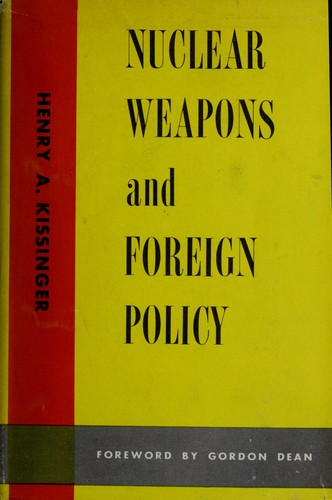 Nuclear weapons and foreign policyHenry Kissinger
 On ChinaHenry Kissinger
 Problems of national strategyHenry Kissinger
 The Age of A.I.Henry Kissinger
 The new digital ageEric Schmidt