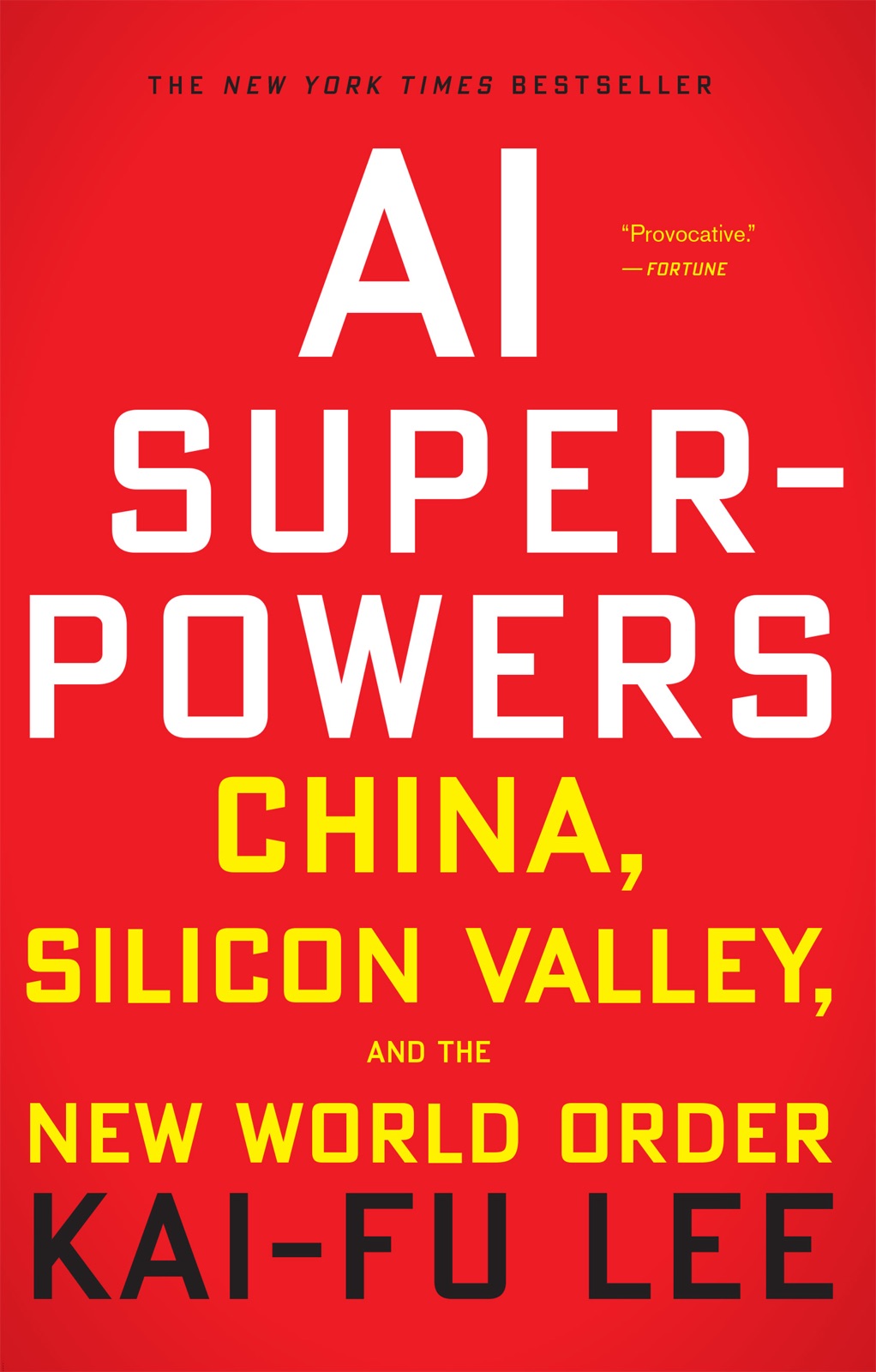
Supremacy AI, ChatGPT, and the Race That Will Change the World
≈ From memoryThe race for AI supremacy is not a battle of better chatbots, but a geopolitical and industrial war over the 'intelligence layer' of the global economy—defined by compute, data moats, and the transition from generative chat to autonomous agents.
In one sentence
The true winner of the AI revolution will not be the company that builds the most eloquent chatbot, but the entity that masters the "Reasoning Engine"—the ability to orchestrate compute and data into autonomous agents capable of complex, multi-step problem solving.
Why read this (and who it's for)
Most people are currently stuck in the "Prompt Engineering" phase of AI—learning how to talk to a tool. This book is for those who want to understand the machinery behind the tool. It solves the problem of superficial understanding by explaining the structural, economic, and technical hurdles that determine which companies will survive the "AI Winter" and which will become the new infrastructure of human civilization.
After reading this, you will be able to:
- Identify the difference between Generative AI (predicting tokens) and Agentic AI (executing goals).
- Understand why "Compute" is the new oil and how it dictates the limits of model capability.
- Evaluate the risks and opportunities of the Open Source vs. Closed Source debate beyond the surface-level hype.
The big idea
Parmy Olson argues that we are currently in a transitional period between two eras: the Generative Era (where AI mimics human output) and the Agentic Era (where AI performs human actions). While the world was distracted by ChatGPT’s ability to write poems and summarize emails, the real "Supremacy" is being fought over the infrastructure of intelligence.
The core thesis is that intelligence is becoming a commodity, but agency remains the frontier. To achieve agency, models need more than just better training data; they need massive scale in compute (the sheer brute force of processing), high-quality reasoning loops (System 2 thinking), and reliable "world models" that allow them to navigate complex environments without human hand-holding at every step.
The logic follows a clear trajectory: Compute $\rightarrow$ Data $\rightarrow$ Reasoning $\rightarrow$ Agency. If you control the compute, you can train the model. If you have the data, you can refine the model. If you master reasoning, you create an agent. The winner of this race will own the "Operating System" for all future work, education, and scientific discovery.
Key ideas
1. Compute as Sovereign Power
What it is: The belief that raw processing power (GPUs/TPUs) is the fundamental constraint on AI progress, acting as a physical moat that only the wealthiest corporations can cross. Why it matters: If intelligence is a function of scale, then the "AI Revolution" is actually an industrial revolution. It means the winners are determined by their ability to secure power grids and silicon supply chains, not just by having the smartest engineers. In the book: Olson highlights the staggering capital expenditure (CapEx) required for training next-generation models, noting how Nvidia’s dominance in hardware has turned "compute" into a geopolitical resource similar to oil or rare earth minerals.
2. The Data Wall and Synthetic Evolution
What it is: The realization that we are running out of high-quality, human-generated text on the internet to train models. To grow, AI must begin training on synthetic data (data generated by other AIs). Why it matters: This creates a "Model Collapse" risk where AI begins to learn from its own mistakes. The winners will be those who can figure out how to maintain "entropy"—ensuring that synthetic data remains high-quality and doesn't lead to a degradation of reasoning. In the book: Olson discusses the pivot from "scraping the web" to "curated, high-reasoning datasets," where the goal is to teach the model how to think rather than just what to say.
3. From Chat to Agents (The Agentic Shift)
What it is: The transition from a user asking a question ("Write me a travel itinerary") to an agent being given a goal ("Book a trip to Japan within this budget"). Why it matters: A chatbot is a tool; an agent is a worker. Agents require "System 2" thinking—the ability to plan, self-correct, and use tools (browsers, spreadsheets, APIs) autonomously. This is the true frontier of utility. In the book: The author emphasizes that the next great leap isn't a "smarter" chat box, but an agentic workflow where the AI can execute 50 steps of a task without human intervention.
4. RLHF and the Human Bottleneck
What it is: Reinforcement Learning from Human Feedback (RLHF) is the process of using humans to "grade" AI responses to align them with human values and logic. Why it matters: While RLHF makes models safer and more useful, it is incredibly expensive and slow. It creates a bottleneck where human intelligence is required to "train" the artificial intelligence, limiting how fast we can scale certain types of reasoning. In the book: Olson explores how companies are trying to automate this "grading" process—using AI to train other AI—to break free from the human labor bottleneck.
5. The Open vs. Closed Moat
What it is: The strategic tension between "Closed" models (OpenAI, Google) which keep weights and data secret, and "Open" models (Meta’s Llama) which are released to the public. Why it matters: This isn't just a philosophical debate; it's a business model. Open source creates a "commodity" layer of intelligence that forces closed-source companies to innovate faster on proprietary features like reasoning and agentic integration. In the book: Olson analyzes Meta’s strategy of "democratizing" the weights to ensure that the industry standard remains accessible, while OpenAI focuses on being the premium, high-capability frontier.
Frameworks & tools
The AI Supremacy Triad
To understand where a company or technology stands in the race for supremacy, evaluate them across these three pillars:
- Compute (The Foundation): How much raw processing power do they have? Do they have a "compute moat" (exclusive access to H100s/B200s)?
- Data (The Fuel): Do they own proprietary data that isn't on the public internet? (e.g., medical records, private codebases, real-time sensor data).
- Architecture/Reasoning (The Engine): Can the model "think" before it speaks? Does it use Chain-of-Thought (CoT) or search-based reasoning to solve complex problems?
The Agentic Workflow Checklist
When evaluating if an AI implementation is truly "Agentic" rather than just "Generative," use this checklist:
- Goal Decomposition: Can the AI break a large goal into 10+ sub-tasks?
- Tool Use: Can it autonomously decide which tool (calculator, search engine, Python interpreter) to use?
- Self-Correction: If an action fails, can it identify the error and try a different path without being told what went wrong?
- Persistence: Can it maintain state over a long-running task that takes minutes or hours to complete?
Memorable examples & stories
The Nvidia Hegemony
Olson describes the sheer physical scale of the "compute" war, where Nvidia has become the gatekeeper of the AI era. It isn't just a software win; it’s a hardware reality where the most powerful "brains" in the world are powered by silicon and massive amounts of electricity. Lesson: AI is as much an industrial/energy challenge as it is a mathematical one.
Meta’s Llama Strategy
The story of how Meta (Mark Zuckerberg) decided to release the weights of Llama models serves as a masterclass in "Open Source" strategy. By giving away the "engine," Meta ensured that everyone else would build on their standards, effectively making them the default infrastructure for developers. Lesson: Sometimes, the best way to win a market is to make your technology the standard by giving it away.
The "Stochastic Parrot" vs. Reasoning
The contrast between early LLMs (which were criticized as just predicting the next word) and the new generation of models that can "reason" through math and logic problems. This highlights the shift from imitation to inference. Lesson: The value is moving from "looking like a human" to "thinking like a human."
Key quotes
"The race for AI supremacy is not about who can make the best chatbot, but who can build the most reliable reasoning engine." (Paraphrased) Why it matters: It shifts the focus from UI/UX to core architectural capability.
"Compute is the new oil; data is the new gold; and inference is the new frontier." (Paraphrased) Why it matters: It frames the AI economy in terms of resources and outputs.
"We are moving from a world where humans use AI as a tool, to a world where humans manage AI as agents." (Paraphrased) Why it matters: This defines the fundamental shift in human-computer interaction.
How to apply it
This week
- Audit your "Chat" habits: Identify three tasks you currently do with ChatGPT (e.g., summarizing a meeting). Ask yourself: "If I gave this task to an agent, what would its goal be?" (Shift from prompting to goal-setting).
- Identify your Data Moat: If you are a business owner or creator, list the data you produce that is unique to you. That is your only defense against being replaced by a generic AI model.
- Explore Agentic Tools: Instead of just using ChatGPT, look at tools like AutoGPT, CrewAI, or even simple multi-step prompts in Claude/OpenAI to see how "agentic" workflows actually feel.
Ongoing
- The 80/20 Rule of Reasoning: Spend 80% of your time on the logic of the task and only 20% on the prompt. The better you can define a logical path to a solution, the better the AI will perform as an agent.
- Monitor the Compute/Energy Landscape: Stay aware of how power availability and chip production affect the pace of AI development. It is the "hidden" variable in the AI race.
Common pitfalls
- The Prompting Trap: Many people think they are "learning AI" by mastering 50 different prompt templates. Olson argues this is a surface-level skill that will be automated away as models get smarter. The real skill is understanding problem decomposition.
- Overestimating "Humanity": Don't mistake a model's ability to sound human for actual consciousness or intent. It is still a mathematical prediction of the next token; the goal is to make those predictions useful, not to find a "soul" in the machine.
- Ignoring the Physical Layer: People often forget that AI requires massive physical infrastructure (cooling, electricity, silicon). If you ignore the physical constraints, you cannot predict the true limits of the technology.
Connects to
- "Prediction Machines" by Agrawal, Gans, and Goldfarb: Extends the economic theory of AI as a way to lower the cost of prediction.
- "The Age of AI" by Kissinger, et al.: Provides the geopolitical and philosophical framework for how AI will change human society and warfare.
If you remember only three things
- Agency over Chat: The future is about "Agents" that do work, not just "Chatbots" that answer questions.
- Compute/Data Moats: The winners of the AI race are determined by who owns the most compute power and the highest-quality proprietary data.
- Reasoning as the Frontier: The next major breakthrough isn't more data; it's better "System 2" reasoning—the ability for models to plan, think, and self-correct.
Internalize it
-
Reflection questions
- If an AI agent could do 80% of my daily tasks today, what would be the remaining 20% that only I can do?
- How much of my current "expertise" is actually just being a good curator of information? (And how will that change when information curation becomes free?)
- If compute power became infinite tomorrow, what would be the ultimate bottleneck in my specific industry?
-
Flashcards Q: What is the difference between Generative AI and Agentic AI? A: Generative AI predicts the next token to produce a response; Agentic AI plans and executes multi-step actions to achieve a goal.
Q: Why is "Compute" considered a moat in the AI race? A: Because training state-of-the-art models requires massive, expensive hardware (GPUs) and power, creating a barrier to entry for all but the wealthiest companies.
Q: What is the "Data Wall"? A: The point where human-generated data on the internet is exhausted, forcing models to train on synthetic data.
Q: What does it mean for AI to have "System 2" thinking? A: It refers to deliberate, slow reasoning (planning and logic) rather than "System 1" fast, instinctive pattern matching.
Q: What is RLHF? A: Reinforcement Learning from Human Feedback—the process of using human graders to align AI behavior with human values and instructions.
Fidelity note
This summary is grounded in the core arguments presented by Parmy Olson regarding the industrial and structural nature of the AI race. I am highly confident in the distinction between Generative/Agentic AI and the importance of Compute/Data as moats. However, because the field moves so quickly, specific technical benchmarks or "winners" mentioned in a 2024 book may have shifted by the time you read this. Always verify current hardware specs (like H100 vs B200) if you are making investment decisions.