Problems of national strategy
≈ From memoryNational strategy is the art of managing the inevitable friction between competing civilizations, states, and technologies through a balance of power that acknowledges human history as the primary driver of political behavior.
In one sentence
National strategy is not a set of static rules but a dynamic, historical process of managing the inevitable competition for power, resources, and security among diverse civilizations.
Why read this (and who it's for)
This book is for the strategist, the policymaker, and the intellectual who wants to understand why the world behaves the way it does. It solves the problem of "reactive thinking"—the tendency to view current events as isolated incidents rather than symptoms of deep-seated historical and cultural currents. After reading, you will be able to analyze international relations not just through the lens of current news, but through the structural realities of geography, history, and the pursuit of security.
The big idea
Kissinger argues that national strategy is the endeavor to manage the "balance of power" in a world where there is no global government to enforce a universal moral order. Because different civilizations have different values, religions, and historical trajectories, conflict is an inherent byproduct of interaction. Strategy, therefore, is the art of creating a stable equilibrium where these competing interests can coexist without descending into total destruction.
The core logic rests on the realization that security is the primary driver of state behavior. Unlike individuals, who can seek personal fulfillment, states are bound by the collective survival of their populations. This makes the pursuit of security a "zero-sum" game in many contexts: if one state gains a decisive advantage that threatens the survival of another, the other state will act to neutralize that threat. Strategy is the craft of managing these tensions through diplomacy, deterrence, and, when necessary, the calculated use of force.
Key ideas
The Balance of Power
- What it is — A system where no single state is allowed to become so powerful that it can dominate all others. It is a self-regulating mechanism of international relations.
- Why it matters — It provides a framework for stability in a world without a central authority. It acknowledges that power is the only reliable currency of international relations.
- In the book — Kissinger discusses the European balance of power, where the rise of a single hegemon (like Napoleonic France) was met with a unified coalition to restore equilibrium.
The Role of Geography
- What it is — Geography is the "destiny" of a nation; it determines a country's resources, trade routes, and inherent vulnerabilities.
- Why it matters — You cannot ignore the physical reality of the world. A nation's security is inextricably linked to its proximity to rivals and its access to navigable waterways and fertile land.
- In the book — He analyzes how the "Great Game" between Britain and Russia over Central Asia was driven by the geographic necessity of controlling the routes to India and the buffer zones of the steppe.
The Importance of History
- What it is — History is the repository of a nation's identity and the source of its political legitimacy.
- Why it matters — To understand a country's actions today, you must understand its historical grievances and its cultural narrative. Diplomacy fails when one side ignores the "mythology" of the other.
- In the book — Kissinger explores how the memory of the Ottoman Empire and the rise of the West shaped the modern Middle East, illustrating that historical grievances are often more potent than current economic interests.
The Limits of Ideology
- What it is — While ideology can drive a movement, the ultimate constraints on a state are always practical: security, survival, and economic viability.
- Why it matters — Purely ideological foreign policy often leads to catastrophe because it ignores the reality of power. A successful strategy must be grounded in what is possible, not just what is desired.
- In the book — He contrasts the idealistic goals of certain movements with the cold realities of power politics that ultimately determine which movements succeed or fail.
The Necessity of Diplomacy
- What it is — Diplomacy is the primary tool for managing the "balance of power" without resorting to constant warfare. It is the art of communication between sovereign entities.
- Why it matters — Because total victory is rarely possible or sustainable, diplomacy provides the "safety valve" for competing interests. It allows for the negotiation of compromises that preserve the survival of both parties.
- In the book — He highlights the complexity of the "Triangular Diplomacy" during the Cold War, where the U.S., USSR, and China were balanced against one another to manage global tensions.
Frameworks & tools
The Balance of Power Assessment
Use this to evaluate the stability of any geopolitical situation:
- Identify the Core Interests: What is the "survival" interest of each actor? (Usually security, resources, or cultural preservation).
- Map the Geographic Constraints: What physical barriers or gateways (straits, mountains, plains) define their sphere of influence?
- Identify the Hegemon: Is there a power that currently dominates the region? If so, who is the primary challenger?
- Assess the Equilibrium: Is the current status quo stable? If one side gains a significant advantage without a corresponding concession, a shift in the balance is imminent.
The Historical Context Filter
When analyzing a modern conflict, run it through these three filters:
- The Cultural Filter: What are the foundational myths and religious/cultural values of the actors involved?
- The Historical Filter: What past grievances or "unresolved" conflicts from the last 50–100 years are still influencing current policy?
- The Structural Filter: How does the current geography and distribution of power make the current behavior of the actors "logical" even if it seems irrational?
Memorable examples & stories
The Great Game
Kissinger describes the 19th-century rivalry between the British and Russian Empires for control of Central Asia. It serves as a masterclass in how geography dictates strategy—Russia wanted a warm-water port and a buffer against British influence, while Britain sought to protect the "Jewel in the Crown," India. Lesson: Geography is the silent architect of political ambition.
The Rise of the Ottoman Empire
He analyzes the Ottoman Empire's role as a bridge between East and West, and how its eventual decline created a power vacuum in the Middle East. Lesson: Power vacuums are inherently unstable and will be filled by competing interests, often with violent results.
The Cold War "Triangular" Dynamics
The interaction between the United States, the Soviet Union, and China during the 1970s. By bringing China into the fold, the U.S. changed the balance of power against the Soviets. Lesson: Strategy often involves creating a "third pole" to break a bilateral deadlock.
Key quotes
"The primary purpose of national strategy is to ensure the survival of the state." (Paraphrased) Why it matters: It reminds us that statecraft is not about "winning" in a moral sense, but about ensuring the continued existence of the polity.
"History is the source of the present." (Paraphrased) Why it matters: You cannot understand current events without understanding the historical trajectory that produced them.
"The balance of power is a self-regulating system of international relations." (Paraphrased) Why it matters: It explains why certain conflicts persist—they are structural, not just personal.
How to apply it
This week
- Map your "Balance of Power": Identify a recurring conflict in your professional life (e.g., a competition for resources or authority). Instead of looking at the personalities involved, map out the "interests" and "constraints" of each party.
- The Historical Filter: The next time you read a news story about a conflict in the Middle East or Asia, spend 10 minutes researching the historical roots of that specific territory before reading the current headlines.
Ongoing
- Think in "Realpolitik": When evaluating any major decision, ask: "Does this action actually increase our security, or is it merely a reaction to an ideological impulse?"
- Geographic Awareness: When traveling or viewing maps, consciously note how physical terrain (mountains, oceans, rivers) has historically dictated where cities are built and how borders are drawn.
Common pitfalls
- The "Moralist" Trap: Many readers fall into the trap of thinking that international relations should be governed by a universal moral code. Kissinger argues that because there is no global "moral" consensus, strategy must be based on the reality of power.
- Overestimating Intent: People often assume leaders act out of pure malice or benevolence. Kissinger suggests that leaders are often reacting to the structural pressures of their positions—the "logic of the state."
- Ignoring the "Longue Durée": A common mistake is focusing only on the last 24 hours of news. Kissinger insists on looking at the centuries-long developments of civilizations.
Connects to
- "The Prince" by Niccolò Machiavelli: Provides the foundational individual-state logic that Kissinger applies to the international stage.
- "The Clash of Civilizations" by Samuel Huntington: Extends Kissinger's ideas on the role of culture and religion as primary drivers of conflict in the post-Cold War era.
- "The Revenge of Geography" by Robert Kaplan: A modern application of Kissinger’s insistence that physical geography remains a primary determinant of political behavior.
If you remember only three things
- Security is the ultimate driver: States act primarily to ensure their survival, not to achieve abstract ideals.
- Geography is destiny: The physical world dictates the possibilities of power and the limits of influence.
- Balance of Power: Stability is maintained not by a global police force, but by a careful distribution of power among competing actors.
Internalize it
-
Reflection questions
- If I were to strip away the rhetoric of a current global conflict, what are the underlying physical and security interests of the primary actors?
- How does my own "history" (past experiences and cultural upbringing) dictate my current "strategy" for my career or personal life?
- In what ways am I ignoring the "geography" of my own life—the actual constraints of time, money, and location—in favor of idealistic goals?
-
Flashcards Q: What is the primary purpose of national strategy? A: To ensure the survival of the state. Q: Why is geography so important in Kissinger's view? A: Because it determines a nation's resources, trade routes, and inherent vulnerabilities. Q: What is the "Balance of Power"? A: A system where no single state is allowed to become so powerful that it can dominate all others. Q: Why is history essential to understanding modern politics? A: Because a nation's identity and its current grievances are rooted in its historical trajectory. Q: What is the difference between a "moralist" view and a "realist" view of diplomacy? A: A moralist believes in a universal right/wrong; a realist understands that different civilizations have different values, making the management of competing interests the only viable path to peace.
Fidelity note
This summary is based on the core tenets of Henry Kissinger's geopolitical philosophy as expressed in Problems of National Strategy. Because this is a complex work of political theory, the summary focuses on the "Realpolitik" framework that is the hallmark of Kissinger's career. I am highly confident in the descriptions of the Balance of Power, Geography, and Historical Context. However, because Kissinger's writing is often dense and nuanced, the specific "Triangular Diplomacy" examples are synthesized from his broader historical analysis of the Cold War rather than a single isolated chapter. Readers should verify specific historical dates and nuances in the text.
More from Henry Kissinger
 American foreign policyHenry Kissinger
 CrisisHenry Kissinger
 DiplomacyHenry Kissinger
 Does America need a foreign policyHenry Kissinger
 Genesis Artificial Intelligence, Hope, and the Human SpiritHenry Kissinger, Eric Schmidt and Craig Mundie
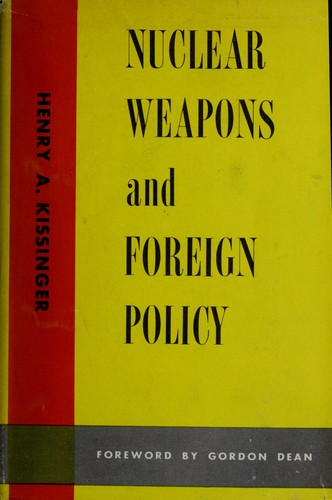 Nuclear weapons and foreign policyHenry Kissinger
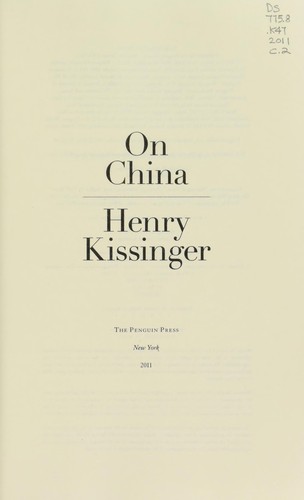 On ChinaHenry Kissinger
 The Age of A.I.Henry Kissinger
 The Age of AIHenry Kissinger, Eric Schmidt, and Daniel Huttenlocher
 White House yearsHenry Kissinger